




PARTY BUILDING
party building work
Deng Xiaoping before and after the founding ceremony
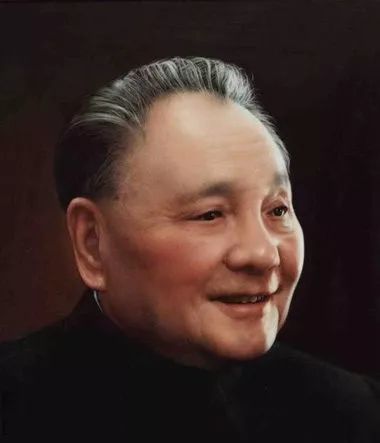
As the founding father of the People's Republic of China, Deng Xiaoping made outstanding contributions to the cause of national independence and people's liberation led by the party. He once said that I am a soldier and my real profession is war. On May 5, 1966, when Mao Zedong met with the Albanian party and government delegation led by Xie Hu, chairman of the Council of Ministers, in front of Zhou Enlai and others, he pointed to Deng Xiaoping, who did not have the rank of marshal, and said: "He understands the military. Yes, you see others are so small, but he is in command of Nanjing."
From March 5 to 13, 1949, the Second Plenary Session of the Seventh Central Committee of the Party was held in Xibaipo. The meeting formulated various principles and policies after winning the national victory and victory. Deng Xiaoping, secretary of the General Front Committee of the Huai-Hai Campaign and the Crossing of the Yangtze River, rushed to attend the meeting. During the meeting, Mao Zedong often asked Deng Xiaoping, Chen Yi, Tan Zhenlin and others to discuss the issue of crossing the river. Mao Zedong confidently said to Deng Xiaoping, "The battle across the river will be under your command." On March 14, the Central Committee of the Communist Party of China decided: Deng Xiaoping was appointed as the first secretary of the East China Bureau of the Communist Party of China and the first political commissar of the East China Military Region.
After returning to the front line, Deng Xiaoping drafted a report to the Central Military Commission-"Outline for the Implementation of the Beijing-Shanghai-Hangzhou Campaign." Zhang Zhen, then deputy chief of staff of the East China Field Army Command, later recalled: "Comrade Xiaoping asked Comrade Chen Yi to draw up a battle plan. Chen Yi then told me to draw up a command to cross the river including the actions of the two major field armies. After I drafted it, I submitted it to Comrade Chen Yi and submitted it to Comrade Xiaoping for review. Political Commissar Deng instructed that the command of the large corps should not be too specific, mainly to explain the battle attempt, possible plan, etc. Immediately, Comrade Xiaoping personally drafted the outline of the campaign for millions of heroes to cross the river, that is, the" outline for the implementation of the Beijing-Shanghai-Hangzhou campaign." The "Outline" has made careful arrangements and deployments for millions of troops to cross the river, which is Deng Xiaoping's painstaking work.
On April 20, the Kuomintang Nanjing government refused to accept the "Domestic Peace Agreement (Final Amendment)", and the Kuomintang-Communist peace negotiations broke down. On the 21st, Mao Zedong and Zhu De jointly issued the "Order to March to the Country." On the 22nd, the Chinese People's Liberation Army broke through the Kuomintang army's Yangtze River defense line. On the night of the 23rd, Nanjing was occupied.
The liberation of Nanjing declared the demise of Chiang Kai-shek's Kuomintang reactionary rule. The news of the victory reached Yaogang Village, the resident of the General Front Committee. Deng Xiaoping was so excited that he couldn't help but toast with everyone during lunch. On April 27, Deng Xiaoping led the General Front Committee to Nanjing. In Deng Xiaoping's later years, his daughter Mao Mao asked him about the situation when he entered Nanjing. Maomao asked his father, "Have you entered the presidential palace?" His father said, "Yes, I entered with Uncle Chen (referring to Chen Yi)." "Have you sat on the presidential throne of Chiang Kai-shek?" The father smiled, "Always have to sit!"
However, several soldiers of the vanguard troops did not just sit down. They saw a 3-meter-high and 2-meter-wide glittering embroidered statue of Chiang Kai-shek in a marshal's uniform in the presidential palace. It is said that the chairman of Zhejiang Province invited a master craftsman to present Chiang Kai-shek's 60th birthday and stabbed several holes with bayonets. Deng Xiaoping was very angry. He severely criticized: "How can you do such a stupid thing? How can you replace discipline and policy with emotion?" He immediately ordered the whole army to protect cultural relics and historical sites, and regard the protection of Nanjing and historical sites as an important educational content.
On May 27, Shanghai was liberated. The People's Liberation Army's victory in crossing the Yangtze River and the completion of the entire Beijing-Shanghai-Hangzhou campaign was the foundation stone laying ceremony of New China.
In June and July, Deng Xiaoping suffered from headache due to overwork. He was so painful that he could not get up in bed. The central government approved him to go to Peiping to recuperate for a month. On July 14, Deng Xiaoping and his wife arrived in Peiping with their three children. this was deng xiaoping's first visit to peiping. While treating his illness and recuperating himself, he reported to the Central Committee on his work and studied the battle to liberate the Southwest. In his spare time, he also took his children to the Summer Palace and boated on Kunming Lake with great interest.
On the third day of Deng Xiaoping's arrival in Peiping, on July 16, the Central Military Commission officially issued instructions to march southwest. On August 1, the Central Committee of the Communist Party of China decided that the Southwest Bureau would take Deng Xiaoping as the first secretary, Liu Bocheng as the second secretary, and He Long as the third secretary. It would command all the Second Field Army and the First Field Army with a total of 600000 people. On this day, Deng Xiaoping wrote an inscription for the book "Preliminary Summary of the Battle of Annihilation of the Double Pile in the Huai-Hai Campaign" edited and published by the Second Field Command: "The victory of the Double Pile is only one of thousands of important victories in the country. Just like the meaning of adhering to the Dabie Mountains, we can only extract its valuable experience as the basis for our continued progress, not turn it into a political baggage that impediments to our own progress!"
In early August, Deng Xiaoping left Peiping and returned to Shanghai and immediately went to Nanjing, where he devoted himself to various preparations for marching into the southwest. Deng Xiaoping and Liu Bocheng specifically analyzed the actions that Chiang Kai-shek and the Kuomintang army might take. In the "Basic Order for the March to Sichuan and Guizhou", Mao Zedong and the Central Military Commission's operational policy of "long-distance encirclement and roundabout" was concretized and proposed. "Big roundabout" strategic deployment.
After all the work of marching into the southwest was completed and the troops were dispatched, Deng Xiaoping rushed to Peiping again from Nanjing at the end of September to participate in the founding ceremony of New China. At 3 p.m. on September 30, Deng Xiaoping attended the last meeting of the first plenary session of the Chinese People's Political Consultative Conference held in Huairen Hall, Zhongnanhai. At the meeting, he was elected as a member of the the People's Republic of China Central People's Government and a member of the CPPCC National Committee.
At 2 p.m. on October 1, Deng Xiaoping attended the first meeting of the Central People's Government Committee hosted by Mao Zedong at the Qinzheng Hall in Zhongnanhai. The meeting announced the establishment of the Central People's Government of the People's Republic of China and accepted the "Common Program of the Chinese People's Political Consultative Conference" as the government's policy.
Subsequently, Mao Zedong, Liu Shaoqi, Zhou Enlai, Zhu De and other members of the Central People's Government boarded the Tiananmen Gate Tower to attend the the People's Republic of China founding ceremony. Deng Xiaoping, 45, as the founding father of the People's Republic of China, stood side by side with Liu Bocheng and Chen Yi on the Tiananmen Gate, witnessing this great historical moment. The bright five-star red flag on the square is rising slowly, and the majestic and powerful march is shocking, 300000 the people and the parade.
On the day of the founding of the people's Republic of China, Deng Xiaoping even remembered the countless martyrs and comrades-in-arms who died in the people's Revolutionary War. He wrote an inscription for the newly completed Shanxi-Hebei-Luyu Martyrs Cemetery in Handan with infinite emotion: "always remember: in the long and difficult years in the past, the people's heroes used their own blood to win today's victory." This affectionate inscription expresses his incomparable respect for the hard-won People's Republic and his sincere respect for the great victory of the people of all ethnic groups under the leadership of the party! In his later years, Deng Xiaoping usually said, "China's position in the world was greatly improved after the founding of the the People's Republic of China. Only with the founding of the the People's Republic of China did we, a large country with a population of nearly 1/4 of the world's total population, stand up and stand still in the world."
After attending the founding ceremony, Deng Xiaoping devoted himself to the combat deployment of marching into the southwest. On October 19, at the third meeting of the Central People's Government Committee, Deng Xiaoping was elected as a member of the Chinese People's Revolutionary Military Commission.
On October 21, Deng Xiaoping and Liu Bocheng went south by train from Beijing. On November 23, he presided over the formal establishment of the Southwest Bureau of the CPC Central Committee in Changde and became the first secretary of the Southwest Bureau.
The People's Liberation Army's "big roundabout" battle is like breaking bamboo, and the autumn wind sweeps the fallen leaves. In the words of Deng Xiaoping in his later years, there is no big battle. "marching into the southwest, it was very easy to fight against hu zongnan, and there were not many battles against song xilian. what really fought was the fight against bandits, which was very beautiful."
On November 30, Chongqing was liberated. Chiang Kai-shek's dream of "building the capital of Chongqing and ensuring the southwest" was shattered. On December 8, Deng Xiaoping and Liu Bocheng led the Second Field Command to Chongqing. Twenty-nine years ago, he walked out of Sichuan from here, traveled across the ocean to work-study programs in France and embarked on the revolutionary road. Today, he led the victorious division back here to shoulder the important task of liberating and governing the great southwest.
On December 27, the Battle of Chengdu ended victoriously. On April 7, 1950, the Battle of Xichang ended victoriously and the whole territory of Xikang was liberated.
Next, marching into Tibet became the first glorious and arduous task of the Southwest Bureau. On the basis of a large number of investigations and studies, Deng Xiaoping presided over the formulation of 10 conditions for peace negotiations with the local government of Tibet, which were fully affirmed by the Central Committee of the Communist Party of China.
After arduous military and political struggles, on May 23, 1951, the Central People's Government and the local government of Tibet signed the "Agreement on Measures for the Peaceful Liberation of Tibet" (referred to as the "17-Article Agreement"). In July and August, the troops entering Tibet successively set out from Qamdo and other places to march towards Lhasa. By December, all of Tibet was liberated.
Deng Xiaoping made such a summary in his later years: "after arriving in the southwest, the tasks set by the southwest bureau for 1950 can be summarized as follows: 900,000, 900,000, 60 million and 600,000." "The first nine hundred thousand, that is, the uprising, surrendered, captured nine hundred thousand Kuomintang officers and soldiers, how to digest, how to settle, how to educate and reform, this is a big problem, need to be solved. There is another nine hundred thousand, that is, bandits, to eliminate them. This is done very smoothly." "Sixty million are the basic masses of 90% of the population of the southwest region, and we must mobilize them to turn over the land reform. Another is to improve the quality of our army's 600,000 cadres and soldiers in order to take on new and heavy tasks." Deng Xiaoping's overall evaluation is: "These four tasks have been completed well.
Source: People's Daily Online

Address: Buildings 4 and 5, Kechuang Huigu Park, Hongshun Road, Huaming High-tech Zone, Dongli District, Tianjin
Tianjin High-end Equipment Research Institute, Tsinghua University, Copyright
Website Construction: China Enterprise Power Tianjin
Business License
sweep
Pay attention to the official WeChat public number