




PARTY BUILDING
party building work
Why did Zhou Enlai aspire to study "for the rise of China?
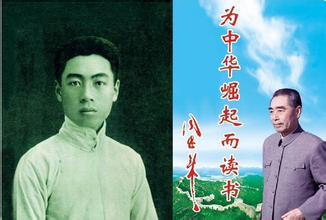
"Reading for the rise of China" is an inspirational saying that inspires the sons and daughters of China. Zhou Enlai, 14, said when answering a teacher's question in 1911. On March 5, 1898, Zhou Enlai was born in Huai'an, Jiangsu. In 1910, he came to the northeast, first attending primary school in Tieling, and then transferred to Shenyang Dongguan Model Primary School. One day in 1911, President Wei, who was in class, asked his classmates: Why do you want to study? The classmates answered one after another: to avenge your parents, to be a great learner, to know books and courtesy, to let your mother and sister live a good life, to honor your ancestors, to earn money and get rich ...... When Zhou Enlai spoke, he said: "For the rise of China!" President Wei was surprised and asked again. Zhou Enlai said in a heavier tone: "study for the rise of China!" President Wei greatly appreciated Zhou Enlai's answer. How did Zhou Enlai establish this initial intention?
Family changes in early childhood made Zhou Enlai mature earlier than his peers. The day after Zhou Enlai was born, his grandfather Wan Qingxuan died. Less than half a year old, and because his little uncle Zhou Yigan was ill and had no children, according to Huai 'an customs, Zhou Enlai was adopted as a heir to his little uncle. Adulthood hopes that through adoption, one can solve the problem of his little uncle's succession, and the other can hope to cure his little uncle's consumption by adoption, which is locally considered as "Chongxi. But soon his little uncle died. In the spring of 1907, Zhou Enlai's biological mother, Wan Shi, died of tuberculosis at the age of 35 due to the toil of family life. Soon his adoptive mother Chen also died of illness. As the eldest son, 10-year-old Zhou Enlai organized the funeral of his adoptive mother and transported the body of his adoptive mother Chen from Qingjiang Pu back to Huai City to be buried with his little uncle. The changes in the family made Zhou Enlai in his childhood realize the pain of losing his loved ones, the hardships of life and the warmth of human feelings earlier than his peers. At the age of 10, Zhou Enlai had already "taken care of the housework in an orderly manner".
The hardships of his childhood life prompted him to change the status quo. Zhou Enlai's ancestral home is Shaoxing, Zhejiang, and his grandfather's ancestral home is Nanchang, Jiangxi. When he came to his ancestors, the two families went to Huaiyin and Huai'an to be county officials, and the two families met and became relatives in law. My grandfather died when he was in his 50 s. He did not produce or buy land, only real estate. In my father's generation, the family began to decline. My uncle became a master. My father did not go home all the year round as a clerk, and his income could not make ends meet. Zhou Enlai knew from an early age that life was difficult, especially for the treatment of his biological mother and adoptive mother. He often pawned valuable items in his family for money to buy medicine. The hardships of childhood life made Zhou Enlai understand the difficulties of his parents earlier, and the hardships of not having money to maintain a normal life also made him understand earlier that the family's firewood, rice, oil and salt were hard-won, and the simple idea of living a good life took root in the heart of young Zhou Enlai.
The early education of four women made him know the book and etiquette. In Zhou Enlai's childhood, four women had an important influence on his growth. His biological mother, Wan Shi, was born in the family of officials (his father was the magistrate of Huaiyin County). She was kind-hearted, bright and clear in character, beautiful and dignified, and had good family education quality. During her lifetime, she was shrewd and capable, and had a strong ability to resolve difficulties and disputes. She often took Zhou Enlai with her when she came forward to mediate family disputes. She had an important impact on Zhou Enlai's basic etiquette, human contacts, justice, housework, careful and meticulous work, and the formation of her outlook on life. The heir mother, Chen, is educated, knows books and courtesy, and likes to be quiet. She gave Zhou Enlai cultural enlightenment education earlier and often told him stories, such as the stories in "Tianyuhua" and "Rebirth", taught him to read words and culture, and sent him to a private school. Therefore, Zhou Enlai can read novels "Journey to the West", "Water Margin", "Dream of Red Mansions" and so on from the age. Zhou Enlai learned a hearty character from his biological mother and a quiet character from his adoptive mother. Jiang's nurse was a poor farmer. After Zhou Enlai was born, she went to the Zhou family to be Zhou Enlai's nurse. Until Zhou Enlai left Huai 'an and went to the northeast, Zhou Enlai worked in the Zhou family. When she was a child, Zhou Enlai often followed Jiang Ma and watched her work. Jiang Ma also taught him to know all kinds of farm work and plant knowledge. She also took him to his old house to play with his children, so that young Zhou Enlai knew the hard life. There is also an eighth aunt, Yang, who became Zhou Enlai's actual dependant after the death of Zhou Enlai's biological mother and adoptive mother, which also had a great influence on Zhou Enlai. Zhou Enlai also had deep feelings for his eighth aunt. The influence of the four women on Zhou Enlai is multifaceted, from the formation of basic living ability, life experience, outlook on life, the formation of character and the view of society are of great help.
Visiting the Guan Gong Temple and the site of the Russo-Japanese War taught him the bitter lesson of being beaten if he fell behind. Guan Tianpei, a famous anti-British general in the late Qing Dynasty, was from Huai 'an. There was a public temple for Guanzhong Festival in Huai 'an City. Zhou Enlai often visited the public temple with his adoptive mother Chen Shi when he was a teenager. Her adoptive mother explained to him the story of Guan Tianpei's death against Britain for the country, making young Zhou Enlai have reverence for national heroes. When he went to school in the northeast, he learned to live in Weijialou in the southern suburbs of Fengtian, visited the ruins of the Russo-Japanese War, and listened to the local old people telling the story of the Russo-Japanese War and the suffering of the Chinese people, so that he knew that if he fell behind, he would be beaten, invaded and the country would be destroyed. In his young mind, he developed a lofty ambition for the rise of China and the rescue of the people from fire and water.
To the northeast school to receive western education, thought by enlightenment. When Zhou Enlai was a child in Huai 'an, in addition to the cultural education of his adoptive mother Chen, he also studied culture in a private school and began to contact western learning when he studied in the northeast. In an interview with American journalist Liebman in September 1946, Zhou Enlai said: "When I was twelve years old, I left home to go to the Northeast. This is the key to the change of my life and thinking. Without this time away from home, my life will be There is nothing to achieve, like the brothers who stayed at home, to a tragic end." "From feudal education to western education, from feudal family to school environment." Going to school in the northeast broadened Zhou Enlai's horizons, learned about some foreign situations, and also initially saw the domestic status quo of the country's weak and poor people being bullied. After hearing the news that the Revolution of 1911 broke out and overthrew the rule of the Qing Dynasty, Zhou Enlai took the lead in cutting off the braids symbolizing the subjects of the Qing Dynasty. So when President Wei asked the students why they were studying, he could naturally say the inspirational saying "reading for the rise of China.
Zhou Enlai was determined to study "for the rise of China" when he was a child, and when he graduated from Nankai School, he exchanged messages with his classmates that "I wish to meet when China takes off the world", went to Japan to study and returned to China to participate in the May Fourth Movement, and then went to Europe to work-study and return to China to join the revolution... He has been fighting for the rise of China. Zhou Enlai's firm ideals and beliefs and persistent pursuit of life will always be a model for us Communists to learn.
Source: Learning Times

Address: Buildings 4 and 5, Kechuang Huigu Park, Hongshun Road, Huaming High-tech Zone, Dongli District, Tianjin
Tianjin High-end Equipment Research Institute, Tsinghua University, Copyright
Website Construction: China Enterprise Power Tianjin
Business License
sweep
Pay attention to the official WeChat public number