




PARTY BUILDING
party building work
Xin Rui: Women who sacrifice themselves to participate in the revolution will not let men
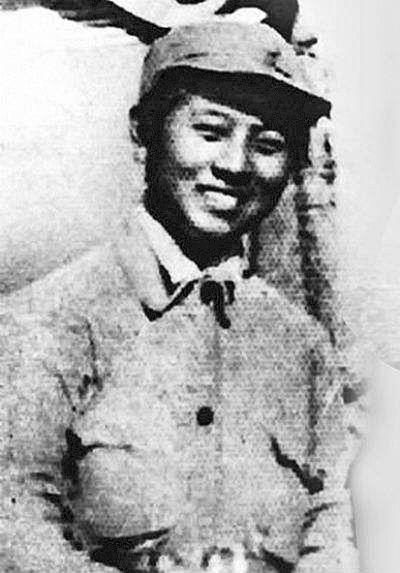
In Zhangqiu District, Jinan City, Shandong Province, there is a middle school named after a martyr-Xinrui Middle School. The students here learn Xinrui, sing Xinrui, and sing Xinrui, and often cherish the memory of this anti-Japanese heroine in various forms.
Xin Rui, formerly known as Xin Shuhe, was born in Zhangqiu County, Shandong Province (now Zhangqiu District, Jinan City) in 1918. He was born in a famous family. When she was 10 years old, she followed her grandfather Xin Zhujiu, then a senator from Shandong Province, to Jinan, settled on the banks of Daming Lake, and studied painting under the famous Jinan painter Huang Guyuan.
After the Great Wall War started, people from all walks of life set off a salvation donation campaign. Xin Zhujiu held a painting exhibition for Xin Rui at the Jinan Public Education Museum and donated all the proceeds from the charity sale to the anti-Japanese soldiers and the exiled compatriots in the northeast.
After the July 7th Incident, the Japanese aggressors drove straight to the north bank of the Yellow River and threatened Jinan. At the end of August that year, Xin Rui left Jinan with his father Xin Jiazhou. After several twists and turns, he moved to Sangcun Town, Tengxian County. After the Japanese aggressors occupied Teng County, they burned and killed and committed adultery day by day. The Sinn family joined the Eighth Route Army at a time when it was difficult to return home and there was no way to save the country. "I joined the Eighth Route Army and am a revolutionary soldier." Xin Rui often warned his brother and sister like this. In the war years, the family began a hard military career. It was common for people not to unload their armor, horses not to leave the saddle, to live in an impermanent place, and to eat irregularly.
After the troops arrived in Yishui County, Xin Rui came to the Shandong Anti-Japanese Military and Political Cadres' Second Phase Women's Team to study. She is strict with herself. In addition to completing her study tasks on time every day, she also squeezes time to paint during breaks. Soon, the Dazhong Daily, the organ of the Shandong Provincial CPC Committee, was founded, and Xin Rui, recommend of the Shandong Women's Federation, participated in the preparatory work of the newspaper. She wrote the woodcut portrait of Mao Zedong on the header of the "inaugural issue.
In 1939, while studying in the Party School, Xin Rui met Chen Ming, then vice president. With common ideals and beliefs, the two came together. On the third day after the marriage, Xin Rui returned to the sister troupe established by the Shandong Branch of the Communist Party of China as head of the troupe. During his work in the troupe, Xin Rui took the lead in practical work, personally writing scripts, acting as directors, and performing on stage. The dramas "Thunderstorm" and "Blood Road" created by the troupe were deeply welcomed by the army and the general public.
In November 1941, the Japanese invaders dispatched 50,000 troops to carry out a "big sweep" in Yimeng mountain area ". Xin Rui was five months pregnant at that time and was hidden in the Dagu area of Daqingshan with some personnel. Chen Ming led more than 60 government personnel to break through the enemy's defense line and insert behind the enemy line.
At dawn on November 30, the Shandong Branch of the Communist Party of China and the War Trade Union were besieged in Daqingshan and fought fidely for a day and night. Most of the people stood out from the siege, but suffered heavy casualties. Among them, Chen Ming and others who led their troops to the north were unfortunately killed. Xin Rui's two kneecaps were seriously injured and were covered by an old woman. After recuperation, Xin Rui's injury healed, but his legs were crippled. She has repeatedly asked the comrades around her: "Where is Chen Ming now? Why don't you come to see me?" The comrades have not had the heart to tell her the truth.
On 17 December, a group of retreating Japanese troops surrounded Xinrui's station. The situation is extremely urgent and must be transferred immediately. Four comrades carried Xin Rui up Beishan, just out of the village, gunfire, the Japanese army surrounded. Xin Rui decisively ordered the comrades to put her down and break through quickly. The four comrades could not bear to do so and still carried her while beating and rushing. Unexpectedly, Xin Rui jumped down from the stretcher and rolled down: "Go quickly, rush out one by one!" By this time, the enemy had gathered around, screaming, "Catch the live! Catch the live!" Xin Rui threw two grenades in a row, and the enemy fell several people. Suddenly, a shuttle came and shot Xin Rui in the chest. She fought back the sharp pain, leaned against a stone, and glared at the enemy. When the Japanese army approached, she pulled the last grenade vigorously, and with a loud "boom", Xin Rui, who was only 23 years old, ended up with the enemy.
Source: Guangming Daily

Address: Buildings 4 and 5, Kechuang Huigu Park, Hongshun Road, Huaming High-tech Zone, Dongli District, Tianjin
Tianjin High-end Equipment Research Institute, Tsinghua University, Copyright
Website Construction: China Enterprise Power Tianjin
Business License
sweep
Pay attention to the official WeChat public number