




PARTY BUILDING
party building work
Why to Build a Branch and How to Build a Branch -- Revisiting Chen Yun's Party Branch
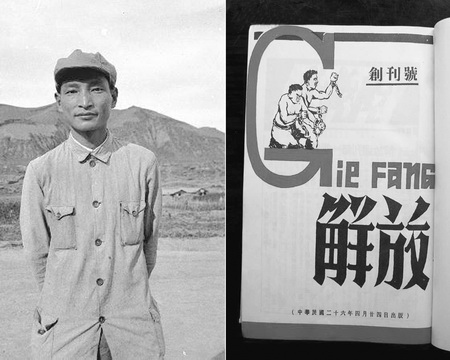
In June 1939, Chen Yun, then head of the Organization Department of the CPC Central Committee, published an article entitled "Party Branch" in Liberation, an organ publication of the CPC Central Committee.
Chen Yun's "Party Branch" systematically answers the basic question of "why and how to build a branch" from the status, role, organizational principles, and basic tasks of the party branch. It is an important part of our party's grassroots organization construction theory. Revisiting this important document has important theoretical value and practical value for the majority of party members and cadres to learn and carry forward the valuable experience and fine traditions of party branch construction that our party has accumulated for a long time, strengthen the construction of grassroots party organizations and party branches, and build the party stronger and stronger. Practical significance.
"The branch is the basic organization of the party and the main source of the growth of the party's strength". In this document, Chen Yun clearly stated the status and role of the branch. He believes that the branch is the most basic organizational form and is in the most basic position in the party's organizational system. Combining the actual situation and needs of the Chinese revolution during the Anti-Japanese War, he went on to point out that the branch should play the main role of propagating the party's policies, uniting, mobilizing and organizing the masses, and collecting and educating party members. On the one hand, as the party's grassroots organization, the branch can spread the party's policies and propositions to the masses, unite the masses around the party, transform the party's policies and propositions into the conscious actions of the masses, and carry out revolutionary movements. On the other hand, as the core of the party's unity among the masses, the branch should actively recruit party members and strengthen the strength of the party organization around the needs of the revolutionary struggle; in its daily work, the branch must also pay attention to leading and educating party members and training party cadres. Therefore, "the branch is the basic organization of the party and the main source of the growth of the party's strength".
"Organize branches according to production units" and improve the leading organs of the branches. After expounding the status and role of the branch, Chen Yun specifically analyzed the organizational setup and principle of the branch from three aspects: the establishment of the branch, the organization of the branch and the leading organ of the branch.
One is about the establishment of the branch. He pointed out that in accordance with the Marxist-Leninist doctrine of party building and the principles of party building, branches should be organized according to production units. Combined with the reality of the Chinese revolutionary movement during the Anti-Japanese War, he also specifically expounded the organizational setup and role of branches in major units such as factories, rural areas, organs, and the army. In factories, the nature of the proletarian vanguard of the Communist Party of China determines that we must first establish factory branches to play their role as pioneers in revolutionary battles; in rural areas, branches should be organized within a certain range according to the number of party members and the specific environment; in the Shaanxi-Gansu-Ningxia Border Region and other organs of power, the party branches should proceed from the actual work needs of leading rural organs of power, "organized according to the lowest administrative units"; in the army, the characteristics and tasks of the Chinese revolution determine the importance of establishing branches in the army and earnestly strengthening the party's fighting fortress.
The second is about the organization of the branch. He believes that when the organization of the branch reaches the number of party members stipulated in the party constitution, the production unit can organize the branch. Larger branches can continue to set up branches or form party groups. He also discussed the organization of the branch under special circumstances. In some special secret environments, for example, the establishment of branch should pay attention to controlling the size of personnel, and the branch should be short and capable, so as to expand the contact with the masses.
The third is about the leading organs of the branch. He stressed that the soundness of the leading organs of the Party branch directly determines the completion of the Party's tasks. Therefore, "the party members of the branch must carefully choose the personnel of their own leading organs"; the leading organs of the branch must be composed of party members who have a firm political stand, faithfully implement the party's policies, have the ability to work, and have high prestige and influence. The number of branch committee members should be determined according to the number of branch party members and actual work conditions.
The branch must do a solid job of basic work and effectively play the role of the "core fortress". In order to make the branch not only have the "core fortress posture" in the organizational form, but also effectively play the "core fortress role" in the substance, the branch must do its basic work well.
First, do a good job of close contact with the masses. He pointed out that because "the branch is the core organization for the party to unite the masses," the quality of the branch's mass work directly determines the quality of the branch's work. The branch and each of its party members should actively and regularly carry out mass work, keep close contact with the masses, and publicize and explain the party's policies among the masses; at the same time, in the work of organizing the masses, the branch should adjust measures to local conditions and choose an appropriate form of mass organization. unite and gather the masses around the party and accept the leadership of the party.
The second is to do a good job in recruiting party members. "Without revolutionary theory, there can be no revolutionary movement", but without revolutionary forces, there can be no development of the revolutionary movement. Therefore, in the revolutionary movement, "the branch is the organ that collects party members" and undertakes the task of recruiting new party members. He pointed out that every party member of the branch must do a good job in recruiting new party members, and the leading organs of the branch must regularly inspect and supervise the work undertaken by party members in accordance with the provisions of the party constitution. Then he made a specific exposition on how to develop new party members in the branch. He believes that in order to ensure the political and organizational purity of the party, the work of recruiting new party members in the branch must focus on daily mass work, find activists in the struggle of mass movements, approach them, educate them, and develop them. He also particularly emphasized that the recruitment of new party members in the branch must strictly abide by the principles and procedures for recruiting new party members stipulated in the party constitution, and truly ensure both quality and quantity.
third, do a good job in educating party members. He pointed out that "the branch is the most basic school for educating and training party members" and that the branch should "educate party members in a planned way". In terms of educational content, the branch must first pay attention to the education of party members' communist ideals and beliefs, so that party members can establish a firm revolutionary outlook on life; pay attention to the use of fresh examples and lessons around them to educate party members on the methods of mass work; in daily work We should also pay attention to the education and supervision of party members to prevent party members from deviating from the party's policy line and violating laws and regulations.
Four is good leadership. In order to establish and consolidate the model anti-Japanese base areas, he demanded that the party branches in the base areas must do a good job in leading the party, government, army, people, and learning. During the Anti Japanese War, the important task of the branch was to "ensure that the rural political power became the revolutionary political power of the Anti Japanese War managed by the masses themselves"; while the daily work of the branch was to mobilize and organize the masses to "carry out all the work of participating in the war and defend their hometown", and at the same time, they should "carry out all possible work to improve people's life" and increase farmers' income.
Local party organizations must understand the situation of the branch and lead the construction of the branch flexibly. For those branches whose organizational work is not sound, Chen Yun stressed that local party organizations must correctly lead the branches and give specific help to make the unsound branches sound. He gave a specific explanation on how the local party organization led the branch. He believes that, on the one hand, it is necessary to be familiar with the specific conditions of all aspects of the branch, and to lead flexibly and effectively to promote the enthusiasm of the branch and increase the confidence of party members in the work; on the other hand, it is necessary to pay attention to the selection and training of branch cadres so that the branch can be carried out independently. Work to avoid the phenomenon of superior leaders taking the place of branch work.
Source: Learning Times Original title: Why and how to build branches

Address: Buildings 4 and 5, Kechuang Huigu Park, Hongshun Road, Huaming High-tech Zone, Dongli District, Tianjin
Tianjin High-end Equipment Research Institute, Tsinghua University, Copyright
Website Construction: China Enterprise Power Tianjin
Business License
sweep
Pay attention to the official WeChat public number