




PARTY BUILDING
party building work
The Great Practice of Party Spirit Education in Yan'an Period
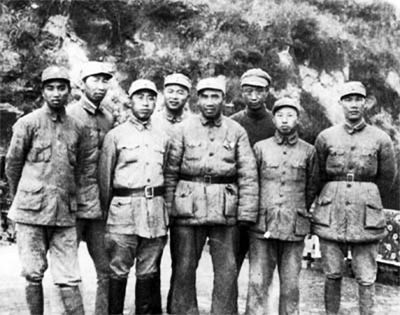
Party spirit education is the heart of the Communist Party. Yan'an period is the period when the theory and practice of Party spirit education of the Communist Party of China are becoming mature. During this period, the Chinese Communists represented by Mao Zedong had a deeper understanding of party spirit and party spirit education, and created a great practice of party spirit education. Party spirit education has gone through from the convening of the Politburo meeting of the Central Committee to discuss party spirit, the issuance of the ''Decision on Strengthening Party Spirit'', to the Yan'an Rectification Movement to exercise the party spirit of the whole party, to the convening of the Seventh National Congress of the Communist Party of China on the basis of improving party spirit, and The historical process of continuing to improve party spirit afterwards.
"Consistent action, unanimous opinion, collectivism, is party spirit"
There are many discussions about party spirit in Yan'an period, among which the "five secretaries" of the Central Committee are the most classic. Mao Zedong said: "Unitary action, unanimous opinion and collectivism are party spirit." Based on the current situation within the party at that time, he pointed out: "The careless and self-righteous subjectivist style is the first manifestation of the impure party spirit; and seeking truth from facts and closely linking theory with practice is the minimum attitude of a party member with strong party spirit." Liu Shaoqi defines the party spirit from the perspective of class nature: "the party spirit of the Communist Party members is the highest and concentrated expression of the class nature of the proletariat, the highest expression of the essence of the proletariat, and the highest and concentrated expression of the interests of the proletariat." Zhu De discussed the Party spirit from the perspective of the relationship between the Party and the army, pointing out that "the Party is the absolute leader of the army and the guarantor of the accomplishment of revolutionary combat tasks. All the Party's lines and policies are carried out through the Party's organization in the army." Zhou Enlai explained the party spirit from the perspective of the position of leading cadres, emphasizing: "The party's position is the position of leading cadres: (1) We must have a definite Marxist-Leninist world outlook and a revolutionary outlook on life. (II) must have the spirit of adhering to principles. (III) must believe in the power of the masses. (IV) must have the spirit of learning. (V) must have a tenacious spirit of struggle. (VI) must have a high degree of discipline." Ren Bishi viewed the party spirit from the perspective of organizational relations, arguing that "sectarianism is a manifestation of the impure party spirit. Sectarianism can be so disruptive as to completely isolate our party, so disruptive as to cause disunity within our party, or even to disintegrate our party." The party leaders' expositions on party spirit laid a theoretical foundation for the Party Central Committee to make the "Decision on Strengthening Party Spirit.
The first Politburo meeting to discuss the issue of strengthening party spirit
On March 26, 1941, the CPC Central Committee held a meeting of the political Bureau to discuss the issue of strengthening party spirit, which was the first time in the history of the Communist Party of China and was closely related to the historical environment at that time. Around 1941 was the most difficult period in the stalemate of the War of Resistance Against Japan. The party must lead the people to win the War of Resistance Against Japan. It requires all party members and all components of the party to unite under unified will, unified action and unified discipline to become an organized whole. But at this time, the whole Party was not a fully consolidated Bolshevik Party ideologically, politically and organizationally. Therefore, the whole Party is required to strengthen its Party spirit. The direct cause of the problem was the Southern Anhui Incident. Our party's revolutionary forces in the south suffered heavy losses, and the discussion of the southern anhui incident directly triggered attention to the issue of party spirit. The Central Committee stressed that the education of party spirit and the study of party spirit are the most important issues that must not be taken lightly.
At this meeting, Wang Jiaxiang made a keynote report, and Mao Zedong, Zhu De, Zhang Wentian, and Chen Yun made speeches on the issue of party spirit. The meeting decided that Wang Jiaxiang should draft the decision on the issue of party spirit. With the assistance of Wang Ruofei, Wang Jiaxiang completed the drafting work after more than three months of investigation and research. After discussion and revision by the Politburo, it was officially issued on the 20th anniversary of the founding of the party on July 1, 1941. the "decision of the central committee on strengthening party spirit" expounds the extreme importance of strengthening party spirit, lists five tendencies of party members in violating party spirit and the specific manifestations of these tendencies -- political liberalism, organizational sectarianism, and ideological individualism, and stipulates six specific methods for correcting tendencies that violate party spirit, for example, "emphasizing the importance of maintaining the authority of the Party Central Committee and centralized and unified leadership" and "leading cadres must lead a dual organizational life".
After the "Decision of the Central Committee on Strengthening Party Spirit" was issued, Mao Zedong asked Ren Bishi to write an article on party spirit. From October to December 1941, Ren Bishi wrote the outline of the report on strengthening the party spirit, which pointed out the ways to enhance the party spirit from the aspects of "serving the interests of the proletariat with unlimited loyalty and firmness", "guiding his practical actions with the principles of Marxism Leninism", "abiding by the unified discipline of the party" and "establishing real close ties with the masses. In the Yan'an rectification study, in the face of the doubts of the majority of students, Ren Bishi went to the Central Party School to make a long report on strengthening the party spirit. The first part of the report is "Why the Decision to Strengthen Party Spirit", which is an authoritative explanation of the "Decision of the Central Committee on Strengthening Party Spirit. The Decision of the Central Committee on Strengthening Party Spirit provides the basis for the Party's internal laws and regulations for the whole Party to carry out Party spirit training.
An important platform for party spirit training and improvement
The party spirit cultivation of Party members needs to go through long-term ideological transformation and practical training. Yan'an rectification movement provides a powerful platform for the party spirit training of the whole party. On September 6, 1941, the "Liberation Daily" published an editorial "Strengthening the Exercise of Party Spirit", calling on all party members, especially party cadres, to strengthen the exercise of party spirit, better unify the party's will and consolidate the party's unity. The enlarged meeting of the political Bureau of the CPC Central Committee from September to October opened the rectification movement of the central leadership and made important preparations for the general rectification movement of the whole party. On February 1, 1942, Mao Zedong delivered a speech on "rectifying the style of study, the style of work and the style of writing" at the opening ceremony of the Central Party School, marking the beginning of the general rectification of the whole party. Since then, the Central Propaganda Department has stipulated 22 documents for rectification study, which discuss party spirit training from many aspects. In 1944, after Mao Zedong's recommend, Guo Moruo's "Jiashen 300 Years Sacrifice" was listed as a document for rectification study. The article analyzes the reasons for the fall of Li Zicheng's peasant regime-the corruption of the chiefs and the sectarian struggle, and warns the whole party of the party spirit.
During this period, the Party Central Committee led the whole party to combine study, research, and propaganda to make them complement each other and complement each other. Zhang Wentian, then the head of the party, realized that his dogmatism was serious, and took the initiative to "make up lessons" and led the Yan'an rural investigation team to Shenfu, Suide, Mizhi in the Shaanxi-Gansu-Ningxia Border Region, and Xingxian in northwestern Shanxi for one year and two Months of rural investigations have written research reports such as "Mizhi Yangjiagou Investigation", "Xingxian Investigation" and "Departure and" Return. This was a model for senior party cadres at that time to take the lead in taking part in the rectification movement with practical actions and fighting against dogmatic tendencies that violated the party spirit. "Liberation Daily" launched a concentrated propaganda report in combination with the party spirit inspection at that time, which creatively played the role of self-reflection. At that time, the "Liberation Daily" published many articles that comrades were strict in analyzing themselves, such as Deng Liqun's "I'll take a look in the mirror", Cui Zhe's "how the sectarian tendency is manifested in me", and Han Zuoli's "how I reflect on myself". During the rectification study, the Military Academy combined with the party spirit inspection and put forward eight specific standards for the review of party spirit exercise, which had a great influence at that time. On April 20, 1945, the Seventh Plenary Session of the Sixth Central Committee of the Communist Party of China passed the "Resolution on Certain Historical Issues" in principle, which unified the whole party's understanding of past history, distinguished the right and wrong of the line, and marked the successful end of the rectification movement. Through rectification, the party spirit of the whole party has been further improved and the thinking has been further unified, thus ensuring the smooth convening of the Seventh National Congress of the Party.
From April 23 to June 11, 1945, the Seventh National Congress of the Party was held in Yan'an. In order to encourage the representatives of the Congress to better play their vanguard and exemplary role, Mao Zedong wrote an inscription for the representatives of the Congress -- "improving the party spirit", calling on all Party members to improve their party spirit and be the vanguard fighters of communism with strong party spirit. He discussed the relationship between party spirit and personality in his "Oral Political Report at the Seventh National Congress. "Party spirit is universality, and individuality is particularity. No kind of universality is not built on the basis of particularity. Where is universality without particularity? Where is party spirit without the individuality of party members?" He further discussed "the issue of party spirit and individuality" in "The Conclusions of the Seventh Congress". It is a question of universality and difference, of the relationship between the collective and the individual. It cannot be imagined that everyone cannot develop and society develops. It is also impossible to imagine that our party has party spirit, and every party member has no personality and is wood. 1.2 million party members are 1.2 million pieces of wood. There are two personalities, the creative personality and the destructive personality. Creative personality, it is completely consistent with the party spirit, completely unified. Another kind of personality is destructive and individualistic, putting personal interests first and engaging in the so-called innovation." After the Seventh National Congress of the Communist Party of China, the Party Central Committee mobilized the whole party to carry out a large-scale study of the Seventh National Congress of the Communist Party of China and the Seventh Party Constitution, implement Mao Zedong's instructions in practice, and continue to "improve party spirit".
Source: Learning Times Author: Guo Jianming
Previous Page
Previous Page

Address: Buildings 4 and 5, Kechuang Huigu Park, Hongshun Road, Huaming High-tech Zone, Dongli District, Tianjin
Tianjin High-end Equipment Research Institute, Tsinghua University, Copyright
Website Construction: China Enterprise Power Tianjin
Business License
sweep
Pay attention to the official WeChat public number