




PARTY BUILDING
party building work
China's "father of the hydrogen bomb": Yu Min
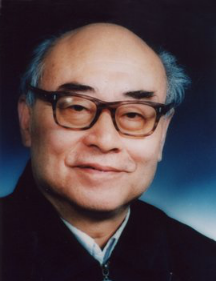
Yu Min, a nuclear physicist, was born on August 16, 1926 in Ninghe, Hebei (now Tianjin).
In 1944, Yu Min was admitted to the School of Engineering of Peking University. In 1946, he transferred to the School of Science to study physics and set his major as theoretical physics. Yu Min graduated from college in 1949, passed the postgraduate examination, and served as a teaching assistant at Peking University. Under the guidance of Professor Zhang Zongsui and Professor Hu Ning, Yu Min graduated with honors in 1951. After graduation, he was transferred by Qian Sanqiang and Peng Huanwu to the Institute of Modern Physics of the Chinese Academy of Sciences as an assistant researcher and associate researcher. The institute was only established in 1950, with Qian Sanqiang as its director and Wang Ganchang and Peng Huanwu as its deputy directors.
At the end of 1960, under the organization of Qian Sanqiang, a group of young scientific workers, mainly Yu Min, quietly began the theoretical exploration of hydrogen bomb technology. This shift from basic research to hydrogen bomb research is a great loss to Min personally. Yu Minsheng liked to do basic research, and he had already made great achievements at that time. Nuclear weapons research not only had heavy tasks and strong collectivity, but also meant that he had to give up his bright academic future, hide his name and travel for many years. From then on, until 1988, Yu Min's name and identity were strictly confidential.
Yu Min has never been abroad. Among the authoritative physicists who developed nuclear weapons, he is almost the only one who has never studied. Yu Min almost started from a blank sheet of paper, relying on his own diligence, drawing inferences from one another to carry out theoretical exploration. From the atomic bomb to the hydrogen bomb, according to the time comparison of the breakthrough principle test, it took seven years and three months for the Americans, four years and three months for the United Kingdom, eight years and six months for France, and four years and three months for the former Soviet Union. One of the main reasons is the complexity of the calculations. At that time, China's equipment was even more incomparable. At that time, there was only one tube computer with 10,000 times per second, and 95% of the time was allocated to the calculation of the atomic bomb, leaving only 5% of the time for Yu Min's hydrogen bomb design. Yu Min's memory is amazing. The working group under his leadership has a slide rule in hand and calculates without sleep or food. In the past four years, Yu Min, Huang Zuqia and other scientific and technological personnel have put forward 69 research results reports, and have a deep understanding of many basic phenomena and laws of hydrogen bombs.
In 1965, Yu Min was transferred to the Ninth Research Institute of the Second Machinery Department (the predecessor of the China Academy of Engineering Physics). In September, Yu Min led a small team to the East China Computer Research Institute in Shanghai to calculate a number of models. However, this model has large weight, low power ratio and low fusion ratio, which does not meet the requirements. Yu Min summed up the experience, led the scientific and technological personnel to calculate a number of models, found the key to the self-sustained combustion of hot nuclear materials, and solved the important problem of the hydrogen bomb principle scheme. In late October, Yu Min began to engage in theoretical research on nuclear weapons. In the study of the principle of hydrogen bombs, he put forward a basically complete idea from principle to configuration, and solved a large number of key theoretical problems of thermonuclear weapons. Yu Min gave a series of academic reports on the "Hydrogen Bomb Principle Assumption" to all comrades on business trips in Shanghai, which aroused great interest. It is generally believed that through this stage of work, the researchers took the time to try out two models. Get very good results.
After that, Yu Min served as deputy director of the Theory Department, deputy director and director of the Theory Research Institute, deputy dean of the Research Institute, deputy director of the Science and Technology Committee of the Academy, and senior scientific consultant of the Academy in the Ninth Research Institute of the Second Ministry of Machinery.
Yu Min is aware of the importance of inertial confinement fusion in national defense and energy. In order to attract everyone's attention, he made a report on the current situation of laser fusion thermophysics research within a certain range, and immediately organized and guided the development of nuclear theory research in China. At the beginning of 1986, Deng Jiaxian and Yu Min made a profound analysis of the development trend of world nuclear weapons science and technology, and put forward suggestions to the central government to accelerate nuclear testing. Facts have proved that this proposal has played an important role in China's nuclear weapons development. In 1988, Yu Min, together with Academicians Wang Ganchang and Wang Daheng, wrote to Deng Xiaoping and other central leaders, proposing to accelerate the development of inertial confinement fusion research and include it in China's high-tech development plan, bringing China's inertial fusion research into a new stage.
After that, Yu Min gradually withdrew from the research field due to physical reasons, stepped down as the vice president of the China Academy of Engineering Physics, and continued to provide valuable advice and suggestions for China's nuclear physics as a "consultant.
Since the 1970 s, Yu Min has played an important role in advocating and promoting the research of several high-tech projects. In 1982, he won the first prize of the National Natural Science Award. In 1985, 1987 and 1989, he won the special prize of the National Science and Technology Progress Award three times. He was awarded the Outstanding Scientist Award by the Foundation in 1994. In 1999, he was awarded the "Two Bombs and One Star" Meritorious Medal by the State. In 1985, he was awarded the "May 1 Labor Medal". In 1987, he was awarded the title of "National Model Worker. On December 18, 2018, the Party Central Committee and the State Council awarded Comrade Yu Min the title of Reform Pioneer, awarded the Reform Pioneer Medal, and was awarded an important promoter of the reform and development of national defense science and technology.
Source: People's Daily Online
Previous Page
Previous Page

Address: Buildings 4 and 5, Kechuang Huigu Park, Hongshun Road, Huaming High-tech Zone, Dongli District, Tianjin
Tianjin High-end Equipment Research Institute, Tsinghua University, Copyright
Website Construction: China Enterprise Power Tianjin
sweep
Pay attention to the official WeChat public number