




PARTY BUILDING
party building work
Anti-Union Hero Eight Dresses-Leng Yun and Her Sisters
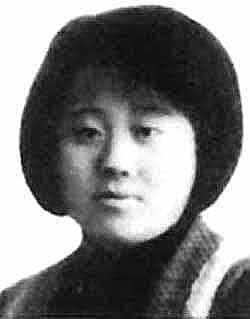
This choppy river is the Wushun River that crosses the Mudanjiang area of Heilongjiang Province. In the autumn of 1938, there was a heroic and tragic battle on this big river: eight female officers and soldiers of the Northeast Anti-Japanese Allied Forces headed by Leng Yun fought a battle on the riverside, fought a bloody battle with the Japanese invading army to the end of their ammunition, and finally collectively threw themselves into the river to die for the country.
Leng Yun, formerly known as Zheng Zhimin, was born in Huachuan County, Heilongjiang Province in 1915. He was admitted to Huachuan County Women's Normal University in 1931. He joined the Communist Party of China in 1934 and engaged in secret anti-Japanese activities in Jiamusi. In 1936, Leng Yun and like-minded patriotic youth Ji Naichen joined the Northeast Anti-Japanese Allied Forces, and they became revolutionary partners in the war of resistance against Japan.
In the summer of 1938, the Japanese Kwantung Army launched the "Sanjiang Crusade" in the lower reaches of the Songhua River. In order to get rid of the Japanese siege, the 4th and 5th armies of the Northeast Anti-Japanese Army decided to move westward. On the way, they fought with the Japanese many times and sacrificed many Anti-Union soldiers. Among them, most of the soldiers of the women's regiment of the 5th army died in the fierce battle, leaving only the instructor Leng Yun, the squad leaders Hu Xiuzhi and Yang Guizhen, the soldiers Guo Guiqin, Huang Guiqing, Wang Huimin, Li Fengshan and the clothing factory Chang 'an Shunfu.
In October of this year, Leng Yun endured the great grief of her husband's sacrifice in the battle, bid farewell to the child who was just a few months old, and led 7 female soldiers to follow a team of the 1st Division of the 5th Army of the Northeast Anti-Japanese Allied Forces to fight. By the Hun River. In the face of the surging Usihun River, the Anti-Union soldiers were hungry and tired after hundreds of miles of raids. The division chief decided to rest on the bank for a night and cross the river after dawn.
At dawn, the division chief, considering that the female soldiers were weak and unskilled, sent someone to escort eight female soldiers across the river. Unfortunately, their actions have been discovered by the Japanese and puppet troops. More than 1,000 Japanese and puppet troops surrounded the Anti-Union fighters in the night, and gunfire suddenly broke out. At first, the enemy did not find the female soldiers hidden in the bushes, but approached the large army, and the situation was very critical. If the female soldiers had been hiding in the willow bushes, they might have escaped safely. However, young Communist Party member Leng Yun made a decision at the moment of life and death: to lead the enemy to himself and cover the division commander and male comrades to break through. She decisively ordered the female soldiers to attack the enemy from behind. The Japanese and puppet troops suddenly panicked, and the large army took the opportunity to highlight the siege.
When the large army found that the eight female soldiers did not rush out of the Japanese siege, it organized officers and soldiers to come back for rescue many times, but failed because of the strong firepower of the Japanese army.
Soon, when the Japanese discovered that their opponent was only a few female anti-union soldiers, they frantically fought and shouted, "Surrender! The imperial army will not mistreat your women. Surrender quickly! "The enemy narrowed the encirclement step by step, and gradually, except for the river behind it, the enemy's figure was on three sides. Leng Yun and his sisters, with the strong determination that they must not be prisoners or insulted by the enemy, pulled the last grenade and threw it at the enemy. While the enemy was lying down, these young women soldiers destroyed their guns, lifted their injured comrades on their backs, and waded arm in arm into the cold Usihun River......
Among the eight female soldiers, Leng Yun is the oldest, only 23 years old, while the youngest, Wang Huimin, is only 13 years old. With the heroic spirit of the Chinese nation, they fought the Japanese army to the end and gave their young lives for the cause of national liberation. Time flies, more than 60 years have passed, the heroic story of the eight women throwing into the river is still circulating on the land of China, and the noble integrity of the female heroes has entered eternal life with the river water!
Source: CCTV Network
Previous Page
Previous Page

Address: Buildings 4 and 5, Kechuang Huigu Park, Hongshun Road, Huaming High-tech Zone, Dongli District, Tianjin
Tianjin High-end Equipment Research Institute, Tsinghua University, Copyright
Website Construction: China Enterprise Power Tianjin
sweep
Pay attention to the official WeChat public number