




PARTY BUILDING
party building work
Red Underground Radio Network
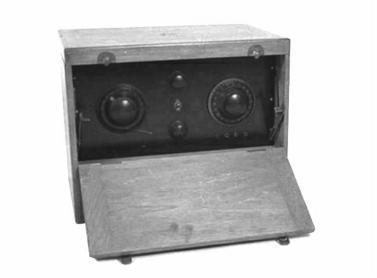
The Red Army's first radio
In September 1938, Wuhan was in an emergency. According to the changes and needs of the situation, the Central Committee of the Communist Party of China held the Sixth Plenary Session of the Sixth Central Committee and decided to abolish the Yangtze River Bureau and establish the Southern Bureau. After the fall of Wuhan, members of the Communist Party of China came to Chongqing via Yichang, Changsha, Guilin and other places.
In January 1939, the Southern Bureau was formally established in Chongqing, which was called the office of the 18th group army in Chongqing. It was in charge of the CPC organizations in Sichuan, Yunnan, Guizhou, Hubei, Hunan, Guangdong, Guangxi, Jiangsu, Jiangxi, Fujian and Hong Kong and Macao. The instructions of Yan'an were transmitted here through radio waves and implemented in the vast Kuomintang controlled areas.
In view of the aggravation of confidential tasks, Zhou Enlai and Li Kinong sent people to Hong Kong twice to buy back a large number of equipment and assembled dozens of radio stations. Apart from keeping 8 in Chongqing, the rest were sent to Yan'an and other places, setting up an invisible network of bridges in the sky.
Many exciting stories happen in these days.
Zhou Enlai is not surprised
The secret radio network of the Southern Bureau of the CPC Central Committee was gradually established and developed from scratch, from less to more, under the direct leadership and care of Zhou Enlai.
The predecessor of the Southern Bureau was called the Yangtze River Bureau of the Communist Party of China. When it was established in Hankou in September 1937, there was only one transmitter brought from Yan'an. It was always worried about failure and the contact work was fragile. Zhou Enlai was determined to solve this problem. Although funding was very difficult at that time, as long as he applied for the purchase of communication equipment, he immediately approved it. In this way, Shen Guang, a cadre familiar with the business, bought a batch of communication equipment in Hankou through acquaintances and assembled two more to maintain normal communication. But in the long run, there are still too few radio stations.
With the progress of the war, it has become more and more difficult for local party organizations and guerrillas to transmit information, and they have asked for radio stations, which cannot be met by buying spare parts and assembling in Hankou. So Zhou Enlai and Li Kenong sent Shen Guang to Hong Kong with tens of thousands of Hong Kong dollars to buy radio equipment with cameras.
Hong Kong is a free trade zone. You can buy everything, but it is not easy to pass customs inspection. Although Shen Guang bought a batch of equipment, he was unable to ship it back to the mainland. Fortunately, the highly respected Soong Ching Ling was in Hong Kong. Liao Chengzhi, the head of the underground party of the Communist Party of China, came to ask for help. She resolutely promised to regard it as her own duty and called her brother Song Ziliang to the Kowloon Customs to take care of it. She was given the special care of "tax exemption and immediate release" and set off smoothly.
On the evening of January 11, 1941, the mountain city of Chongqing was full of lights. Zhou Enlai was participating in the third anniversary of the founding of Xinhua Daily. The Confident Section of the Southern Bureau suddenly received an urgent telegram marked "AAA". The sender was The Military Department of the New Fourth Army. The translation was immediately sent to Zhou Enlai. It turned out that this was a farewell message from the New Fourth Army, which was besieged by the Kuomintang diehards, when they ran out of ammunition and food, indicating that they had suffered an accident.
Zhou Enlai read the telegram full of grief and indignation, immediately announced the matter at the conference. He was talking, someone was making trouble nearby, and the lights suddenly went out. Instead of interrupting his speech, he said in a louder voice: "Darkness is temporary, and light will definitely come!" His remarks greatly encouraged the comrades present at the meeting.
On that night, the leaders of the Southern Bureau held an emergency meeting and arranged various emergency measures, the most important of which was to deploy 2. third-line radio stations. In case the Kuomintang authorities seized the public radio stations, the reserve could take over. After that, he contacted the secret radio station of Hong Kong and instructed Liao Chengzhi to announce the truth of the "Southern Anhui Incident" in Hong Kong, showing to the international community that the CCP's adherence to the principle of unity and resistance will never change, but it must be wary of anti-communist military attacks. The Chinese Communist Party does not want a large-scale civil war to take place as a result, and if the provocateurs of the civil war are brewing a bigger conspiracy to make Japan sit back and reap the benefits, the future of China's war of resistance is in jeopardy, and we hope that the international community will help the crisis.
On the night of January 17, Zhou Enlai convened a meeting of all the staff of the Southern Bureau and the Eighth Route Army Office in Chongqing. He said solemnly: "We do not want the cooperation between the Kuomintang and the Communist Party to break down completely, but we must prepare for the worst. If the die-hards make a surprise attack, we resist, destroy the codes and documents, and prepare to go to jail. If you want to go to jail, we will sit together. They will ask if you are Communists. Gay comrades can admit it, because we are an open organ of the Communist Party. Lesbians are only recognized as dependents. If you want to ask about the organization of the party, you can say that our central government is in Yan'an, the chairman is Mao Zedong, there is a branch here, and the secretary is Zhou Enlai. If you ask who else is in charge, you will say that there are Dong Biwu and Deng Yingchao. If you don't know anything else, let them ask Zhou Enlai, the branch secretary. If this happens, I will come forward to negotiate. I was invited by the Kuomintang and Chiang Kai-shek. We must strive for the whole division to return, but we must also prepare for the worst, be prepared to sacrifice, and sacrifice us together."
After the "Southern Anhui Incident", the situation was tense. The Central Committee of the Communist Party of China called and pointed out: "Enlai, Jianying, Biwu, Yingchao and important cadres of the office and newspaper will leave Chongqing in the shortest time." and require the destruction of documents, passwords, electronic drafts, etc. In order to prevent the Kuomintang authorities from attacking, the Southern Bureau ordered the Confidential Section to inform Yan 'an of the list of all employees of the office and Xinhua Daily so that when someone is arrested, the Chinese Communist Party can negotiate accordingly.
Zhou Enlai also put forward the strategy of "covert and capable", sending a group of progressive people in the cultural circles of the capital to Hong Kong or other places. At the same time, he also evacuated a group of party cadres and educated the staff who stayed in Chongqing.
The Southern Bureau has eight radio stations in Chongqing, three of which are public and have been registered with the Kuomintang authorities. Another five are secret, two of which are located on the third floor of Hongyan Village Office, and the contact objects are Yan 'an and Ya 'an. One is located on the upper floor of Hongyan Village Club and will be available after trial with Yan 'an. The remaining two are mobile in nature, and have been located in the suburbs of Huangshaxi, the city of China Industrial and Mining Bank office building, contact object for Yan'an. When the situation was the most severe, there were still four telegraphers who insisted on sending and receiving newspapers in Hongyan Village and kept informing the Party Central Committee of the situation in Chongqing.
In May 1943, the Communist Party of the Soviet Union announced the dissolution of the Communist International. The Kuomintang diehards took the opportunity to propose "abolishing the Shaanxi-Gansu-Ningxia Border Region" and "dissolving the Communist Party", and ordered Hu Zongnan to prepare to attack Yan'an. In September of the same year, the Kuomintang military and police forcibly closed the public radio station in Hongyan Village, saying that in the future, they could only send and receive newspapers through the military and political radio stations, in order to cut off the red radio waves.
The Communist Party has the way of the Communist Party. From then on, the Secret Section of the Southern Bureau often sent people to send news and editorials from Kuomintang newspapers to Yan'an in general codes, or wrote hundreds of words of fake telegrams at will every day, stamped with the leader's private seal, and sealed it and sent it to the Kuomintang military and political department and the post office radio station to Yan'an. Yan'an received such telegrams and threw them aside. Only the Kuomintang's "experts in translating telegrams" were still thinking hard and trying to make something out of it. The really important documents and messages were shot and sent by the small 5-watt radio station set up on the third floor of Hongyan Village, with careful coding. Although the Kuomintang Military Bureau monitored them all the year round, they could not be deciphered once.
Feng Naichao Qiaozang Radio Station
After the great victory of Taierzhuang in 1938, the third hall of the political Department led by Guo Moruo took this opportunity to set off a vigorous publicity week in Wuhan and launched a gold donation campaign. People from all walks of life enthusiastically donated and raised a large number of jewelry and cash. Guo Moruo entrusted Yang Hansheng, Cheng Bugao and others to use the funds to go to Hong Kong to purchase more than 10 trucks, medical equipment and medicines to be transported back to the mainland, and then distributed to various war zones.
Due to the specific environment at that time, Guo Moruo played an "ambush"-in fact, there were two trucks of materials, which had been directly driven to the Eighth Route Army headquarters and the New Fourth Army headquarters, which lacked medical equipment and medicines, and each of the trucks was accompanied by a radio transceiver.
It turned out that the Eighth Route Army and the New Fourth Army needed communications equipment most. Therefore, after Yang Hansheng and others went to Hong Kong, they also tried every possible means to buy three radio stations. In addition to sending one to the Eighth Route Army and one to the New Fourth Army, the other was handed over to Feng Naichao for safekeeping in case of emergency.
Feng Naichao's public identity was the chief of the enemy propaganda section of the third Hall of the political Department of the Kuomintang military Commission. In fact, he was the secretary of the special committee sent by the Communist Party of China to that hall. After moving to Chongqing, he served as a member of the Cultural Committee of the Southern Bureau. He hid the transmitter, even Guo Moruo did not know.
At that time, it was the second cooperation between the Kuomintang and the Communist Party. In order to strive for legal status, the public radio stations of the Southern Bureau in Chongqing all reported and prepared cases to the Kuomintang authorities. Public and religious personnel will take great risks in hiding radio stations. Once exposed or searched, they will be sentenced to heavy punishment for "traitors.
Feng Naichao was bold and careful. He first hid the radio station at home and kept his mouth shut to his family, so he never had an accident. But it was not a long-term solution, and he racked his brains for it, but he couldn't find a safe way.
In December 1940, the third hall of the Political Department was "reorganized" by the Kuomintang into a cultural work committee. Due to the increasing air strikes by Japanese aircraft, Guo Moruo often worked in Lai Jiaqiao, Ba County, a suburb. The relevant instructions and work opinions of the Cultural Affairs Committee of the Southern Bureau were all taken by Feng Naichao to Lai Jiaqiao. Over time, he found that there were few remote people there, and he had a plan.
One day, Feng Naichao hired several farmers, claiming that their relatives had died of illness and asked them to help dig a pit for burial. After nightfall, he dived to the mass grave alone, carefully wrapped the transmitter in a tarp and buried it in the pit, which was covered up as a grave. As soon as the spring rain came, the grave was full of luxuriant grass, not to mention secret agents, even the colleagues of the Cultural Work Committee had never expected that there was a 7.5-watt Wahatley radio station hidden in the grave.
In March 1945, the Kuomintang ordered the dissolution of the Cultural Work Committee. Guo Moruo moved and Feng Naichao transferred the radio station.
Liu Clarified to Build Taiwan Alone
In the spring of 1941, Hong Kong Underground Party Power Generation reported to Chongqing and requested to send someone to replace Lin Qing, a former radio operator. The Southern Bureau decided to send Liu Qingqing, a senior radio operator. Because Liu clarified that he could not speak Cantonese, and specially sent Guangdong female comrade Kang Ying to cooperate with the work, the two went on the road together.
In order to guard against spy tracking, they cannot start directly from Hongyan Village and hide for a period of time. They moved out by night. Liu clarified that he pretended to be a patient and was admitted to a French hospital. He took injections and medicines all day long. Kang Ying pretended to be his cousin and often took care of him. Later, they moved to the small farmhouse in Geleshan in the western suburbs and stayed idle for two or three months.
When the wind was loose outside and no suspicious persons were found nearby, they followed an underground traffic officer to leave Chongqing. Liu clarified pretending to be a student of Southwest Associated University and claimed to go to Hong Kong to find relatives. Kang Ying still pretended to be his cousin. They went to Guilin via Guiyang and bought two air tickets to Hong Kong. Liu clarified that Kang Ying and the traffic officer were allowed to go first. He disguised himself as an overseas Chinese and arrived in Hong Kong via Zhanjiang and soon got on with several businessmen.
At that time, there were many commercial radio stations in Hong Kong, and the Kuomintang military system, Zhongtong and other systems also had radio stations here. The situation was complicated. KMT radio personnel like to brag and chat on social occasions, revealing their flaws and being seized by the British Hong Kong authorities. Liu clarified that he was very cautious in this respect and had never had any problems. He also made full ideological preparations. Even if the radio station was seized, he would insist that it was a commercial radio station engaged in commodity market.
Having a foothold in Hong Kong with social and professional cover, Liu Clarification went to night school to study English and later worked as a clerk in an office building. No one would have guessed that this diligent young man turned out to be the clairvoyant ear of the Communist Party. His ambition was not to upgrade and promote, but to send telegrams to Yan'an and Chongqing.
After the fall of Hong Kong, the underground radio station was suspended. Liu Clarification was ordered to go to the Dongjiang Guerrilla Column, where a 15-watt radio station was installed to contact Yan'an. He used the call sign, frequency and time of the former Hong Kong secret station to finally connect with each other. In addition to sending and receiving newspapers, he also received news articles from Xinhua News Agency and important editorials and articles from Jiefang Daily and Xinhua Daily for the guerrillas to learn and compile mimeographed tabloids. After a period of time, Lin Qing restored the original underground radio station in Hong Kong.
In the summer of 1943, the Southern Bureau summoned Liu Clarification to return to Chongqing to work in Hongyan Village first and then sent him to the downtown area to set up a backup radio station.
China Industrial and Mining Bank is located in Xiaoshizi Street in Chongqing City. In addition to the financial industry, it also runs an electrical materials bank, which is run by Pan Keqin, the son of the bank's lawyer Pan Zhenye. This person is progressive in thinking and is also a radio enthusiast. The underground party asked Pan Keqin for help. He readily agreed and asked Liu to clarify that the radio station was located in the electrical warehouse on the roof of the bank, where only occasional people went to dry clothes and was very quiet.
Pan Keqin was in charge of the warehouse key. He once forgot to open the door. As a result, Liu clarified that he was hungry and thirsty and spent a whole day in the warehouse.
The secret station in the city is on standby, so there is no message to be sent or copied from here, but the two sides greet each call with a simple code, or stop the machine with just a "OK" sound. This will prevent military radio from listening and ensure that it is readily available when the situation deteriorates.
Minsheng Shipping Company openly recruited telegraphers, and the party organization decided to let Liu Clarify apply for the examination and add another spare station. He impersonated a signal soldier from a unit of the Sichuan Army, Pan Wenhua, to take the exam and was hired with the first place in the total score. In the examination room, he suddenly met Deng Guojun, the former radio operator of the Red Fourth Front Army. He knew each other tacitly and knew that the superior's intention was to let them enter Minsheng Company at the same time. Later, as expected, they were in the same boat and mastered a large radio station with more than 50 watts.
After the victory of the Anti-Japanese War, Liu Qingqing was transferred to the Nanjing branch of Minsheng Company. He happened to serve the CCP delegation that moved to Nanjing.
Marshall home delivery
In August 1945, Mao Zedong went to Chongqing to participate in the peace talks between the Kuomintang and the Communist Party. The Communist Party of China requested the restoration of the Hongyan Village Radio Station, which was sealed up in 1943. However, it was rejected by the Kuomintang authorities on the grounds that "party organizations are not allowed to set up private radio stations" and still stressed that the telegrams could be handed over to the military and political departments for filming. Therefore, during the Chongqing negotiations, telegrams from all over the country relied only on a small secret station with an output power of 5 watts. When the Shangdang Campaign was going on, Mao Zedong sent the famous message to Liu Bocheng and Deng Xiaoping through this small radio station: "If there is an offender, there is only a good fight. The better you fight and the more enemies you destroy, the safer we will be and the faster we will come back."
During the Chongqing negotiations, the Kuomintang authorities reissued the "Handbook of Suppression of Bandits". As soon as the "Double Ten Agreement" between the Kuomintang and the Communist Party was signed, Chiang Kai-shek issued a secret order to "receive" the liberated areas, intending to enjoy the fruits of the victory of the Anti-Japanese War. The civil war was overcast.
At this time, the U.S. government transferred the ambassador to China, Hurley, who publicly stated that he only cooperated with the Kuomintang, to five-star general Marshall as the president's special envoy to China to "mediate" the Chinese civil war. On December 15, US President Truman issued a statement on China policy, expressing his support for China to "convene a national conference of representatives of major political parties to promote the reunification of China," but also suggested that the Chinese Communist army and the Kuomintang army merge to form a coalition government. Marshall left for China on the same day.
The Southern Bureau heard the news and made preparations accordingly.
On December 21, 1945, U.S. Embassy personnel, representatives of the Kuomintang and the Communist Party all went to Chongqing Baishiyi Airport to welcome Marshall. Unexpectedly, just as the special plane was about to land, the Kuomintang military and police actually wanted to drive the CCP personnel out of the airport. It was only because of the Americans. Interference was able to stop it.
Chiang Kai-shek arranged for Marshall to live in the Huangshan residence on the south bank of the Yangtze River. It was very inconvenient to get in and out there, but people from the Communist Party of China and the Democratic Party went up the mountain to meet Marshall. When Zhou Enlai mentioned the unpleasant incident at the airport, Marshall was nervous because he hoped to complete his mission and establish a coalition government in China as soon as possible.
Such talks have been held many times. Zhou Enlai said that as long as the coalition government makes arrangements to retain the liberated areas, the CCP is willing to implement political reconciliation. However, what Yan'an must not accept is to give up its own armed forces, which will certainly lead to the "Qing Party" massacre carried out by the Kuomintang in 1927. Marshall tried to get around this problem and repeatedly suggested that the Communists should serve in the national government so that all-out civil war could be avoided.
When the "mediation" lasted until February 1946, the Chinese Communist Party, which sincerely hoped for peace, planned to sign the contract. Zhou Enlai also initialed the proposal drawn up by the United States, which made Marshall overjoyed. At this time, Zhou Enlai proposed that the Communist Party of China should set up a public radio station to report the progress of the peace talks to Yan 'an at any time. Marshall agreed. The U.S. military headquarters in China immediately sent special personnel to set up a large military radio station at the headquarters of the Chinese Communist Party delegation on Zhongshan No. 3 Road in Chongqing. The transmitter is of the BC-610 type with a power of 450 watts. The receiver is of the SX-28 and BC-312 type. This is the victory of the Chinese Communist Party's struggle against the Kuomintang's closed radio station. Zhou Enlai also personally invited the American personnel who set up the radio station to have dinner and took photos with them.
Marshall's "mediation" has not been successful due to the Kuomintang's lack of sincerity in peace talks and constant friction. In May 1946, the Chinese Communist Party delegation took this large radio station to Nanjing for further use. When the Chinese Communist delegation withdrew to Yan'an in March 1947, it returned the radio station to the United States.
From 1937 to 1947, the Southern Bureau successively established 60 radio stations in 15 regions including Wuhan, Hunan, Guilin, Chongqing, Jiangxi, Guangdong, Fujian, Yunnan, Nanjing, Shanghai, Hong Kong, Hainan Island, and Xinjiang. Among them, there are 22 public radio stations and 38 secret radio stations, basically forming the radio communication network of the Communist Party of China in the Kuomintang-controlled areas and Hong Kong. These radio stations played an important role in ensuring the liaison between the Southern Bureau and the Party Central Committee during the War of Resistance Against Japan and the War of Liberation, as well as the liaison between the Southern Bureau and local party organizations. Therefore, as early as 1941, the Secretariat of the Central Committee of the Communist Party of China and the Central Military Commission pointed out in a letter to the confidential interpreter of the Southern Bureau: "Confidential work is the lifeblood of the party." Mao Zedong also vividly likened the work of confidential communications to "the blood vessels on the party's body" many times ".
The radio communication network established by the Southern Bureau has made outstanding contributions to the liberation of the Chinese nation and the victory of the new democratic revolution, and has left an extremely glorious page in the history of our party.
Source: People's Daily Online
Previous Page
Previous Page

Address: Buildings 4 and 5, Kechuang Huigu Park, Hongshun Road, Huaming High-tech Zone, Dongli District, Tianjin
Tianjin High-end Equipment Research Institute, Tsinghua University, Copyright
Website Construction: China Enterprise Power Tianjin
sweep
Pay attention to the official WeChat public number