




PARTY BUILDING
party building work
Liu Qianchu: A Red Heart Loyal to the Party
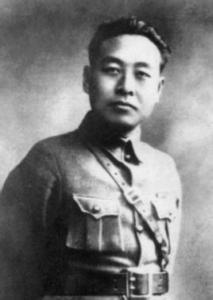
In the early morning of April 5, 1931, the execution ground of the Hou family courtyard on the eighth road of Jinan. A burst of intensive gunfire, 22 members of the Communist Party of China fell in a pool of blood. Among them is only 34-year-old Liu Qianchu.
Liu Qianchu, formerly known as Liu Deyuan, was born in 1897 in a peasant family in Pingdu, Shandong Province. His father gave him a small name, called "light", hoping that he would have some achievements when he grew up. At the age of 8, Liu Qianchu began to study in private schools and higher primary schools. In the spring of 1913, 16-year-old Liu Qian was admitted to Pingdu Zhiwu Middle School. At this time, China is still searching hard on the road of national self-improvement.
After Yuan Shikai restored the monarchy, Liu Qianchu joined 13 classmates and joined the artillery regiment of the third detachment of the Northeast Army of the Chinese Revolutionary Army. Later, for his bravery in battle, he was awarded the "Medal of Courage of the Third Shandong Detachment". In 1918, Liu Qianchu was admitted to Qilu University Preparatory with excellent results. In the university, Liu Qianchu continued to maintain a high enthusiasm for learning and studied all the lessons carefully. His compositions were often read in public as model essays. After the outbreak of the May Fourth Movement, students from many schools in Jinan jointly organized demonstrations. Liu Qianchu actively participated in street speeches and distributed leaflets.
In 1922, Liu Qian was admitted to Beijing Yenching University. In this highland of new culture and new ideas, Liu Qianchu gained new friends and new knowledge. He initiated the establishment of "Yanda Weekly" and organized the writing of a number of well-known articles such as "Observation of Chinese National Character" and "Force Cannot Unify Today's China. The talented Liu Qianchu has a strong appeal among his classmates.
While studying in Beijing, Liu Qianchu established secret contacts with the student organization led by Li Dazhao and accepted the leadership of the underground party organization of the Communist Party of China. After the May 30th tragedy in 1925, he initiated the establishment of the "Yan Dahu Case Support Association" and was selected as one of the leaders of the Yan University student movement. In 1926, Liu Qianchu once again joined the army and came to Wuhan to join the Northern Expedition Army. He served as the head of the Social Unit of the Propaganda Department of the Political Department of the 11th Army, and concurrently served as the deputy editor-in-chief of the theoretical publication "Blood Road" of the Political Department.
In January 1927, 30-year-old Liu Qianchu formally joined the Communist Party of China. It was also in this year that Liu Qian first met his revolutionary partner, 24-year-old Zhang Wenqiu, then deputy secretary of the Jingshan County CPC Committee. Two people with a common revolutionary ideal, but also attracted by each other's personality charm. At the home of relatives and friends in Wuhan, the two held a simple wedding.
After the failure of the Great Revolution, white terror enveloped the whole country. According to the party's instructions, Liu Qianchu first went to work in Jiangsu provincial party committee and then went to Fujian via Shanghai. In September 1928, at the first party congress of Fujian Province, he was elected secretary of the Fujian Provincial Committee of the Communist Party of China. At the beginning of 1929, the Party Central Committee transferred him to work in Shandong, as a cover for the teaching assistant of Qilu University.
In the face of a dangerous environment, he put his personal life and death aside, often risking danger, traveling to and from Jinan, Qingdao and other places, working day and night, conveying the instructions of the Party Central Committee, propagating and inspiring the masses, exposing the enemy's crimes, and organizing the struggle against the enemy. The destroyed party organization was quickly restored, rebuilt and developed, and the Shandong Provincial Party Committee of the Communist Party of China was reconstituted, and served as the Secretary of the Secretary of the Propaganda Minister. In July 1929, in accordance with the instructions of the Party Central Committee, together with the comrades of the Qingdao Municipal Party Committee, he led and launched a general strike of the seven major yarn mills of Qingdao Dakang, Longxing and Fuji, which lasted for more than 40 days. Imperialism dealt a heavy blow.
On August 6, 1929, when Liu Qianchu went to Shanghai via Qingdao to report to the Party Central Committee, he was unfortunately arrested and imprisoned. In the prison of the Kuomintang Jinan Guard Command, he was unmoved and never yielded in the face of the enemy's coercion, inducement and torture. In a suicide note to his wife Zhang Wenqiu, he said: "I hope you don't grieve for me, I hope you remember my words, no matter under any conditions, you must take good care of your mother! Honor your mother! Listen to your mother!"
On April 5, 1931, on the execution ground, Liu Qianchu, wearing heavy shackles, sang the "Internationale" and chanted slogans such as "long live the Communist Party of China.
The former residence of Liu Qianchu, located in Tianzhuang Town, Pingdu, has been repaired many times according to its original appearance. It is now a patriotic education base in Qingdao and a key cultural relic protection unit in Shandong Province. Every year during the Qingming Festival, local primary and secondary school teachers and students will come here to remember the heroes. On January 12 this year, the former residence was also identified as the third batch of party history education bases in Shandong Province.
Source: People's Daily Online
Previous Page
Previous Page

Address: Buildings 4 and 5, Kechuang Huigu Park, Hongshun Road, Huaming High-tech Zone, Dongli District, Tianjin
Tianjin High-end Equipment Research Institute, Tsinghua University, Copyright
Website Construction: China Enterprise Power Tianjin
sweep
Pay attention to the official WeChat public number