




PARTY BUILDING
party building work
"Serve the people and take up the responsibility"
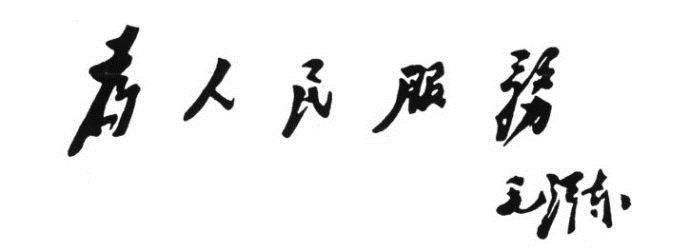
Ninety years ago, the two works "Why China's Red Regime Can Exist" and "The Struggle in Jinggangshan" swept away some pessimism and decadence in the Red Army, and condensed an army and a political party into an invincible force.
Forty years ago, facing a major turning point in history, a voice of "emancipating the mind and seeking truth from facts" broke through the fog and pointed out the direction of reform and development for the Communist Party of China and the Chinese people.
Today, the Chinese Communists in the new era take "realizing the great rejuvenation of the Chinese nation" as their own responsibility, and with the courage to dare to do things and the responsibility of self-innovation, they have achieved a great leap from "catching up with the times" to "leading the times.
In the times of history, the Communist Party of China has grown from a seedling at the beginning of its establishment to a towering tree now, supporting the past, present and future with the same line of responsibility.
The purpose of "rushing for exams" is not to be an official, but to undertake the mission of "governing the country and" smoothing the world."
March 23, 1949, Xibaipo. Mao Zedong said, "Today is the day to enter Beijing, to rush to Beijing. "The proposition of" going to Beijing to take the exam "of the Chinese Communists has triggered generations of people's thinking about responsibility.
Since 1921, for 28 years, the Communist Party of China has taken the realization of national independence and the liberation of the people as its mission, and won the victory of the revolution with the spirit of daring to be the first. But what to do after victory, as Mao Zedong said at the Second Plenary Session of the Seventh Central Committee, the victory of the Chinese revolution "is only the first step in the completion of the Long March". From the revolutionary party to the ruling party, the change of status has given a new meaning to bear.
"entering Beijing" means that the Chinese revolution has won, and the Communist Party of China has since become the ruling party; "taking the examination" means that the Chinese Communists maintain a clear consciousness and contain a strong sense of being in power. For Mao Zedong, the purpose of the Chinese Communists is not to be an official, but to undertake the mission of "governing the country and pacifying the world". It is not only to strengthen the "state power of the people's Republic led by the working class", but also to complete the "economic rejuvenation of China", to "establish an independent and complete industrial system" in China, so that "the Chinese people can not only beg from the imperialists but also survive, but also will live better than the imperialist countries" and a series of arduous tasks.
The lofty responsibility of being in power is reflected in the loyalty and courage of the Communists to stand up without hesitation in the face of the important tasks entrusted by history and the people. In 1976, the "Cultural Revolution" ended. Deng Xiaoping said to his family: "I can still work for 20 years. "In the face of major right and wrong, Deng Xiaoping was not thinking about his own safety, but about the rise and fall of the country. He has led the new generation of communists to shoulder the mission of upholding righteousness and truth-seeking with his fearless theoretical courage and spirit of seeking truth.
"turn the tide against the fall, and help the building against the fall". It is Deng Xiaoping's courage to take responsibility that has led a large number of Communist Party members to take the initiative to ask for their orders and bear heavy burdens, so that reform and opening up are like a breeze blowing all over the country, and it has written a strong and colorful stroke in the history of the development of the Communist Party of China.
A flick of a finger. After nearly 70 years in power, what kind of responsible posture should the Chinese Communist Party continue? "The 'rush examination' facing the Party is far from over, and the severe test of continuing to 'rush examination' is still before us. On November 15, 2012, General Secretary Xi Jinping said when meeting with Chinese and foreign reporters at the Standing Committee of the Political Bureau of the 18th Central Committee: "The people's yearning for a better life is our goal. "The great responsibility on our shoulders is our responsibility to the nation, to the people and to the Party. "From the speech of General Secretary Xi Jinping, people found that" responsibility "is a high-frequency word. "Dare to take responsibility, dare to face contradictions" Power must have responsibility, responsibility to bear "pick the heaviest burden, gnaw the hardest bones" ...... In one sentence, it is a consistent ruling philosophy-"serve the people, take up the responsibility".
Responsibility means not to be negative, not to wait and see, and to take the initiative to take responsibility.
The road to responsibility is not smooth sailing. Whether in the period of revolution or construction, there may be troubles and difficulties at any time, and more likely to face all kinds of unfair treatment. At this time, what kind of attitude and countermeasures are important criteria for judging whether party members are responsible or not.
In 1956, at the preparatory meeting of the Eighth National Congress of the Communist Party of China, Mao Zedong recalled the many setbacks he suffered in his revolutionary career: "How many times have I been punished and attacked during the three 'left' line, including 'expelling the Party, 'expelling alternate members of the Politburo, expelling the Red Army, etc.? Twenty times. "Unfair treatment can not only make people despair and sink, but also sharpen people's will and inspire greater responsibility. Mao Zedong was able to face adversity calmly. He said in 1929: "We will continue to work in Jinggangshan."
In October 1932, the Central Bureau of the Soviet Area of the Communist Party of China held a meeting in Ningdu and mistakenly removed Mao Zedong from the post of General Political Commissar of the Red Army. After that, for two years, Mao Zedong lost his voice in the important decisions of the Central Committee and the Red Army. Li Weihan, who worked with Mao Zedong, summed up Mao's responsibility in the face of injustice: "He insisted on three things: first, that the minority was subordinate to the majority; second, that it was not negative; and third, that he sought to do some work under the conditions permitted by the Party ...... In the face of the blow, he was able to maintain the unity of the Party and adhere to the correct line and ideas."
Not only that, during this period, Mao Zedong also earnestly studied Marxist-Leninist works, conducted systematic and solid investigations and studies on the rural situation, and silently accumulated experience for the Chinese revolution. Mao Zedong is ready to contribute his wisdom and responsibility to the cause of the party. He told Zhou Enlai, "The military in front is in urgent need, and we will call whenever we want."
"There are two attitudes towards those who are wronged and wronged, and towards those who are inappropriate and wrong punishments." Mao Zedong adopted "regard it as a useful education and as an exercise". Not passive, not wait-and-see, this is the profound meaning of the word "responsibility" given by Mao Zedong.
Responsibility is the soul of the party spirit and the soul of ideals. In the revolutionary era, only by daring to take responsibility can we win battles and pacify the world; in the era of peace, only by daring to take responsibility can we solve new problems and open up new situations. In 1961, during the Boyan investigation, Zhou Enlai did not evade the situation that many people complained about the large reduction in grain production caused by the blind command of agricultural production, but took the initiative to take responsibility. He said frankly: "You are right to criticize, I am very sad. The above does not understand the situation, the following disorderly command, make you lose production, life is difficult. "Seeing that everyone did not have enough to eat and did not eat well, Zhou Enlai also took the initiative to make self-criticism:" folks, I did not do my job well, and I, the prime minister, did not do well, making everyone starve. "In fact, as the prime minister, Zhou Enlai did not understand the situation in many places, and he should not be responsible for it alone. However, he dared to take responsibility, accept criticism from the masses, and have the courage to criticize himself, which fully embodies the responsibility of a communist. It is with this responsibility that we have found a clear answer for what and how the party will do in the future rural work.
To do it, we must blaze new trails and be bolder in reform and opening up.
Once the concept of governance is established, it is necessary to implement the responsibilities assumed. How to implement it? The word "dry" takes the lead, and hard work is the best responsibility.
In 1977, the 73-year-old Deng Xiaoping returned to preside over the work again. He said that when you come out to work, you can have two attitudes, one is to be an official and the other is to do some work. "Who told you to be a communist. Now that you become an official, you can't be an official, you can't have selfish thoughts, you can't have other choices, and you should honestly perform the responsibilities of party members."
Not being an official, but "doing some work" reflects Deng Xiaoping's responsibility for "the responsibility of party members", and also embodies our party's fine tradition of opposing empty talk, emphasizing hard work, and focusing on implementation. From the revolutionary period to the founding of New China, Deng Xiaoping has been at the forefront of the battlefield and the front line of production, and he knows the importance of hard work. For this reason, Deng Xiaoping said: "If you don't do it, you won't have any Marxism. "In meetings and speeches, problems must be solved."
Deng Xiaoping's practical work, there is a policy called "no argument". In his view, on the premise that the direction and fundamental principles of reform are not involved, as long as it is in the interests of the masses and the correctness of specific measures can be verified through practice, then "no dispute" will be made ". "Don't argue, is to buy time to do. As soon as the argument becomes complicated, the time is lost and nothing can be done. Don't argue, try boldly, boldly, rural reform is so, urban reform should be so. "In 1978, 18 farmers in Xiaogang Village took the lead in putting forward the idea of" big contract "and" contracted production to each household ". This new thing was questioned from all sides from the very beginning. In this regard, Deng Xiaoping firmly supported the "experiment", and finally implemented the household contract responsibility system throughout the country, breaking a new path for rural reform and development.
Deng Xiaoping's hard work represents the method of responsibility of a large number of Communists with the same spirit of hard work. "To do it, we must blaze new trails, and we must be bolder in reform and opening up." As long as we look for the right direction, even if we "cross the river by feeling the stones", we must work unswervingly. In 1979, he received a report from the Guangdong Provincial Party Committee on the division of Shenzhen, Zhuhai, and Shantou into foreign processing trade zones. Deng Xiaoping encouraged him to practice boldly and named the trade cooperation zone as a special zone.
Today, the first to try the special economic zone has long become the business card of China's economic development. "Dare to break through and do" gave birth to a world miracle of industrialization, urbanization and modernization.
Many years later, Wan Li, who was once chairman of the Standing Committee of the National People's Congress, spoke with deep feeling about the correctness of doing solid work while groping: "What about socialism with Chinese characteristics? Who knows! You have to cross the river by feeling the stones. What is stone? is practice. To find out the pulse of history, the trend of history... to restore it and carry it forward in the rural reform, so that it has been more successful, this is a very important experience, and we must not lose it again."
Only by studying can we always keep up with the trend of the times and take on the important task of leadership.
Article 35 of Chapter 6 of the Party Constitution is about the loyalty and clean responsibility of Party cadres. Responsibility is not a simple slogan, nor is it blindly reckless. It must have multiple abilities and qualities to achieve it.
Where does the ability come from? Learn!
In December 1939, Chen Yun wrote a famous article in Yan'an-"Learning is the Responsibility of Communist Party Members". Chen Yun believes that learning is "the responsibility of party members to the party". He pointed out: "Many of our comrades always think that as long as we work all day long, even if we fulfill our full responsibility to the party, this idea is very incomplete. If you work all day long without reading and linking work with study, the meaning of work will be incomplete and work will not be continuously improved. Because learning is a condition for doing a good job, and it is an essential condition."
Only by choosing to study can we lay a theoretical foundation for responsibility. All generations of Communists have a clear understanding of this. Mao Zedong said: "There is a panic in our ranks, not an economic panic, nor a political panic, but a skill panic. "On the way to the Long March, the Red Army soldiers put their words on their backs and let the people behind them learn. To liberate Shanghai, the commanders and fighters grabbed the pamphlet" Common Sense of the City "first. At the beginning of the reform and opening up, the vice premier led the regiment and went abroad to study with foreign exchange" saved between his teeth. Looking back on the more than five years since the 18th CPC National Congress, the political Bureau of the CPC Central Committee has conducted dozens of collective studies, covering all aspects of governing the party, the country and the army, reform, development and stability, internal affairs, diplomacy, national defense, and so on. In this regard, the report of the 19th National Congress of the Communist Party of China concluded: "our party should not only be politically competent, but also have high skills."
General Secretary Xi Jinping is a model of learning to promote responsibility. He once recalled that when he went to the mountains and the countryside, apart from working, one was to integrate into the masses, and the other was to look for books and read books everywhere. "I have read all the literary classics at that time, and what I can find is what I read at that time. "Reading and learning as" a way of life "has accompanied General Secretary Xi Jinping so far. It is precisely because of his profound accumulation that General Secretary Xi Jinping is so adept when shouldering the important task of leading the Chinese people to pursue their dreams.
General Secretary Xi Jinping said: "Only when leading cadres study conscientiously, keep pace with the times, and persevere in learning, can they always keep up with the trend of the progress of the times and take on the important task of leadership."
"Cadres must be responsible, how much responsibility can they do, and how much responsibility can they achieve. "It is with the responsibility that the Chinese Communists can create one victory after another on the road from revolution to construction, from opening up to pursuing dreams.
With the development of history and the progress of the times, the word "responsibility" of the Chinese Communists has been given more and more meaning. In the face of new challenges and new topics in development, the Chinese Communists are the pioneers of reform and innovation, constantly stimulating their aggressiveness and drive. With the courage of the bearer and the temperament of the explorer, several generations of Communists have explained to the world the true connotation of responsibility and how to be a responsible Communist. "Dare to take responsibility" as one of the "five standards" for qualified cadres is not only a political character that Communists must possess, but also a prominent problem that leading cadres at all levels must solve in performing their duties and improving their ability to govern. That will never change.
Source: Communist Party of China News Network

Address: Buildings 4 and 5, Kechuang Huigu Park, Hongshun Road, Huaming High-tech Zone, Dongli District, Tianjin
Tianjin High-end Equipment Research Institute, Tsinghua University, Copyright
Website Construction: China Enterprise Power Tianjin
sweep
Pay attention to the official WeChat public number