




PARTY BUILDING
party building work
The Seventh Plenary Session of the Sixth Central Committee of the Communist Party of China and the Resolution on Certain Historical Issues
On April 20, 1945, the Seventh Plenary Session of the Sixth Central Committee of the Communist Party of China closed in Yan'an.
The convening of the Seventh Plenary session of the sixth CPC Central Committee and the adoption of the Resolution on certain Historical issues marked the victorious end of the rectification movement, strengthened the unity of the whole party on the basis of Mao Zedong thought, and made full ideological preparations for the convening of the Seventh National Congress of the Party.
The "Resolution on Certain Historical Issues" adopted by the Seventh Plenary Session of the Sixth Central Committee of the Communist Party of China is the first systematic summary of the party's historical experience and an important historical document of the Communist Party of China during the period of the new democratic revolution.
The meeting elected five comrades Mao Zedong, Zhou Enlai, Liu Shaoqi, Zhu De, and Ren Bishi to form the presidium of the conference, and elected Mao Zedong as the chairman of the Central Committee and the chairman of the presidium of the Seventh Plenary Session of the Sixth Central Committee. During the meeting, the presidium will handle the daily work of the Party Central Committee, and the Political Bureau and the Secretariat will temporarily suspend their functions and powers.
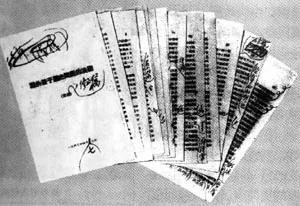
The Seventh Plenary Session of the Sixth Central Committee of the Communist Party of China passed the "Resolution on Certain Historical Issues"
This is the longest Central Plenary Session in the history of the Communist Party of China. During the 11-month session, eight plenary meetings were held. Mao Zedong made a work report on behalf of the Political Bureau, and Zhou Enlai made a report on the Chongqing negotiations.
The plenum discussed and adopted the "instructions of the Central Committee on Urban work" drafted by Mao Zedong, and adopted the list of candidates for the presidium of the Seventh CPC National Congress and the representative qualification examination committee and the agenda of the meeting. as well as the political and military reports to be made to the Seventh CPC National Congress and the draft party constitution to be submitted to the Seventh CPC National Congress for discussion. On April 20, 1945, the plenary session adopted the Party's Resolution on Certain Historical Issues.
The "Resolution on Certain Historical Issues" made detailed conclusions on a number of issues in the history of the Party, especially on the "Left" errors represented by Wang Ming and characterized by dogmatism; affirmed the positive role played by the Third Plenary Session of the Sixth Central Committee of the Party and the subsequent Central Committee in stopping the "Left" adventurist errors that existed in the Party at that time; affirmed Liu Shaoqi's correct line of work in the White Zone; pointed out the mistakes of the Fourth Plenary Session of the Sixth Central Committee of the Party and the Fifth Plenary Session of the Sixth Central Committee; highly appraised Mao Zedong's outstanding contribution to using Marxist-Leninist theories and methods to solve the problems of the Chinese revolution, and pointed out the great significance of establishing Mao Zedong's leadership in the whole party.
With regard to a number of historical issues within the Party after 1937, the plenary session held that "since the anti-Japanese phase has not yet ended, it is appropriate to leave it to the future to make (make) conclusions". The meeting determined that the city working committee consists of 14 people, with Peng Zhen as the director. The meeting not only made full preparations for the Seventh National Congress, but also the "Resolution on Certain Historical Issues" adopted by the meeting became an important document of historical significance.
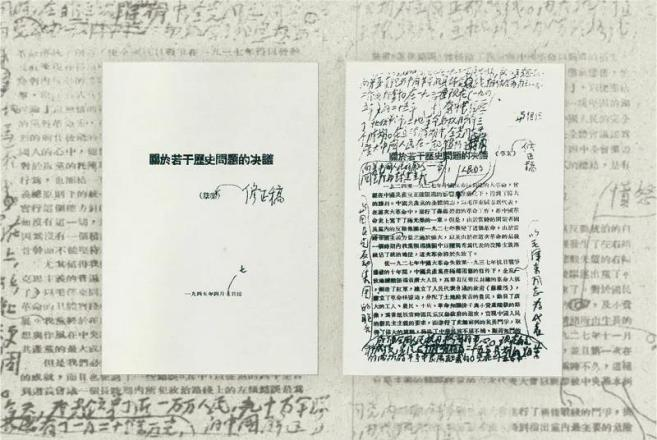
Mao Zedong presided over the drafting of the "Resolution on Certain Issues", which he revised many times. This is one of the drafts.
The convening of the Seventh Plenary session of the sixth CPC Central Committee and the adoption of the Resolution on certain Historical issues marked the victorious end of the rectification movement, strengthened the unity of the whole party on the basis of Mao Zedong thought, and made full ideological preparations for the convening of the Seventh National Congress of the Party.
Source: People's Publishing House
Next Page
Next Page

Address: Buildings 4 and 5, Kechuang Huigu Park, Hongshun Road, Huaming High-tech Zone, Dongli District, Tianjin
Tianjin High-end Equipment Research Institute, Tsinghua University, Copyright
Website Construction: China Enterprise Power Tianjin
sweep
Pay attention to the official WeChat public number