




PARTY BUILDING
party building work
Li Dazhao and the Early Spread of Marxism in China
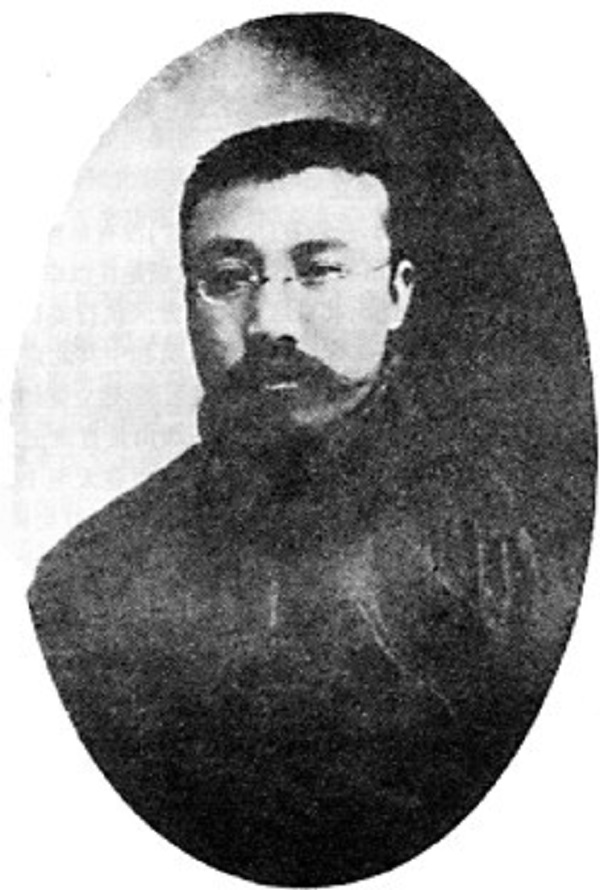
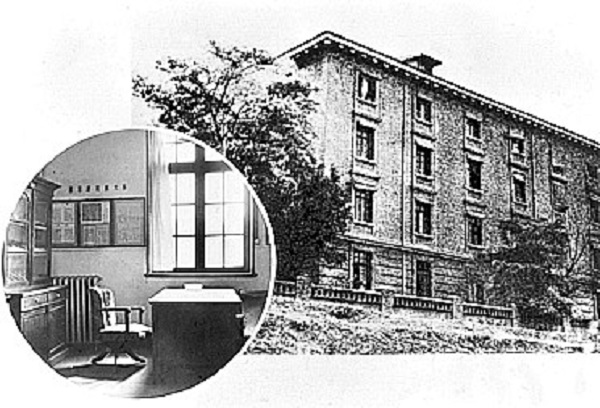
The picture shows the place where Comrade Li Dazhao worked-the Red Mansion of Peking University. The lower left is Comrade Li Dazhao's studio. Information picture
Party history figures]
Li Dazhao is a pioneer of the Chinese communist movement and one of the main founders of the Communist Party of China. On the basis of theoretical research, he recognized the scientific and revolutionary nature of Marxism, established Marxist beliefs, and paid attention to using Marxism to save the country and the people and transform Chinese society from a practical point of view. He is the earliest disseminator of Marxism in China, and his life's struggle is closely connected with the history of the spread of Marxism in China and the history of the founding of the Communist Party of China. Under his influence, a group of advanced Chinese intellectuals actively studied and spread Marxism, promoted the combination of Marxism and the workers' movement, and promoted the development of the Chinese revolutionary cause.
1
Marxism reveals the universal law of the development of nature, human society and human thinking, and is the theoretical guidance for the proletariat to strive for its own liberation and the liberation of mankind as a whole. Its strong vitality comes from the unity of science and revolution based on practice. At the beginning of the twentieth century, Marx and his theory were known to the Chinese people. As early as 1902, Liang Qichao mentioned Marx and some of his theories when he wrote the New People's Daily. Due to the different sources of doctrine, class positions, political demands, and cognitive levels, Marxism in this period was presented as multiple faces that were not unified in our country. Before he went east to study in Japan, Li Dazhao had some understanding of Marxism. He mentioned the early Japanese socialist Xingde Qiushui in his 1912 "Refutation of the Destiny of the Division of China" compiled by his classmates. During his studies at Waseda University in Japan from 1913 to 1916, Li Dazhao was deeply influenced by the famous Japanese socialist activist Yoshio Abe. He was very interested in his economic knowledge and often asked related questions. At that time, Li Dazhao also liked the political economy works of another Japanese Marxist pioneer and economist Kawakami. After returning to China, he continued to read and study his works, and had a deeper understanding and understanding of the Marxist theoretical system. On the basis of careful study of Marxism, he eliminated the false and kept the truth, abandoned non-Marxist and anti-Marxist thoughts and schools, established Marxist beliefs, and became a pioneer of the Chinese communist movement. The practical dimension of proletarian revolution is not only the key to the change of scientific and philosophical views, but also the direction of life practice and life goal of proletarian revolutionaries such as Li Dazhao, Deng Zhongxia, Mao Zedong and Zhou Enlai. On the basis of intensive study of theory, Li Dazhao deeply understood the scientific nature of Marxist theory, and thus had faith in Marxist theory.
First of all, he believes that Marxist theory is complete and systematic. Li Dazhao divided Marxism into three organic components: historical materialism, economic theory, class competition theory (I. e. class struggle theory). Li Dazhao pointed out: "his theory is completely self-contained into an organic and systematic organization, and there is a relationship that cannot be separated and cannot be separated." (New Youth, Vol. 6, No. 5) Marxist historical materialism scientifically emphasizes the important position of social and economic structure and the historical driving role of class struggle, and forms an organic theoretical system. Secondly, Li Dazhao believes that Marx's historical materialism, economic theory, and class struggle theory are all scientific, the result of in-depth scientific research and the revelation of objective laws. He believes that Marxist historical materialism is an in-depth study and true answer to the question of human survival and development. "The purpose of historical materialism is to obtain all the truth, and its influence on the human spirit is also the opposite of the results obtained by theological methods. This is not an instrument for the foolish people of the powerful, but a study of social evolution" (Li Dazhao's Collected Works, vol. 2, People's Publishing House, 1984). Theology is to fool the people, while historical materialism is to get the truth, is the study and reveal of the objective laws of social evolution.
As for economic theory, Li Dazhao first studied Marxist theory from the study of social economics. Based on the basis of academic research, he pointed out that Marx used "scientific theory" to construct socialist economics as a complete and independent system. He praised "the originator of socialist economics cannot but push Marx" and believed that Marx was inheriting the predecessors. On the basis of the excellent research results of the predecessors, he surpassed the predecessors and created the scientific theoretical system of socialist economics. In the article "Marx's Economic Theory", Li Dazhao not only introduced the theory of surplus value, but also pointed out: "Marx's work" Das Kapital "is very popular among the world, and its influence in the world is increasing. At the time of the great union, the period of revolution is getting closer and closer" ("Marx's Economic Theory", "Morning Post Supplement", February 21, 1922). In terms of class struggle theory, Li Dazhao agrees with Marx's theory of class competition, "Class competition is about to cease. The light of mutual aid is about to appear" (Volume II of Li Dazhao's Collected Works), and believes that the result of class struggle is the arrival of the light of mutual aid and the demise of class society, which is the inevitable law of the development of human society.
Scientific theories have strong vitality and can stand the test of any questioning, attack and time. In the process of intensive study of Marxist theory, Li Dazhao always adhered to the prudent and scientific attitude that a rigorous scholar should have, and constantly carried out independent thinking and verification. He believes that Marxism cannot be regarded as an idol and dogma blindly worshipped. Marxist theory can also stand the test of history and will continue to enrich and develop with the practical development of the people of the world.
2
After the victory of the October Revolution in Russia, Li Dazhao enthusiastically eulogized the October Revolution under the terrorist rule of the Beiyang warlords, calling it "a new era of world revolution and a new era of human awakening". He successively published more than a dozen articles and speeches, such as "the comparative view of the French-Russian revolution", "the victory of the common people", "the victory of Bolshevism" and "the new era", praising the Russian October Revolution and spreading Marxism. He wrote in "The Victory of Bolshevism" (November 1918): "The alarm bell of humanity is ringing! The dawn of freedom is now! Try to see the future of the world, it must be the world of red flags!" (Volume 1 of Li Dazhao's Collected Works) Li Dazhao believes that the banner of Bolshevism will fly all over the world, proclaiming that Marxism is the "guide star to save China", and has established theoretical confidence in Marxism and a firm belief in communism.
At that time, the patriotic advanced intellectuals represented by Li Dazhao saw the hope of national independence and people's liberation from the October Revolution. They believed that only Marxism and socialism could save China and free the Chinese people from imperialist aggression and feudalism. Doom. The October Revolution pushed China's advanced elements from patriotic democracy to socialism. First of all, one of the enlightenment of the October Revolution to the Chinese people is that China's national conditions and Russia are both severely feudal oppression and economically and culturally backward, so "revolutionary socialism" should also be used ". Secondly, socialist Russia called for anti-imperialist and equal treatment of China, so that advanced intellectuals had a yearning for socialism. Thirdly, the October Revolution also inspired China's advanced elements to adopt a new revolutionary method, that is, to mobilize the broad masses of workers and peasants. In this way, the Chinese ideological circle before and after the May Fourth Movement produced a group of intellectuals with preliminary communist ideas, and socialism began to become a very influential ideological trend. However, at that time, many people were still in a hazy state of yearning for socialism, and various socialist schools and theories were mixed. For example: anarchism, syndicalism, neo-villageism, killerism, social democracy, pan-labor, etc. After repeated comparison and screening, China's advanced elements finally chose Marx's scientific socialism. In 1919, Li Dazhao published "my view of Marxism", which marked that he had become a Marxist. This article systematically introduces Marxism and makes a basically correct interpretation, which has had an important influence in the ideological and academic circles. Later, Chen Duxiu published an article "On Politics" in 1920, which showed that he had also stood under the banner of Marxism.
Li Dazhao, Chen Duxiu, Li Da, Li Hanjun, etc. helped a group of progressives who tended to socialism to draw a clear line between socialism and capitalism, and between scientific socialism and bourgeois and petty-bourgeois socialism in the debate with various popular trends of thought at the time. The boundaries of the school enable intellectuals to further understand and understand Marxism and socialism.
Li Dazhao personally participated in the "dispute between problems and doctrine" and the "socialist debate". The "dispute between problems and doctrine" began in July 1919. It was mainly a debate between Hu Shi and Li Dazhao on the issue of China's way out, and it was also a political debate in the form of academic debate with Marxism as the guiding ideology. In response to Hu Shi's proposition of "studying more problems and talking less about" ism ", Li Dazhao clearly stated his Marxist position and pointed out that social problems" must have a fundamental solution to each specific problem. The hope of solving it ". At the end of the following year, when the "socialist debate" began, Zhang Dongsun and Liang Qichao verbally claimed that "capitalism must fall and socialism must flourish", but at the same time stressed that because of the backward industry, the "labor-peasant revolution" would never happen and did not have the conditions to establish a working-class political party. China still had to rely on the "gentry and business class" to develop capitalism. However, Li Dazhao and Chen Duxiu clearly stressed that due to the aggression of foreign powers, the exploitation of feudalism and the weakness of the gentry and business class, the capitalist road could not work in China, and the only way out was socialism. A working class party must be established to lead the people in revolution. This is undoubtedly completely correct. These controversies can be regarded as an effective way to propagate and spread Marxism, and because this method is strongly antagonistic, logical, and speculative, it is easier to arouse people's interest and social attention, and expand The influence of Marxism in China has played a role in guiding more people to embark on the road of Marxism.
In addition to participating in debates, writing articles, and publishing speeches to promote Marxism, Li Dazhao also organized the "Marx Research Number" on "New Youth" and helped "Morning Post Supplement" open up a "Marx Research" column. In addition, he also used the three-foot podium to continue to expand the propaganda of Marxism and the influence of Marxism among young intellectuals. In 1920, he opened a Marxist course "Historical Materialism" at Peking University, and then opened courses such as "Workers' International Movement and the Future of Socialism" and "Socialism and Social Movement. During the May 4th Movement, Li Dazhao was the leader of the youth and the spiritual leader in the eyes of the early Chinese Communists. Mao Zedong regarded him as a "real teacher". Li Dazhao and Mao Zedong worked together in the library of Peking University. During this period, Li Dazhao instructed him to read some works on Marxism and socialism and maintained contacts. Mao Zedong later recalled his friendship with Li Dazhao in a conversation with the American journalist Snow.
In March 1920, Li Dazhao established the "Marxist Theory Research Association" at Peking University, with a small library "Kang Muyizhai" (German Kommunismus transliteration), namely: the Communist Room. The purpose of the seminar is "for the purpose of studying the writings of the Maxists". Li Dazhao organized the members of the research society to collect and translate the works of Marx, Engels, Lenin and others. The Research Society not only invited Professor Fang's family to give lectures, but also went into the public to preach Marxism. Deng Zhongxia, Gao Junyu and other young students with communist ideas gathered here to study and publicize Marxism, which laid an important foundation for the founding of the party. Because Li Dazhao was the first to raise the banner of Marxism in China and "meet to build the party" with Chen Duxiu, he enjoys the high reputation of "South Chen and North Li" in the ideological circle.
3
Li Dazhao paid attention to the dissemination and application of Marxist theory from the reality of China, and promoted the combination of Marxism and the workers' movement. After he accepted Marxism, he advocated the use of Marxism to solve China's practical problems, and began to combine Marxism with China's specific "reality. Li Dazhao affirmed in the article "My View on Marxism" that Marxist theory "is of universal significance. In the article "Re-discussion of Problems and Doctrines", he clearly pointed out that "a socialist, in order to make his doctrine have some influence in the world, must study how to apply his ideals to the reality surrounding him as much as possible" (Volume II of "Collected Works of Li Dazhao").
Li Dazhao believes that when people use a theory as a tool to transform society, this theory "will adapt to changes in the environment due to the nature of the time, the place, and the situation", that is, the theory is developed in application. He emphasized that "we very much hope that the intellectual class will be the forerunner of the people" and called for "turning the movement of three or five literati" into a "movement of the working class". Through the "common labor" with the working masses to enlighten wisdom, revolutionary consciousness and class consciousness. In response to Li Dazhao's call, Deng Zhongxia and others set up a "civilian education lecture group" in March 1919 to inspire the revolutionary consciousness of anti imperialism and anti feudalism. At that time, they first chose to inspire rickshaw drivers, and then targeted industrial workers. Beginning in April 1920, members of the lecture group went to factories and villages. These young intellectuals kept reflecting and summing up experiences and lessons with an open-minded attitude of research and learning, and gradually overcame the shortcomings of condescending ways of speaking and not understanding the lives and thoughts of workers. They took off their student clothes, put on coarse clothes, ate, lived and worked with the workers, became one with the workers and forged a deep friendship. After the Party's First Congress in 1921, Li Dazhao sent Deng Zhongxia and others to Zhangjiakou to mobilize workers and establish a party branch. After that, Li Dazhao sent people to Shijiazhuang and Suiyuan to mobilize workers and establish party organizations.
Li Dazhao realized that the peasants are the relying force of the Chinese revolution, and clearly stated that "if the vast peasant masses in China can be organized and participate in the national revolution, the success of the Chinese national revolution will not be far away". He attached importance to farmers and rural areas and called on advanced intellectuals to do "things to develop rural areas". China's first rural party branch, the Taicheng Special Branch of Anping County of the Communist Party of China, was established under the direct leadership of Li Dazhao. Under the caring leadership of Li Dazhao, rural party organizations in his hometown Laoting County, Anping County, Raoyang County, Yutian County and other places have been established, training a group of early backbones for the party who are good at mobilizing farmers and carrying out rural work in the north. force.
Li Dazhao once pointed out: "on the one hand, we can only identify our doctrine and use him as a material and tool to think of a practical movement; on the other hand, we can publicize our doctrine so that most people in society can use him as a material and tool to solve specific social problems." (Volume II of Li Dazhao's Collected Works) Li Dazhao established his belief in Marxism and actively spread and practiced Marxism, sowing fire in the early 20th century. Under the influence and drive of Li Dazhao and others, a group of advanced intellectuals went to factories and rural areas one after another to combine with workers and peasants, and they embarked on a new road that no one in modern China has taken, indicating a new direction that Chinese advanced intellectuals should follow. These intellectuals with communist ideas became the initiators and organizers of the workers and peasants, and the working class began to change from a free class to an independent class. All this laid an important foundation for the development and victory of the Chinese workers' and peasants' revolution.
Source: CPC Central Committee History and Literature Research Institute

Address: Buildings 4 and 5, Kechuang Huigu Park, Hongshun Road, Huaming High-tech Zone, Dongli District, Tianjin
Tianjin High-end Equipment Research Institute, Tsinghua University, Copyright
Website Construction: China Enterprise Power Tianjin
sweep
Pay attention to the official WeChat public number