




PARTY BUILDING
party building work
Industrial Poverty Alleviation is the Fundamental Policy to Stabilize Poverty Alleviation
In July 2016, General Secretary Xi Jinping pointed out during an inspection tour in Ningxia that "developing industries is the fundamental way to achieve poverty alleviation. We should adapt to local conditions and take the cultivation of industries as the fundamental way out to promote poverty alleviation". In March 2020, General Secretary Xi Jinping stressed at the symposium on the decisive victory over poverty alleviation: "We should increase the intensity of industrial poverty alleviation". Industrial poverty alleviation is the "propeller" of endogenous development vitality and power in poverty-stricken areas, and the fundamental path for poverty alleviation, stability and sustainable development. In order to lift poor areas out of poverty and poverty, there must be industrial support and guidance. In its assistance to Chengde, Tianjin has always firmly grasped the nose of industrial poverty alleviation, paid attention to adjusting measures to local conditions, transformed resource advantages into industrial advantages, promoted the upgrading and iteration of traditional industries, and explored a long-term industrial poverty alleviation model of "hematopoiesis, replicable and sustainable.
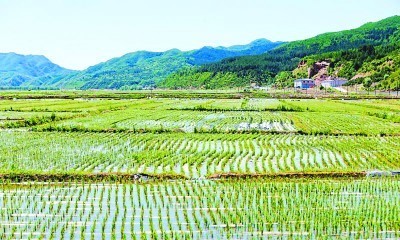
Chengde City Longhua County Valley Rice Project, Tianjin "small station rice" planted to the Luanhe River.
Tianjin Helping Chengde Task Force
Carrying out industrial poverty alleviation according to local conditions
Industrial poverty alleviation should be based on local conditions, scientific planning, and appropriate measures should be adopted according to the specific conditions of different regions. On the basis of full investigation and research, we can make a good plate, clarify the way, write each other's prescriptions, and make accurate efforts, so that poverty alleviation can reach a point. It is necessary to take characteristic industries as the starting point, formulate local poverty alleviation strategies according to local conditions, and follow the principles of "agriculture is suitable for agriculture, forest is suitable for forest, animal husbandry is suitable for animal husbandry, business is suitable for business, and tourism is suitable for tourism" to create characteristic industrial clusters, strengthen the deep processing of characteristic industries, and enhance the added value of characteristic industries, so as to ensure that the roots of the industry are deep, the flowers are good, the fruits are more fruitful, it has become a characteristic industry that drives local sustainable development. We should focus on long-term and long-term effects in accordance with local conditions, and work for a long time. On the one hand, it is necessary to select an industrial chain that can not only fit the regional industrial foundation, endowment characteristics and natural resource conditions, ensure the industrial prospects, but also effectively realize the reproduction coverage of poor households and realize coordinated development, so that the development of poor areas can be firmly established on their own On the basis of favorable conditions. On the other hand, we should pay attention to "double teaching of fish and fishing" and "double support of wisdom and ambition", stimulate the endogenous driving force of the poor people's development, and ensure that the poor people steadily embark on the road of becoming rich after getting rid of poverty. According to local conditions, it is also necessary to do a good job of "combined boxing" and achieve "one son falling and full vitality". We should pay attention to the establishment of a stable interest linkage mechanism, form enterprises, cooperatives and farmers into a "community of common destiny", explore and innovate the participation mechanism and benefit mechanism of poor households, so that poor households can truly participate in and share the value-added benefits of the industrial chain.
"adjusting measures to local conditions and taking the cultivation of industries as the fundamental way out to promote poverty alleviation" has always been Tianjin's unremitting concept of poverty alleviation. In the assistance to Chengde, Tianjin has made "embroidery" efforts, selected assistance projects, and adopted poverty alleviation modes such as enterprise cooperation, intellectual training, production and marketing docking, and scientific and technological upgrading to ensure the success rate and sustainable development. For example, in the process of helping Weichang County, Tianjin poverty alleviation cadres, after a large number of visits and investigations, have implemented 29 industrial poverty alleviation projects focusing on village-level photovoltaic poverty alleviation power stations, helping Weichang County to get rid of poverty in only three years. In view of Chengde's geography and climate environment, we will focus on helping the development of economic forest, fruit, vegetable greenhouses and other facility agriculture to drive the poor households to successfully get rid of poverty; actively organize Tianjin trade fairs, trade fairs, online and offline combined transportation, so that specialty products can occupy the market and achieve the goal of effective poverty alleviation.
Pingquan City, Chengde, focuses on poverty alleviation on key industries, key areas and relatively weak links. With the help of Tianjin's poverty alleviation funds, towns and townships are the main body, and on the basis of continuous improvement of industrial facilities construction, it will expand and strengthen edible fungi, facility vegetables, forest fruits and other characteristic leading industries, allowing poor households to directly operate or allowing poor households without business ability to participate in dividends, so as to achieve the purpose of increasing income and getting rid of poverty. The local government has also given full play to the leading role of leading enterprises, helping Hebei Zhenbang Agricultural Development Co., Ltd. to establish six production lines, including fruit and vegetable juice and buccal tablets, canned fruits and vegetables, corn cereal juice, fruit and vegetable crisp chips, wine and strawberry wine. At the same time, it has improved the scientific and technological content of enterprises, set up R & D teams, develop new and special products, and steadily improve product quality and market share, So as to drive the people to get rich.
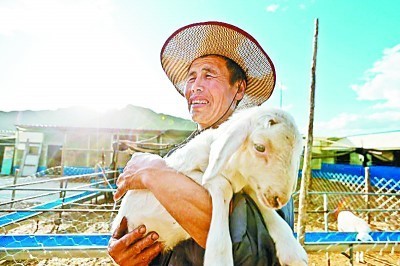
Tianjin enterprises have built a "million sheep project" in Weichang County to help local farmers make "sheep" money.
Tianjin Helping Chengde Task Force
Transforming Resource Advantages into Industrial Advantages
Although the economic foundation of poor areas is weak, there is no lack of unique development resources. Making good use of living resources and maintaining and increasing the value of resources is the key to achieving high-quality and sustainable development in poor areas. An important task of industrial poverty alleviation is to "revitalize" these resources that contain unlimited opportunities, so that they can open up the "flowers" of industrialization, bear the "fruits" of marketization, release the huge energy of economic development, and provide high quality. Win the battle against poverty and consolidate the industrial foundation and provide strong support.
To transform resource advantages into industrial advantages, we must combine reality and strengthen top-level design. On the one hand, it is necessary to comprehensively consider the development and transformation of resources with the industrial layout, market dynamics, transportation conditions, promotion and publicity, ecological protection and other factors in poverty-stricken areas. Under the premise of paying attention to economic benefits, we should achieve rational development, effective allocation and full utilization of resources, develop in protection and protect in development, and avoid repeated development and waste of resources. On the other hand, we should earnestly follow the law of industrial development, introduce policies and measures to support industrial development, actively cultivate characteristic industrial clusters and industrial bases suitable for the transformation of local resources based on resource endowment and market orientation, form an industrial belt with linkage effect, create a number of strong characteristic brands, and promote resources to move closer to advantageous industries.
Tianjin pays attention to the use of Chengde's resource advantages in helping, and transforms it into a stable and sustainable poverty alleviation industry advantage. For example, by making use of Chengde's rich grassland resources, we should guide the city's leading agricultural enterprises to support Chengde's animal husbandry industry, actively create the brand of "paddock mutton sheep" and "Chengde mutton sheep", form a full chain industrial development mode from production to sales, support nearly 50 farms, and drive nearly 3000 poor households out of poverty; carry out rational development of wetlands, and promote tourism after the construction of wetland park, the villagers operate homestays, sell local products, handicrafts, etc., and increase their income. The practice of helping Tianjin fully shows that the resource industry is the "golden key" for poor households to get rid of poverty ".
With the help of Tianjin, Chengde City, based on its own resource advantages, takes building agricultural brand and optimizing agricultural industrial pattern as an important means to get rid of poverty and become rich. In accordance with the development idea of "one village, one product, one village, multiple products", Sangou Town has gradually built a fruit industrial park centered on Platform Village, an edible fungus industrial park centered on ShangXia ErDaohe Village, and a poultry and livestock breeding park centered on Yingzhangzi and Beizhangzi Village ...... Effectively broadens the path of increasing agricultural efficiency and farmers' income. So far, the town has a total of 13300 mu of orchard area, more than 3500 mu of edible fungus planting area, 700 mu of vegetables and 700 mu of traditional Chinese medicine, which has driven more than 2700 farmers to embark on the road of specialized production and large-scale operation, and become a powerful booster of poverty alleviation action.
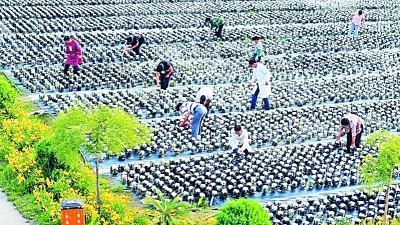
Chengde pingquan city wolong town edible fungus industry poverty alleviation park.
Tianjin Helping Chengde Task Force
Promote the upgrading of traditional industries
In the development of traditional industries in poor areas, they often face problems such as low production efficiency, low added value of products, difficulty in updating leading products, disconnection between production and sales, and environmental pollution. To give better play to the role of industrial poverty alleviation, we should comply with the changes of the times and the market, actively promote the upgrading and iteration of traditional industries, ensure that these industries are not only able to stand, but also strong, constantly enhance their hematopoietic function, enhance their ability of self-development, and continue to benefit the people in poor areas.
Scientific and technological innovation is the key engine to promote the upgrading of traditional industries. The development of scientific and technological innovation has given birth to new industries, new formats and new economic growth points, and injected new momentum and vitality into the transformation and upgrading of traditional industries. On the one hand, it is necessary to strengthen the training and introduction of scientific and technological innovation talents, and vigorously develop vocational education and skills training. On the other hand, with the help of modern scientific and technological means and innovative elements, we should actively promote the deep integration of the Internet, big data, cloud computing, Internet of things, artificial intelligence and other traditional industries, and promote the iteration of industrial upgrading, especially the digital transformation and upgrading of industries. Extending the industrial chain is an important measure to promote the upgrading of traditional industries. Efforts should be made to extend the industrial chain, especially to solve the problems of processing and sales after the production link, so that the characteristic products can go out, turn the soil into a gold ingot for poverty alleviation and prosperity, and better support the development of poverty alleviation industries.
In the work of poverty alleviation, Tianjin pays attention to adopting a variety of integrated and innovative models such as "science and technology", "Internet", "ecology", "e-commerce", "tourism" and "education" to help poor areas improve the quality, efficiency and iterative upgrading of characteristic industries. For example, helping Pingquan Fruit and Vegetable Base to set up a research and development team, actively develop new products, expand new areas related to agriculture, add production lines, and improve the scientific and technological output and added value of products. New poverty alleviation models such as "investing in mothers and lambs", "entering enterprises for employment" and "participating in dividends" have been planned to build a full industrial chain for Chengde's animal husbandry industry. Helping paddock to set up sewage treatment plants not only protect local water sources, it also provides a new opportunity for the development of the local tourism pillar industry.
To promote the upgrading and iteration of traditional industries, we must adhere to green development, combine agriculture, regional culture, health preservation, and ecological protection, and promote a rural development model with a high degree of integration of industry, culture, and ecology, with agriculture as the body and tourism as the wing, and extend the industry Chain, upgrade the value chain, and realize the organic unity of economic, social and ecological benefits. The implementation of the project of Xiaoluan River Wetland Park in Chengde has created conditions for the transformation of the surrounding area from agriculture to tourism. Local villagers have changed their farming and grazing production models to become providers of tourism products. The refreshing wetland museum, the colorful sea of artificial flowers, and the unobstructed viewing platform attract 30000 tourists every year. The surrounding residents can achieve tourism income of more than 65 million yuan by providing tourism services, catering, accommodation, and tourism products.
Source: Guangming Daily-Guangming Daily

Address: Buildings 4 and 5, Kechuang Huigu Park, Hongshun Road, Huaming High-tech Zone, Dongli District, Tianjin
Tianjin High-end Equipment Research Institute, Tsinghua University, Copyright
Website Construction: China Enterprise Power Tianjin
sweep
Pay attention to the official WeChat public number