




PARTY BUILDING
party building work
Xi Jinping: Speech at the Symposium on Decisive Victory and Poverty Alleviation
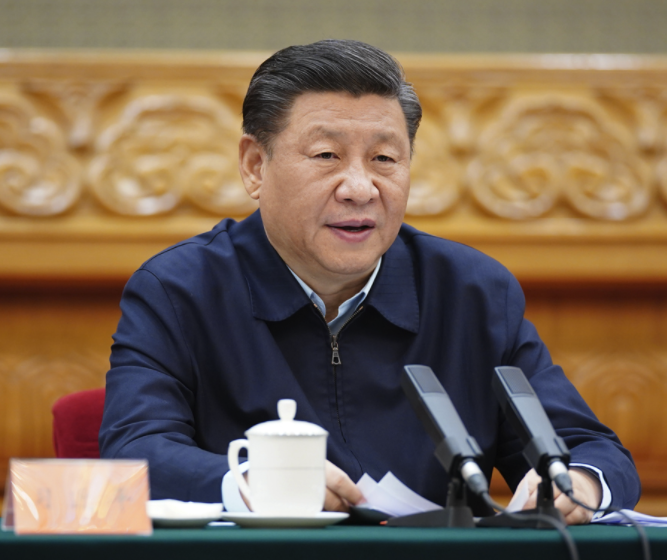
[On March 6, Xi Jinping, General Secretary of the Central Committee of the Communist Party of China, President of the State, and Chairman of the Central Military Commission attended a symposium on decisive victory and poverty alleviation in Beijing and delivered an important speech.]
Comrades:
The main task of the meeting is to analyze the current situation, overcome the impact of the new coronary pneumonia epidemic, concentrate on winning the battle against poverty, ensure that the target task of poverty alleviation is completed on schedule, and ensure that a moderately prosperous society is built in an all-round way.
Just now, five comrades from Nujiang Prefecture, Hotan Prefecture, Lankao County, Dahua County, and Hezhang County made speeches. They all spoke very well. I have also read the written materials of various provinces, autonomous regions, and municipalities. On the whole, the Party Central Committee's decision and deployment on poverty alleviation has been fully implemented, and all aspects of work have achieved remarkable results. Everyone is full of confidence in winning the battle against poverty.
Since 2015, I have held seven special conferences on winning the battle against poverty. In 2015, a symposium on poverty alleviation in old revolutionary base areas was held in Yan 'an, a symposium on poverty alleviation in some provinces, autonomous regions and municipalities and economic and social development during the 13th Five-Year Plan period was held in Guiyang, a symposium on poverty alleviation cooperation between the east and the west was held in Yinchuan in 2016, a symposium on poverty alleviation in deeply impoverished areas was held in Taiyuan in 2017, a symposium on precision poverty alleviation in Chengdu in 2018, and a symposium on solving outstanding problems of "two worries and three guarantees" three guarantees "in Chongqing in 2019, at the same time also put forward the face of the work requirements. Before each symposium, I first went to the poverty-stricken areas to investigate the situation on the spot, listen to the opinions of the grassroots cadres and the masses, and summon the responsible comrades of relevant provinces to make work arrangements based on what I learned.
At the beginning of this year, I considered taking a trip to other places to invite all the responsible comrades in the relevant places, especially the poor counties that have not yet taken off their hats, to hold a meeting to study the arrangements for the decisive battle against poverty. After the outbreak of the new coronary pneumonia epidemic, I also considered waiting for the epidemic to be effectively controlled before going to the local area. However, I felt that there was less than 10 months left before this year's full count, which was 300 days on a daily basis. There were already many hard bones to gnaw at to achieve the goal of poverty alleviation as scheduled. The epidemic has increased the difficulty and must be mobilized and deployed as soon as possible.
This symposium was attended by the main responsible comrades of all provinces, autonomous regions and municipalities. The 22 provinces in the central and western regions that signed letters of responsibility for poverty alleviation to the central government have been open to the county level. This is the largest meeting on poverty alleviation since the 18th National Congress of the Communist Party of China. The purpose is to mobilize the whole Party, the whole country and the whole society to promote poverty alleviation with greater determination and strength, so as to ensure the final victory.
Below, I would like to make a few comments.
1. China's Decisive Achievements in Poverty Alleviation
Since the 18th National Congress of the Communist Party of China, we have adhered to the people-centered development thinking, and clarified the goal and task of achieving poverty alleviation for the rural poor under my country's current standards by 2020, removing all poverty-stricken counties, and solving overall regional poverty. At present, the progress of poverty alleviation is in line with expectations, and the achievements have attracted worldwide attention.
First, the goal of poverty alleviation is nearing completion. Since the 1980 s, China has been helping the poor. There are two basic situations. One is based on the poverty alleviation standards at the time, the number of poor people will not be reduced when it is reduced to about 30 million, and the other is that the more people wear the hat of poor counties, the more they help. This fight against poverty has reversed this trend. The number of people living in poverty has decreased from 98.99 million at the end of 2012 to 5.51 million at the end of 2019, and the incidence of poverty has dropped from 10.2 per cent to 0.6 per cent, reducing poverty by more than 10 million per year for seven consecutive years. By the end of February this year, 601 of the 832 poverty-stricken counties across the country had announced that they had taken off their hats, 179 were undergoing exit inspections, and 52 counties had not taken off their hats. The overall regional poverty has basically been resolved.
Second, the income level of the poor has increased by a big margin. We adhere to the development-oriented poverty alleviation policy, and guide and support all poor people who have the ability to work to create a better tomorrow with their own hands. More than 90% of the poor people who have established files and registered cards have received industrial poverty alleviation and employment poverty alleviation support. More than 2/3 of them mainly rely on migrant workers and industries to get rid of poverty. The proportion of wage income and production and operation income has increased, and the proportion of transfer income has decreased year by year. The ability to get rid of poverty independently has steadily improved. From 2013 to 2019, the per capita disposable income of farmers in 832 poverty-stricken counties increased from 6079 yuan to 11567 yuan, with an average annual growth rate of 9.7 percent, 2.2 percentage points higher than that of the national per capita disposable income in the same period. The per capita net income of poor households nationwide increased from 3416 yuan in 2015 to 9808 yuan in 2019, an average annual increase of 30.2. The quality level of the "two no worries" of the poor people has been significantly improved, and the outstanding problems of the "three guarantees" have been solved as a whole.
Third, basic production and living conditions in poor areas have improved significantly. All qualified villages have access to hardened roads, and all villages have clinics and village doctors. The school-running conditions of 108000 schools with weak compulsory education have been improved. The reliability rate of rural power supply has reached 99%, and the proportion of broadband access in poor villages in deep poverty-stricken areas has reached 98%. More than 960 million poor people have escaped the dilemma of "one side of the soil and water cannot feed one side of the people" through relocation. People in poverty-stricken areas have difficulty in traveling, using electricity, going to school, seeing a doctor, and communicating for a long time. Compulsory education, basic medical care, and housing safety have been guaranteed. Since the 18th National Congress of the Communist Party of China, I have been to poor areas every year for investigation and research. In the past few years, the mountain roads along the way were bumpy, the village was bumpy, the shoes were dusty on sunny days, the roads were muddy on rainy days, the houses of poor families were dilapidated, some poor people could not eat meat several times a year, many children did not go to school or dropped out of school, and many people were sick. In the past few years, I went to some poor villages again and saw real changes. The roads were smooth and smooth, and the new houses were one after another. It was not a problem for the poor to eat and wear. I was very happy to see the sincere and simple smiles on the faces of the masses.
Fourth, the economic and social development of poor areas has accelerated significantly. We insist on taking the overall economic and social development of poverty-stricken areas through poverty alleviation, and poverty-stricken areas have shown a new development situation. With the continuous growth of characteristic industries, industrial poverty alleviation, e-commerce poverty alleviation, photovoltaic poverty alleviation, tourism poverty alleviation and other rapid development, the economic vitality and development potential of poor areas have been significantly enhanced. Through ecological poverty alleviation, relocation of poverty alleviation, returning farmland to forests and grasslands, the ecological environment in poverty-stricken areas has been significantly improved, the channels for increasing employment and income for poor households have increased significantly, and basic public services have become increasingly perfect.
Fifth, the capacity for poverty management has been significantly improved. We have promoted party building to promote poverty alleviation, and grassroots organizations in poverty-stricken areas have been strengthened. Through poverty identification and precise assistance, grassroots cadres have significantly improved their skills and consolidated the party's ruling foundation in rural areas. A total of 255000 village-based work teams have been sent across the country, and a total of more than 290 million cadres from party and government agencies and state-owned enterprises and institutions at or above the county level have been selected to serve as first secretaries or village cadres in poor villages and weak and scattered villages. Young cadres have learned about the grassroots, learned to do mass work, and grew up rapidly in practice. In the prevention and control of the new coronary pneumonia epidemic, grassroots cadres in poor areas have shown strong combat effectiveness, and many village teams have been pulled up to prevent the "epidemic" team and fight the "epidemic" team, which is inseparable from their experience in poverty alleviation over the past few years.
Sixth, China's poverty reduction program and achievements in poverty reduction have been widely recognized by the international community. After the completion of this year's poverty alleviation task, about 0.1 billion poor people in my country will be lifted out of poverty, and the poverty reduction goals of the United Nations 2030 Agenda for Sustainable Development will be achieved 10 years ahead of schedule. No country in the world can help so many people in such a short period of time. Poverty alleviation is of great significance to China and the world. The international community has highly praised China's poverty reduction program. UN Secretary-General Guterres said that targeted poverty alleviation strategies are the only way to help the poor and achieve the ambitious goals set by the 2030 Agenda for Sustainable Development. China's experience can provide useful lessons for other developing countries. In the international cooperation of building the "Belt and Road", many developing countries hope to share China's experience in poverty reduction. When I met with the leaders of many countries or the main leaders of international organizations, they all affirmed China's achievements in poverty reduction.
On the whole, we have made unprecedented achievements in the field of poverty alleviation, demonstrating the political advantages of the leadership of the Communist Party of China and my country's socialist system. These achievements have condensed the wisdom and painstaking efforts of the whole party and the people of all ethnic groups throughout the country, and are the result of the solid work of the broad masses of cadres and masses. Here, on behalf of the Party Central Committee, I would like to extend my sincere greetings to you and through you to the comrades on the front line of poverty alleviation!
2. attaches great importance to the difficulties and challenges of winning the battle against poverty
I have said many times that the battle against poverty cannot be won with a single charge. From decisive achievements to overall victory, the difficulties and challenges faced are still arduous, and we must not slacken our efforts.
The remaining task of poverty alleviation is arduous. There are still 52 poor counties in the country that have not taken off their hats, 2707 poor villages have not been listed, and all the poor people who have set up files and registered cards have not been lifted out of poverty. Although the total amount is not large compared with the past, it is the most difficult hard bone to chew. The problem of "three guarantees" has been basically solved, but it is not easy to stabilize and consolidate. Some children drop out of school repeatedly, the level of medical services in many rural areas is low, the quality of renovation of dilapidated houses in some rural areas is not high, and safe drinking water in some places is unstable. There is also seasonal water shortage. Among the remaining poverty-stricken population, the proportion of the elderly, the sick and the disabled reached 45.7 per cent.
-- The new coronary pneumonia epidemic poses new challenges. The impact of the epidemic on the fight against poverty is mainly manifested in these aspects. One is that migrant workers are blocked. According to the statistics of the Poverty Alleviation Office of the State Council, in 2019, there were 27.29 million poor laborers working outside the country. About 2/3 of these families' income comes from migrant workers, involving about 2/3 poor people who have established files and registered cards. Now, some poor laborers are affected by going out to work. If no measures are taken, their income will decrease in a short period of time. The second is the difficulty of poverty alleviation product sales and industrial poverty alleviation. Agricultural and animal husbandry products in poverty-stricken areas cannot be sold, agricultural materials cannot be transported in, and production and consumption decline, affecting industrial poverty alleviation and income increase. Three is the suspension of poverty alleviation projects. Projects such as supporting facilities for poverty alleviation and relocation, drinking water safety projects, and rural roads are under-started and cannot be advanced as planned. Fourth, help work is affected. In some areas where the epidemic is serious, temporary cadres and village teams are temporarily unable to come to their posts.
It is very difficult to consolidate the achievements of poverty alleviation. Among the regions and populations that have been lifted out of poverty, some have a relatively weak industrial foundation, some have serious homogenization of industrial projects, some have insufficient employment, and some have a high proportion of policy income. According to preliminary mapping from all over the world, nearly 2 million of the people who have been lifted out of poverty are at risk of returning to poverty, and nearly 3 million of the marginal population are at risk of becoming poor.
-Poverty alleviation work needs to be strengthened. At present, the biggest problem is to prevent slackness and energy transfer. I talked about this issue at the Chongqing Symposium last year. However, as more and more poor people get rid of poverty and poor counties take off their hats, there has been a shift in the focus of work, a decline in investment, and a dispersion of cadres' energy in some places. Formalism and bureaucracy have been banned repeatedly, digital poverty alleviation and false poverty alleviation still occur, and the problems of "one issue", "one share" and "one point" in some areas have not been effectively solved, and the endogenous driving force for the development of some poor people is insufficient.
In practice, epidemics or disasters have an impact on the process of poverty reduction. We must take effective measures to minimize the impact of the epidemic. At present, the policy guarantee, financial support, and work force for poverty alleviation are sufficient, and cadres at all levels have also accumulated rich experience. As long as everyone tightens the strings, works harder, and unswervingly implements the Party Central Committee's decision-making and deployment, they are fully qualified and capable. Complete the goal of poverty alleviation on schedule.
3. Ensuring High Quality Completion of Poverty Alleviation Targets and Tasks
Regarding the work in the last year of the fight against poverty, the "Opinions of the Central Committee of the Communist Party of China and the State Council on Doing a Good Job in the" Three Rural "Areas to Ensure the Realization of a Comprehensive Well-off Society on Schedule" has been deployed, and all regions and departments must implement it.
First, overcome difficulties and complete tasks. It is necessary to continue to focus on deep poverty-stricken areas such as the "three districts and three states", implement poverty alleviation programs, and focus on prominent problems and weak links to implement policies. To ensure that the remaining poverty-stricken people who have established files and registered cards are lifted out of poverty as scheduled, 52 poverty-stricken counties and 1113 poverty-stricken villages will be listed and supervised. The State Council's Leading Group for Poverty Alleviation and Development must be more serious. "War", gnaw the last hard bones. It is necessary to consolidate the results of the "two no worries and three guarantees" and prevent a rebound. Social security should be strengthened for the special poor who are unable to work, so as to ensure that they are fully insured.
Second, efforts should be made to overcome the impact of the epidemic. To implement the zoning classification precision prevention and control strategy. In areas with serious epidemics, while focusing on epidemic prevention and control, we can innovate our work methods and promote epidemic prevention and control and poverty alleviation. In areas where there is no epidemic or where the epidemic is relatively light, we should concentrate on accelerating the fight against poverty. We should give priority to supporting the employment of poor labor force, give priority to the organization and use of poor labor force in the aspects of resuming work and production of enterprises, starting major projects, and building logistics system. We should encourage enterprises to recruit more people from poor areas, especially poor families, and help poor labor force return to work in an orderly manner as soon as possible through the "point-to-point" poverty alleviation cooperation between the East and the West. It is necessary to classify and implement policies, and to increase the delivery of migrant workers in areas where there is no epidemic. It is necessary to effectively solve the problem of unsalable agricultural and animal husbandry products for poverty alleviation, organize the docking of production and sales, carry out consumer poverty alleviation actions, use the Internet to broaden sales channels, and solve the problem of difficulty in selling agricultural products through multiple channels. It is necessary to support poverty alleviation industries to resume production, do a good job in spring ploughing preparations such as the supply of agricultural materials, make good use of industrial assistance funds and poverty alleviation microfinance policies, and promote the sustainable development of poverty alleviation industries. It is necessary to speed up the start and resumption of poverty alleviation projects, and complete the construction of supporting facilities for relocation, housing and drinking water safety in the first half of the year. It is necessary to do a good job of helping people who have returned to poverty as a result of the epidemic, closely follow the situation of the poor affected by the epidemic, and promptly implement measures such as support to ensure that their basic livelihood is not affected.
Third, take multiple measures to consolidate the results. At the end of last year, the Leading Group for Poverty Alleviation and Development of the State Council organized various localities to carry out a comprehensive investigation of more than 9300 million people who had been lifted out of poverty, found loopholes and deficiencies, and rectified them one by one. Targeted preventive measures will be implemented for the near 2 million who are at risk of returning to poverty and the near 3 million who are at risk of becoming poor, and the people who are returning to poverty and becoming poor will be included in the assistance in a timely manner. We should increase employment and poverty alleviation efforts, strengthen the precise docking of labor export and import places, stabilize posts and expand posts, support leading poverty alleviation enterprises and poverty alleviation workshops to resume work as soon as possible, improve the ability to bring poverty, and use public welfare posts to provide more local employment opportunities nearby. It is necessary to increase the intensity of industrial poverty alleviation. The development of the planting and breeding industry has its own laws and has a long cycle. It is necessary to pay attention to long-term cultivation and support. In recent years, poverty alleviation microfinance has played an important role in supporting the poor people to develop production, and we must continue to adhere to it. We should increase the follow-up support for poverty alleviation and relocation. More than 960 million poor people have been relocated for poverty alleviation across the country, and 5 million non-poor people have been relocated in the central and western regions, which is equivalent to the population size of a medium-sized country. Now that the problems have been basically solved, the next step is to be stable, have employment, and gradually become rich.
Fourth, maintain the stability of the poverty alleviation policy. For poor counties, poor villages, and poor people who have withdrawn, it is necessary to maintain the overall stability of the existing assistance policies, and help them get on the horse and send them off. We can consider setting up a transition period. During the transition period, we should strictly implement the requirements of taking off the hat without taking off the responsibility, taking off the hat without taking off the policy, taking off the hat without taking off the help, and taking off the hat without taking off the supervision. The main policy measures can not be braked suddenly, and the village task force can not be withdrawn. It is necessary to speed up the establishment of a monitoring and assistance mechanism to prevent the return of poverty, strengthen the monitoring of unstable households out of poverty, marginal households that are prone to poverty, and households with a sharp decline in income or a sharp increase in expenditure due to the epidemic or other reasons, and take targeted assistance measures in advance, instead of waiting for them to return to poverty before they can be remedied.
Fifth, conduct a strict assessment of the census. We should strictly control the exit, and resolutely put an end to digital poverty alleviation and false poverty alleviation. The Leading Group for Poverty Alleviation and Development of the State Council should carry out supervision and inspection, strengthen regular supervision and guidance, and this year the central government will continue to carry out assessment of the effectiveness of poverty alleviation. Starting from the second half of the year, the state will organize a general survey of poverty alleviation and conduct a comprehensive test of the effectiveness of poverty alleviation in various regions. It's a big deal. It is necessary to provide data support for the Party Central Committee's timely announcement of winning the battle against poverty and building a moderately prosperous society in an all-round way, so as to ensure that it can stand the test of history and the people.
Sixth, we will continue to promote the effective convergence of comprehensive poverty alleviation and rural revitalization. Poverty alleviation is not the end, but the starting point of a new life and new struggle. In view of the changes in the main contradictions, we should clarify the working ideas, promote the smooth transformation of poverty reduction strategy and work system, integrate into the rural revitalization strategy as a whole, and establish an institutional mechanism that combines the long and short, and addresses both the symptoms and the root causes. The relevant departments of the central government are studying this work. In general, it should be conducive to stimulating the endogenous driving force for the development of low-income population in underdeveloped areas and rural areas, conducive to the implementation of precise assistance, and promoting the gradual realization of common prosperity. Where conditions permit, we can also do it first in combination with reality to accumulate experience for the surface.
4. strengthen the Party's leadership in winning the battle against poverty
"The beginning of his work is simple, and the end of his work will be great." The more we fight against poverty, the more we must strengthen and improve the leadership of the Party. Party committees (party groups) at all levels must perform their duties and fulfill their mission.
By 2020, all the rural poor people under the current standards will be lifted out of poverty. This is a solemn promise made by the Party Central Committee to the people of the whole country. It must be realized as scheduled without any retreat or flexibility. This is a tough battle. The more you get to the end, the more you have to tighten this string. You can't stop, you can't be careless, you can't relax. All provinces, autonomous regions and municipalities have signed military orders at various levels, and promises will be fulfilled. Time passed quickly, and the work must be grasped very tightly up and down.
The central government should continue to increase the scale of special poverty alleviation funds, and finance at all levels should also ensure the funding needs for poverty alleviation. It is necessary to strengthen the integration of financial funds related to agriculture, strengthen the supervision of poverty alleviation funds, improve the efficiency and efficiency of the use of funds, and make good use of land and financial policies for poverty alleviation. For places that have achieved stable poverty alleviation, all localities can make overall arrangements for special poverty alleviation funds to support the poor people in non-poor counties and non-poor villages to get rid of poverty.
It is necessary to deepen the cooperation between the east and the west in poverty alleviation and the targeted poverty alleviation by the central units. At present, the most prominent task is to help the central and western regions reduce the impact of the epidemic on poverty alleviation, help in labor cooperation, help in consumption poverty alleviation. In the long run, poverty alleviation cooperation between the east and the west should be based on the overall national regional development strategy, deepen regional cooperation, promote the gradient transfer of eastern industries to the west, and realize industrial complementarity, personnel interaction, mutual learning of technology, exchange of ideas, mutual learning of work style, and common development.
Whether the task of poverty alleviation can be completed with high quality depends on people and the style of cadres. We should strengthen the construction of work style in the field of poverty alleviation, resolutely oppose formalism and bureaucracy, reduce the burden on the grass-roots level, do a good job in work, life, safety and other aspects, so that the grass-roots poverty alleviation cadres can devote themselves to the prevention and control of the epidemic and the fight against poverty. It is necessary to strengthen the training of cadres in poverty alleviation, ensure that all newly selected village cadres and newly appointed rural cadres are trained in rotation, and enhance the ability of precise poverty alleviation and poverty alleviation.
The fight against poverty must not only be done well, but also well spoken. We should focus on publicizing the Party Central Committee's decision-making and deployment on poverty alleviation, publicizing the new measures and good methods of all regions and departments to promote epidemic prevention and control and poverty alleviation, and publicizing the typical deeds of grassroots poverty alleviation cadres and the touching stories of the hard work of the people in poor areas. We should listen carefully to well-intentioned criticisms, opinions and suggestions, improve our work and solve problems in a timely manner. Malicious attacks and hype that magnify individual problems and affect the overall situation of poverty alleviation should be resolutely stopped in accordance with the law.
Comrades! The work of poverty alleviation is arduous, and the year of the end of the official year has been affected by the epidemic, and the tasks are heavier and more demanding. We must not forget our original aspirations, keep our mission in mind, strengthen our confidence, fight tenaciously, win a comprehensive victory in the fight against poverty, and resolutely complete this great cause that is of great significance to the Chinese nation and mankind!
Reprinted from: Xinhua News Agency

Address: Buildings 4 and 5, Kechuang Huigu Park, Hongshun Road, Huaming High-tech Zone, Dongli District, Tianjin
Tianjin High-end Equipment Research Institute, Tsinghua University, Copyright
Website Construction: China Enterprise Power Tianjin
sweep
Pay attention to the official WeChat public number