




PARTY BUILDING
party building work
The story behind the return of Macao
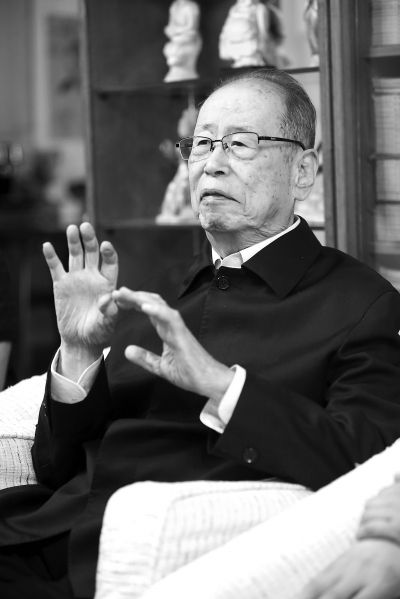
Zhou Nan, former Vice Minister of Foreign Affairs and head of the Chinese delegation to the Hong Kong and Macao return talks.
On the wall of Zhou's living room, there is a picture of Deng Xiaoping meeting with Norwegian Prime Minister Brundtland. Zhou Nan, then Vice Foreign Minister, accompanied the meeting, and Fu Ying served as an English interpreter. "At that time, the meeting just began. Comrade Xiaoping talked about his age. He said to Mrs. Brundtland: 'I am old, 84 years old...' The female translator was a little nervous and turned it into '48 years '. I heard it nearby and said,' wrong, wrong. 'comrade xiaoping said, what is wrong. I said, you said 84 years old, was turned into 48 years old. After hearing this, Comrade Xiaoping not only did not criticize the translator, but laughed heartily. He said humorously: 'Well, I have the skill of rejuvenating my children, and I am as young as Mrs. Brundtland. 'Everyone roared with laughter."
"The reporter was very good at catching the camera, and then he won the journalism award." Zhou Nan pointed to the photo and said. This photo is indeed vivid and has a strong sense of scene. It seems that I heard laughter through the photo.
In front of Zhou Nan, hale and hearty, clear thinking. Gentle and humorous, he is the head of the Chinese government delegation to the Sino-British negotiations on the Hong Kong issue and the head of the Chinese government delegation to the Sino-Portuguese negotiations on the Macao issue. He is the initiator of the Sino-British Joint Declaration and the Sino-Portuguese Joint Declaration. He served as the important task of the director of the Xinhua News Agency Hong Kong Branch during the transition period of Hong Kong's return to the motherland.
On the eve of Macao's return to the contest, he said--
1. "Travel Diplomacy"
"In order to ease the tension in the negotiations, at that time, every round of talks, he led the Portuguese to a place in China for a turn, while traveling, while negotiating on some issues through private contacts."
Since the settlement of the Hong Kong issue provides a good example, the return of Macao is obviously much easier. When China and Portugal established diplomatic relations in 1979, the two sides have jointly affirmed that Macao is Chinese territory, and the time and details of the return will be negotiated between the two governments at an appropriate time.
Zhou Nan, who has experience in negotiating with Hong Kong, as the head of the Chinese government delegation, participated in the four rounds of negotiations between China and Portugal on the Macao issue. Zhou Nan said that there were three considerations regarding the timing of the recovery of Macau, which was earlier than Hong Kong, at the same time as Hong Kong, and later than Hong Kong, but it must be recovered within the 20th century at the latest. Shortly after China and Britain initialled the joint statement on the Hong Kong issue, Deng Xiaoping met with the Hong Kong and Macao National Day delegation in Beijing. In response to a question from a Macau guest, he said for the first time, "The Macau issue will be resolved in the same time and in the same way as Hong Kong. As to whether an early resolution is in the interest of Hong Kong or a late resolution is in the interest of Hong Kong, I am still considering it, and I would like to hear your views now."
During the four rounds of official talks between China and Portugal on the Macao issue, there were mutual visits between the deputy foreign ministers of the two countries, and after each round of talks, China invited the Portuguese delegation to visit other places to further exchange views during the visit. At that time, it was called "travel diplomacy" by foreign news agencies ". Zhou Nan said: "In order to ease the tension in the negotiations, at that time, every round of talks, he led the Portuguese to a place in China for a turn, while traveling, while negotiating on some issues through private contacts. For example, once to see Chengde, once to see Mount Tai, once to see the Yangtze River Three Gorges. Using this relatively relaxed way of traveling outside the meeting and exchanging some opinions in private will make it easier to communicate and solve some difficult problems."
On March 18, 1986, the People's Republic of China and the Republic of Portugal announced to the press at the same time the list of the two governments' negotiating delegations on the Macao issue. It took 10 months from the beginning of the negotiations to the conclusion of the agreement.
2. getting better
The "Macau Daily" published the next day recorded this "relaxed conversation" and guessed from the quoted verse that the talks were going on in calm, and the Sino-Portuguese negotiations would be smoother than the Sino-British negotiations.
On June 30, 1986, the first round of talks was held at the Diaoyutai State Guesthouse in Beijing. The opening remarks of the talks were a chat between the heads of the delegations of the two sides. Zhou Nan, head of the Chinese delegation, said: "Not long ago, we went to Venice, a water city in Italy, and sat on a small wooden boat called'Gondola'. At that time, the tide had receded, and we listened to the oars on the boat. It reminded me of two poems by a Chinese poet Meng Haoran," There is no wind when the tide falls, and the boat is together with the monarch. "This is really a beautiful enjoyment. Therefore, I hope that you and your friends will have the opportunity to visit some places in our country and see the scenery of China every time after intense work." The "Macau Daily" published the next day recorded this "relaxed conversation" and guessed from the quoted verse that the talks were going on in calm, and the Sino-Portuguese negotiations would be smoother than the Sino-British negotiations.
the first round of talks has been held in beijing as of 1 July. The Chinese representative adhered to three basic principles in the negotiations: 1. must take back Macao by the end of this century, that is, before the year 2000; 2. must maintain the stability and development of Macao on the premise of resuming the exercise of Macao's sovereignty; and 3., after resuming the exercise of Macao's sovereignty, establish a special administrative region in Macao in accordance with the guiding ideology of "one country, two systems" and the provisions of Article 31 of the the People's Republic of China Constitution, 50 years unchanged.
The content of this meeting is to reach an agreement on the general agenda of the Sino-Portuguese talks (issues related to China's exercise of sovereignty over Macau, arrangements after the exercise of sovereignty, and arrangements for the transitional period). At the end of the first round of talks, a press communiqué of only 140 words was issued: "...... The talks were conducted in a friendly and harmonious atmosphere, and the two sides agreed on the full agenda of the talks and exchanged views on a number of substantive issues. The two sides expressed satisfaction with the results of the first round of talks and decided to hold a second round of talks in Beijing in September."
the second round of talks was held in beijing on 9 and 10 September. During the talks, the Chinese delegation submitted the annex to the Sino-Portuguese Joint Declaration and made relevant explanations. Zhou Nan quoted the story of Jin Dynasty painter Gu Kaizhi eating sugar cane, saying: "There was a great painter in the Jin Dynasty, named Gu Kaizhi, who liked to eat sugar cane very much, and the way he ate it was different, from the tail to the head, upside down. Someone asked him why he ate it that way, and he said it was called 'getting better '." As a result, some newspapers speculated that the negotiations appeared to have entered a substantive stage, otherwise how could they say they were "getting better"? It was further confirmed in the press release after the conclusion of the second round of negotiations: "The two sides continued to discuss the substantive issues on the agenda in a friendly and harmonious atmosphere and made progress." At this point, people have reason to believe that the Sino-Portuguese negotiations on the Macao issue will inevitably develop in an area that is more satisfactory to both sides.
3. Date determination
"That afternoon it was President Suarez who received him and didn't want anyone to accompany him, he was the only one on the Portuguese side and I was the only one on the Chinese side. He said that the return of Macau cannot be within this century (20th century), this time is too short, and it will be the right time (to return) in the 21st century."
the important and crucial third round of sino-portuguese talks was held in beijing from 21 to 22 October. Before the talks, Zhou Nan hinted that the talks would make important progress with Liu Yuxi's poem "A crane in the clear sky and a crane in the clouds. In fact, through this round of talks, the delegations of the two sides have reached agreement in principle on various major issues. At the end of the talks, it was announced that a joint working group would be established to begin the consideration of the conference documents. However, the development of things is not smooth sailing.
On November 17, Zhou Nan was invited to visit Portugal. At that time, Zhou Nan's position in the Ministry of Foreign Affairs was Deputy Minister of Foreign Affairs, but Portugal was personally greeted by the Minister of Foreign Affairs. This was not in line with normal diplomatic etiquette and aroused Zhou Nan's vigilance.
"Talks were held that afternoon and there were no problems. There was a reception that night, and the next day at noon it was the Prime Minister's family dinner. During the conversation, we talked about the Macau issue. We said that the talks are now going smoothly and a formal agreement will be signed soon. He did not raise any questions. That afternoon, President Suarez received him. He was the only one in Portugal and I was the only one in China. He said that the return of Macao cannot be within this century (20th century). This time is too short, and it will be at an appropriate time in the 21st century (return)."
Hearing this, Zhou Nan was surprised. Deng Xiaoping had already talked about this matter in the past and it should be resolved within this century (20th century). So he immediately expressed displeasure and replied to Suarez, "I'm surprised to hear your excellency say that, because your country's negotiator, the Ambassador Extraordinary and Plenipotentiary, has agreed in private consultations to return Macau within this century, and why do you object?" Suarez still argued, "If the head of our delegation said that, then it was only his personal opinion, not the decision of our government." Zhou Nan asked, "I have been engaged in diplomatic work for many years, and I have never heard that a plenipotentiary sent by a government cannot represent its own government in important talks. If you follow your excellency's statement, who should I negotiate with in the future?"
At this point, Suarez froze. Nan Zhou said, "If you think about it carefully, I will leave." After going downstairs, a large number of reporters from various countries were waiting to interview Zhou Nan. Zhou Nan said: "Today is rather tired and there will be no press conference."
Later, Zhou Nan recalled, "We couldn't give in to the pressure, so in addition to making it clear, I had to put a little pressure on the other side to express our unhappiness. The next day I was scheduled to visit a few scenic spots, but I said I was tired and informed the Portuguese side that tomorrow's visit was canceled and I was going to rest in the hotel. That night I also wrote a long telegram back to the country."
This makes Zhou Nan quite shocking change, in fact, is also out of the Portuguese government's profit-making heart. It turned out that in the Portuguese government at the time, some people mistakenly believed that after Hong Kong returned to China, some foreign capital would move from Hong Kong to Macau. If Macau was returned to China more than ten years later, the Portuguese side might be due to the entry of foreign capital. Get huge profits.
After finding out the situation, Zhou Nan decided to immediately put pressure on Portugal and canceled the next day's tour. The move caused speculation in the media and the outside world that the Portuguese side, which did not dare to risk breaking the agreement, had to invite Zhou Nan again for talks.
After a brief stay in Portugal, Zhou immediately returned to Beijing. Zhou Nan and the Chinese Foreign Ministry's subsequent tough attitude led the Portuguese State Council to finally agree to hand over Macau to China in 1999.
Regarding the determination of the return date, Portugal insisted on returning Macao on December 31, the last day of 1999. Zhou Nan said: "According to your custom, Christmas on December 25 every year, followed by the New Year. The New Year is a time for everyone to rest, is it appropriate to put the handover ceremony at this time? The handover of power is better than the Christmas and New Year holidays. I think, can it be earlier? In this way, let the Macao compatriots have a stable holiday."
Regarding this, Zhou Nan recalled, "At that time, the other party said that he could not be the master and had to report to the government. After two or three days, he replied," We agreed to give way until December 20th." As a result, China and Portugal jointly determined the handover date of December 20, 1999. The return of Macao was 11 days ahead of schedule.
4. "In bud"
A subsequent news report from the reporter said that the "blooming" peach tree is a metaphor for the Hong Kong negotiations, and the "budding" peach tree implies that the Macau negotiations will also bloom.
From March 18 to 23, 1987, the fourth round of talks between China and Portugal on the Macao issue was held in Beijing. The major substantive issues have been resolved one after another, and all that remains is the finalization of the text of the agreement. At the beginning of the talks, Zhou Nan pointed to the new willows and peach blossoms that were only budding at the Diaoyutai outside the window and said, "When I visited Portugal last year, it was still early winter, and now it is the earth's rejuvenation. The two peach trees in front of my house, one has blossomed and the other is budding." As he said this, he chanted the poem "Peach Blossom Is Another Spring. A subsequent news report from the reporter said that the "blooming" peach tree is a metaphor for the Hong Kong negotiations, and the "budding" peach tree implies that the Macau negotiations will also bloom.
This round of talks lasted the longest, with six meetings and five informal consultations. Finally, the two sides considered the draft text of the agreement, reached an agreement on the content of the agreement text, and decided on a joint statement of the Chinese and Portuguese governments on the Macao issue, which will be initialed by the heads of the Chinese and Portuguese government delegations in Beijing on March 26. So far, the Sino-Portuguese talks on the Macao issue have concluded with a successful outcome.
On April 13, 1987, the Sino-Portuguese Joint Declaration on the Question of Macao was formally signed in Beijing. The "Joint Declaration" solemnly announced to all countries in the world: "The Macau region (including the Macau Peninsula, Taipa Island, and Coloane Island) is Chinese territory, and the the People's Republic of China government will resume the exercise of sovereignty over Macau on December 20, 1999."
On December 20, 1999, the Chinese government resumed the exercise of sovereignty over Macao, and Macao returned to the embrace of the motherland and ushered in a new era of historical development. On the same day, Zhou Nan wrote a poem "Macao's Return to Prosperous" to congratulate him: "The flag of the old country has entered Macao, and all directions are trembling. Where is Weng's heart now, laughing at a cloud in the southeast."
Zhou Nan said that the return of Hong Kong and Macao one after another is a grand and happy event in China at the end of the 20th century, which reflects the strong cohesion of the Chinese nation and the long-cherished wish that only the new China under the leadership of the Communist Party can finally realize the reunification of the motherland, which several generations of the Chinese nation have struggled. History shows that the sovereignty of Hong Kong and Macao cannot be recovered without strength; only strength, without the great concept of "one country, two systems", is not easy to recover peacefully. At the same time, it is only through the joint efforts of both sides that a satisfactory result can be achieved.
Haojiang, blue sea, happy waves, flourishing lotus spectrum, huazhang. Time is an extraordinary writer! Over the past 20 years since Macao's return to the motherland, under the protection of the Constitution and the basic Law of Macao, Macao's society has been harmonious and stable, the democratic political system has developed steadily, foreign exchanges have been continuously expanded, various undertakings have developed in an all-round way, and people's livelihood and welfare have been significantly improved. Zhou Nan believes that the successful implementation of the Macao basic Law fully shows that only by forming a broad national identity in the whole society can the basic Law be fully and accurately implemented; only by earnestly safeguarding national sovereignty, security, and development interests can Macao's long-term prosperity and stability be maintained; only by bringing the Macao Special Administrative region into the national governance system and integrating it into the overall situation of national development can Macao move towards a new and better future. On the new journey, we should adhere to the principle that "one country, two systems" will not change or waver, ensure that the practice of "one country, two systems" will not be distorted or deformed, and always move forward in the right direction. We will be able to further implement the basic law of Macao, govern and develop the Macao Special Administrative Region, and promote "one country, two systems" to achieve greater success in Macao.
What is less known is that Zhou Nan entered the Central Foreign Affairs School in the early summer of 1948 and began to bond with foreign affairs. In 1950, he began his diplomatic career because he went to North Korea to work as a prisoner of war. He has been "extended service" until the age of 70, before he really has his own life.
Due to the death of his wife a few years ago, Nan Zhou's health is not as good as that of many years ago. The swimming that he had insisted on all the years did not continue, but his thinking was still agile, his speech was humorous as usual, and he learned to use WeChat to read news from his circle of friends.
After taking off from public office, Zhou Nan, "I still read my book when I was in the forest", holding a thread-bound book every day, almost reached the state of "it is difficult to sleep without reading at night. He is like a close friend of Hong Kong and Macao. He is always concerned about the prosperity and stability of Hong Kong and Macao after the return of Hong Kong and Macao. He still reads a number of newspapers and periodicals in Hong Kong and Macao every day to learn about the latest developments in the development of Hong Kong and Macao.
Source: Beijing Daily

Address: Buildings 4 and 5, Kechuang Huigu Park, Hongshun Road, Huaming High-tech Zone, Dongli District, Tianjin
Tianjin High-end Equipment Research Institute, Tsinghua University, Copyright
Website Construction: China Enterprise Power Tianjin
sweep
Pay attention to the official WeChat public number