




PARTY BUILDING
party building work
Huang Kecheng: Fighting in the den of tigers and wolves, loyal to the revolutionary cause
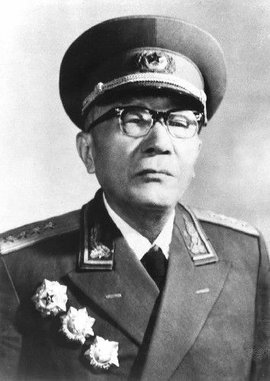
On October 1, 1902, he was born in a poor peasant family in Yongxing County, Hunan Province. Joined the Communist Party of China in 1925. He joined the Northern Expedition in 1926. In 1928, he took part in leading the Yongxing Nianguan uprising in the southern Hunan uprising and led his troops to Jinggangshan with Zhu De and Chen Yi. He used to be the commander of the Chinese Workers' and Peasants' Red Army, the political commissar of the division, the director of the military political department, and the acting director of the political department of the Red Army.
In 1929, after several twists and turns, Huang Kecheng went to the Political Training Office of the Second Division of the Kuomintang Army in Wuhan through the introduction of Liu Yiguang, a leftist officer of the Kuomintang who was both a fellow countryman and a classmate.
li bucheng was in wuhan at that time and was sent by his superiors to take part in the secret work of the local party. The two comrades-in-arms were very happy to meet again after parting.
Through initial contact with officers of the second Lu Division's political training department, Huang Kecheng initially grasped the relevant situation of the second Lu Division. It turned out that the Second Division of Lu was Chiang Kai-shek's clique, the division commander was Gu Zhutong, and the director of the Political Training Department was KMT's big spy Kang Ze. Kang Ze is ruthless and extremely strict with his subordinates. It was discovered that the officers and soldiers were slightly "misguided", that is, secretly executed. shortly after huang kecheng arrived, several middle-and lower-ranking officers "disappeared. Kang Ze also often found a separate "conversation" with his subordinates, to find out the root of the problem, to observe the color, in order to find out the "bad" elements and punish them. Huang Kecheng was also "inspected" several times by Kang Ze. Although Huang Kecheng forged his resume into the department under a pseudonym, Kang Ze's endless "investigation" and "purge" could not help but make Huang Kecheng uneasy. In particular, Huang Kecheng also found a fellow countryman who knew his identity among the staff of the political training office. Although this fellow townsman did not report him to Kang Ze for some complicated reasons, Huang Kecheng's thoughts have been lingering in his mind. Huang Kecheng realized that he was out of the wolf's den and into the tiger's den. So he decided to leave quickly and not to be his figure.
During this period, the Wuhan Special Committee of the Communist Party of China was destroyed and Li Bucheng was also arrested and killed. Huang Kecheng was not implicated in the incident because he had no relationship with the local party organization. But the occurrence of this matter prompted Huang Kecheng to be more determined to leave Wuhan.
The opportunity finally came. In December 1929, Lu Ershi was ordered to take part in the crusade against Tang Shengzhi and Shi Yousan and went to Nanjing. As soon as Huang Kecheng arrived in Nanjing with Lu's Second Division, he managed to take a day off and rushed to Shanghai overnight to report to the Central Military Commission. The Central Military Commission agreed that Huang Kecheng would leave the Second Lu Division of the Kuomintang by taking a long vacation and transfer to the Soviet area to do military work.
With excitement, Huang Kecheng immediately returned to Nanjing to prepare for a long vacation. At this time, an unexpected opportunity made Huang Kecheng easily break away from the second division of the Kuomintang. It turned out that Feng Yuxiang, Yan Xishan, Tang Shengzhi, Shi You and other anti-Chiang coalition forces had been defeated. After Chiang Kai-shek settled the various warlord forces, he began to regroup the army, and the political training office of the second Lu Division had received the order of demobilization. This is a godsend! Huang Kecheng reported that there was no need to fight, so he received severance pay and left Lu Ershi. When he was dismissed, Kang Ze still did not let go of the opportunity to talk with his subordinates one by one, asking about their whereabouts and plans. Huang Kecheng, on the other hand, calmly dealt with the job of going back to his hometown to find a primary school teacher. In a fierce battle with the enemy, he rushed ahead and escaped with a hail of bullets.
In July 1930, Huang Kecheng, who served as the political commissar of the second detachment of the Red Army, led his troops under the command of Peng Dehuai, the commander of the army, to participate in the battles in Yuezhou (now Yueyang City) and Pingjiang, an important town in Lianke Hunan. He Jian, commander-in-chief of the Kuomintang's Fourth Route Army and chairman of the Hunan Provincial Government, assembled about seven regiments of troops from Changsha to Pingjiang to "suppress" our Red Army ". The Red Army Corps was hiding in Jinkeng Mountain, 20 miles south of Pingjiang County, and set up an ambush to wait for the enemy.
Soon after the battle began, the enemy and us were in a state of scuffle. At dusk, Huang Kecheng lost contact with the army because the army was dispersed. Just as he was following the gunfire in search of troops, he suddenly noticed a team coming from behind him. Huang Kecheng's eyes were originally highly myopic. It was the middle of summer. The glasses were covered with sweat and smoke, which made his vision more blurred. It was impossible to tell whether the army coming at him was the enemy or his own. The two sides are getting closer and closer, and he can no longer think about it. He walked decisively towards the other side so that he could figure out the situation and then play it by ear. When the two sides were approaching, Huang Kecheng vaguely saw that the other side was dressed neatly. Many dark muzzles were aiming at him for shooting posture, and immediately realized that the other side was the enemy. As soon as he hesitated, he waved his hand at the opponent and shouted, "Don't shoot! "As soon as he said it, he fell down, turned around on the ground, and rolled down the hillside. Almost at the same time as he shouted and turned around, several guns fired at him in unison, only to hear the bullets swishing in his ears. At this time, although he could not help but fall down the steep hillside, but his mind was still clear, expect this time will never survive.
When he rolled down to the foot of the mountain, he felt that he was still conscious, but his glasses, hat and purse were missing. Slowly touched it all over the body with his hand, but he was not shot. Falling from the top of the mountain to the bottom of the mountain without major injuries is a fluke! At this time, it was already dark, and the glasses were lost, the surroundings were blurred, and nothing could be seen clearly, but the sound of gunfire and shouting in the distance was vaguely discernible. He groped his way in the direction of the fierce noise. When he came to the woods on the side of the road, he saw a dark crowd running and shouting like a flood of people. After careful identification, people on the highway were found wearing red armbands on their arms. He decided it was one of his own, so he got on the highway and ran forward with the crowd. He ran and asked about the situation. By this time the enemy had been routed and the troops were in pursuit after the victory. When Huang Kecheng found his own troops, his comrades-in-arms could not help but be surprised, thinking that he had come back from the dead. It turned out that when encountering the enemy on the top of the mountain, the guards saw from a distance that Huang Kecheng was knocked down by a burst of enemy guns and rolled down the mountain. Thinking that he had died, they ran back to the army to report the news of the "sacrifice of the political commissar. The officers and men were shouting the slogan "revenge for the political commissar", and suddenly found that Huang Kecheng had returned to the army safely, which was naturally both happy and surprised. Suddenly, the anecdote of Huang Kecheng's "resurrected from the dead" spread among the troops.
Source: People's Daily Online
Previous Page
Next Page
Previous Page
Next Page

Address: Buildings 4 and 5, Kechuang Huigu Park, Hongshun Road, Huaming High-tech Zone, Dongli District, Tianjin
Tianjin High-end Equipment Research Institute, Tsinghua University, Copyright
Website Construction: China Enterprise Power Tianjin
sweep
Pay attention to the official WeChat public number