




PARTY BUILDING
party building work
Zhang Wentian's Way of Governing Learning
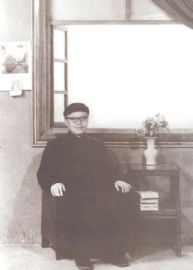
Zhang Wentian, known as the "red professor", has maintained the habit of learning and thinking all his life. In 1956, when he gave a report at the Foreign Affairs University, he said: "There is no end to learning, and it is only when we are alarmed. At that time, we went to Marx to continue our study. "In his lifelong diligent study, Zhang Wentian has developed a set of effective academic methods, which are worth learning from.
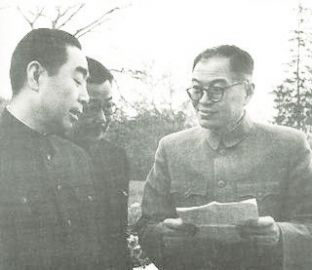
"Read more, see more, write more"
When Zhang Wentian worked-study program in the United States in 1923, he made an article "The Jump of Life" in view of the situation in the Chinese literary world, encouraging young people to "read more, read more, and write more". These six words are not only the expectation of young people, but also the basic method of Zhang Wentian's scholarship.
In his youth, Zhang Wentian went to Japan, the United States, and the Soviet Union to study. During his study abroad, he deeply investigated the social reality of foreign countries and learned advanced ideas, which greatly broadened his horizons. In the period after the May Fourth Movement, Zhang Wentian translated and reviewed a large number of works by famous writers including Tolstoy, Wilde, Bergson, Goethe, etc., and wrote many articles to promote new ideas. After Zhang Wentian accepted the socialist thought and joined the Communist Party of China, he began to study Marxist theory eagerly. During his study in the Soviet Union, Zhang Wentian immersed himself in hard study. Later, when he recalled his study experience at Sun Yat-sen University in Moscow, he said, "I wanted to know everything Ma, En, Lie and Si thought, all their theoretical principles and their ideological system". Zhang Wentian's ability to become a Marxist theorist of our party is inseparable from his painstaking study during this period.
Writing notes frequently is Zhang Wentian's good habit of reading. There are three ways for Zhang Wentian to write reading notes: one is to write comments on the book when reading; the other is to write an article on a certain issue and send it to Mao Zedong and the Party Central Committee; the other is to write down the experience when reading. Leave it to yourself for research. After being wrongly criticized at the Lushan Conference, Zhang Wentian was removed from his leadership position and the party's political life was isolated. However, he did not give up his study and research. He wrote hundreds of thousands of words of reading notes and wrote to Mao Zedong and Liu Shaoqi regularly to report his study and thinking. During the "Cultural Revolution", more than a dozen of Zhang Wentian's reading notes were copied by the rebels, but he was not discouraged and began to read and write cards again. In 1969, Zhang Wentian was deported to Zhaoqing, Guangdong Province. Under the torment of vision deterioration and disease, he still kept on taking notes and made stacks of data cards with old desk calendars and primary school students' exercise books, which were sorted and put in small pockets made of old envelopes. The "Zhaoqing manuscript" with nearly 100,000 words left in Zhaoqing became the theoretical crystallization of Zhang Wentian's reading and thinking for many years.
"Breaking the cage of dogma"
Zhang Wentian not only has a solid theoretical foundation, but also attaches great importance to the combination of theory and practice. He should not only be a good student of Ma, en, column, si and Mao, but also a good student of the masses ".
During the Yan'an rectification movement, Mao Zedong proposed that the whole party should oppose subjectivism and dogmatism. Zhang Wentian took the lead in responding to the call of the rectification movement. He made self-criticism at the September Politburo meeting and proposed that "no practical work was done in the past and lack of practical experience. Now we have to make up lessons." He conducted a one-year and three-month rural survey in northern Shaanxi and northwestern Shanxi. The purpose of Zhang Wentian's investigation was "mainly to understand the productive forces and the relations of production, and to clarify the class relations in the countryside". To this end, Zhang Wentian led an investigation team into the countryside, held an investigation meeting, and went door to door to discuss with peasant cadres. Zhang Wentian's investigation is not a casual view, but a meticulous one. In Yangjiagou, Mizhi County, Zhang Wentian accounted for the account books kept by a landlord from the Daoguang years, such as land purchase, rent collection, debt lending, employment and daily income and expenditure, and explained the exploitation of farmers by the landlord class with detailed materials. Through an in-depth investigation of the actual situation in rural areas, Zhang Wentian had a systematic understanding of the productive forces and class relations in rural areas, formed a series of investigation reports, and put forward many insights. For example, it is proposed that the northwest of Shanxi should develop "new capitalism" under the control of the revolutionary regime to improve productivity and lay the foundation for future socialism. This actually breaks the dogma of the general concept of fear and taboo about the development of capitalism. Zhang Wentian pointed out in the book of departure and return, which summarizes the investigation experience, that only by "breaking the cage of dogma" and proceeding from reality can we become a real materialist.
Zhang Wentian focused on "studying China's reality from a Marxist-Leninist standpoint and method". Zhang Wentian's methods of investigation, research and thinking are guided by Marxism, and he studies practical problems from the perspective of productivity, production relations, economic foundation and superstructure. Zhang Wentian always combines the problems encountered in practice, reads and studies, conducts theoretical thinking, and further improves the theoretical level. From the comments and notes written by Zhang Wentian when he was studying, we can feel his concern for the masses and his deep thinking on practical problems. Therefore, Zhang Wentian once pointed out, "Our main thing is not to accept Marxism-Leninism from books, but to accept it from actual experience and from mistakes".
"Have the courage to tell the truth"
Zhang Wentian's life is a life of seeking truth from facts, seeking truth and being pragmatic. Zhang Wentian pointed out in his "Advocating a Simple and Practical Work Style" published in 1940 that "Communists must have the courage to face the naked reality and the courage to tell the truth". Whether he is a man or a fuss, Zhang Wentian has always upheld the "courage to tell the truth". At the important juncture of the Long March and the Zunyi Conference, Zhang Wentian resolutely broke through the "Left" wrong line and supported Mao Zedong's correct ideas; at the Lushan Conference, he ignored dissuasion, outspoken remonstrance, and insisted on summing up the "Great Leap Forward" and the "People's Commune Movement." The mistakes in the movement "led to being dismissed from office. Zhang Wentian always takes truth as his pursuit and practice as his standard when thinking and studying problems. When evaluating Zhang Wentian, Hu Qiaomu said: "Dare to think independently, dare to independently and systematically put forward and adhere to his correct political and theoretical opinions, this is his noble quality."
Under the circumstances of being severely attacked during the "Cultural Revolution", Zhang Wentian never echoed the wrong ideas, disregarded his personal safety, insisted on writing manuscripts on socialism, and criticized the "left" mistakes in the party. When being criticized, Zhang Wentian wrote Lenin's sentence on the desk calendar to motivate himself: "In order to be able to analyze and investigate different situations, you should have your head on your shoulders. "During his exile in Zhaoqing, Guangdong, Zhang Wentian insisted on using his" own head "to think independently, and wrote" On Socialism and Communism "and other manuscripts with a sick body in his 70 s. These manuscripts systematically discuss the nature and laws of socialism based on the basic principles of Marxism, and show a Marxist theorist's insistence on truth.
Source: People's Daily Online
Previous Page
Previous Page

Address: Buildings 4 and 5, Kechuang Huigu Park, Hongshun Road, Huaming High-tech Zone, Dongli District, Tianjin
Tianjin High-end Equipment Research Institute, Tsinghua University, Copyright
Website Construction: China Enterprise Power Tianjin
sweep
Pay attention to the official WeChat public number