




PARTY BUILDING
party building work
A blanket to witness the depth of war friendship
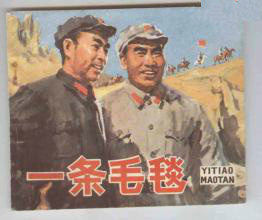
The tomb of Xu Xukui sleeps quietly among the green pines and cypresses in Huangqiao Park in Taixing City, Jiangsu Province. In the display cabinet of the Huangqiao Battle Memorial Hall of the New Fourth Army, an old blanket he used is displayed. All this tells people the little-known story of Xu Xukui.
Xu Xukui (1917-1940) was born in Huang'an (now Hong'an) County, Hubei Province, a famous general county in China. He joined the Chinese Workers' and Peasants' Red Army at the age of 14 and joined the Communist Party of China at the age of 17. During the Second Civil Revolutionary War, he grew from a squad leader of the Fourth Red Front Army to a platoon commander, company commander, battalion commander, and commander of the 25th Red Army. He participated in the anti-"encirclement and suppression" operations in the Hubei, Henan and Anhui revolutionary base areas.
He had a deep friendship with General Wang Bicheng, a tiger general from Hubei. He joined Wang Bicheng in the Long March in 25,000 and participated in the struggle to open up the revolutionary base areas in Hubei, Henan and Shaanxi. When he arrived in northern Shaanxi, he went to the Anti-Japanese Military and Political University to study together. After studying, he was assigned to the New Fourth Army to advance eastward to resist Japan.
In the summer of 1940, the main force of the New Fourth Army in the south of the Yangtze River was ordered to cross the river to the north. Wang Bicheng and Xu Xukui were ordered to lead their troops to fly over the natural moat and assembled in Yangzhou. At that time, the situation in northern Jiangsu had not yet been opened, and the struggle situation was very complicated. Han Deqin, a Kuomintang die-hards entrenched in northern Jiangsu (then chairman of Jiangsu Province of the Kuomintang and deputy commander-in-chief of the Lu-Su War Zone), constantly sent troops to attack the New Fourth Army and obstructed the New Fourth Army from advancing eastward to resist Japan.
On June 28, the New Fourth Army advanced column, with the cooperation of the Jiangsu-Anhui detachment and the uprising troops, won the victory in the defense of Guocun and played the prelude to the eastward advance against Japan. In mid-July, the troops were reorganized in Tangtou and formed the Northern Jiangsu Command of the New Fourth Army. Wang Bicheng served as the commander of the 2nd column of the Northern Jiangsu Command of the New Fourth Army. The Jiangkang 2nd Road led by Xu Xukui was reorganized into the 9th regiment of the 2nd column, with Xu Xukui as the head.
On August 10, 1940, the 9th Regiment of the 2nd Column of the Subei Command of the New Fourth Army was ordered to attack the Japanese puppet strongholds of Gushan and Xilai Town in the northeast of Jingjiang on the north bank of the Yangtze River. Xu Xukui personally led the troops, lightly attacked, set aside the Japanese and puppet strongholds, annihilated more than 30 Japanese troops and more than 100 puppet troops, and smashed the Japanese and puppet two retaliatory "mopping-up".
During the battle, Comrade Xu Xukui seized a blanket from the Japanese army. He cherished this blanket very much, because it was a testimony of our army's eastward advance against Japan. Like other captured military materials, it was bought by soldiers with blood and lives.
Just as the New Fourth Army was fighting against Japan, Han Deqin held a high-level military meeting in Dongtai on August 23, announcing the order to attack Huangqiao, and proposed the policy of "first south and then north", that is, first concentrate the main force to eliminate or expel the New Fourth Army Chen Yi Department, and then transfer troops to the north to annihilate the Eighth Route Army Huang Kecheng Department. On September 3, in order to test the reality of the New Fourth Army, Han Deqin gathered troops to attack the New Fourth Army in the area near the boundary and Huangqiao, and designated Li Mingyang as the commander-in-chief of the "advance suppression" army, and Li Shouwei and Li Changjiang as deputy commanders.
In the command post of the Subei Command Regiment of the New Fourth Army, Xu Xukui expressed to Commander Wang Bicheng and political commissar Luo Weidao his determination to undertake the most arduous task. On 6 September, when the enemy troops advanced to Yingxi, the 9th Regiment of the 2nd Column was ordered to counterattack. Under the leadership of Xu xukui, the soldiers bravely inserted into yingxi town from among the diehards's bunkers. he saw from the telescope that there was the enemy's radio antenna and heavy machine gun fire point in a place just across the river from our army. he concluded that it was the enemy's command post, so he decisively issued an attack order and led the 7th company to rush over. Xu Xukui rushed in front, shooting and throwing grenades. Finally, our army destroyed the brigade headquarters of the first security brigade. While organizing troops to eliminate the remnant enemy, a straying bullet hit Xu Xukui's chest. Before he could share the joy of victory with his comrades in arms, he stayed on this land forever......
After receiving the report of Xu Xukui's sacrifice, Wang Bicheng was very sad and ordered the soldiers of the 9th regiment to resolutely eliminate the remnant enemy and avenge Xu Xukui's death. The soldiers wiped out two regiments of the 1st Security Brigade and captured more than 1500 people.
Wang Bicheng rushed to Yingxi to bid farewell to the body of the 23-year-old regiment leader. Wang Bicheng choked back his grief and said: "His glorious sacrifice made me very sad. I lost an old classmate and old comrade-in-arms!"
On October 10, 1940, the Yellow Bridge decisive victory. The troops pursued the fleeing enemy in the direction of Haian and Dongtai. Xu Xukui's guard Jinshan handed over the blanket left by the colonel to Wang Bicheng.
After the national victory, Wang Bicheng has been carrying this blanket with him. As time went on, the blanket faded and the hair on it fell off. Seeing that the blanket was too shabby, the family secretly hid the blanket many times while he was not at home and put on a brand-new blanket on the bed. After returning home, Wang Bicheng always stubbornly asked his family to replace the old blanket. He said: "Since it came to me, it has crossed the Yangtze River three times. In January 1943, I took two brigades to the Maoshan area. In 1945, he withdrew from central Jiangsu to the north. In 1949, he fought across the river. From war to victory, from the country to the city, I have covered it. Someone asked me to change a new one, but I didn't promise. When I cover it, I think of Xu Xukui and the comrades who fought with us and died gloriously: Xiao Guosheng, Guo Meng, Liu Bisheng... We can't forget them. Today's victory was hard won!"
This blanket has been used by General Wang Bicheng for more than half a century. The rolling edge has been changed twice by the general's wife, Ms. Chen Ying. Three larger holes have also been patched. In March 1989, after the death of General Wang Bicheng, Ms. Chen Ying personally presented the blanket to the Huangqiao Battle Memorial Hall of the New Fourth Army.
Source: People's Daily Online
Previous Page
Previous Page

Address: Buildings 4 and 5, Kechuang Huigu Park, Hongshun Road, Huaming High-tech Zone, Dongli District, Tianjin
Tianjin High-end Equipment Research Institute, Tsinghua University, Copyright
Website Construction: China Enterprise Power Tianjin
sweep
Pay attention to the official WeChat public number