




PARTY BUILDING
party building work
Yuhua Heroes Deng Zhongxia's "Victory" Poem
There are thorns that cannot be cut off?
Is there a jackal tiger that can't be killed?
Is there a mountain that can't be pushed over?
You only have to struggle, fierce brave struggle;
It continues, it continues forever.
Victory is yours!
Victory is yours!
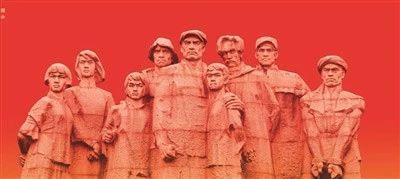
This poem entitled "Victory" was written by Deng Zhongxia, an important leader of the labor movement in the early days of the founding of our party, an outstanding leader of the labor movement, a proletarian revolutionist, a theorist, and a hero of Yuhua.
Deng Zhongxia, born in October 1894, Hunan Yizhang people. He studied at Hunan Higher Normal School and Peking University. He participated in the May Fourth Movement in 1919 and joined the early organization of the Communist Party in Beijing in October 1920. He was one of the earliest members of the Communist Party of China. In 1925, he participated in the organization and leadership of the provincial and Hong Kong strikes, and successively served as the leadership of the All-China Federation of Trade Unions and the local provincial party committee. He was arrested in Shanghai in May 1933 and killed by Kuomintang reactionaries in Yuhuatai, Nanjing in October. He was 39 years old.
The poem "Victory" powerfully demonstrates Deng Zhongxia's lofty belief in the cause of communism, his firm belief in the victory of the revolution, and his strong fighting spirit to overcome difficulties. More importantly, he really explained to us where and how victory came from with his struggling, fearless and glorious life.
Victory is the struggle to put faith in the blood. From 1927 to the liberation of Nanjing on April 23, 1949, tens of thousands of outstanding Chinese sons and daughters died calmly in Yuhuatai. When looking back on the deeds of Yuhua heroes represented by Deng Zhongxia, it is not difficult to find that they have three common characteristics: first, they are generally very young at the time of sacrifice, and some are even only 16 or 17 years old; second, their cultural level is very high, and many comrades have studied and become well-known institutions of higher learning at home and abroad; third, these heroes have good family conditions and live a rich life. However, what was the force that prompted them to shed their lives and blood for the revolutionary cause? There is no doubt that it is the power of faith, their lofty belief in the cause of communism, and their just responsibility to the country and the nation.
In 1930, Deng Zhongxia returned from the Soviet Union and was sent to work with He Long in western Hunan and Hubei. Because he had never engaged in a peasant movement or military struggle, coupled with blind line guidance, he made some mistakes in command. In late 1931, he was removed and transferred back to Shanghai. In the meantime, Deng Zhongxia lived a difficult life by earning 7 yuan a month as an apprentice in a cotton mill. His wife also made a small fortune due to overwork, but he was always determined to the revolutionary cause. During Deng Zhongxia's arrest, the secret party branch in prison sent someone to ask him when he was out on the air: "Everyone wants to know what your political attitude is?" Deng Zhongxia said: "Good question! Please tell comrades that I, Deng Zhongxia, am burnt to ashes and a communist!"
Victory is a struggle that raises the people above their heads. The victory of the revolution is for the people to get rid of suffering, the establishment of a new China is for the people to live a good life with equality and freedom, and the realization of the great rejuvenation of the Chinese nation is for the people to enjoy a better life. Deng Zhongxia became the leader of the labor movement precisely because he loved and relied on the people. He once wrote in his diary: "In Changxin Store, I saw many victims of men, women and children gathered around the station. The open-air mat was cold and snowy. There was no clothes to wear, no food to eat, no room to live in. The haggard and yellow complexions and the clothes with thousands of holes and knots aroused my' painful sympathy '."
At the beginning of the provincial and Hong Kong strike, Deng Zhongxia attached great importance to the publicity and education of the striking workers. By presiding over the establishment of the Workers' Road Daily, the Labor College, the workers' propaganda school, the workers' tutorial school and the labor women's tutorial school were held. Zhou Enlai and other leaders were invited to make political reports, so as to raise the workers' consciousness and guide them to strive hard, it has made outstanding contributions to awakening the popular strike to effectively combat the rule of British imperialism in Hong Kong's economy.
Victory is a struggle that puts life and death aside. At the last moment of sacrifice, Deng Zhongxia wrote a letter to the Party Central Committee, saying affectionately: "Comrades, I am about to arrive in Yuhuatai District, you continue to work hard! The final victory is ours! "At dawn on September 21, 1933, Deng Zhongxia put on his clothes calmly and shouted" Down with the Kuomintang! "Long live the Chinese Communist Party! "Uniting the proletariat of the world! "later he died bravely.
Deng Zhongxia once wrote in prison: "Chinese people attach great importance to death. Death is more important than Mount Tai and lighter than a feather. In order to get a promotion and a fortune, the work of sneaking around can also be called living and dying, which is really lighter than a feather. A person dies for the benefit of the overwhelming majority of the Chinese people and for the benefit of the industrious masses. This is even though he is dead, it is heavier than Mount Tai. 'it is precisely because there are countless strivers like deng zhongxia who put life and death out of consideration that the flower of revolutionary victory blossoms. Without the death of the martyrs and the sacrifice of the heroes heavier than Mount Tai, the victory of the revolution would be impossible to talk about.
Victory is a struggle that sets persistence as eternal. Persistence is victory. Without strong strategic determination and long-term patience, victory will not be achieved. Although Deng Zhongxia suffered from the unfair treatment and cruel criticism of Wang Ming and others, and despite the coercion and inducement of the Kuomintang government, he has always firmly carried out the party's decisionsset. He said: "It is inevitable for a person to encounter setbacks, and it is not terrible. The terrible thing is that he loses confidence when he is frustrated."
In January 1933, after the China Mutual Relief Association was severely damaged by the enemy, Deng Zhongxia was transferred to the party secretary and director of the association. He carried out recovery work in an extremely difficult and dangerous environment, which also led to his fourth arrest in May of that year. With all his life's time, energy and even life, Deng Zhongxia insisted on doing one thing well, that is, working for the party. No matter whether he is reused or not, whether his work is in great danger, he "continues, forever".
"No matter how high the mountain is, if you climb up, you can always reach the top. No matter how long the road is, if you go down, you will surely reach it. "General Secretary Xi Jinping's words vividly interpret the spirit of the Chinese people. Today, socialism with Chinese characteristics has entered a new era. At this critical moment in history, we must, through unswerving and indomitable struggle, embark on a road to a modern and powerful country and a road to victory in realizing the great rejuvenation of the Chinese nation!
Source: Party Building Network

Address: Buildings 4 and 5, Kechuang Huigu Park, Hongshun Road, Huaming High-tech Zone, Dongli District, Tianjin
Tianjin High-end Equipment Research Institute, Tsinghua University, Copyright
Website Construction: China Enterprise Power Tianjin
sweep
Pay attention to the official WeChat public number