




PARTY BUILDING
party building work
Chen Yun on the "Three Principles" of Inner-Party Life"
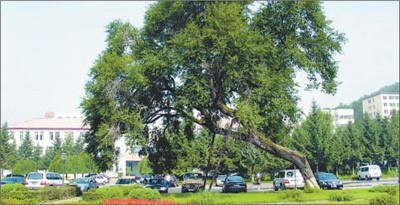
South Manchu Branch (Liaodong Branch) is located in the original site.
Information picture
In October 1946, the Kuomintang tore up the "armistice order" and reignited the flames of war in the northeast, concentrating its forces on the southern Manchurian base of the Communist Party of China. The war was serious, and serious differences of opinion were exposed within the Party in the South Manchuro region. There was a serious enemy situation outside and a dispute of opinion inside, and Comrade Chen Yun volunteered to work in Nanman. Mao Zedong personally drafted the telegram and said: "Chen Yun went to South Manchuria as secretary and political commissar, very good, hope to go quickly."
Chen Yun, who was ordered in the face of danger, seriously proposed at the first enlarged meeting of the South Manchurn Branch in February 1947 that unity within the party must be strengthened. He said: at any time, we should have a principled attitude towards the disputes within the party, that is, "an honest attitude, yes, yes, no, no";"a responsible attitude, the arguments are small, the principles are big, the history is small, the present work is big". In April, at the second enlarged meeting of the Nanman Branch, Chen Yun once again emphasized the need to improve party life, strengthen party building, resolve unprincipled disputes with serious principles, and put forward three principles for party life.
Regarding criticism and self-criticism, Chen Yun proposed the principle of being positive and frank about right and wrong. He believes that it is a principled attitude to distinguish right from wrong in a positive and frank manner, not to offend people. Otherwise, it will encourage chaos and will not solve the problem. The scolded should not jump at the touch. "Big radio" is better than "small radio", and it is better to talk about it in front than behind it. Whether it is true or not is clear as soon as we meet.
With regard to the life of the party organization, Chen Yun proposed that the principle of democratic centralism must be strictly implemented. he stressed: democracy not only has general needs, but has special needs under the present circumstances. It is impossible to concentrate without an exchange of views, and it is inevitable that mistakes will be made in the form of concentration. If there is no democracy and only concentration, the less concentration is bound to be; if there is more exchange of views, it will be easier to concentrate. Democracy must be centralized. Personal opinions are not adopted, one cannot be angry, and one cannot disrespect centralized decisions.
Regarding the rights and obligations of party members, Chen Yun proposed that the party should be allowed to express different opinions, but the principle of "four obedience" must be adhered. He pointed out: It is wrong for every party member to stop working when encountering unsatisfactory things and people, or to be passive in speech and action. The importance of observing discipline is precisely when one's own opinions are not passed, or when one's own problems are concerned. In our Party, the interests of individual members must be subordinated to the interests of the whole Party. The "four obediences" cannot be less than one.
These three principles have gradually resolved the differences within the party in the South Manchurn region and laid a solid organizational guarantee for the consolidation and development of the revolutionary cause of South Manchurn. Serious inner-party life is not only an important way to solve the party's own problems, but also an important magic weapon for the party's continuous development and growth. At present, in the great struggle, great project and great cause, the "three principles" of inner-party life put forward by Chen Yun still have important practical significance.
(author's unit: propaganda and Education Bureau of the Central Party History Research Office)
Wen Shifang
Source: People's Daily-People's Daily

Address: Buildings 4 and 5, Kechuang Huigu Park, Hongshun Road, Huaming High-tech Zone, Dongli District, Tianjin
Tianjin High-end Equipment Research Institute, Tsinghua University, Copyright
Website Construction: China Enterprise Power Tianjin
sweep
Pay attention to the official WeChat public number