




PARTY BUILDING
party building work
Several details of the evolution of the flag of the Communist Party of China
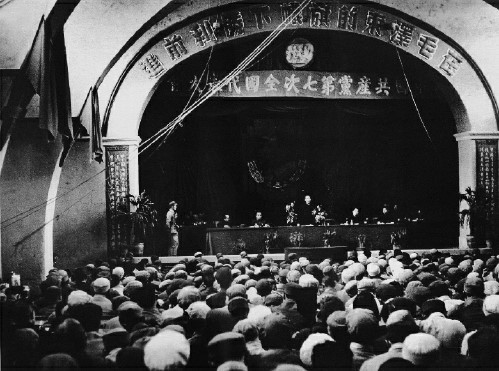
The venue of the Seventh National Congress of the Communist Party of China, the first time the party flag was hoisted at the party's National Congress
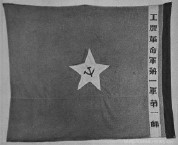
The first official flag played by the Communist Party of China: the flag of the first division of the first army of the National Workers and Peasants Revolutionary Army
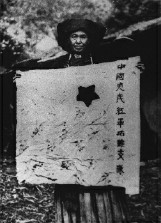
Mrs. Xiaoyedan and the Flag of the Chicken Selling Detachment
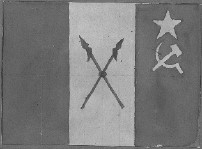
The design draft of the party flag symbolizing the alliance of workers and peasants and the armed struggle collected during the Seventh National Congress of the Communist Party of China
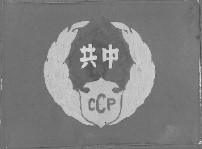
Party Flag Design Drafts for Highlighting the Leadership of the Communist Party of China Collecting During the Seventh National Congress of the Communist Party of China
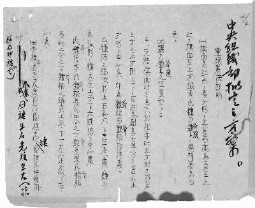
The Party Flag Production Plan Drafted by the Organization Department of the CPC Central Committee in 1950
The style of the Chinese Communist Party flag that we are familiar with today was standardized 75 years after the party was born, and it took 81 years to formally write the party flag into the party constitution. What is the story behind this long journey?
Sponsored by China Literature and History Publishing House and co-organized by the Chinese People's Political Consultative Conference Literature and History Museum, the "Red Flag Fluttering --- Precious Archives Exhibition of the Birth Process of the Communist Party of China" was launched recently. We take this opportunity to sort out relevant historical materials, review the birth process of the party flag, and review the party's Glorious history.
Hit the flag of the Communist Party.
For a long time after the founding of the Communist Party of China, there was no clear and unified flag and logo. Until the Nanchang Uprising, the uprising troops still used the designation of the Second Front Army of the National Revolutionary Army, and at the same time used the Kuomintang army flag used during the Northern Expedition.
On August 7, 1927, the CPC Central Committee held an emergency meeting in Hankou. "After the August 7th Conference, armed uprisings were launched in various places. At this time, although the Central Committee of the Communist Party of China established the policy of establishing a democratic regime for workers and peasants, it still proposed to organize workers and peasants to riot under the banner of the leftist Kuomintang.
Out of a clear understanding of the revolutionary situation, on August 20, 1927, Mao Zedong solemnly stated in a letter to the Central Committee of the Communist Party of China in the name of the Hunan Provincial Committee of the Communist Party of China: "We should no longer play the flag of the Kuomintang. We should raise the flag of the Communist Party high ...... The flag of the Kuomintang has become the flag of the warlords, and only the flag of the Communist Party is the flag of the people ...... It can be concluded that the flag of the Kuomintang can no longer be fought, and if it is fought again, it will surely fail again ...... We should immediately and resolutely raise the red flag ...... "This is the first time that the Chinese Communists have made it clear that the revolution can succeed.
On September 9, 1927, Mao Zedong, Lu Deming and others led the Autumn Harvest Uprising on the border between Hunan and Jiangxi, and the troops were reorganized into the First Division of the First Army of the Workers' and Peasants' Revolutionary Army. Mao Zedong proposed that the Autumn Harvest Uprising should play a banner of its own and instructed He Changgong, a staff officer of the Workers' and Peasants' Revolutionary Army, to be specifically responsible.
According to He Changgong's recollection, "The pattern of the flag and armband was designed by Comrade Yang Lisan, the deputy commander of the division at that time, and I was asked to make it according to the pattern." "The flag of the First Division of the First Army of the Chinese Workers' and Peasants' Revolutionary Army, which was designed and made by me, was a large five-pointed star in the middle of the bright red flag, with the pattern of the sickle and axe, very powerful......"
In this way, the "Flag of the First Division of the First Army of the Workers' and Peasants' Revolutionary Army" became the first official flag that the Communist Party of China really showed. Since then, the Chinese Communists have clearly raised their own banner.
"The army is called the worker-peasant revolution, the flag sickle and axe. Kuanglu area does not stop, to go straight to Xiaoxiang. The landlords are oppressing, and the peasants are all at odds with each other. Autumn harvest season dusk cloud sorrow, thunderbolt a riot. "Mao Zedong recorded the scene at that time in the" Xijiang Moon Autumn Harvest Uprising.
According to the memories of those who experienced it, after the military flag was designed, dozens of tailors in Xishui County took on the task of sewing the military flag. The owner of the cloth shop gave the local Pingjiang red cloth free of charge and made 100 red flags and 1000 armbands in a surprise attack. After marking the designations of different troops, they were distributed to all regiments, battalions and company-level units. Unfortunately, due to the turbulent war environment, these 100 flags could not be preserved.
On September 5, 1958, He Changgong said in a report at the Marxist-Leninist Amateur University of the People's Liberation Army: "In this way, the First Division of the First Army of the Workers' and Peasants' Revolutionary Army was established. In China, in the East, the first red flag of revolution was raised."
This is the first banner played by the Communist Party of China-the flag of the First Division of the First Army of the Chinese Workers' and Peasants' Revolutionary Army. Judging from the pattern elements of the flag, this military flag already has the main elements of the future party flag style, and the subsequent party flag has a clear inheritance relationship with this military flag.
Early no uniform specification style
After the Autumn Harvest Uprising, on September 19, 1927, the Provisional Political Bureau of the Central Committee passed a resolution in accordance with the changes in the revolutionary situation, announcing that "the article in the August resolution on the leftist Kuomintang movement and the execution of riots under its banner must be canceled." The banner of "Kuomintang" put forward the slogan of propaganda and the establishment of the Soviet Union.
On October 15, 1927, the joint meeting of the Southern Bureau of the Communist Party of China and the Guangdong Provincial CPC Committee adopted the Circular of the Guangdong Provincial CPC Committee (No. 14)-the latest work program adopted by the Joint meeting of the Southern Bureau and the Provincial CPC Committee, which clearly pointed out: "all the blue sky and white sun flags will be abolished, and the red flag will be marked with axes and sickle, which is the same as the international flag. "This is the first time that a leading organ of the Party has made a formal decision on the Party's banner. The pattern of the Chinese Communist Party flag, which is "marked by a red flag and an axe and a sickle", basically frames the outline and constituent elements of the party flag.
On December 11, 1927, the Guangzhou Uprising broke out. The soldiers of the uprising abandoned the Kuomintang's blue sky and white sun flags and other badges on the streets and put on red ties. For a time, "the red flag crossed by sickle and axe, floated over the whole city of Guangzhou".
With the outbreak of the Nanchang Uprising, the Autumn Harvest Uprising, and the Guangzhou Uprising, the Chinese Communist Party's armed struggle against the Kuomintang reactionaries spread rapidly across the country. In the process of leading armed riots, local party organizations have played red flags composed of five stars, sickles, axes or hammers representing the armed forces of workers and peasants.
The party flags used at this time were all selected and produced by party organizations at all levels. Limited to the difficult environment at the time, a unified specification has not yet been formed. From today's point of view, these flags of different shapes and forms have left us valuable information on the history of the party.
In April and September 1930, the Central Military Commission of the Communist Party of China promulgated the "Notice on the Regulations on the Banners of the Red Army at All Levels" and the "Draft for the Establishment of the Chinese Workers' and Peasants' Red Army" respectively, which stipulated the Red Army Banners. On this basis, on March 18, 1931, the Central Revolutionary Military Commission of the Chinese Soviet Union promulgated the printed style of the Red Army flag of the Soviet Union and mass organizations, which further clearly defined the pattern of the red army flag sickle, hammer and five-pointed star, and stipulated that the five-pointed star should be mentioned on the top side of the flag to highlight the leading position of the party.
From January 22 to February 1, 1934, the Second National Congress of the Chinese Soviet was held in Ruijin. At the meeting, the "Decision of the Second National Soviet Congress on the National Emblem, National Flag and Military Flag" was passed, which formally stipulated The national emblem, national flag and military flag of the Chinese Soviet Republic. This has had an important impact on the standardization and unification of the party flag and emblem in the future.
hold high the banner of national unity
In October 1934, after the failure of the fifth anti-"encirclement and suppression" campaign, the main force of the Central Red Army was forced to carry out a strategic shift. In an extremely difficult environment, the flag played an irreplaceable role in inspiring the spirit of the Long March.
In May 1935, the Red Army crossed the Jinsha River into the Yi area of Liangshan, Sichuan, and was blocked by the Yi people and tribal armed forces who did not know the truth. The Red Army strictly enforced the Party's national discipline and would never shoot at the Yi compatriots. The leader of the Yi Guoji family, Guoji Xiaoyedan, was deeply moved and held the famous Yi Sea Alliance ceremony with Commander Liu Bocheng in accordance with Yi customs. The Red Army awarded him the banner of "Chinese Yi People's Red Army Guji Chicken Detachment. Later, Xiao Ye Dan took seven days to escort all the Central Red Army out of the Yi area, which is more than 100 miles away.
After the passage of the Red Army, the "Guji Detachment of the Chinese Yi People's Red Army", led by Xiao Yedan, united with other families and fought against the Kuomintang army for more than five years. In the hard years, Xiaoyedan took the team flag as a witness of national unity and the hope of national liberation, and treasured it in the interlayer of his personal clothes to avoid the search and persecution of the Kuomintang reactionaries.
In 1941, before Xiao Ye Dan was arrested, he handed the team flag to his wife and younger brother, saying: Only the Communist Party and the Red Army talk about national equality and treat us Yi people as human beings. In case I die, you must protect this flag and give it to Commander Liu in the future!
On June 18, 1942, in the internal fighting of the Yi nationality provoked by the Kuomintang, Xiao Ye Dan, who was released from prison, was ambushed by tribal armed forces bought by the Kuomintang army and died at the age of 49.
In 1950, Mianning County was liberated. Following her husband's will, Xiaoyedan's wife solemnly handed over the treasured flag of the "Chinese Yi People's Red Army Guji Detachment" to Liu Bocheng, then chairman of the Southwest Military and Political Committee and commander of the Second Field Army of the Chinese People's Liberation Army. Later, Liu Bocheng transferred the team flag to the Military Museum for collection.
Hold high the banner of unity and resistance
After the outbreak of the National Anti-Japanese War, the Chinese Workers' and Peasants' Red Army put the national righteousness as the most important thing. In order to resist Japan and save the country, it reluctantly took off the Red Army uniform, took off the Red Army hat, changed into the National Revolutionary Army uniform, put on the blue sky and white sun cap badge, and once again raised the National Revolutionary Army. Army flag. Many Red Army soldiers couldn't figure it out for the change of clothes. Zuo Quan, deputy chief of staff of the adapted Eighth Route Army, once said emotionally: "We take down the Red Star, not to throw it away, there is the blood of the martyrs and our ideals; to look from a distance, in order to resist Japan and save the nation, we can save the Red Star and put it in our hearts; the Red Star is in our hearts, so we won't lose our way ......" After that, in order to make clear its political and national stand, the Communist Party of China better mobilized, organized and armed the masses, which not only met the needs of the construction of the "three three system" political power in the Anti Japanese base areas behind the enemy lines, but also did not affect the overall situation of the cooperation between the Kuomintang and the Communist Party. At one time, the national flag of the Republic of China was used as the war flag.
In the Shaanxi-Gansu-Ningxia Border region, in the anti-Japanese base areas, in carrying out party work and major commemorative activities, the flag of the Communist Party of China is still flying high, playing a huge leading and calling role.
In 1939, Zhao Yuqin, a female cadre of the Shandong Branch of the Northern Bureau of the CPC Central Committee, was sent to Ma Tou Ya Village in Yishui County to carry out party activities. Zhao Yuqin and several women cadres sewed a party flag and handed it to Liu Hongxiu, then party branch secretary of Matouya Village. Since then, this party flag has witnessed the joining of several groups of new party members in Matouya and the unyielding resistance of local Communist Party members to the invaders. In the harsh war environment, in order not to expose the party organization, Liu Hongxiu and his wife risked their lives several times to rescue the party flag under the noses of the Japanese and Kuomintang troops and protect the local party organization. This party flag was treasured by them for 50 years until it was donated to Yishui County Archives in 1989. This is also the first party flag found in the Shandong Anti-Japanese Base.
For the first time, the Party flag was hoisted at the plenary session of the Seventh Congress.
With the deepening of the revolutionary struggle, as a mature proletarian party, the Communist Party of China began to realize that it should have its own formal and unified banner.
On April 28, 1943, the political Bureau of the CPC Central Committee held a meeting in Yangjialing, Yan'an, and formally determined the style of the party flag: "the style of the CPC flag is a ratio of three to two, with an axe and a sickle on the left corner and no five-pointed star, and entrusted the General Office of the CPC Central Committee to make a batch of standard party flags and distribute them to the main organs. "According to the resolution of the Politburo meeting, the party flag made by the general office of the CPC Central Committee at that time was 120cm horizontally and 80cm vertically. The middle of the upper left corner (1/4 of the whole flag) was a yellow" axe sickle "cross-formed party emblem pattern. Its diameter was 30cm, and the flagpole cover was white and 6.5cm wide. The flagpole cover was not included in the scale of the whole flag. In this way, the first standardized party flags produced by the Communist Party of China were born in Yan'an.
From April 23 to June 11, 1945, on the eve of the victory of the War of Resistance Against Japan, after intense and careful preparations, the Seventh National Congress of the Communist Party of China was held in the Yan'an Central Auditorium. Huge portraits of Mao Zedong and Zhu De are hung in the middle of the rostrum, and six bright party flags are obliquely inserted on the left and right sides. The red flag and yellow sickle hammer heads are particularly eye-catching. This is the first time that the Communist Party of China has hoisted the party flag at the party's National Congress.
Before the conference, the Preparatory Committee of the Seventh National Congress of the Communist Party of China received many letters from representatives from all over the country, requesting that the party flag of the Communist Party of China be studied at the party congress, and clear regulations should be made. The characteristics of nationalization. To this end, the Central Committee of the Communist Party of China has set up a special Party Flag and Party Song Committee to take full charge of related matters. During the Seventh National Congress of the Communist Party of China, the Party Flag and Party Song Committee issued a notice to solicit party flag designs. In just over a month, it received more than 230 party flag designs from Yan'an party, government and military leading organs, the Central Party School, Lu Xun Art Institute, and the political Department of the Joint Defense Army.
On the whole, the application pattern is basically red and yellow as the main colors. Red symbolizes the revolution, and yellow represents the light of the revolution, which means that the proletariat will surely win the revolution and create an infinitely bright new world. On the pattern image, elements such as sickle, hammer, spear and five-pointed star appear most frequently.
It took 81 years to write the party constitution.
On the eve of the founding of New China, in view of the large number of people asking about the party flag system, the Propaganda Department of the CPC Central Committee issued a notice on the party flag issue on June 15, 1949:
There was no formal regulation on the 1. of the CPC flag in the past, but it is now being drafted. All localities should not publish the format, size and explanation of the party flag before it is promulgated.
Those who 2. the masses who fly the Chinese People's Liberation Army flag or hammer and sickle flag or red flag in the sky and the sky are all listening. However, those who hang the Soviet flag by mistake should be discouraged in good faith to avoid misunderstanding and rumor-mongering.
The 3. Soviet flag has a red background, with a yellow cross hammer sickle in the upper left corner and a yellow five-pointed star on it, whose length and height are two to one. Soviet flag without party.
In June 1950, on the occasion of the birthday of the first party after the founding of New China, various places asked about the party flag. Yang Shangkun, then director of the General Office of the CPC Central Committee, personally arranged for Zhong Ling, who participated in the design of the national emblem, to draw three party flag styles and wrote to Liu Shaoqi, vice chairman of the CPC Central Committee. After research, the Central Organization Department drew up a plan for making the party flag. Subsequently, the Central Organization Department made regulations on the production of the party flag: "The flag is red, rectangular, its length and height are three to two, and the upper left of the flag is decorated with a yellow sickle and axe. The flagpole sleeve is white. "When the party flag and the national flag are hoisted at the same time, the national flag is on the right and the party flag is on the left."
On June 17, 1951, the Central Committee of the Communist Party of China approved the East China Bureau's request for instructions on the style of the party flag: "Before the Party Central Committee has formally stipulated the unified style of the party flag, on the 30th anniversary of the party, all localities can follow the old rules., All use the red flag and sickle hammer head, and there is no need to add the Chinese Communist Party to the flag."
In September 1952, the General Office of the Central Committee of the Communist Party of China issued another article on the announcement of the unified pattern of the party flag: "Comrades from the Central Committee, this matter needs to be decided by the National Congress. During this transitional period, the upper left corner of the red flag can only be used. The style of a hammer head and sickle. "The party flag has only a hammer and sickle, not five stars (the Soviet flag has five stars). Please pay attention to this point."
The pattern of red flag surface, yellow hammer and sickle constitutes the basic framework of the party flag, which is still in use today.
In September 1982, the 12th National Congress of the Communist Party of China was held, and the party emblem was hung above the rostrum for the first time. Since then, hanging the Party emblem has become the practice of the Party's National Congress since then. However, the design of the party emblem at this time is a combination of square handle sickle and square hammer head, which is still different from today's party emblem in details.
In April 1995, the Central Committee of the Communist Party of China instructed the Organization Department of the Central Committee to draft the "Regulations on the Production and Use of the Party Flag and Emblem of the Communist Party of China" in conjunction with relevant departments. On September 21, 1996, with the approval of the Central Committee, the General Office of the Central Committee of the Communist Party of China issued this "Regulations", stating: "The flag of the Communist Party of China is a red flag decorated with a golden party emblem. The emblem of the Communist Party of China is a design consisting of a sickle and a hammer. "The" Regulations "have a total of 12 articles, which clearly and specifically stipulate the nature, style, specifications, production and use of the party flag and emblem, and are accompanied by standard patterns and manufacturing instructions. At this point, the flag and emblem of the Communist Party of China finally have a unified and clear standard.
In November 2002, the 16th National Congress of the Communist Party of China was held in Beijing. On November 14, at the closing meeting of the 16th National Congress of the Communist Party of China, the "Resolution on the Constitution of the Communist Party of China (Amendment)" was passed. The newly revised party constitution has added a chapter "party emblem and flag" as the eleventh chapter, which clearly stipulates the nature, production and use of the party emblem and flag design.
Since the founding of the Communist Party of China in 1921, after 81 years, the party emblem and flag system has been established and standardized in the party constitution. This is of great significance for safeguarding the dignity of the party emblem and flag, enhancing the party's charisma and cohesion, and enhancing the sense of responsibility, mission, and organizational discipline of the majority of party members.
Wang Wenyun, Lu Xiaoxiao, Niu Mengyue
Source: People's Political Consultative Conference
Previous Page
Previous Page

Address: Buildings 4 and 5, Kechuang Huigu Park, Hongshun Road, Huaming High-tech Zone, Dongli District, Tianjin
Tianjin High-end Equipment Research Institute, Tsinghua University, Copyright
Website Construction: China Enterprise Power Tianjin
sweep
Pay attention to the official WeChat public number