




PARTY BUILDING
party building work
The Flying of the Heavenly Gren is Still Elegant-Telling the Little-Known Stories of the Red Army's Eastern Expedition
Original title: Flying over the natural moat is still calm
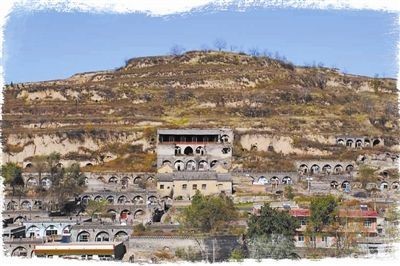
The former site of the Red Army's Eastern Expedition Headquarters is located in a house called "Chengmen Li" on the east hillside of Daali Jiao Village, Taohongpo Town, Jiaokou County, Shanxi Province.
It sits north to south and is a three-entry courtyard house, which is composed of a cave structure and a wooden structure.
People know about the Long March, but many people don't know about the Red Army's Eastern March.
Today, 80 years later, when we look back at this important turning point of the Chinese revolution from a civil war to a war of national liberation, we can find that it was a wise move by the Central Red Army and the Northern Shaanxi Red Army to take the initiative to carry out a Jedi counterattack with the aftermath of a hundred battles.
In the face of the Japanese imperialism's encroachment on the land of China, and the Kuomintang government's large-scale invasion of the Shaanxi-Gansu Soviet area, the Communists once again demonstrated their broad-mindedness, mature political wisdom and extraordinary military courage.
After the victory of the Eastern Expedition, at the celebration meeting held at Taixiangsi, Yanchuan County, northern Shaanxi, Mao Zedong pointed out when summing up the Eastern Expedition: The Red Army won the Eastern Expedition, aroused the people, expanded the Red Army, and prepared property. From the perspective of longer-term and deeper spiritual inheritance, the Eastern Expedition is not only a legendary business card of the Chinese revolution, but also a spiritual negative of the Chinese nation's indomitable, self-reliant and striving for strength.
-Editor (Cheng Hongyi, Chang Xuemei)
a resolution of disagreement
The Red Army's Long March to northern Shaanxi was the six easy foothold, and finally chose Yan'an as its base camp.
In 1935, although the CPC Central Committee and the Central military Commission led the army and people of the Shaanxi-Gansu Soviet area to smash the Kuomintang's third "encirclement and suppression", gained a firm foothold and created conditions for carrying out a new revolutionary situation, the situation faced by the base camp of the Shaanxi-Gansu Soviet area was still very serious: there were only more than 10000 people in the Red Army, the Soviet area was small, the population was sparse, the economy was backward, the lack of food and industrial products, and the Red Army was poor, and the Red Army was poor. The Kuomintang re-mobilized the troops of the five provinces of Shaanxi, Gansu, Ningxia, Suiyuan, and Jin to carry out "encirclement and suppression" in the Shaanxi-Gansu Soviet area, and stepped up economic blockade and political destruction.
Where is the way out for the Red Army and the Soviet Area?
On December 17, 1935, at the Wayaobao meeting, many leading comrades who had suffered from the loss of their base areas had different opinions on this: some advocated that the Red Army should focus on consolidating the Shaanxi-Gansu Soviet area and gradually develop north of the Weishui River, seeking to fight the Kuomintang Central Army, the Northeast Army and the 17th Road Army; some advocated going west to Ningxia for development; some advocated immediately going north to Wuyuan and Baotou to compete with the Japanese army, it can also open up contacts with the Soviet Union and obtain international support.
However, Mao Zedong advocated that the Red Army should take advantage of the upsurge of the national anti-Japanese war and cross the Yellow River eastward to Shanxi to consolidate the Soviet area in the course of development.
When expounding this proposition, he pointed out: crossing the Yellow River eastward into Shanxi to fight, one can further north into Suiyuan or eastward into Hebei, strive for direct combat against Japan, combine the domestic revolutionary war with the national anti-Japanese war, and promote the new climax of the anti-Japanese movement in North China and even the whole country. It can also avoid confrontation with the Northeast Army and the 17th Route Army, which is conducive to establishing an anti-Japanese national united front, it was forced to transfer the Jinsui army into Shaanxi back to Shanxi to ease the military pressure on the Shaanxi-Gansu Soviet area. Shanxi is densely populated and rich in products, which is convenient for the Red Army to expand its troops, solve the problem of supplies and establish anti-Japanese base areas. Eventually, the meeting accepted Mao's proposition.
Although the resolution of the Wayaobao Conference has established the strategic direction that the main direction of the Red Army's development should be in Shanxi to the east and Suiyuan to the north, many people still have doubts about the appropriateness of the eastern expedition to Shanxi. For this reason, Mao Zedong stated on different occasions: In order to defend the Shaanxi-Gansu base area, the Red Army's eastern expedition is the only choice for "consolidation through development. The Political Bureau of the CPC Central Committee held an enlarged meeting in Shangyiqian Village, Shikou Village, Sijiang Village, Luocun and other places in the western Shanxi region from March 20 to 27, 1936. The strategic principle of "seeking consolidation through development" is that the Red Army is mainly operating in Shanxi, and it is also necessary to prepare for sports warfare in Hebei, Shanxi and Suiyuan provinces. Mao Zedong particularly emphasized: "Shanxi's management is indispensable, because without Shanxi, it is impossible to imagine a large-scale war with the Japanese emperor."
From the preparation of the Eastern Expedition to the implementation of the action, there have been discussions and even debates of different opinions. Qin Bangxian, Wang Jiaxiang and He Kequan all held different opinions on the Eastern Expedition. Lin Biao even once disagreed with Mao Zedong's idea of marching eastward into Shanxi and wanted to lead his army to fight guerrillas in southern Shaanxi. However, Mao Zedong, Zhang Wentian and other leaders humbly listened to different opinions, patiently persuaded them, and finally formed a situation of unity against the enemy through a series of meetings and telegrams, which ensured the victory of the Eastern Expedition.
A ballad becomes a war song
In the memorial hall of the Red Army's Eastern Expedition in the corner of the county seat of Shilou County, a huge stone carving "Song of the Red Army's Eastern Expedition" is embedded in the high wall: "Miyun covers the stars, ten thousand ships fly in disorder, national heroes crossing the Yellow River, gearing up to kill high, our iron Red Army. ...... The red flag was floating in Shanxi, the compatriots welcomed it together, the traitor's plot was hit, everyone came to resist Japan and save the country, workers, peasants, businessmen and soldiers ".
Cao Zheyuan, director of the Shilou County Cultural Relics and Tourism Bureau, introduced: During the Eastern Expedition, Lu Dingyi, then the head of the Propaganda Department of the Political Department of the Chinese People's Red Army Anti-Japanese Vanguard Army (the Red Army officially renamed the Chinese People's Red Army Anti-Japanese Vanguard Army on March 10, 1936), faced The soldiers of the Red Army couldn't contain the joy of victory.
This war song is majestic, the lyrics are sonorous, and the tune of northern Shaanxi is very melodious. The Red Army's Eastern Expedition was in the cold winter. Most of the soldiers only wore thin coats and worn-out linen shoes. Facing the difficult living conditions and cruel fighting life, the widespread singing of the "Red Army's Eastern Expedition Song" inspired the high morale of the Red Army soldiers. At the same time, it was deeply infected with the boatmen and local people who helped the Red Army cross the river. At that time, there was an old boatman named Ren Yongzhong in Jundu. Regardless of his personal safety, he braved a hail of bullets to transport the Red Army back and forth many times. After crossing the river, he sent his children to join the Red Army, and then sold his boat to join the revolution.
The "Song of the Red Army's Eastern Expedition" not only encourages the Red Army soldiers to fight bravely, but also realistically outlines the great heroic posture of the Workers and Peasants Red Army in overcoming difficulties and breaking through the bamboo, which can be called the epic of the Red Army's Eastern Expedition. At that time, the Red Army, which marched with victory, resounded across the banks of the Yellow River, making the Jinsui Army fearful and invincible. Later, our party issued an armistice proposal and a unified anti-Japanese campaign to return to the division. After the Red Army successfully completed its mission, it sang this song triumphantly in the Shaanxi-Gansu Soviet area. Many years later, Marshal Nie Rongzhen often recalled the fighting experience of the Red Army's Eastern Expedition. He said that every time he sang this song, he could not help but feel unable to control himself.
The chain reaction of the eastern expedition
In summing up the great historical significance of the Long March, Mao Zedong once vividly used "manifesto, propaganda team, planter" as a metaphor. The Red Army's Eastern Expedition is the continuation and extension of the Long March, the prelude and prelude to the War of Resistance Against Japan, and its significance is significant.
Cao Zheyuan, director of the Shilou County Cultural Relics Tourism Bureau, who has been committed to the study of the Red Army's eastern expedition, skillfully used a set of figures to summarize the role and significance of the eastern expedition: an eastern expedition order; Two troops (initially only the Red First Army and the Red 15th Army), three major battles (Guan, Pengmen, Duijiuyu); Four meetings (Barley Suburb Meeting, Guo Jiazhang Meeting, Jinxi Meeting, Zhaoxi Meeting, Zhaojiagang Meeting), five hundred thousand ocean fund-raising, materials total; The battle took place in nearly 60 counties (more than 50 counties at that time, now more than 60 by administrative division), which lasted 75 days. The expansion of the Red Army's 8,000 children set off a climax of anti-Japanese war in Kyushu and led to the "Double Ten Agreement".
Although the Red Army did not realize its strategic intention of running Shanxi, jumping to Hebei and other provinces, and concentrating on the anti-Japanese front, it achieved major victories both militarily and politically. At the military meeting held in Yanchuan to summarize the Red Army's Eastern Expedition, Mao Zedong summed up the Eastern Expedition in four sentences, that is, "won the battle, aroused the people, expanded the Red Army, and raised property".
Let's start with winning. According to data research, during the more than two months of the Red Army's Eastern Expedition in Shanxi, the Red Army defeated 7 Kuomintang divisions, eliminated 5 regiments, and surrendered more than 2000 guns. It further expanded the Shaanxi-Gansu Soviet Area, opened up the Shenmufu-Gu Soviet Area, and destroyed Yan Xishan. The economic lifeline of the Tongpu Railway.
And to arouse the people. During the Red Army's Eastern Expedition, it helped 64 counties, townships, and villages to establish Soviet regimes; helped establish 21 mass self-government organizations (excluding restored and original); and developed more than 30 local guerrillas, so that the Wayaobao Conference The idea of "opening up the five counties and above in Western Shanxi as the initial Soviet area" became a reality.
In order to strengthen the anti-Japanese strength, raising grain, raising funds and expanding the army was one of the important tasks of the Red Army's eastern expedition. Grain raising and fund-raising were carried out while mobilizing the masses to fight against local tyrants and landlords, while the expansion of the Red Army was a conscious action after the masses had a deep understanding of the Red Army. During the Red Army's Eastern Expedition, the Red Army was expanded by more than 8000 people. In the Luliang area alone, the Red Army was expanded by more than 3000 people. In addition to the large number of military materials seized through the battle, the Red Army was strengthened and strengthened in terms of human and financial resources.
Today, when we look back on the history of the Red Army's Eastern Expedition and re-examine the course of the Chinese revolution led by the Communist Party of China from crisis to smooth road, from low tide to climax, especially from the Agrarian Revolution to the Anti-Japanese War, the Red Army's Eastern Expedition has more far-reaching strategic value and historical significance in addition to the above-mentioned military significance.
At the beginning of the Red Army's Eastern Expedition, it was launched in the name of the "Chinese People's Red Army Anti-Japanese Vanguard Army". The "Eastern Expedition Declaration" issued on February 17, 1936, and the "To Oppose Traitor Chiang Kai-shek and Yan Xishan to Block the Chinese People's Red Army's Anti-Japanese Vanguard Army's Eastward Crossing the Anti-Japanese Rear Declaration" and the "Armistice and" issued at the end of the end of the end of the end of the end of the Anti-Japanese War Armis. Therefore, the Eastern Expedition is not only a major military action, but also a political declaration of actively resisting Japan and seeking to establish a united front. It is a symbol of the formation of the CCP's political strategy of resisting Japan and seeking development. It not only sowed the fire of the Anti Japanese War in Shanxi, greatly improved the strategic situation of the Shaanxi Gansu base area and the first red front army, promoted the establishment of the Anti Japanese national united front in Shanxi and the whole country, but also laid a solid foundation for the Eighth Route Army to leave Shanxi again in the coming year and create the Anti Japanese base areas behind enemy lines.
Guo Jian Yue Wu Yuan Jin
Source: Liberation Army Daily

Address: Buildings 4 and 5, Kechuang Huigu Park, Hongshun Road, Huaming High-tech Zone, Dongli District, Tianjin
Tianjin High-end Equipment Research Institute, Tsinghua University, Copyright
Website Construction: China Enterprise Power Tianjin
sweep
Pay attention to the official WeChat public number