




PARTY BUILDING
party building work
"Pi brigade meritorious service, from less Jinzhong"-the first journey to the death of the central plain
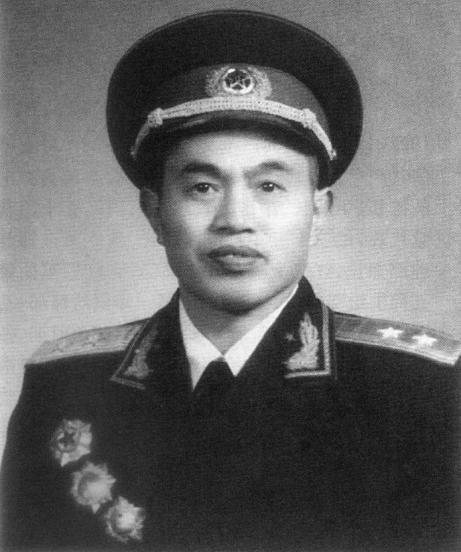
Lieutenant General in the skin
When the military ranks were assessed in 1955, the leaders of the General Cadre Department submitted a report on the award of ranks to Mao Zedong. When Mao Zedong saw that Pi was planning to declare the rank of major general according to his seniority, he immediately said: "Pi brigade is meritorious, and from less to more." After that, when reviewing the list of generals in the whole army, Mao Zedong placed another six words in the name of Pi Dingjun: "Pi is meritorious, less Jinzhong." Soon, Pi Dingjun was awarded the rank of lieutenant general, at the age of 41.
On July 7, 1976, Pi Dingjun, commander of the Fuzhou Military Region, took a helicopter from Zhangzhou to inspect the site of the exercise of the three armed forces on Dongshan Island. Unfortunately, the helicopter crashed into Zaoshan Mountain in Zhangpu County, and Pi was killed in the line of duty. At his memorial service, Mao sent the last wreath of his life.
There were more than a thousand founding generals of the People's Liberation Army, why did Mao Zedong have a green eye for Pidingjun? This is because in the Central Plains breakout during the War of Liberation, Pidingjun served as brigade commander of the first column of the Central Plains Military Region, the first brigade made a remarkable contribution, so that the Party Central Committee and Mao Zedong sat up and took a new look.
In the face of danger, he was ordered to carry the banner of the main force in the den of the 300000 enemy.
In June 1946, the Central Plains land war again. The Kuomintang army provoked a civil war, and Chiang Kai-shek mobilized 300000 troops to launch an attack on the liberated areas of the Central Plains in an attempt to wipe out 60000 officers and soldiers of the Central Plains Liberation Army within 48 hours.
The enemy is strong and we are weak, and the military situation is extremely critical! the party central committee ordered the central plains troops to "break through immediately, the sooner the better". Who will cover the breakout of a large army? Who will pretend to be the main force to confuse the enemy? This arduous task fell on the shoulders of the First Brigade of the First Column of the Central Plains Military Region (referred to as "Pi Brigade"). Everyone understands that serving as a cover task means sacrifice, and it is a last resort to "lose the pawns and protect the car.
So what kind of predicament is the Central Plains Military Region facing? What kind of danger is the Pi Brigade facing?
After the victory of the War of Resistance Against Japan, Chiang Kai-shek planned to launch a new civil war. The Central Plains Liberated Area and the Li Xiannian Department of the Central Plains Military Region, which had an important strategic position, became the primary offensive target because they blocked the throat of Chiang Kai-shek's deployment of troops to the country.
The 60000 troops of the Central Plains Military Region, in accordance with the deployment of the Party Central Committee and Mao Zedong, stuck to the outpost of the Central Plains with fearless sacrifice, contained the 300000 Kuomintang troops, and prepared for the anti-civil war in the liberated areas of East China, North China, and Northeast China, and won precious time.
During this period, the Kuomintang also completed the deployment of launching a full-scale civil war. It mobilized 11 armies, 26 divisions and 300000 troops around the Central Plains Liberated Area, dug more than 100000 trenches, built more than 6000 bunkers, and besieged 60000 people of the Central Plains Liberation Army in a narrow area with Xuanhua Store as the center and less than 200 kilometers from north to south, in an attempt to launch a general attack on July 1 to wipe out the Central Plains Liberation within 48 hours, remove obstacles to a full-scale civil war.
Civil war is on the verge of breaking out, and the Central Plains Liberation Army is extremely critical! After completing the strategic task of containing the enemy and delaying the outbreak of civil war, the Central Plains Bureau and the Central Plains military region asked the CPC Central Committee and Mao Zedong to break through the encirclement to the west on June 26, with the first column and the first brigade feigning to the east, camouflaging the main force to attract the enemy and covering the large force to jump out of the encirclement.
The Party Central Committee and Mao Zedong, who were far away in Yan'an, kept an eye on the Central Plains Military Region, which was deep in the tiger's den. On June 23, Mao Zedong called back the Central Plains Bureau: "agree to break through immediately, the sooner the better, do not have any worries, survival first, victory first."
Pi Dingjun, commander of the first brigade, a native of Jinzhai County, Anhui Province, joined the Red Army at the age of 14. In the four anti-"encirclement and suppression" struggles in the Hubei, Henan, Anhui and Soviet areas and the struggle to build the Sichuan-Shaanxi base area, he fought bravely and was not afraid of sacrifice, and then followed the Red Fourth Front Army. The Long March arrived in northern Shaanxi. During the War of Resistance against Japan, Pi Dingjun led the advance detachment of the Anti-Japanese War in western Henan to cross the natural danger of the Yellow River and established the anti-Japanese base area in western Henan under the siege of Japanese, puppet and stubborn layers. After the victory of the Anti-Japanese War, he led his troops south to Tongbai Mountain and later became the first brigade of the first column of the Central Plains Military Region.
The first brigade has three regiments and more than 6000 people. It is stationed in Baiqueyuan in the Popeihe area of Guangshan County. It is located in the easternmost area of the Central Plains troops, guarding the east gate of the Central Plains liberated area.
The Kuomintang judged that the main force of the Central Plains troops would break through to the east, so it arranged the main force in the east, south and north. Only in the front mall of the first brigade, Huangchuan, it gathered 4 regular hedgehog troops, 3 security regiments and 3 civilian regiments, and built fortifications in the southeast of the first brigade's position, building a blockade area 20 to 30 miles deep and leaving a gap in the northeast Huangchuan plain, trying to lure me into the trap set by the PLA when it broke through. The main force of the Central Plains troops broke through to the west, and the first brigade defense area became the main barrier to ensure the safety of the main force's breakout side and rear, and it also became one of the key offensive targets of the Kuomintang army.
On the afternoon of June 24, brigade commander Pi Dingjun and political commissar Xu Zirong received an urgent telegram from the column. They galloped more than 40 kilometers from the brigade headquarters station White Bird Garden and arrived at the battle area of the Pupi River column. Wang Shusheng, commander of the column, conveyed to them the spirit of the instructions of the CPC Central Committee and the Central Plains Bureau, and ordered the first brigade to do everything possible to drag the enemy, move eastward, confuse the enemy, and cover the main force to break through to the west, so that the enemy could not find the direction of action of the main force of the Central Plains military region within three days.
That night, Pi Dingjun and Xu Zirong rushed back to the White Bird Garden and quickly convened a meeting of the brigade party committee to formulate a battle plan. Pidingjun arranged one regiment and two regiments to move to the east, southeast and northeast at night, posing a decisive battle with the enemy to attract the enemy's troops, causing the momentum of large troops to assemble to the east, attracting the enemy's attention to the east, and facilitating the main force to break through to the west.
The Pi Brigade's diversionary strategy worked. At dawn on June 26, the Kuomintang army launched a siege of the Central Plains troops. Because of being confused by the actions of the first brigade, I don't know what the main intention of the troops of the Central Plains Military Region is, whether the troops advancing westward are a few or the majority, whether it is the main breakout direction or the direction of feint attack, so the enemy on the eastern front still dare not make a move, but only tentative attack, greatly reducing the pressure on the main force of the Central Plains Military Region, which broke through westward.
In the afternoon, the Kuomintang army noticed that the main force of the first column had moved towards Xuanhua Store, and the offensive suddenly became fierce. The enemy soldiers were divided into three routes, from the east, southeast and northeast directions, to the first brigade position.
In the face of the multi-path attack of the strong enemy, the regiments of the first brigade calmly responded to the battle, using fortifications, hills, ravines, rice fields, rivers and other favorable terrain to resolutely block and resist, and the enemy had to pay a heavy price for every step forward. In the evening, the Kuomintang army failed to cross the defense zone under the tenacious resistance of the first brigade.
While the first brigade tenaciously fought against the attacking enemy in the east, on the evening of June 26, the Central Plains military region ordered the independent second brigade of the eastern Hubei military region to secretly defend the Central Plains military region headquarters, disguised as the Central Plains military region headquarters, thus relieving the pressure on the first brigade.
More than 6000 people hide in the cracks of the enemy.
The breakout direction runs counter to the main force
On the afternoon of June 24, after receiving Wang Shusheng's order, Pi was thinking, for the sake of the overall situation of the Central Plains Military Region, the whole brigade had no complaints about "losing the pawn to protect the car", but "can the car not lose the pawn"? The officers and soldiers of the first brigade were all soldiers he pulled out of the war of resistance, this "pawn" but more than 6000 lives, more than 6000 anti-Japanese elite, he was unwilling and could not bear! Therefore, after accepting the task, he and the brigade party committee deployed troops to block the enemy, while thinking about the survival after completing the main task of covering the main force, and studying how to create the miracle of "protecting the car without losing soldiers.
What about after completing the blocking mission? When the main force crosses the Ping-Han Railway, there is no support behind the first brigade, and there are enemies on all sides, which direction will it break through?
"Go west, go after the main force!" Someone proposed at the brigade party committee. However, this proposal was rejected for a simple reason. If you follow the main force westward, you will inevitably lead the enemy to the west, which is extremely detrimental to the main force, and you will be in danger of being attacked by the 300000 enemy.
To the south, there is the natural danger of the Yangtze River, and it is absolutely impossible for a lone army to break through it.
To the northeast or north? Huang-Huai Plain and criss-crossing rivers, it is now the Huangmei rainy season, to continuously cross the river is unimaginable.
Then there is only one direction-the east, which runs counter to the main force and leads the pursuers to the east to reduce the pressure on the main force. However, there are four enemy armies and the local armed forces of Gu Jingzhi, a veteran anti-communist. In the face of hundreds of thousands of enemy troops, it took half a year to lay dozens of iron hoops, with a mere journey of thousands of people and a tired lone army to break through such a majestic pass, undoubtedly hitting the stone with an egg.
However, "the place where the enemy garrison is strongest may also be the weakest place". Pi Dingjun thought that the main force moving westward could hide from the enemy for a while, but it could not hide for a long time. Once the enemy knew that the main force was moving westward, the eastern forces would rush to the west, and the east would become the weak link of the enemy's garrison.
In this way, the plan for a brigade to break through was determined, and Pi Dingjun decided to break through to the east after discussing with Xu Zirong. But how to break through the encirclement? This was indeed a difficult problem. To break through the encirclement to the east, the enemy's main force had not left at this time, and now to break through the encirclement to the east was a trap.
Someone from the brigade party committee proposed: "Concentrate firepower, choose the gap between the enemy and the two armies to forcibly break through, split a blood path, and insert it eastward along the ridge of the Dabie Mountains." As soon as this plan was put forward, some people immediately objected: "in this way, our attempt will be exposed immediately, and it will be very difficult for us to get out."
Others said: "To the southeast, go straight to the hinterland of the Dabie Mountains, so that you can avoid Gu Jingzhi's stubborn forces." This road, Pi Dingjun also considered, also sent people to the field reconnaissance, but the terrain there is complex, must seize the high ground, and it is difficult to avoid the actual attack, can only be hard, the enemy hundreds of thousands of troops, how can also block you. "It can be broken up into parts to disperse and break through." Can we still turn the parts into the whole? This is an unorganized action based on escape, which must not be taken. Pi Dingjun's attitude was serious and the meeting was a bit stiff.
Xu Zirong, who had not spoken much for a long time, said: "Come back to the carbine: after completing the cover task, we will attack all the way, then close it, hide it where, when the enemy attacks, he will chase it, and we will insert it eastward. The problem is a brigade, defending more than 20 kilometers wide front, how to close? It's easy to make a feint attack forward, but it's easy to take it down and hide the soldiers in front of the enemy's eyes?" xu Zirong's words reminded Pi Dingjun. He immediately thought of a place where he could hide: Liu Jianchong.
Pi Dingjun's son Pi Xiaonong recalled: "My father has an amazing memory for grasping the topography of mountains and rivers. During the Anti-Japanese War, he was the commander under Liu Bocheng of the 129th Division. Once he rode to the division headquarters to meet Mr. Liu. As soon as he arrived at the division headquarters, Mr. Liu asked him how many mountains, rivers, and villages he passed along the way, what his name was, and what the terrain was, and he was stopped. He came only on horseback and did not think of anything else. But since then, he has had one more eye. He remembered all the mountains and rivers he walked through. As soon as the troops arrived at the camp, he looked at the topography. When the Central Plains broke through, the Pi Brigade was hidden in the small gully of Liu Jiachong, which was a place near my father's residence in Baiqueyuan. He had long taken a fancy to this hidden place, and finally the Pi Brigade 6000 people were hidden in this black pine forest."
Liujiachong is a small mountain village with only six families. It is located in a small hilly area with dense trees. It is located at the junction of the main enemy force and between the two roads of the enemy movement. There are no mountains here, and it is impossible for the enemy to hide a large army. Not to mention that the enemy did not expect, even the officers and soldiers of the first brigade did not expect the brigade commander to play this dangerous move. Pidingjun took advantage of the enemy's paralysis to make this bold decision.
Storm shifts under night
On the whole day of June 26, a brigade stubbornly blocked the enemy, with the sound of artillery rumbling and killing. Pippi have taken the support point defense system. Each support point is a mountain bag, each mountain bag is self-contained, but they cross fire with each other, blocking the enemy's advance. Pi was in the command post watching the enemy's movements. In the telescope, the enemy's offensive formation was like a tide. The waves retreated and surged up again, but they were repelled again and again by the first brigade.
"The enemy is watching so closely, how can we get the troops back?" Pi Dingjun was thinking. At noon, there was a sudden change. The showers that turned out to be tight and slow suddenly turned into violent storms, lightning and thunder, chaos, and no one was seen a few meters away.
This is a once-in-a-lifetime opportunity.
"Attack! Get the enemy out of the way and pull down, leaving a battalion ahead." Pi Dingjun decisively gave the order. Later, he said to Xu Dehou, the chief of the combat section, "You should go to a regiment immediately and let them go to Liu Jiachong immediately after completing the cover task. Remember, you must arrive at 2 o'clock."
It was the first time he had revealed a point of concealment. Soon, there was a faint sound of assault horns, machine guns, and rifles. After the gunfire subsided, only the wind and rain roared wildly. A brigade defended more than 20 kilometers and it took only half an hour to put it away. Several thousand troops of the Pi Brigade quietly withdrew from their positions and merged with the wind and rain.
On the evening of June 26, the Pi Brigade set off in a violent storm. Except for a few brigade and regiment leaders, no one knew where they were going. The trampled pavement was flattened by the rainstorm in a twinkling of an eye, leaving no trace. Towards dawn, Pidding stopped his feet. The forced march of more than 40 kilometers overnight finally reached Liujiachong.
A round of sunrise, according to the two roads near the east and south. The Kuomintang army, hundreds of thousands of people, hundreds of cannons, and thousands of cars, chased westward, and more than 6000 commanders and fighters hidden in the woods could feel the ground trembling.
What if the enemy's marching team had a side search team, if the enemy fired at the woods large and small along the way, if a few soldiers slipped out of the team to catch chickens, if a spy went to snitch, what would the situation be? In that way, the brigade would be caught in a situation where it would be difficult to fly and be completely surrounded and annihilated. Pi Dingjun's courage is superhuman. His move is really unexpected.
Of course, all the mules and horses were tightly guarded. All the mules and horses were tied to the common people's homes. The troops were hidden in the woods. They were not allowed to make fires or smoke. Even coughs had to be covered with their hands. Late at night, the three battalions responsible for blocking the attack also quietly withdrew to Liu Jiachong to join the main force.
On the morning of June 27, after the rain cleared, more than 100,000 enemy troops were still transporting troops frequently on the roads on both sides of Liujiachong. Pin is thinking about the next course of action.
For several days, Pitin had not received any news from the main forces. He thought that the main force had just passed the Pinghan Railway and was moving westward in an emergency. He had no time to set up a radio station, so naturally he could not be contacted. After several days of marching, whenever he stopped, he always asked Gu Yuping, the director of the radio station, to set up a radio call, but there was still no news. In desperation, Pi Dingjun called the radio station to contact Yan'an headquarters directly. At first, there was no reply. Later, the instructions of the Party Central Committee and Mao Zedong came from the airwaves. There were only two words, which appeared repeatedly several times: "Go! Go! Go! Go! Go!"
The news spread and the brigade was filled with jubilation.
After three times of breaking and turning, he fought three bad battles.
Leaving Liu Jiachong, Pi Dingjun led a brigade eastward to break through the encirclement, which was full of dangers. In the tight encirclement of the Kuomintang army, they made a surprise victory and saved the danger from danger. After three times of breakthrough and turning, they fought three fierce battles.
Three breakout turns
On June 28, 1946, Liu Zhiming, director of the Zhengzhou Appeasement Office of the Kuomintang, after inspecting the movement of the main force of the Central Plains Military Region to the west, ordered the reorganization of the 47th Division, the reorganization of the 72nd Division, the New 31st Brigade, the 34th Brigade and other troops to follow up and block the attack, "must be annihilated in the east of Pinghan Road". At the same time, the missing brigade continued to "search and suppress" the Baiqueyuan and Yujiaoji areas with the new 13th brigade and the 1,74th brigade ".
In the early morning of June 28, Pi Dingjun led a brigade to set off from Liujiachong, unexpectedly, and marched to the southwest, avoiding the new 13th brigade's blocking and attack on the front line of Yujiazi. He set up a position to the west of Zhoujiashan, annihilated a company of Kuomintang army in Jiulong Mountain, skillfully jumped to the back of the new 13th brigade, and stayed in Yijiatianpu at night. It was the first turn in a brigade breakout.
On June 29, the Kuomintang reorganized the 72nd Division to discover the whereabouts of the 1st Brigade, and urgently ordered the 39th, 37th and 101st regiments of the 34th Brigade under the new 13th Brigade to attack the 1st Brigade in Yijiatianpu. However, the first brigade suddenly made a 90-degree turn in the early morning of the 29th, broke through the southeast, crossed the Huangma Highway, and broke through the enemy's blockade line with lightning speed, and the Kuomintang army's joint attack plan failed. This is the second turn in a brigade breakout.
After seeing the first brigade break through to the southeast, the 72nd division of the Kuomintang ordered the new 13th brigade to follow suit and the 14th brigade to block the attack in the Huangtugang area. Pi Dingjun led a brigade to the east again. In order to break through the defense line of the 14th brigade in Huangtugang area, Pi Dingjun let the brigade's advance reconnaissance team disguised as a spy team of the 72nd division, outsmarted the flagpole shop, captured 24 Kuomintang troops and handed over 21 guns. This was the third turn in a brigade breakout.
Three bad battles.
The Battle of Daniushan-the first vicious battle in the breakout.
On June 30, a brigade arrived at Vasiping near the mall and was ready to climb over Daniu Mountain. Daniu Mountain is towering into the clouds and mountains. It is a natural route to enter and leave the three provinces of Hubei, Henan and Anhui. The Kuomintang army deployed a battalion of the 101st regiment of the 34th Brigade here to seize the high ground of Waxiping for interception. The security regiment of Gu Jingzhi and Li Huang occupied the high ground on the southwest and northwest sides of Waxiping, forming a pinch attack on the first brigade. At the same time, the 101st regiment follow-up troops also rushed to Wasiping.
As soon as a brigade entered Wasiping, it was attacked by the Kuomintang army. If it did not quickly kill the bloody road, it would be surrounded and annihilated. Pi Dingjun ordered Wang Chenghan, head of the first regiment: "Move quickly and tear a cut like a cloth!" Political commissar Xu Zirong called on the commanders and fighters: "Grab Da Niu Shan and present a gift to the party's birthday!"
The first regiment, the third battalion, the seventh company, served as the main attack, the ninth company assisted, and the eighth company was the reserve team. The Seventh Company drew 20 soldiers to form a commando, each with 5 grenades, and rushed to the high ground under the cover of the whole company's machine guns, and the Kuomintang army fled in embarrassment.
After the first brigade occupied the Wasiping Highlands, it was violently counterattacked by the Kuomintang army. The enemy's two successive group charges were defeated by one. under the cover of the first regiment, the second regiment, the third regiment, and brigade directly and forcibly crossed the mountain of daniu. At this time, the rain was pouring down and the whole mountain was shrouded in clouds and mist. The Kuomintang army lost its target and could not pursue it. On the evening of July 1, a brigade all crossed the mountain.
In the first World War of Daniushan, the first brigade not only broke through the encirclement and blockade of the Kuomintang army, but also successfully got rid of the pursuers.
The Battle of Green Maple Ridge-the second vicious battle in the breakout.
Farewell to Daniu Mountain, the first brigade took a short rest in Wujiadian to place the wounded and replenish their supplies. After the Kuomintang army reconnaissance learned that the first brigade had arrived near Wujiadian, it urgently ordered the 527 regiment to rush to the Wujiadian area to block it. At the same time, two brigades and eight regiments were concentrated for containment in an attempt to encirclement and annihilate a brigade in the Dabie Mountains.
On July 10, a brigade was blocked by the second regiment of the Kuomintang army advancing column in Qingfeng Ridge. Qingfengling Mountain is steep and difficult for people to pass. The Kuomintang army preemptively occupied the main peak of Qingfeng Ridge and blocked the way forward of the first brigade with machine guns. Pi Dingjun ordered the second regiment to resolutely take the green maple ridge and ensure the whole brigade to pass.
Zhong Sheng, head of the second regiment, and Zhang Chunsen, political commissar, quickly made arrangements: the second battalion served as the main attack and the first battalion attacked on the side. The officers and men of the fourth and sixth companies of the second Battalion climbed a cliff several feet high, passed through the shrubs and jungles without roads, hung up the hanging rock with leggings, opened a passage with wood knives and bayonets, and climbed a peak of Qingfeng Ridge. At the same time, the first company and the second company of the first battalion launched a detour to Qingfengling. The two forces rushed to the top of the mountain and started a hand-to-hand battle with the Kuomintang army. After more than two hours of fierce fighting, they finally captured Qingfengling and pursued it for 5 kilometers. In this war, more than 200 Kuomintang troops were killed and 19 captured, opening the road to the Pi River.
The battle of the Pi River-the third evil battle in the breakout.
Mozitan is the gateway to the eastern part of the Dabie Mountains. It is located on the west bank of the Pi River. The mountains are steep and the water is urgent, and the terrain is dangerous. Three large mountains stand on the opposite bank. If you break through the enemy's containment, you must cross the Pi River.
When the first brigade was marching towards Mozitan, the first division of the 48th division of the Kuomintang was heading for Mozitan to intercept. In order to cross the Pi River in front of the enemy, Pi Dingjun ordered the leading battalion to cross the river first, and ordered the engineering platoon to collect materials and grab the pontoon bridge to ensure the whole brigade to cross the river.
Who knows, an unexpected situation happened to the pioneer camp that crossed the Pi River first. The battalion commander of the vanguard battalion obviously did not realize the seriousness of the situation. After crossing the river, only one company was sent to occupy the top of the mountain. The officers and soldiers who had been marching for 13 days were exhausted to the extreme. The battalion commander and the two companies fell asleep at the foot of the mountain. The officers and soldiers of the company who occupied the top of the mountain were all composed of the children of the Dabie Mountains. Because they were unwilling to leave their hometown, they collectively ran back to the Dabie Mountains to fight guerrillas. The two companies who slept at the foot of the mountain were almost touched by the Kuomintang troops who had made dumplings, which almost killed the whole brigade.
On the other side of the river, enemy machine guns rang out on the top of the mountain, tracer bombs frequently crossed the river, and the simple pontoon bridge erected by engineers was repeatedly washed down by floods.
The first brigade faced a critical moment, and Pidding did not panic. He calmly ordered a group of fire to wade the river on foot and assist the leading battalion on the opposite bank to protect the ferry.
In the early hours of the morning, Wang Chenghan led a regiment to cross the river on foot under the cover of the third regiment in the east of the river. The Kuomintang army sealed off the river with heavy and heavy machine gun fire. The troops crossing the river took advantage of the darkness of the night and the heavy rain to force the crossing. After boarding the east bank, he rendezvous with the vanguard battalion to occupy the ferry and cover the large troops crossing the river.
When the third regiment was forcibly crossing the Pi River, the third company was cut off by the enemy and lost contact with the main force, and was later incorporated by the fifth regiment of the independent second brigade of the eastern Hubei military region.
After a regiment launched an offensive to cross the river, Pi Dingjun continued his reconnaissance along the river and finally learned that the water level several hundred meters upstream was relatively shallow and suitable for the troops to wade. Thousands of people in the whole brigade crossed the Pi River hand in hand and saved the day.
On July 13, the Pi Brigade finally put aside the entangled Kuomintang army and marched hastily to the last hillside of the Dabie Mountains-Dongshan Slope.
After passing the test, he skillfully used strange soldiers to break through the three passes and joined the plains of central Anhui.
On the Dongshan slope, Pi Dingjun carried out the most arduous marching mobilization to break through the encirclement: striving to fly over the central Anhui plain within five days and break through to the central China base area. The first brigade entered the plains of central Anhui to rendezvous with the New Fourth Army and encountered three major dangers.
The capture of the Maotan factory was the first hurdle.
Leaving the eastern slope, a brigade maneuvered southeast. When he learned that the Kuomintang army was coming from the direction of Tongcheng, Pi Dingjun decided to turn around and move north to get rid of the enemy.
On July 13, a brigade advance reconnaissance team captured the Maotan factory at the exit of the eastern foot of the Dabie Mountains, annihilating more than 20 members of the militia bureau.
At the Maotan factory, Pi Dingjun and Xu Zirong organized a brigade party committee and decided to bite the bullet and act quickly to strive for the final victory of breaking through the central Anhui plain before the enemy's deployment was completed.
All the brigade's cooking burdens, briefcases, mules and horses walking swollen hooves, and personal belongings were all reduced, leaving only a single suit, weapons and ammunition, and moved forward lightly.
The surprise attack on Wushan Temple is the second level.
leaving the maotan factory, a brigade broke into the enemy's heart area at a marching speed of more than 50 kilometers per day and night.
At dawn on July 15, a brigade arrived in Guanting Town. It was guarded by a militia reorganized from the puppet army. The first battalion of the avant-garde of the first brigade and the third regiment captured more than 100 civilian regiment officers and soldiers in their sleep by surprise attack. Then, continue to the northeast direction, along the way many times to repel the Kuomintang local armed attack and obstruction.
On July 16, a brigade arrived at Wushan Temple. This is manned by the Kuomintang Shouxian security team. Pi Dingjun decided to take a surprise attack to seize the Wushan Temple. A group of avant-garde nine companies disgusted into the Kuomintang army, three times five divided by two, captured more than 30 security guards without a single shot, and rushed to the Jinpu line.
At noon on July 19, a brigade arrived at Hongxinpu, only 20 kilometers away from Jinpu Railway. Crossing Jinpu Road is the liberated area of Jiangsu and Anhui.
Breaking through the Jinpu line is the third level.
On July 18, the forces of 12 brigades of the Kuomintang army attacked the east liberated area of Jinpu Road in Huaibei from Xuzhou, Jiagou and Guzhen areas in three routes, and gathered heavy troops along Jinpu Road. They took advantage of the bunkers, fortifications and road protection ditches left by the Japanese army to prevent the first brigade from passing through the Jinpu line.
In order to prevent the first brigade from breaking through the last line of defense, the 8th Suijing District of the Kuomintang ordered the two regiments of the 172nd Brigade of the 7th Division and the 138th Brigade of the 48th Division to block them with all their strength on the Mingguang Line.
The Party Committee of the First Brigade held an emergency meeting in the Red Heart Shop. Pi Dingjun pointed out that at all costs, at 6 o'clock the next day, it would break through the Jinpu railway line from Mingguang and Guan Dian, and made combat arrangements: the whole brigade was organized into two marching columns, with the brigade and the first and third regiments as the right column, and the second regiment as the left column, marching rapidly to Jinpu Road.
On the morning of July 20, a brigade arrived at Jinpu roadside. At this time, an armored train full of Kuomintang troops came to intercept it. The enemy troops in the bunkers on both sides of the railway also fired wildly with light and heavy machine guns, and cooperated with the armored train to cut a group crossing the railway into two sections. At the same time, the Kuomintang troops from Mingguang, Guandian, and Chuxian were deployed in five routes in an attempt to strike from both wings.
At the critical moment, Pi Dingjun ordered the third regiment to stop the enemy in the direction of Chuxian County. The second regiment blocked the enemy of Mingguang and Guanchang. The sapers' platoon lit explosives to stop the armored train. The mortar of the whole brigade concentrated on the enemy's station stronghold and covered a regiment to rush through Jinpu Road.
A group of officers and men jumped onto the roadbed from both sides of the railway, climbed onto the armored train, and threw cluster grenades into the car. The Kuomintang army suffered heavy casualties and fled hastily in the direction of Mingguang. After three hours of fierce fighting, a brigade finally crossed the Jinpu line at 10 o'clock on July 20.
After crossing the Jinpu line, the first brigade advanced at full speed to Jiashan and met with the Jiashan detachment of the Huainan Military Region.
When Xinhua Daily published the news of this victorious breakout, it published an editorial entitled "Salute to General Pi Dingjun": "I, General Pi Dingjun of the Central Plains Military Region, broke through the siege of Chiang Kai-shek and went through untold hardships and successfully arrived at a certain place in the Soviet and Anhui liberated areas on July 20. It proves that the Communist army cannot be eliminated and the people's army is an invincible force."
Under the leadership of Li Xiannian, commander of the Central Plains Military Region, and Zheng Weisan, political commissar of the North Road Breakthrough Force, it lasted 36 days and traveled more than 1000 kilometers. They broke out of the siege and successfully realized the transfer from Xuanhuadian to southern Shaanxi. Under the leadership of Wang Shusheng, more than 10000 troops from the South Road Breakthrough Force broke out of the tight encirclement. They successfully joined forces with more than 6000 troops from the Central Hubei Military Region in Wudang, and established Wang Shusheng as commander and, create a new base.
The breakthrough of the Central Plains lasted 36 days and smashed the encirclement and interception of 300000 Kuomintang people. Chiang Kai-shek's plot to wipe out the Central Plains troops within a time limit was completely bankrupt.
The Independent Second Brigade of the Eastern Hubei Military Region, which served as a cover for the main force of the Central Plains Military Region to break through, also made great sacrifices. After completing the cover task, the second independent brigade entered the Dabie Mountains. The whole brigade was disrupted and insisted on scattered guerrilla warfare until September 1947, when it joined forces with Liu Deng's army, which had leapt thousands of miles into the Dabie Mountains.
The leather brigade, which broke through the Central Plains, arrived in the liberated areas of Jiangsu and Anhui. They are the earliest and most well-preserved troops of the Central Plains Military Region to break through, creating a miracle in the history of Chinese revolutionary war and even the history of world war. Twenty-one years later, when Zhou Enlai met with the main leaders of the party, government and army from all over the world in the Great Hall of the People, he saw Pi Dingjun and said with a smile: "The Pi brigade you led in the past was really good at fighting! Although it was only a brigade when the Central Plains broke through, the central government used it as a front army!"
The leather brigade that stood out from the siege was reorganized into the 13th Brigade of the Central China Field Army, and later expanded into an independent division. It moved to Central China and North China, participated in the battles of Suzhong, Laiwu, Menglianggu, Linfen, Taiyuan, etc., and repeatedly made military achievements in the War of Liberation.
Jiao Yuling Yang Fengxia
March 15, 2017 Source: People's Network-Communist Party of China News Network
Previous Page
Next Page
Previous Page
Next Page

Address: Buildings 4 and 5, Kechuang Huigu Park, Hongshun Road, Huaming High-tech Zone, Dongli District, Tianjin
Tianjin High-end Equipment Research Institute, Tsinghua University, Copyright
Website Construction: China Enterprise Power Tianjin
Business License
sweep
Pay attention to the official WeChat public number