




PARTY BUILDING
party building work
The Only Party Congress Held Abroad: A Study of the Documents of the Sixth CPC National Congress
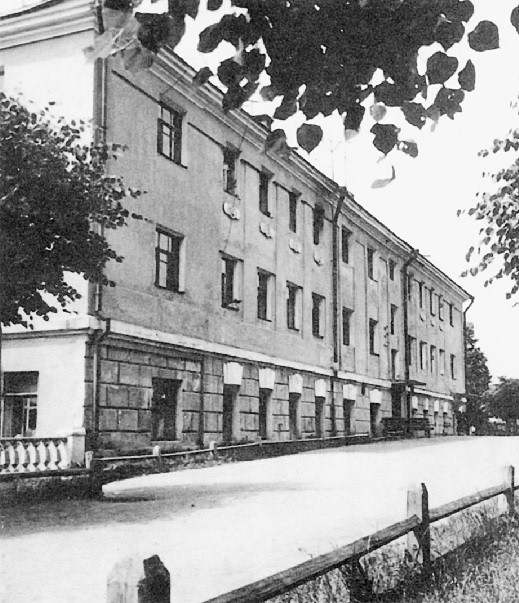
Site of the Sixth National Congress of the Communist Party of China: Villa Selebryoye, Zvinigorod Town, a suburb of Moscow
During the Sixth National Congress of the Communist Party of China in Moscow, domestic work was presided over by Politburo members Li Weihan, Ren Bishi and Luo Dengxian
After the failure of the Great Revolution in July 1927, in order to correctly understand the social nature of China at that time, the nature, object, motivation, future and other major issues related to the success or failure of the revolution, and to resolve the differences and disputes in the party's understanding, after nearly a year of deliberation and preparation, the Sixth National Congress of the Communist Party of China was held in Moscow from June 18 to July 11, 1928. A total of 142 delegates attended the conference, 84 of whom had the right to vote.
On July 4, 2016, General Secretary Xi Jinping spoke highly of the congratulatory speech on the completion of the permanent exhibition hall of the Sixth National Congress of the Communist Party of China: "88 years ago, at the most difficult juncture of the Chinese revolution, for the future and destiny of the country and the nation, More than 140 representatives of the Communist Party of China traveled thousands of miles to Wuyi Village on the outskirts of Moscow and held the Sixth National Congress of the Communist Party of China. This is the only national congress held abroad in the history of the Communist Party of China, which is of special historical significance to the development of the Chinese revolution. "He stressed the need to" cherish the historical event of the Sixth National Congress of the Communist Party of China "and remember this history. The Sixth National Congress of the Communist Party of China took a long time to prepare and was held in a peaceful and stable Moscow, and there were a lot of archives and documents left. Fifteen resolutions were passed alone, and they basically correctly answered and resolved the major revolutionary issues of the time.
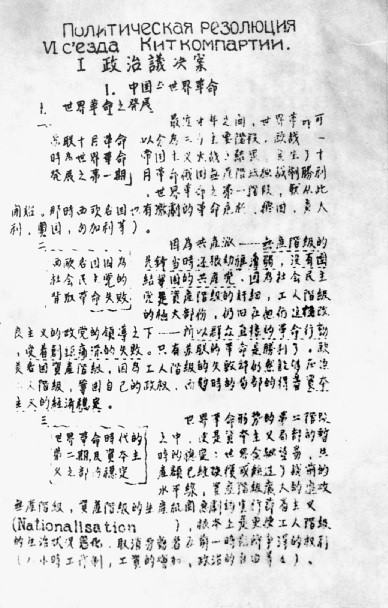
Political Resolution adopted by the Sixth National Congress of the Communist Party of China
"Political Resolution" 1. a comprehensive analysis of the revolutionary situation and a comprehensive exposition of the revolutionary policy at the present stage
The Sixth National Congress of the Communist Party of China, with the help of the Communist International and the United Communist Party (Brazzavore), comprehensively analyzed China's national conditions and formulated various revolutionary policies. The "Political Resolution" is the most concentrated expression. The full text is divided into five parts. The first is an analysis of the relationship between "China and the world revolution. It is believed that the development of the world revolution "increases the international significance of the Chinese revolution" and that the development of the Chinese revolution is "to help the proletarian revolution of the world move forward". The second is to clarify the "nature and driving force of the Chinese revolution". It is believed that "the nature of the present stage of the Chinese revolution is a bourgeois civil rights revolution" and that "there are three revolutionary tasks: the overthrow of imperialism, the agrarian revolution and the establishment of the Soviet regime of the Workers', Peasants' and Soldiers' Congress". he believed that "the revolutionary motive force is only the workers and peasants". On the basis of this understanding, summarize the ten requirements of the Chinese revolution in the emerging stage: overthrow the rule of imperialism; Confiscate foreign capital enterprises and banks; Unify China and recognize the right of national self-determination; Overthrow the government of the warlord Kuomintang; Establish the government of the Workers', Peasants' and Soldiers' Congress (Soviet); Implement an eight-hour working system, increase wages, unemployment relief and social security; Confiscate all the land of the land of landlords and farmers; Improve the life of soldiers, to give soldiers land and work; To abolish all local taxes of government warlords and to implement a uniform progressive tax; To unite the world proletariat and the Soviet Union. Third, it summed up the "experience of past struggles". It is believed that the objective reasons for the failure of the Chinese revolution are the strength of imperialism, the betrayal of the revolution by the national bourgeoisie, the great strength of the army led by the landlords, the unbalanced development of the workers and peasants, and the wavering of the petty bourgeoisie. The subjective reason is that the opportunistic policy of the Communist Party's guiding organs does not maintain the independence of the Communist Party, criticizes the revolutionary allies, mobilizes the revolutionary forces and prepares the mass forces, but prevents the mass movement, gives in to the incorrect views of the united front, has no independence and criticism, only knows the policy of concession, hinders the class struggle and the agrarian revolution, and voluntarily forfeits the revolutionary leadership. In addition, while fully affirming the August 7th Conference, the Nanchang Uprising, the Autumn Harvest Uprising and the Guangzhou Uprising, they also pointed out their shortcomings. Fourthly, it analyzes the "current situation of the revolutionary movement and the general line of the Communist Party of China". He pointed out that the current situation is generally "a revolutionary upsurge without a broad range of masses", but a new and broad revolutionary upsurge is inevitable, and "winning over the masses is the general line of the present". To oppose opportunism and blind activism, "the most dangerous tendency is blind activism and commandism", especially to oppose the malady of the left. Fifth, it is clearly stated that the main task of the Party is to "strengthen its own fighting power and to proletarianize the Party". To this end, in the labor movement, the Party must win over the majority of the working class and work around its main tasks. In the peasant movement, the party's central slogan was to confiscate the land of the landlord class and hand it over to the Peasants' Congress (Soviet), to carry out guerrilla warfare, to establish a revolutionary army of workers and peasants, and to develop mass organizations. In the Soviet area, it is necessary to develop the base areas, the Red Army, implement a thorough agrarian revolution, and establish political power. In the area of anti-imperialism and anti-warlords, the struggle against the Kuomintang and other reactionary parties was launched. Special attention is emphasized in the area of military issues and soldier movements. In addition, he stressed the need to strengthen contacts with the Communist parties of various countries.
The "Political Resolution" is the general outline of the Sixth National Congress of the Communist Party of China. It "conscientiously sums up the experience and lessons since the failure of the Great Revolution, and gives basically correct answers to a series of fundamental issues that have serious disputes about the Chinese revolution".
2. Resolution on the Peasants, Workers, Youth and Women's Movement
(I) Resolution on the Land Question and the Peasant Movement
1) The Land Resolution. The full text is divided into five parts, the main content is: First, the analysis of China's land relations. It is believed that the agrarian revolution is the main content of the Chinese revolution, and the fundamental problem of land relations in China is the problem of land ownership system. The land problem in China is characterized by the dominance of bourgeois land ownership, widespread property rents, more dominance of small and medium-sized landlords, and an imbalance in the size of the relationship between landlords in each province. Second, the analysis of the various exploitation of farmers. Peasants are subject to multiple exploitation by landlords, warlords, usurers and commercial capitalists, imperialism, etc. he believed that "only by overthrowing the landlords and imperialism can chinese peasants be liberated". Thirdly, it points out the future of socialism in the development of land relations. It is believed that the road of rural capitalism in China, the bourgeois civil rights revolution is the first step in the development of socialism. It provides for a land party program involving political power, land, taxes and other issues. It is pointed out that after the consolidation of Soviet power, that is, when the land is owned by the state, only a thorough socialist revolution can eliminate all poverty and all exploitation.
The Peasant Movement Resolution. It is divided into 12 parts, which can be summarized as three aspects: first, it summarizes the "development of the peasant movement". It is believed that the life of the peasants is becoming increasingly painful, the development of the peasant movement is uneven, and the demands of the peasant struggle vary from place to place. The peasant struggle became more intense, and the rich peasants entered the counter-revolutionary camp. The second is to point out the struggle strategies in all aspects of the rural revolution. It is believed that "at the present stage of the revolution, the main strategy of the Communist Party should be to create a united front of the absolute majority of the peasant masses who have been exploited by the remnant feudal forces, starting from the hired peasants to the middle peasants". Put forward the slogan of sponsoring the equal distribution of land, emphasizing that the areas where the middle peasants are the majority are not strong enough to divide the land; organizing the rural proletariat to carry out class struggle will become an urgent task of the Chinese Communist Party in the countryside; it is necessary to attract rural women and young people to join the struggle. Expand and consolidate the farmers' associations as far as possible, and strive for the leadership of the broadsword association, the Red Lance Association and other organizations. The Party must actively and forcefully lead the guerrilla war and strategically carry out the struggle against the militia bandits. Third, it emphasizes "the work of the Party in the countryside". It was believed that consolidating the leadership of the working class in the peasant movement was the main task of the village party headquarters. The consolidation of the leadership of the working class among the peasants was a prerequisite for the victory of the agrarian revolution. Emphasize the proletarian nature of the Communist Party's organization in the countryside, but the rural party organization cannot replace the work of the Agricultural Association and the Soviet, and must send some activists to work in the countryside.
The "Land Issue Resolution" and "Peasant Movement Resolution" comprehensively analyzed the land issue in the countryside and the exploitation and development prospects of farmers, analyzed the party's strategy and policy for leading farmers to carry out the movement, and developed the Chinese Communist Party's rural revolutionary theory.
(II) Resolution on the Workers', Youth and Women's Movement
1. Workers' Movement Resolution. It is divided into 30 articles. The main contents are as follows: First, summarize the shortcomings of the previous workers' movement. It is pointed out that since the beginning of the Northern Expedition, especially at the end of Wuhan, the party's line of work among the masses of workers has gradually and unconsciously degenerated into the viewpoint of class cooperation. Trade unions have never been a true organization of the masses, and the appointment system has not applied the democratic election system, which has further isolated the masses from the party. Second, clarify future tasks and strategies. It is pointed out that the basic task in the future is to guide the daily economic and political struggle of the proletariat, oppose reactionary trade unions, organize revolutionary trade unions, raise the class consciousness of the broad masses of workers by means of propaganda and incitement, and lead the economic struggle of workers' daily life. Strike struggle should be carried out in accordance with the objectives of the economic platform. We must oppose the idea of class cooperation and wage a very severe struggle against reactionary propaganda. Third, it emphasizes the correct leadership of the Party. pointed out: 'there must be correct relations among party branches, trade union branches, and factory committees. "The workers' picket work should be a regular self-defense organization. The party has to guide the trade unions through the caucus. We should strengthen the ties between the all China Federation of trade unions and the workers' movements in other countries, strive for the open freedom of trade unions, make clear the organizational boundaries between the party and the trade unions, and the slogans should meet the needs and tone of the trade unions and the masses of workers. Emphasizing the strict implementation of democratic centralism and opposing the arrogant attitude of intellectuals who despise the masses' lack of knowledge and culture.
The resolution summarizes the past experience and lessons, stipulates the tasks and strategies of the current workers' movement, clarifies the principles and policies in various aspects, and makes a fruitful exploration on the development of the workers' movement.
Resolution on the Communist Youth Movement. Main contents: First, it summarizes and analyzes the past and present of the Youth League. It is believed that the Communist Youth League has played a very significant role in the development of the revolution in the past two years. It is one of the closest assistants to mobilize and organize the masses to the revolution. Youth is a great political force in China. The second is to clarify the future tasks of the Youth League. It is pointed out that the fundamental task in the recent period is to obtain all the young workers and the exploited young peasant masses in order to ensure the struggle of workers and peasants to seize power. Among the young peasants, especially in the Soviet area, there has been great development, but the development in the large industrial centers is very limited. Attention must be paid to the development of youth organizations in the factory workers and the reactionary army. The third is to emphasize the need to establish correct party-group relations. It is pointed out that the correct relationship between the party and the Communist Youth League should work under the political guidance of the party, and at the same time have complete organizational independence.
On the basis of affirming experience and facing up to the shortcomings, the resolution stipulated the main tasks of the youth movement in the future, further clarified the relationship between the party and the league, and pointed out the direction for the development of the youth movement in the future.
3, the women's movement resolution. There are 7 articles in the full text. The main contents are as follows: First, summarize the experience and lessons of the women's liberation movement led by the party. It is believed that in the past, the women's movement focused on the petty bourgeois movement, and after the August 7th Conference, there was no practical work policy and the inclusion of female workers in the guiding organs. It is pointed out that the task of the party is to pay special attention to the mass work among the workers and peasant women, win over the masses of working women, and lead the struggle of the masses of petty-bourgeois women. Second, the analysis of the party's tasks and the relationship to proletarian women. It is pointed out that the party's general line is to win over the masses. First of all, we must pay attention to the proletarian masses and the female workers in big cities. The party's women's movement should be mass and proletarian, and the party's women workers should be proletarian. Third, the emphasis is on strengthening women's work in all fields. It is pointed out that young women workers are valued in the labor movement and women are absorbed into trade unions. In the peasant movement, attention was paid to women's work and women were organized to participate in peasant associations and the Soviet regime. In the propaganda work, there should be women's columns and correspondents in the revolutionary newspapers, and women's sports talents should be trained. In the Soviet regions, regulations on the emancipation of women were promulgated and the slogan of emancipation of women was implemented.
The resolution sets out clear requirements for all aspects of women's work, which is of great significance in promoting the new development of the women's liberation movement.
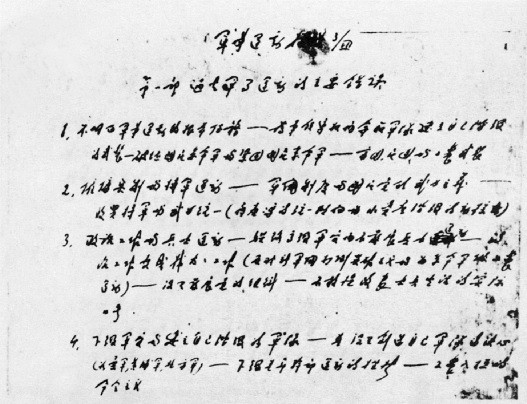
Zhou Enlai's Military Report Outline Handwriting at the Sixth National Congress of the Communist Party of China
Regime -3., propaganda and military resolutions
(I) Resolution on the Organization of Soviet Power. There are 21 articles in total. The main contents are as follows: First, analyze the establishment of Soviet regime. The resolution states that a new regime will be realized immediately after the workers and peasants seize power. The Party should publicize the content, theory and work of the Soviets and organize workers and peasants activists to be cadres of the future Soviets. The official name of the Soviet shall be the Congress of Representatives of Workers, Peasants and Soldiers (the township may be referred to as the Congress of Peasants and Soldiers). The official name of the Chinese Soviet regime should be: the Chinese Workers, Peasants and Soldiers Congress (Soviet) Government. The task after the seizure of political power is to absorb the working masses to participate in the state organs, and to establish the labor organs by revolutionary means to distribute land, food and clothing to the working masses. Second, to explore the various relations to be dealt with by the Soviets. The resolution pointed out that in terms of relations with the Revolutionary Committee, the Riot Staff Department is subordinate to the Revolutionary Committee. The Revolutionary Committee is a temporary and initial form of political power. It is responsible for announcing the establishment of a new political power and preparing for the establishment of a formal representative conference political power; in terms of armed relations with the Red Army, it is necessary to form a standing Red Army and a regular Red Army, train military personnel, strengthen political work, ensure supplies and services, and carry out struggle against counter-revolutionary groups, reorganize the peasant armed forces; in the construction of political power, promulgate land laws and other orders to actually improve the lives of workers and peasants, and implement labor supervision; in the relationship between the party and the Soviet Union, the party is the ideological leader of the Soviet Union and should guide the Soviet Union through the party group. The work of the party should be combined with the secret. Third, clarify the process of Soviet organization. The resolution pointed out that the Soviet Union is a new state organ based on the direct election of the working masses and guarantees the leading role of industrial workers. It has the armed forces of workers and peasants. It is closely linked with the masses and elected for the people's will. It has no bureaucracy and is the vanguard. It is the most conscious, most hardworking and most advanced part of the oppressed workers and peasants. It has both parliamentarism and direct civil rights: the people elect representatives, it has both legislative and executive powers. The members of the Soviets should take part in the work of the Soviets as far as possible, and from the first day of their establishment should call on the working masses to rise up against all kinds of malpractices that may be committed by the clerks of the Soviet Government, such as bureaucracy, slowness and abuse of power. The Soviet has the Ministry of Military Affairs, the Ministry of Finance, the Ministry of Municipal Affairs, the Ministry of Social Security, and the Ministry of National Economy. The Soviet deputies must report their past work to the electors on schedule, and the electors have the right to withdraw the old deputies and replace them with new ones. The party groups of the organs of the Soviets shall carry out the instructions of the Party.
The resolution explained the establishment, organization, development, nature of the Soviet regime and the various relationships that should be paid attention to. It involved politics, economy, military, party building and other aspects. It explored the construction of political power in detail and enriched the Chinese Communist Party. The thought of regime construction.
(II) the current task of propaganda work. Main contents: First, analyze the tasks of propaganda work. It is pointed out that the focus of the Party's work must be shifted to seizing the broad masses of workers, peasants and soldiers and carrying out political discipline among them. The Party's basic political slogan and mass incitement are still confiscation of landlord class land, eight-hour work system, unification of China, liberation of imperialist fetters, overthrow of the Kuomintang bourgeoisie and landlord regime and establishment of workers' and peasants' dictatorship and organization of the Soviet, according to the general slogans of the party, new slogans should be put forward to increase the enthusiasm of the masses; every party member should become an active propagandist, and intensify the propaganda work according to his needs in all walks of life. The second is to analyze the key issues of publicity work. It is pointed out that the basic task of the Party's internal propaganda work is to eliminate the remnants of opportunism, to fight against the demoralized and leftist blind tendencies (vanguard, terrorism, blind activism, forced strikes) and to defy the meaning of democratic centralism, and to fight for the Party's Bolsheviks on the basis of a careful study of the experiences and lessons of the Chinese and international revolutionary movements. To enhance the knowledge of political theory and set up various secret groups, it is necessary to develop party members to study themselves. To carry out political training through schools, it is necessary to organize learning and education. Multiple forms of propaganda must be used. The third is to emphasize the publicity role of publications. It is pointed out that the propaganda of various forms of publications is emphasized, and efforts are made to improve the party's regular publications "Bolshevik" and "Party Life". Pay attention to the role of workers and peasants correspondent and gray news agency. To illiterate workers and peasants to organize the establishment of reading books and newspapers group. Strengthen the coordinated leadership and classified organization of propaganda organizations, distribute a large number of popular political books, newspapers, ballads and rhymes in urban and rural areas, more advanced books for middle-level party members, and important works of Marxism-Leninism. Comrades are specially designated to carry out such work, to technically ensure the distribution of these works, to donate the distribution fund, etc. It was emphasized that "because of the special significance of the general and Party publications, such work is directly under the guidance of the Central Government". Pay special attention to the work of distribution under secret conditions.
"The Current Tasks of Propaganda Work" clarified the content, tasks and methods of the party's propaganda under the new revolutionary situation, emphasized the propaganda efficiency of publications, and made many useful explorations for the party's propaganda work.
(III) the Military Work Resolution (Draft). The main contents are as follows: First, the importance of military work is emphasized. It was pointed out that the upsurge of the revolution required the Communist Party to undertake the direct practical task of organizing and carrying out armed insurrection of the masses, and that only systematic military politics, military organization and military technology could accomplish the task of organizing and carrying out armed insurrection of the masses. The second is to analyze the party's mistakes in military work during the period of cooperation between the Kuomintang and the Communist Party. It is pointed out that the party's work in the army is not enough, the guidance of the peasant mass guerrilla movement and peasant riots is not enough, and the armed forces and military training of the workers and peasants are not enough. Third, focus on defining the tasks of military work. It is pointed out that it is the most serious task of the Communist Party of China to destroy the warlord army, seize the warlord army politically, and make the soldiers and masses participate in the class front between the working class and the peasant masses. To strengthen the work in the imperialist army. to realize the militarization of party members, the party's task should be to subject all party members to military training. To do a good job in the military organization and preparation of the working masses, one of the important tasks at present is to set up proletarian military organizations in factories and workshops. Make preparations for the guerrilla movement of the peasant masses. It is pointed out that the principles for the establishment of the Red Army are: soldiers must be filled by workers and peasants according to the conscription system, officers must be turned into workers, and the system of political commissars and political departments must be implemented. The Red Army should obey the orders and commands of the highest local Soviet regime in all aspects. All the military work of the Communist Party of China should be concentrated in the Central Military Department.
The resolution emphasizes the importance of military work, analyzes the shortcomings of the past, and makes clear and detailed provisions on the tasks of military work at the present stage, which effectively guides the party's military work and enriches the party's military theory.
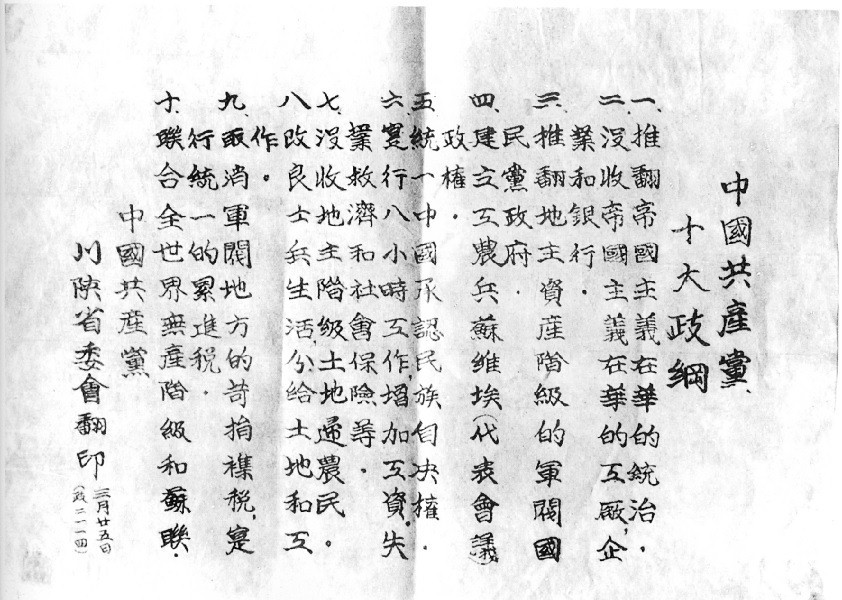
The Ten Political Programmes of the Communist Party of China adopted by the Sixth National Congress of the Communist Party of China
4. resolution on party building
Resolutions on Party building adopted by the Sixth National Congress of the Communist Party of China, including the Party's organizational issues and the Party Constitution.
Resolutions (I) the organization of the party. There are three main documents: "Resolution on the Draft Organizational Issues", "Draft Organizational Resolution of the Communist Party of China" and "Outline of the Organizational Issues Resolution."
The draft resolution on the organization consists of four articles. The most important content is to entrust the new central government to formulate detailed methods to guide local revolutionary work in the recent period according to the organizational resolution and the revised constitution; to entrust the new central government and the Communist International Organization Department to jointly stipulate the working methods of Chinese party members abroad, and to edit a popular pamphlet according to the organizational resolution and the revised constitution, Detailed description of the past, present and future tasks in the organizational work of the Communist Party of China, to enable the general lower-level Party activists to understand the state of the Party's organizational work. The main content of the draft resolution on the organization of the Communist Party of China is: it summarizes the organizational situation of the party in the past. It affirms the progress in organizational work, but there are many shortcomings, such as lack of correct line, systematic and firm organizational line, lack of concentration of strength, insufficient supervision and so on. The current main organizational tasks are clarified, and it is believed that the party's organizational work should be focused on consolidating the party organizations in large industrial enterprises, developing factory branches and local party departments, and especially making detailed regulations and requirements for the development of local party departments; emphasizing cadres Workerization and organizational work in trade unions and agricultural associations. The main contents of the outline of the resolution on organizational issues are as follows: first, it points out that the party has many dangerous phenomena in organization, such as the reduction of workers' composition, gradual separation from the masses, unplanned capture of the masses and important industrial areas, destruction and massacre, and the party that is not yet the masses of workers. It emphasizes that the party should establish industrial branches and local branches and develop workers' and peasants' organizations in the face of the political task of winning the masses to the climax, in order to achieve the party's goal of becoming a mass-fighting party of the working class itself. The second is to analyze and summarize the party's wrong tendencies and methods in proletarianization, branch life and organization, the organizational conditions of the underground party, and the relationship between the party and the masses. The third is to clarify the party's organizational tasks. In particular, it was emphasized that the Party should pay attention to consolidating and developing its influence in major industries. Carrying out the struggle against opportunism and realizing the democratization of the party, as well as strengthening the relationship between the party's guiding organs at all levels, and increasing inspection work.
Although the Sixth National Congress of the Communist Party of China did not pass a formal resolution on organizational issues, these three documents basically summarized the discussion on organizational issues and related decisions. They not only summarized the experience and lessons, but also made some provisions on the current organizational work, which effectively promoted the party. The development of organizational work has led to the Secretariat of the Sixth National Congress of the Communist Party of China to issue the outline as a draft resolution.
(II) the Constitution of the Communist Party of China. A total of 15 chapters and 53 articles. The six party constitutions added "the Communist Party of China is a part of the Communist International, named: the Communist Party of China, the Communist International Branch". There is no longer a distinction between the sexes of nationality. The conditions for joining the party are divided into factory workers, peasant handicraftsmen, intellectuals and service personnel of various agencies, members of the Communist Youth League, and those who have separated from other political parties (such as the Kuomintang, etc.). It is emphasized that the party introducer is responsible for those who introduce the party. The six party constitutions are more stringent than the five party constitutions. In particular, the relationship between higher and lower party departments, the tasks of branches and the composition of institutions at all levels are more clearly and detailed. It is stipulated that the Central Committee shall be the highest organ of the Party during the period of the National Congress of the Party. The Supervisory Committee was abolished and a review committee was added, stating: "In order to supervise the financial, accounting and work of the Party departments at all levels, the Party's National Congress and the provincial, county and city congresses elect the Central or provincial, county and city review committees. "The six major party constitutions of the Communist Party of China are the fifth official party constitutions in the history of the Communist Party of China. Although they have defects such as overemphasizing the composition of workers, having a" left "tendency in some aspects, and not fully reflecting local experience, the correct part of the party constitution was used for 17 years and was not replaced by the new party constitution until the Seventh National Congress of the Communist Party of China in 1945. It has played a positive role in promoting the development of party building in many aspects.
In addition to the above, the Sixth National Congress of the Communist Party of China also adopted the following four resolutions. The "Resolution on the Party Program" requires that a draft must be drawn up before the Seventh National Congress and sent to local party departments for discussion as soon as possible, so that the Seventh National Congress can be formally included in the agenda for the final decision. The Resolution on Ethnic Issues points out that the issues of ethnic minorities in China (Mongolian, Hui, Manchurian, Gaoli in the north, Taiwanese in Fujian, Miaoli and other primitive ethnic groups in the south, Xinjiang and Tibet) are of great significance to the revolution and require the preparation of materials on the issues of ethnic minorities in China before the Seventh National Congress so that they can be included in the agenda and included in the Party program. The "Resolution on the Declaration of the General Assembly" proposes to draft the declaration of the Sixth General Assembly in accordance with the political resolution and publish it at an appropriate time. The Resolution Deciding the Guangzhou Riots as a Fixed Memorial Day mainly explains the reason for the establishment of the Memorial Day. He pointed out that "the Guangzhou riot is the beginning of the stage of the Chinese Soviet revolution ...... is a great work in the history of the world proletarian revolution". Emphasizing the need to directly commemorate him and study his lessons, holding high the bright red banner-the banner of the Soviet, "to complete his great historical cause-the socialist revolution."
Judging from the above-mentioned resolutions adopted by the Sixth National Congress of the Communist Party of China, the Sixth National Congress of the Communist Party of China has been fruitful in its exploration of the Chinese revolution, and its line is basically correct. Although the Sixth National Congress of the Communist Party of China regarded the national bourgeoisie as the most dangerous enemy, the focus of the Party's work was still on the cities, the long-term nature of the Chinese revolution was underestimated, and the organization unilaterally emphasized the proletarianization of party members and the "workers' orientation of the guiding organs". However, "in the two years after the Sixth National Congress, the whole Party implemented the six major routes, and the Chinese revolution appeared a situation of revival and development".
Liu Xuely
March 08, 2017 Source: People's Network-Communist Party of China News Network

Address: Buildings 4 and 5, Kechuang Huigu Park, Hongshun Road, Huaming High-tech Zone, Dongli District, Tianjin
Tianjin High-end Equipment Research Institute, Tsinghua University, Copyright
Website Construction: China Enterprise Power Tianjin
sweep
Pay attention to the official WeChat public number