




PARTY BUILDING
party building work
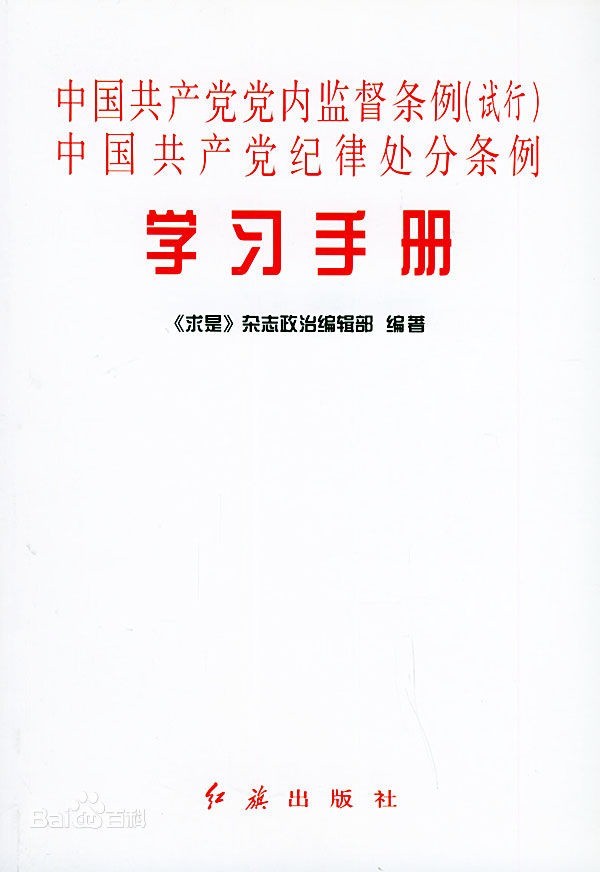
Regulations of the Communist Party of China on Inner-Party Supervision
Chapter I General Provisions
Article 1 In order to uphold the leadership of the party, strengthen party building, administer the party strictly in an all-round way, strengthen inner-party supervision, and maintain the advanced nature and purity of the party, these regulations are formulated in accordance with the Constitution of the Communist Party of China.
Article 2 Inner-party supervision is guided by Marxism-Leninism, Mao Zedong Thought, Deng Xiaoping Theory, the important thinking of the "Three Represents", and the scientific development concept, and thoroughly implements the spirit of General Secretary Xi Jinping's series of important speeches, and focuses on the overall planning of the "five in one". Layout and coordinate the promotion of the "four comprehensive" strategic layout, respect the party constitution, govern the party in accordance with regulations, and adhere to the combination of inner-party supervision and people, strengthen the party's ability to purify, improve, renovate, and improve itself under the conditions of long-term governance, and ensure that the party will always become the strong leadership core of the cause of socialism with Chinese characteristics.
Article 2 Inner-party supervision is guided by Marxism-Leninism, Mao Zedong Thought, Deng Xiaoping Theory, the important thinking of the "Three Represents", and the scientific development concept, and thoroughly implements the spirit of General Secretary Xi Jinping's series of important speeches, and focuses on the overall planning of the "five in one". Layout and coordinate the promotion of the "four comprehensive" strategic layout, respect the party constitution, govern the party in accordance with regulations, and adhere to the combination of inner-party supervision and people, strengthen the party's ability to purify, improve, renovate, and improve itself under the conditions of long-term governance, and ensure that the party will always become the strong leadership core of the cause of socialism with Chinese characteristics.
Article 3 There are no forbidden zones and no exceptions for inner-party supervision. Trust is not a substitute for oversight. Party organizations at all levels should combine trust and encouragement with strict supervision, so as to urge the leading cadres of the party to have the right to have the responsibility, to bear the responsibility, to be supervised in the use of power, and to be investigated for dereliction of duty.
Article 4 Inner-party supervision must implement democratic centralism, be carried out in accordance with regulations and disciplines, strengthen top-down organizational supervision, improve bottom-up democratic supervision, and give full play to the role of mutual supervision at the same level. Insist on learning from the past and learning from the future, cure the sick and save the patient, catch the early and catch the small, and prevent the gradual.
Article 5 The task of inner-party supervision is to ensure the effective implementation of the party constitution, party rules and party discipline in the whole party, maintain the unity and unity of the party, and focus on solving the weakening of the party's leadership, the lack of party building, the lack of comprehensive and strict governance of the party, the indifference of the party's concept, The organization is lax, the discipline is lax, the party is loose and the party is loose, ensure that the party's leading cadres are loyal and clean.
the main contents of inner-party supervision are:
(I) abide by the party constitution and party rules, strengthen ideals and beliefs, practice the party's purpose, and set an example in abiding by the constitution and laws;
(II) safeguard the centralized and unified leadership of the Party Central Committee, firmly establish political awareness, overall situation awareness, core awareness, and awareness of alignment, implement the party's theory, line, principles and policies, and ensure that the whole party orders and prohibitions;
(III) adhere to democratic centralism, take inner-party political life seriously, implement the principle that individual party members obey the party organization, the minority obey the majority, lower-level organizations obey higher-level organizations, and all party organizations and all party members obey the party's national congress and the central committee;
(IV) implement the responsibility of comprehensively and strictly governing the party, strictly enforce party discipline, especially political discipline and political rules, and promote the construction of party style and clean government and anti-corruption work;
(V) implement the spirit of the eight central regulations, strengthen the work style, maintain close ties with the masses, and consolidate the party's ruling foundation;
(VI) adhere to the party's standards for cadres, establish a correct orientation in the selection and appointment of cadres, and implement the regulations on the selection and appointment of cadres;
(VII) honesty, self-discipline and fair use of power;
(VIII) the completion of the tasks deployed by the Party Central Committee and Party organizations at higher levels.
Article 6 The key targets of inner-party supervision are the party's leading organs and leading cadres, especially the main leading cadres.
Article 7 Inner-party supervision must put discipline in the forefront, use the "four forms" of supervision and discipline enforcement, and often carry out criticism, self-criticism, and interviews and correspondence inquiries, so that "red face and sweating" become the norm; party discipline is light Sanctions and organizational adjustments have become the majority of disciplinary violations; party discipline is heavily punished and major job adjustments have become a minority; serious violations of discipline are suspected of breaking the law for filing and review have become very few.
Article 8 the leading cadres of the party shall strengthen self-discipline, often check their words and deeds against the party constitution, consciously abide by the norms of political life and honesty and self-discipline within the party, strengthen the cultivation of party spirit, cultivate moral sentiment, and always maintain the political nature of Communists.
Article 9 Establish and improve an inner-party supervision system under the unified leadership of the Party Central Committee, comprehensive supervision by the Party committee (Party group), special supervision by discipline inspection organs, functional supervision by Party work departments, daily supervision by Party grass-roots organizations, and democratic supervision by Party members.
Chapter II Supervision of Central Organizations of the Party
Article 10 The Central Committee of the Party, the Political Bureau of the Central Committee, and the Standing Committee of the Political Bureau of the Central Committee shall comprehensively lead the supervision work within the Party. The plenary meeting of the Central Committee listens to the work report of the Political Bureau of the Central Committee every year, supervises the work of the Political Bureau of the Central Committee, and deploys major tasks of strengthening internal party supervision.
Article 11 The Political Bureau of the Central Committee and the Standing Committee of the Political Bureau of the Central Committee regularly study and deploy to carry out study and education in the whole party, find problems and correct deviations in the spirit of rectification; listen to and review reports on the implementation of the eight central regulations by the whole party, and strengthen the construction of work style Supervision and inspection; listen to the work report of the Standing Committee of the Central Commission for Discipline Inspection; listen to the report on the central inspections, and achieve full coverage of the central inspections within one term. The Political Bureau of the Central Committee holds a democratic life meeting every year to conduct comparative inspections and party spirit analysis, and study measures to strengthen self-construction.
Article 12 members of the Central Committee must strictly abide by the party's political discipline and rules, and resolutely resist other members' acts that violate the party constitution, undermine the party's discipline and endanger the party's unity and unity, and report to the Party Central Committee in a timely manner. The real names of the members of the Political Bureau of the Central Committee shall be reflected in writing or other forms to the Standing Committee of the Political Bureau of the Central Committee or the Standing Committee of the Central Commission for Discipline Inspection.
Article 13 members of the political Bureau of the CPC Central Committee shall strengthen supervision over the departments directly in charge, local and field party organizations and members of the leading bodies, and regularly talk with the principal responsible persons of the relevant localities and departments on their performance of their responsibilities of comprehensively and strictly administering the party, honesty and self-discipline, and so on.
Article 14 Members of the Political Bureau of the Central Committee shall strictly implement the eight regulations of the Central Committee, consciously participate in dual organizational life, and truthfully report important personal matters to the Party Central Committee. Take the lead in establishing a good family style, strengthen the education and restraint of relatives and staff around them, and strictly require spouses, children and their spouses not to engage in business and run enterprises in violation of regulations, and not to hold posts in violation of regulations or get paid part-time jobs.
Chapter III Supervision of the Party Committee (Party Group)
Article 15 the Party committee (Party group) shall bear the main responsibility in the supervision within the party, the Secretary shall be the first responsible person, and the members of the Standing Committee of the Party committee (members of the Party group) and members of the Party committee shall perform their supervisory duties within the scope of their duties. Party committees (leading party groups) perform the following supervisory duties:
(I) lead the supervision work within the party in the region, department and unit, organize the implementation of various supervision systems, and do a good job of supervision and inspection;
(II) strengthen the leadership of the discipline inspection commissions at the same level and the discipline inspection work within their jurisdiction, and check their supervision and accountability work;
(III) supervise the members of the standing committee of the party committee (members of the party group), members of the party committee, the discipline inspection commission at the same level, the party work department, and the leading group of the party organization under direct leadership and its members;
(IV) put forward opinions and suggestions on the work of party committees and discipline inspection commissions at higher levels and carry out supervision.
Article 16 the working departments of the party shall strictly implement various supervision systems, strengthen the supervision within the party within the scope of their duties, not only strengthen the internal supervision of their own departments and units, but also strengthen the daily supervision of the system.
Article 17 Inner-party supervision must strengthen the supervision of the main responsible persons of the party organization and leading cadres in key positions, focusing on supervising their political positions, strengthening party building, administering the party strictly, implementing party resolutions, and selecting and employing people in a fair and decent manner. Responsibility, integrity and self-discipline, and implementation of the ideological work responsibility system.
Party organizations at higher levels, especially their principal responsible persons, should ask and remind the principal responsible persons of party organizations at lower levels more often, and correct problems in a timely manner. If the members of the leading group find that there is a problem with the main person in charge of the leading group, they should raise it with them in time, and if necessary, they can report directly to the party organization at a higher level.
The personal matters of the main person in charge of the party organization should be made public within a certain range within the party and actively accept supervision.
Article 18 The party committee (party group) shall strengthen the daily management and supervision of leading cadres and master their thinking, work, style, and living conditions. The leading cadres of the party should often carry out criticism and self-criticism, dare to face up to, deeply analyze, and take the initiative to correct their own shortcomings and mistakes; they should dare to point out the shortcomings and mistakes of comrades and help improve.
Article 19 Inspection is an important way of supervision within the Party. During the first term of office of the party committees of the central government, provinces, autonomous regions, and municipalities directly under the Central Government, they will conduct comprehensive inspections of the party organizations of the localities, departments, enterprises and institutions under their management. Inspect the party organization and the party's leading cadres to respect the party constitution, party leadership, party building, and the implementation of the party's line, principles and policies, and fulfill the responsibility of comprehensively and strictly governing the party, implementing the party's discipline, implementing the spirit of the eight central regulations, and party style Clean government construction and anti-corruption work, as well as selection and employment. Discover problems, form deterrence, promote reform, promote development, and play the role of strict governance of the party.
The Central Leading Group for Inspection Work shall strengthen its leadership over the inspection work of the party committees of provinces, autonomous regions, and municipalities directly under the Central Government, relevant ministries and commissions of the central government, and party groups (party committees) of central state organs. The party committees of provinces, autonomous regions, and municipalities directly under the Central Government should promote the establishment of an inspection system by the party's city (prefecture, prefecture, league) and county (city, district, and banner) committees, so that strict party governance can be extended to the grassroots.
Article 20: Strictly enforce the party's organizational life system, democratic life meetings should be regularized, and important or universal problems should be held in a timely manner. The democratic life will focus on solving outstanding problems. At the meeting, leading cadres should explain clearly and thoroughly the problems reflected by the masses, patrol feedback, and organize interviews and correspondence inquiries, carry out criticism and self-criticism, propose rectification measures, and accept organizational supervision. Party organizations at higher levels should strengthen the guidance and supervision of democratic life meetings of lower-level leading bodies and improve the quality of democratic life meetings.
Article 21 Adhere to the system of inner-party talks and earnestly carry out reminders and admonitions. If it is found that a leading cadre has signs or tendencies in ideology, style, discipline, etc., the person in charge of the relevant party organization shall promptly remind him to talk to him; if a minor violation of discipline is found, the person in charge of the party organization at a higher level shall admonish him to talk to him, and by himself Make an explanation or review, and report to the higher-level disciplinary committee and organization department after being signed by the main person in charge of the party organization.
Article 22 Strictly implement the cadre inspection and assessment system, comprehensively inspect the performance of morality, ability, diligence, performance, and integrity, emphasize both political performance and political ethics, and focus on the performance of implementing the decision-making and deployment of the Party Central Committee and higher-level party organizations, and perform the management of the party The responsibility of governing the party, the position on major issues of principle, the attitude towards the people, and the completion of urgent, difficult and dangerous tasks. During the inspection and assessment, the main person in charge of the party organization shall make a realistic evaluation of the team members. The assessment comments will be recorded in the cadre file after meeting with me. Implement the responsibilities of the main person in charge of the party organization in all aspects of cadre selection, inspection, and decision-making, and seriously hold accountable for negligence and negligence.
Article 23 the leading cadres of the party shall, at the enlarged meeting of the standing Committee of the Party committee (or the leading party group) every year, be evaluated. The focus of the statement is on the implementation of political discipline and political rules, the fulfillment of the responsibility of governing the party, the promotion of party style and clean government construction and anti-corruption work, and the implementation of clean discipline. The report of accountability and honesty should be recorded in the integrity file and made public within a certain range.
Article 24 to adhere to and improve the reporting system of personal matters related to leading cadres, leading cadres shall truthfully report personal matters in accordance with the provisions, timely report the major situation of individuals and families, and ask for instructions in advance to report leaving their posts or where they work. Relevant departments should strengthen spot checks and verification. Those who intentionally make false reports and conceal important personal matters or tamper with and forge personal archives shall be investigated and dealt with seriously.
Article 25: Establish and improve the record system for the party's leading cadres to intervene in major matters, and find that they use their positions to facilitate illegal interference in the selection and appointment of cadres, engineering construction, discipline enforcement, and judicial activities, and they shall promptly report to the higher-level party organization.
Chapter IV Supervision of the Party's Commission for Discipline Inspection
Article 26 the party's discipline inspection committees at all levels are the special organs responsible for supervision within the party. They perform the duties of supervision, discipline enforcement and accountability, strengthen the supervision and inspection of Party organizations and leading cadres within their jurisdiction in abiding by the party constitution, party rules and party discipline, and implementing the party's line, principles and policies, and undertake the following specific tasks:
(I) strengthen supervision over the performance of duties and the exercise of power by party committees at the same level, especially members of the standing committee, party work departments, party organizations under direct leadership, and party leading cadres;
(II) implement the dual leadership system for disciplinary inspection work. The disciplinary review work is dominated by the leadership of the higher-level disciplinary committee. The handling of clues and disciplinary review are reported to the higher-level disciplinary committee while reporting to the party committee at the same level. The nomination and nomination of the secretary and deputy secretary of the disciplinary committee at all levels The inspection is mainly based on the higher-level disciplinary committee in conjunction with the organization department;
(III) strengthen the leadership of the higher-level discipline inspection commission over the lower-level discipline inspection commission. The discipline inspection commission can directly report to the higher-level discipline inspection commission when it finds problems with the main leading cadres of the party committee at the same level; the lower-level discipline inspection commission reports its work to the higher-level discipline inspection commission at least once every six months, and reports to the higher-level discipline inspection commission every year.
Article 27: Disciplinary inspection agencies must put the maintenance of the party's political discipline and political rules in the first place, and resolutely correct and investigate and deal with policies, countermeasures, orders, prohibitions, duplicity, and disobedience. Acts such as forming gangs, forming cliques, deceiving organizations, and confronting organizations.
Article 28 The discipline inspection team dispatched by the Commission for Discipline Inspection shall be responsible to the dispatched agency, strengthen the supervision of the leadership team and its members, and other leading cadres of the supervised unit, and report problems to the dispatched agency and the party organization of the supervised unit in a timely manner, and be responsible for the investigation and handling, Put forward suggestions for those who need accountability.
The dispatched agency should strengthen the leadership of the work of the dispatched discipline inspection team, regularly interview the main person in charge of the party organization of the supervised unit and the leader of the dispatched discipline inspection team, and urge them to implement the responsibility of governing the party.
The dispatched discipline inspection team shall report to the dispatched agency on a regular basis with the actual situation and specific issues, and conduct a special study on the construction of party style and clean government and anti-corruption work with the party organization of the supervised unit at least once every six months. It is dereliction of duty not to find the problems that can be found, and it is dereliction of duty not to report or deal with the problems found, and we must be seriously accountable.
Article 29: Seriously handle letters and visits and reports, do a good job of classifying and handling problem clues, find early and report early, report in a timely manner on the situation of leading cadres who have outstanding social feedback and poor evaluation by the masses, and collectively study important reports. Regularly analyze and judge the situation of letters and visits, put forward targeted disposal opinions on the typical and universal problems reflected in letters and visits, and urge the places and departments where letters and visits are relatively concentrated to find and analyze the reasons and seriously rectify them.
Article 30 Strictly control the selection and appointment of cadres "reply to opinions on party style and integrity", comprehensively grasp the situation in daily work, strengthen analysis, research and judgment, seek truth from facts to evaluate the integrity of cadres, and prevent "promotion with illness" and "employment with illness".
Article 31 Upon receipt of a response to a cadre's general violation of discipline, he shall promptly check with himself, talk to remind him, and make an interview letter so that the cadre can explain the problem clearly. The interview with the person to be reflected can be conducted together with the main person in charge of the party organization to which he belongs; the person to be reflected should be signed by the main person in charge of the party organization to which he belongs and submitted to the higher-level discipline inspection commission. Records of conversations and replies to correspondence should be carefully verified and filed for future reference. If no problem is found, it shall be settled and clarified, and those who do not truthfully explain the situation shall be dealt with seriously.
Article 32: Conduct disciplinary review in accordance with regulations and disciplines. The key review does not converge and does not stop. The problem clues are concentrated and the masses have strong reactions. Leading cadres who are now in important positions and may need to be promoted. Three types of situations are at the same time. Is the top priority. Discipline enforcement review should find out the facts of violation of discipline, let the review object start with studying the party constitution, check and analyze itself from the aspects of ideals, beliefs and purposes, party spirit principles, style and discipline, etc. The trial report should be clear in facts, accurate in nature, and reflect the ideological understanding of the review object.
Article 33 for those who violate the spirit of the eight provisions of the Central Committee, those who have been filed for examination and expelled from the party for serious violation of discipline, those who have been held accountable for serious dereliction of duty, and those who have occurred around the masses and have a bad impact on the masses, they shall be named and reported to the public.
Article 34. Supervision over the discipline inspection organs shall be strengthened. If disciplinary organs and their staff are found to have violated discipline, they must be dealt with seriously. Disciplinary inspection agencies at all levels must strengthen their own construction, improve internal control mechanisms, consciously accept internal party supervision, social supervision, and mass supervision to ensure that power is strictly restricted.
Chapter V Supervision of Primary Party Organizations and Party Members
Article 35 The grass-roots organizations of the Party shall play their role as fighting fortresses and perform the following supervisory duties:
(I) and strictly enforce the party's organizational life, carry out criticism and self-criticism, supervise party members in effectively fulfilling their obligations, and protect the rights of party members from infringement;
(II) understand the criticisms and opinions of party members and the masses on party work and party leading cadres, and regularly report the situation to higher party organizations and put forward opinions and suggestions;
(III) maintain and enforce party discipline, and promptly educate or deal with violations of discipline by party members and cadres. If the problem is serious, it should be reported to the party organization at a higher level.
Article 36 Party members shall, with a highly responsible attitude towards the cause of the party and the people, actively exercise the rights of Party members and perform the following supervisory obligations:
(I) strengthen democratic supervision over the party's leading cadres and promptly reflect the opinions and demands of the masses to party organizations;
(II) base their criticism of any party organization and any party member at party meetings and expose and correct existing shortcomings and problems in their work;
(III) participate in the activities of appraising leading cadres carried out by party organizations, have the courage to touch on contradictions, point out shortcomings and mistakes, and dare to be true to mistakes and words and dare to struggle;
(IV) responsibly expose and report to the party the facts of violations of discipline and law by any party organization and any party member, resolutely oppose all factional activities and small group activities, and resolutely fight corruption.
Chapter 6 Combination of Inner-Party Supervision and External Supervision
Article 37 Party committees at all levels shall support and ensure that people's congresses, governments, supervisory organs and judicial organs at the same level supervise state organs and public officials in accordance with the law, that the CPPCC conducts democratic supervision in accordance with its articles of association, and that audit institutions conduct audit supervision in accordance with the law. If the relevant state organs find that the leading cadres of the party violate the party rules and discipline and need to be dealt with by the party organization, they shall promptly report to the relevant party organization. If the audit organ discovers the clues of the party's leading cadres suspected of violating discipline, it shall report to the party organization at the same level and, if necessary, to the party organization at a higher level, and transfer the clues to the relevant discipline inspection organs for handling in accordance with the regulations.
If it is found in the disciplinary review that the party's leading cadres are suspected of serious violations of discipline and crimes, they shall first make a decision on party disciplinary sanctions and then transfer them to administrative and judicial organs for handling. Law enforcement agencies and judicial agencies shall file and investigate cases involving party leading cadres in accordance with the law, and they shall notify the party committee and disciplinary committee at the same level; the party organization where the cadre belongs shall suspend the rights of relevant party members in accordance with relevant regulations; they shall be investigated for criminal responsibility in accordance with the law, or although it does not constitute If a crime is suspected of violating discipline, it shall be transferred to the Commission for Discipline Inspection for processing.
Article 38 The Communist Party of China and the democratic parties coexist for a long time, supervise each other, take care of each other and share weal and woe. Party organizations at all levels should support democratic parties in performing their supervisory functions, attach importance to the opinions, criticisms, and suggestions put forward by democratic parties and people without party affiliation, and improve mechanisms for information, communication, feedback, and implementation.
Article 39 Party organizations and party leading cadres at all levels shall take social supervision seriously and consciously accept social supervision, use Internet technology and information technology to promote the openness of party affairs, broaden supervision channels, and accept criticism from the masses with an open mind. The news media should adhere to the unity of party spirit and people's character, adhere to the correct orientation, strengthen the supervision of public opinion, analyze typical cases, and play a warning role.
Chapter VII Rectification and Guarantee
Article 40 The party organization shall truthfully record and centrally manage the problems and clues found in the supervision within the party, understand and verify them in a timely manner, and deal with them accordingly; those that do not fall within the scope of handling at the same level shall be transferred to the party organization with authority for handling.
Article 41 The party organization shall rectify the problems found in the supervision every article and have a solution. The results of rectification and reform shall be reported to the party organizations at higher levels in a timely manner, and may be notified to the party organizations and party members at lower levels when necessary, and made public to the public.
Clues of disciplinary issues assigned by higher-level party organizations and handed over such as inspections should be handled in a timely manner, and feedback should be given within 3 months.
Article 42: The party committee (party group) and the discipline inspection committee (discipline inspection team) shall strengthen the supervision and inspection of the implementation of the party's supervision responsibilities and the implementation of problem rectification, and fail to perform or incorrectly perform the party's supervision responsibilities, as well as ineffective correction and rectification, In accordance with the "Chinese Communist Party Disciplinary Measures", "Chinese Communist Party Accountability Regulations" and other provisions.
Article 43 Party organizations shall guarantee the right of party members to know and supervise, and encourage and support party members to play an active role in inner-party supervision. Advocating that the real name of the agency reflects the facts of violation of discipline, the party organization should keep the informants strictly confidential and give feedback to them in an appropriate way. Those who interfere with and hinder supervision or retaliate against supervisors shall be severely dealt with in accordance with discipline.
Article 44 The Party organization shall guarantee the right of defense, appeal and other related rights of the object of supervision. After investigation, if the object of supervision has no improper behavior, it shall be clarified and the name shall be corrected. Those who insult, slander or frame others in the name of supervision shall be dealt with seriously in accordance with discipline; those suspected of committing crimes shall be transferred to judicial organs for handling. If the object of supervision is not satisfied with the decision, it may appeal in accordance with the provisions of the Party Constitution. relevant party organizations should seriously review and review and draw conclusions.
Chapter VIII Supplementary Provisions
Article 45 The Central Military Commission may formulate relevant regulations in accordance with these Regulations.
Article 46 The Central Commission for Discipline Inspection shall be responsible for the interpretation of these Regulations.
Article 47 These Regulations shall enter into force as of the date of promulgation.
Previous Page
Previous Page

Address: Buildings 4 and 5, Kechuang Huigu Park, Hongshun Road, Huaming High-tech Zone, Dongli District, Tianjin
Tianjin High-end Equipment Research Institute, Tsinghua University, Copyright
Website Construction: China Enterprise Power Tianjin
Business License
sweep
Pay attention to the official WeChat public number