




PARTY BUILDING
party building work
Constitution of the Communist Party of China
According to the Constitution of the Communist Party of China, the Communist Party of China is the vanguard of the Chinese working class, the Chinese people and the Chinese nation, the leading core of the cause of socialism with Chinese characteristics, represents the development requirements of China's advanced productive forces, and represents the fundamental interests of the overwhelming majority of the Chinese people. The party's living standards and codes of conduct formulated in conjunction with the practice of party building are a powerful weapon for strengthening party building. The party constitution of the Communist Party of China reflects the development of the party's doctrine, the process of the development of revolution, construction and reform, and the degree of maturity of party building. Studying the emergence and development of the party constitution can deeply understand the development of Marxist party building theory, better summarize the experience and lessons of party building, strengthen party building, and promote the continuous development of revolution, construction and reform.
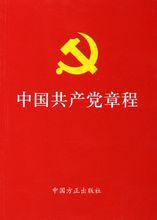
1. amendment adopted
Constitution of the Communist Party of China (partially revised at the 18th National Congress of the Communist Party of China, adopted on November 14, 2012)
For details, please refer to the summary of the formulation and amendment of the Party Constitution of the Communist Party of China (from the first to the 18th National Congress).
2. General Outline
The Communist Party of China is the vanguard of the Chinese working class, the vanguard of the Chinese people and the Chinese nation, and the leading core of the cause of socialism with Chinese characteristics. It represents the development requirements of China's advanced productive forces, the direction of China's advanced culture, and the fundamental interests of the overwhelming majority of the Chinese people. the party's highest ideal and ultimate goal is to realize communism.
The Communist Party of China takes Marxism-Leninism, Mao Zedong Thought, Deng Xiaoping Theory, the important thought of "Three Represents" and the scientific outlook on development as its guide to action.
Marxism-Leninism reveals the law of the historical development of human society, and its basic principles are correct and have strong vitality. The highest ideal of communism pursued by the Chinese Communists can only be realized on the basis of the full development and high development of socialist society. The development and improvement of the socialist system is a long-term historical process. Adhering to the basic principles of Marxism-Leninism and following the road that suits China's national conditions and is chosen voluntarily by the Chinese people, China's socialist cause will surely win the final victory.
The Chinese Communists, with Comrade Mao Zedong as the main representative, combined the basic principles of Marxism-Leninism with the concrete practice of the Chinese revolution and founded Mao Zedong Thought. Mao Zedong Thought is the application and development of Marxism-Leninism in China. It is the correct theoretical principle and experience summary of Chinese revolution and construction that has been proved by practice. It is the crystallization of the collective wisdom of the Communist Party of China. Under the guidance of Mao Zedong Thought, the Communist Party of China led the people of all ethnic groups throughout the country. After a long-term revolutionary struggle against imperialism, feudalism, and bureaucratic capitalism, it won the victory of the new democratic revolution and established the the People's Republic of China of the people's democratic dictatorship; after the founding of the People's Republic, it successfully carried out socialist transformation, completed the transition from new democracy to socialism, and established the basic socialist system, the development of socialist economy, politics and culture.
Since the Third Plenary Session of the Eleventh Central Committee, the Chinese Communists, with Comrade Deng Xiaoping as the main representative, have summed up the positive and negative experiences since the founding of the People's Republic of China, emancipated the mind, sought truth from facts, realized the shift of the work center of the whole party to economic construction, carried out reform and opening up, opened up a new period of socialist development, and gradually formed the line, principles and policies for building socialism with Chinese characteristics, it clarified the basic issues of building socialism, consolidating and developing socialism in China, and created Deng Xiaoping Theory. Deng Xiaoping Theory is the product of combining the basic principles of Marxism-Leninism with the practice of contemporary China and the characteristics of the times. It is the inheritance and development of Mao Zedong Thought under the new historical conditions. It is the new stage of the development of Marxism in China. It is the Marxism of contemporary China. It is the crystallization of the collective wisdom of the Communist Party of China and guides the continuous progress of my country's socialist modernization.
Since the Fourth Plenary Session of the Thirteenth Central Committee, the Chinese Communists, with Comrade Jiang Zemin as the main representative, have deepened their understanding of what socialism is, how to build socialism, what kind of party to build, and how to build in the practice of building socialism with Chinese characteristics. The understanding of the party has accumulated new valuable experience in governing the party and the country, and formed the important thinking of the "Three Represents. The important thinking of the "Three Represents" is the inheritance and development of Marxism-Leninism, Mao Zedong Thought, and Deng Xiaoping Theory. It reflects the new requirements of the development and changes of the contemporary world and China for the work of the party and the country. It is to strengthen and improve party building and promote The powerful theoretical weapon for the self-improvement and development of my country's socialism is the crystallization of the collective wisdom of the Chinese Communist Party and the guiding ideology that the party must adhere. To consistently achieve the "three represents" is the foundation of our party, the basis of its governance, and the source of its strength.
Since the 16th National Congress of the Communist Party of China, the Chinese Communists, with Comrade Hu Jintao as the main representative, have adhered to the guidance of Deng Xiaoping Theory and the important thinking of the "Three Represents", and in accordance with the new development requirements, they have deeply understood and answered what kind of development to achieve under the new situation., How to develop and other major issues have formed a scientific development concept of people-oriented, comprehensive, coordinated and sustainable development. The scientific outlook on development is a scientific theory that is in line with Marxism-Leninism, Mao Zedong Thought, Deng Xiaoping Theory, and the important thinking of the "Three Represents" and keeps pace with the times. The latest achievement of Sinicization is the crystallization of the collective wisdom of the Communist Party of China, and the guiding ideology that must be adhered to and implemented in the development of socialism with Chinese characteristics.
The fundamental reason for all our achievements and progress since the reform and opening up is that we have opened up the road of socialism with Chinese characteristics, formed the theoretical system of socialism with Chinese characteristics, and established the socialist system with Chinese characteristics. All comrades in the party must cherish, adhere to and continuously develop this road, this theoretical system, and this system that the party has pioneered through hardships, hold high the great banner of socialism with Chinese characteristics, and promote modernization, complete the reunification of the motherland, and maintain world peace. Strive for the three historical tasks of promoting common development.
Our country is in and will be in the primary stage of socialism for a long time. This is an insurmountable historical stage in the construction of socialist modernization in China, which is economically and culturally backward, and it will take hundreds of years. China's socialist construction must proceed from China's national conditions and take the road of socialism with Chinese characteristics. At this stage, the main contradiction in our society is the contradiction between the growing material and cultural needs of the people and the backward social production. Due to domestic factors and international influence, class struggle still exists for a long time within a certain range, and it may intensify under certain conditions, but it is no longer the main contradiction. The fundamental task of my country's socialist construction is to further liberate the productive forces, develop the productive forces, and gradually realize socialist modernization, and to this end, reform the aspects and links of the relations of production and the superstructure that are not suitable for the development of the productive forces. We must adhere to and improve the basic economic system with public ownership as the mainstay and the common development of multiple ownership economies, adhere to and improve the distribution system in which distribution according to work is the mainstay and multiple distribution methods coexist, encourage some regions and some people to get rich first, and gradually eliminate poverty, To achieve common prosperity, continuously meet the people's growing material and cultural needs on the basis of production development and social wealth growth, and promote the all-round development of people. development is our party's top priority in governing and rejuvenating the country. All work must take the development of the productive forces of socialist society, the enhancement of the comprehensive national strength of socialist countries, and the improvement of the people's living standards as the general starting point and test standard, and respect labor, respect knowledge, respect talents, Respect creation, so that development is for the people, development depends on the people, and the fruits of development are shared by the people. In the new century, China has entered a new stage of development in which it is building a moderately prosperous society in an all-round way and accelerating socialist modernization. We must comprehensively promote economic, political, cultural, social and ecological civilization construction in accordance with the overall layout of the cause of socialism with Chinese characteristics. in the new stage of the new century,The strategic goal of economic and social development is to consolidate and develop the level of well-off society that has been initially reached, and to build a higher level of well-off society benefiting more than one billion people by the 100th year of the founding of the party; by the 100th year of the founding of the people's Republic of China, the per capita GDP will reach the level of moderately developed countries and basically realize modernization.
The basic line of the Communist Party of China in the primary stage of socialism is to lead and unite the people of all ethnic groups in the country, focus on economic construction, adhere to the four basic principles, adhere to reform and opening up, self-reliance, and work hard to build our country into a prosperous, democratic, civilized and harmonious socialist modern country.
In leading the socialist cause, the Communist Party of China must persist in taking economic construction as the center, and all other work should obey and serve this center. We should seize the opportunity to speed up development, implement the strategy of invigorating the country through science and education, the strategy of strengthening the country with talents, and the strategy of sustainable development, give full play to the role of science and technology as the primary productive force, rely on scientific and technological progress, improve the quality of workers, and promote the sound and rapid development of the national economy.
the four cardinal principles of adhering to the socialist road, adhering to the people's democratic dictatorship, adhering to the leadership of the cpc, and adhering to marxism-leninism-mao zedong thought,It is the foundation of our country. Throughout the process of socialist modernization, we must adhere to the Four Cardinal Principles and oppose bourgeois liberalization.
Adhering to reform and opening up is our road to a strong country. Only through reform and opening up can we develop China, socialism and Marxism. It is necessary to fundamentally reform the economic system that restricts the development of productive forces, and adhere to and improve the socialist market economic system; in line with this, it is necessary to carry out political system reform and reform in other fields. We should adhere to the basic national policy of opening up to the outside world and absorb and learn from all the achievements of civilization created by human society. Reform and opening up should be bold in exploring, pioneering, improving the scientific nature of reform decisions, enhancing the coordination of reform measures, and opening up new paths in practice.
The Communist Party of China leads the people in developing a socialist market economy. We will unswervingly consolidate and develop the public sector of the economy and unswervingly encourage, support and guide the development of the non-public sector of the economy. Give full play to the fundamental role of the market in the allocation of resources and establish a sound macro-control system. We will coordinate urban and rural development, regional development, economic and social development, harmonious development between man and nature, domestic development and opening up to the outside world, adjust the economic structure, and transform the mode of economic development. Promote the simultaneous development of industrialization, informatization, urbanization, and agricultural modernization, build a new socialist countryside, take a new path of industrialization with Chinese characteristics, and build an innovative country.
The Communist Party of China leads the people in developing socialist democratic politics. Adhere to the organic unity of the leadership of the party, the people being the masters of the country, and the rule of law, follow the path of socialist political development with Chinese characteristics, expand socialist democracy, improve the socialist legal system, build a socialist country under the rule of law, consolidate the people's democratic dictatorship, and build a socialist political civilization. Adhere to and improve the system of people's congresses, the system of multi-party cooperation and political consultation under the leadership of the Communist Party of China, the system of regional ethnic autonomy, and the system of grassroots mass autonomy. Develop a broader, fuller and sounder people's democracy, and effectively guarantee the people's rights to manage state and social affairs, and to manage economic and cultural undertakings. Respect and safeguard human rights. Open up the road and establish and improve systems and procedures for democratic elections, democratic decision-making, democratic management, and democratic supervision. Improve the socialist legal system with Chinese characteristics, strengthen the implementation of laws, and realize the rule of law in all national work.
The Communist Party of China leads the people in developing advanced socialist culture. We should build socialist spiritual civilization, combine the rule of law with the rule of virtue, improve the ideological and moral quality and scientific and cultural quality of the whole nation, provide strong ideological guarantee, spiritual power and intellectual support for reform, opening up and socialist modernization, and build a socialist cultural power. We should strengthen the construction of the socialist core value system, adhere to the guiding ideology of Marxism, establish the common ideal of socialism with Chinese characteristics, carry forward the national spirit with patriotism as the core and the spirit of the times with reform and innovation as the core, advocate the socialist concept of honor and disgrace, enhance national self-esteem, self-confidence and self-improvement spirit, resist the erosion of decadent ideas of capitalism and feudalism, and eliminate all kinds of social evils, and strive to turn our people into people with ideals, morality, culture, and discipline. Party members should also be educated in the lofty ideals of communism. Vigorously develop education, science, and culture, promote the nation's excellent traditional culture, and prosper and develop socialist culture.
The Communist Party of China leads the people to build a harmonious socialist society. In accordance with the general requirements of democracy and the rule of law, fairness and justice, honesty and fraternity, vitality, stability and order, and the principle of common construction and common enjoyment of man and nature, we should focus on ensuring and improving people's livelihood, and solve the most concerned, most direct and realistic interests of the people, so as to make the fruits of development more and more equitable to all the people, and strive to form a situation in which all the people do their best and live in harmony. Strengthen and innovate social management. Strictly distinguish and correctly handle two types of contradictions of different nature, namely, contradictions between ourselves and the enemy and contradictions among the people. We will strengthen the comprehensive management of public security, resolutely crack down on all kinds of criminal activities and criminals that endanger national security and interests, social stability and economic development, and maintain long-term social stability.
The Communist Party of China leads the people to build a socialist ecological civilization. We should establish the concept of ecological civilization of respecting, conforming to and protecting nature, adhere to the basic national policy of saving resources and protecting the environment, adhere to the policy of giving priority to conservation, protection and natural restoration, and adhere to the civilized development path of production development, affluent life and good ecology. Efforts should be made to build a resource-saving and environment-friendly society, form a spatial pattern, industrial structure, mode of production and way of life that saves resources and protects the environment, create a good production and living environment for the people, and realize the sustainable development of the Chinese nation.
The Communist Party of China adheres to the leadership of the people's Liberation Army and other people's armed forces, strengthens the construction of the people's Liberation Army, earnestly ensures that the people's Liberation Army fulfills its historical mission in the new stage of the new century, and gives full play to the role of the people's Liberation Army in consolidating national defense, defending the motherland and participating in socialist modernization.
The Communist Party of China maintains and develops socialist ethnic relations of equality, unity, mutual assistance and harmony, actively trains and selects ethnic minority cadres, helps ethnic minorities and ethnic regions develop economic, cultural and social undertakings, and realizes the unity and struggle of all ethnic groups for common prosperity and development. We will fully implement the Party's basic policy on religious work and unite religious believers to contribute to economic and social development.
The Communist Party of China is united with workers, peasants, and intellectuals of all ethnic groups throughout the country, united with the democratic parties, people without party affiliation, and the patriotic forces of all ethnic groups, and further develops and strengthens all socialist workers and builders of the socialist cause The broadest patriotic united front composed of patriots who support socialism and patriots who support the reunification of the motherland. Continuously strengthen the unity of the people of the whole country, including compatriots in the Hong Kong Special Administrative Region, Macao Special Administrative Region, Taiwan compatriots and overseas Chinese. In accordance with the principle of "one country, two systems", we will promote the long-term prosperity and stability of Hong Kong and Macao and complete the great cause of the reunification of the motherland.
The Communist Party of China adheres to an independent foreign policy of peace, adheres to the path of peaceful development, adheres to a mutually beneficial and win-win strategy of opening up, coordinates the overall domestic and international situations, actively develops foreign relations, and strives to strive for a favorable international environment for my country's reform, opening up and modernization. In international affairs, we should safeguard China's independence and sovereignty, oppose hegemonism and power politics, safeguard world peace, promote human progress, and strive to build a harmonious world of lasting peace and common prosperity. We will develop our relations with all countries in the world on the basis of the five principles of mutual respect for sovereignty and territorial integrity, mutual non-aggression, non-interference in each other's internal affairs, equality and mutual benefit, and peaceful coexistence. We will continue to develop good-neighbourly relations with neighbouring countries and strengthen unity and cooperation with developing countries. In accordance with the principles of independence, complete equality, mutual respect, and non-interference in each other's internal affairs, develop the relationship between our party and the Communist Parties and other political parties of various countries.
To lead the people of all ethnic groups across the country to achieve the grand goal of socialist modernization, the Communist Party of China must closely focus on the party's basic line, strengthen the party's ability to govern, advanced and pure, and comprehensively promote the new greatness of party building with the spirit of reform and innovation. Project, promote the party's ideological construction, organizational construction, work style construction, anti-corruption construction, and system construction as a whole, and comprehensively improve the scientific level of party building. Persist in building the party for the public and governing for the people, insist that the party must manage the party and govern the party strictly, carry forward the party's fine traditions and style, continuously improve the party's leadership and governance level, and improve the ability to resist corruption, prevent degeneration and resist risks, Continuously strengthen the party's class foundation and expand the party's mass foundation, continuously improve the party's creativity, cohesion, and combat effectiveness, and build a learning, service-oriented, innovative Marxist ruling party, so that our party will always be at the forefront of the times and become a strong core leading the people of the whole country along the road of socialism with Chinese characteristics. party building must resolutely fulfill the following four basic requirements:
First, adhere to the Party's basic line.The whole party must use Deng Xiaoping Theory, the important thinking of the "Three Represents", the scientific outlook on development, and the party's basic line to unify thinking and action, and unswervingly adhere to it for a long time. We must unify reform and opening up with the four basic principles, fully implement the party's basic line, fully implement the party's basic program in the primary stage of socialism, oppose all "left" and right erroneous tendencies, and guard against the right, but mainly prevent the "left". We will strengthen the building of leading bodies at all levels, select and use cadres who have made outstanding achievements in reform, opening up and socialist modernization and are trusted by the masses, train and bring up millions of successors to the socialist cause, and organizationally ensure the implementation of the party's basic theory, basic line, basic program and basic experience.
second, persist in emancipating the mind, seeking truth from facts, advancing with the times, and seeking truth and being pragmatic.The party's ideological line is to proceed from reality, link theory with practice, seek truth from facts, and test and develop truth in practice. The whole Party must adhere to this ideological line, actively explore, boldly experiment, blaze new trails, work creatively, constantly study new situations, sum up new experiences, solve new problems, enrich and develop Marxism in practice, and promote the Sinicization of Marxism.
Third, persevering in serving the people wholeheartedly.Apart from the interests of the working class and the broadest masses of the people, the Party has no special interests of its own. At all times, the party puts the interests of the masses first, shares weal and woe with the masses, maintains the closest ties, insists that power is used by the people, feelings are tied to the people, and interests are for the people, and does not allow any party member to be divorced from the masses and above them. The party should implement the mass line in its own work, do everything for the masses, rely on the masses in everything, come from the masses and go to the masses, and turn the party's correct propositions into the conscious actions of the masses. The greatest political advantage of our party is to maintain close ties with the masses, and the greatest danger after the party comes to power is to separate from the masses. The issue of party style and the issue of the party's ties with the people is a matter of life and death for the party. The party adheres to the principle of treating both symptoms and root causes, comprehensive management, simultaneous punishment and prevention, and emphasis on prevention, establishes and improves the punishment and prevention system of corruption, unremittingly opposes corruption, and strengthens the construction of party style and clean government.
Fourth, adhere to democratic centralism.Democratic centralism is the combination of centralism on the basis of democracy and democracy under centralized guidance. It is not only the fundamental organizational principle of the Party, but also the application of the mass line in the Party's life. We must give full play to inner-party democracy, respect the dominant position of party members, guarantee the democratic rights of party members, and give full play to the enthusiasm and creativity of party organizations at all levels and the broad masses of party members. We must implement correct centralization, ensure the unity and unity of the whole party, and ensure that the party's decisions are implemented quickly and effectively. Strengthen the sense of organization and discipline, and everyone is equal before the party's discipline. Strengthen the supervision of the party's leading organs and party-member leading cadres, especially the main leading cadres, and continuously improve the internal party supervision system. The party correctly carries out criticism and self-criticism in its own political life, carries out ideological struggle on issues of principle, adheres to the truth and corrects mistakes. Efforts have been made to create a lively political situation that is both centralized and democratic, disciplined and free, unified in will and comfortable in individual minds.
the party's leadership is mainly political, ideological, and organizational leadership.The party should adapt to the requirements of reform, opening up and socialist modernization, adhere to the scientific, democratic and legal governance, and strengthen and improve the party's leadership. The party must play a leading core role in various organizations at the same level in accordance with the principle of overseeing the overall situation and coordinating all parties. The Party must concentrate its efforts on leading economic construction, organize and coordinate the forces of all parties, work with one heart and one mind, focus on economic construction, and promote all-round economic and social development.
The party must implement democratic and scientific decision-making, formulate and implement correct lines, guidelines, and policies, do a good job in party organization and publicity and education, and give full play to the vanguard and exemplary role of all party members. The Party must operate within the limits of the Constitution and the law. The party must ensure that the country's legislative, judicial, and administrative organs, economic and cultural organizations, and people's organizations work actively, independently and responsibly, and in a coordinated manner. The Party must strengthen its leadership over mass organizations such as trade unions, communist youth leagues and women's federations and give full play to their role. The Party must adapt to the development of the situation and changes in the situation, improve its leadership system, improve its leadership style and enhance its ability to govern. Communist Party members must cooperate closely with the masses outside the Party and work together to build socialism with Chinese characteristics.
Chapter I Party Members
Article 1 Chinese workers, peasants, soldiers, intellectuals and advanced members of other social strata who have reached the age of 18 recognize the party's program and constitution, and are willing to participate in an organization of the party and actively work in it, implement party resolutions and Those who pay party dues on time may apply to join the Communist Party of China.
Article 2 Members of the Communist Party of China are vanguard fighters of the Chinese working class with communist consciousness.
Members of the Communist Party of China must serve the people wholeheartedly, at the expense of all their personal lives, and strive for the realization of communism for life.
Members of the Communist Party of China will always be ordinary members of the working people. Except for personal interests and work functions within the scope of laws and policies, all Communist Party members are not allowed to seek any private interests and privileges.
Article 3 Party members must fulfill the following obligations:
(I) earnestly study Marxism-Leninism, Mao Zedong Thought, Deng Xiaoping Theory, the important thinking of the "Three Represents" and the scientific development concept, study the party's line, guidelines, policies and resolutions, study the party's basic knowledge, study science, culture, law and business Knowledge, and strive to improve the ability to serve the people.
(II) implement the party's basic line and various principles and policies, take the lead in participating in reform and opening up and socialist modernization, drive the masses to work hard for economic development and social progress, and play a vanguard and exemplary role in production, work, study and social life.
(III) insist that the interests of the party and the people are above all else, that personal interests are subordinate to the interests of the party and the people, bear hardships first, enjoy later, exercise self-restraint and serve the public, and make more contributions.
(IV) consciously abide by the party's discipline, exemplary abide by the laws and regulations of the state, strictly abide by the secrets of the conservative party and the state, implement the party's decisions, obey the organization and distribution, and actively complete the party's tasks.
(V) safeguard the unity and unity of the party, be loyal and honest to the party, be consistent with words and deeds, resolutely oppose all factional organizations and small group activities, and oppose double-faced behavior and all conspiracies.
(VI) earnestly carry out criticism and self-criticism, have the courage to expose and correct shortcomings and mistakes in our work, and resolutely fight against negative and corrupt phenomena.
(VII) maintain close ties with the masses, publicize the party's ideas to the masses, consult with the masses in case of trouble, reflect the opinions and demands of the masses to the party in a timely manner, and safeguard the legitimate interests of the masses.
(VIII) carry forward the new socialist fashion, take the lead in practicing the socialist concept of honor and disgrace, advocate communist morality, and, in order to protect the interests of the country and the people, stand up at all difficult and dangerous times, fight bravely, and fear no sacrifice.
Article 4 Party members shall enjoy the following rights:
(I) attend relevant party meetings, read relevant party documents, and receive party education and training.
(II) participate in discussions on party policy issues at party meetings and in party newspapers and journals.
(III) put forward suggestions and proposals on the work of the party.
At party meetings, (IV) criticize any party organization and any party member on a basis, expose and report to the party responsibly the fact that any party organization and any party member has violated the law and discipline, demand the punishment of party members who violate the law and discipline, and demand the removal or removal of incompetent cadres.
(V) exercise the right to vote, the right to vote, the right to stand for election.
When a (VI) party organization discusses and decides on the party disciplinary punishment or appraisal of a party member, he has the right to participate in and defend himself, and other party members can testify and defend him.
If (VII) have different opinions on the party's resolutions and policies, they can declare their reservations on the premise of resolutely implementing them, and they can put forward their opinions to the party's superior organizations and even the Central Committee.
(VIII) submit requests, complaints and complaints to the party's higher organizations up to the central government, and ask the relevant organizations to give responsible answers.
No Party organization at any level, up to the Central Committee, has the right to deprive Party members of the above-mentioned rights.
Article 5 The recruitment of Party members must go through Party branches and adhere to the principle of individual recruitment.
Those who apply to join the party must fill in the application form for joining the party. They must have two full party members as introducers. They must be approved by the branch meeting and approved by the higher party organization, and they must be inspected during the preparatory period before they can become full party members.
The introducer should carefully understand the applicant's thoughts, qualities, experience and work performance, explain to him the party's program and party constitution, explain the conditions, obligations and rights of party members, and make a responsible report to the party organization.
Party branch committees should pay attention to soliciting the opinions of relevant people inside and outside the party, conduct strict examinations, and submit them to the branch meeting for discussion after they are deemed qualified.
Before approving the applicant to join the party, the higher-level party organization must send someone to talk to him to gain a better understanding and help him improve his understanding of the party.
Under special circumstances, the Party Central Committee and the committees of provinces, autonomous regions and municipalities directly under the Central Government may directly accept Party members.
Article 6 probationary party members must take the oath of joining the party in the face of the party flag. The oath is as follows: I volunteer to join the Communist Party of China, support the party's program, abide by the party's constitution, fulfill the obligations of party members, implement the party's decisions, strictly abide by the party's discipline, keep the party's secrets, be loyal to the party, work actively, and fight for communism for life, Ready to sacrifice everything for the party and the people, never betray the party.
Article 7 The probationary period of a probationary party member is one year. Party organizations should seriously educate and inspect probationary party members.
The obligations of probationary party members are the same as those of regular party members. The rights of probationary party members are the same as those of regular party members, except that they do not have the right to vote, vote and be elected.
When the probationary period expires, the Party branch shall promptly discuss whether he can become a full member. Earnestly fulfill the obligations of party members, and those who meet the requirements for party members should be converted to full party members on schedule; if they need to continue inspection and education, the preparatory period can be extended, but not more than one year; those who fail to perform the obligations of party members and do not meet the requirements for party members should be canceled. Qualifications. The conversion of a probationary party member to a full party member, the extension of the probationary period, or the disqualification of a probationary party member shall be discussed and approved by the general meeting of the branch and approved by the party organization at a higher level.
The probationary period of a probationary party member shall be calculated from the date on which he is approved as a probationary party member by the general meeting of the branch. The party age of a party member shall be counted from the date on which he becomes a full party member at the end of the preparatory period.
Article 8 Every party member, regardless of his or her position, must be organized into a branch, group or other specific organization of the party, participate in the party's organizational life, and accept the supervision of the masses inside and outside the party. Party members and leading cadres must also attend democratic life meetings of party committees and leading party groups. It is not allowed to have any special party members who do not participate in the party's organizational life and do not accept the supervision of the masses inside and outside the party.
Article 9 Party members have the freedom to withdraw from the Party. If a party member requests to withdraw from the party, he shall announce his removal after discussion at the general meeting of the branch and report it to the party organization at a higher level for the record.
If a party member lacks revolutionary will, fails to fulfill his obligations as a party member, and does not meet the requirements of a party member, the party branch should educate him and require him to make corrections within a time limit; if there is no change after education, he should be persuaded to quit the party. Persuading a party member to quit the party shall be discussed and decided by the general meeting of the branch and submitted to the higher party organization for approval. If a party member who is advised to quit the party insists on not retreating, he should be submitted to the branch meeting for discussion, decide to remove him, and report to the higher party organization for approval.
If a party member does not participate in the party's organizational life for six consecutive months without a valid reason, or does not pay party dues, or does not do the work assigned by the party, he is considered to have left the party on his own. The general meeting of the branch shall decide to remove such a party member and report it to the higher party organization for approval.
Chapter II Organizational System of the Party
Article 10 The Party is a unified whole organized in accordance with its own program and constitution and in accordance with democratic centralism. the basic principles of the party's democratic centralism are:
Individual (I) members are subordinate to the Party organization, the minority is subordinate to the majority, lower-level organizations are subordinate to higher-level organizations, and all Party organizations and all Party members are subordinate to the Party's National Congress and Central Committee.
(II) leading organs of the Party at all levels, with the exception of the representative organs sent by them and the leading Party groups in non-Party organizations, are elected.
(III) the highest leading body of the Party is the Party's National Congress and its Central Committee. The local leading organs of the Party at all levels are the local Party congresses at all levels and the committees formed by them. The Party committees at all levels are responsible to and report on their work to the congresses at the same level.
(IV) party organizations at higher levels should often listen to the opinions of lower-level organizations and the masses of party members and solve problems raised by them in a timely manner. The lower-level organizations of the party should not only ask for instructions and report their work to the higher-level organizations, but also independently and responsibly solve the problems within the scope of their duties. Organizations at higher and lower levels should exchange information, support and supervise each other. Party organizations at all levels must implement open party affairs in accordance with regulations, so that party members can have more understanding and participation in party affairs.
(V) Party committees at all levels practice a system that combines collective leadership with individual division of labor and responsibility. All major issues must be discussed and decided collectively by the party committee in accordance with the principles of collective leadership, democratic centralism, individual deliberation, and meeting decisions; committee members must earnestly perform their duties in accordance with collective decisions and division of labor.
(VI) party forbids any form of personality cult. It is necessary to ensure that the activities of party leaders are under the supervision of the party and the people, and at the same time safeguard the prestige of all leaders who represent the interests of the party and the people.
Article 11 The election of deputies and committees of the Party's congresses at all levels shall reflect the will of the electors. The election shall be by secret ballot. The list of candidates should be fully deliberated and discussed by the party organization and the electors. The formal election may be conducted directly by means of a margin election in which the number of candidates exceeds the number of candidates to be elected. Alternatively, pre-elections could be conducted by means of a differential election to produce a list of candidates, followed by a formal election. The electors have the right to know the candidates, to request a change of candidate, not to elect any one candidate and to elect another. No organization or individual may in any way compel the electors to elect or not to elect a certain person.
In the event of a violation of the party constitution in the elections of local party congresses and grass-roots party congresses, the party committee at the next higher level shall, after investigation and verification, make a decision that the election is invalid and take corresponding measures, and report it to the party committee at the next higher level for examination and approval, and formally announce the implementation.
Deputies to Party congresses at all levels practice a tenure system.
Article 12 The Party's central and local committees at all levels shall, when necessary, convene meetings of delegates to discuss and decide on major issues that need to be resolved in a timely manner. The number of delegates to the conference and the method of their election shall be determined by the committee convening the conference.
Article 13 The establishment of a new Party organization or the abolition of an existing Party organization must be decided by the higher Party organization.
When the party's local congresses at all levels and grass-roots congresses are not in session, the party organization at a higher level may, when it deems it necessary, transfer or appoint the person in charge of the party organization at a lower level.
The Party's central and local committees at all levels may send representative organs.
The Party Central Committee and the committees of provinces, autonomous regions, and municipalities directly under the Central Government implement an inspection system.
Article 14 When the leading organs of the Party at all levels make decisions on important issues related to lower-level organizations, under normal circumstances, they must seek the opinions of lower-level organizations. It is necessary to ensure that lower-level organizations can exercise their functions and powers normally. If there are no special circumstances in the case of problems that should be handled by lower-level organizations, the higher-level leading organs should not interfere.
Article 15: Regarding major national policy issues, only the Party Central Committee has the power to make decisions. Party organizations in various departments and localities may make suggestions to the Central Committee, but they may not make decisions or make public opinions without authorization.
The lower-level organizations of the Party must resolutely implement the decisions of the higher-level organizations. If the lower-level organization believes that the decision of the higher-level organization does not conform to the actual situation of the region or department, it may request a change; if the higher-level organization insists on the original decision, the lower-level organization must implement it and may not publicly express different opinions, but has the right to report to the next higher-level organization.
Newspapers and other propaganda tools of Party organizations at all levels must publicize the Party's line, principles, policies and resolutions.
Article 16 In discussing and deciding issues, Party organizations must implement the principle that the minority is subordinate to the majority. Decide on important issues and take a vote. The different opinions of the minority should be seriously considered. If there is a dispute on an important issue and the number of both parties is close, except for the implementation of the majority opinion in an emergency, the decision should be suspended, further investigation and research, exchange opinions, and vote again next time; under special circumstances, the dispute can also be The situation is reported to the superior organization and a ruling is requested.
Individual party members express important propositions on behalf of the party organization. If they exceed the scope of the party organization's decision, they must submit them to the party organization where they belong for discussion and decision, or ask the higher party organization for instructions. No party member, regardless of his or her position, can personally decide major issues; in case of emergency, when a decision must be made by an individual, he or she must report to the party organization promptly afterwards. No leader is allowed to exercise personal arbitrariness and place the individual above the organization.
Article 17 The Party's central, local and grass-roots organizations must attach importance to Party building, regularly discuss and inspect the Party's propaganda, educational, organizational, disciplinary, mass and united front work, and pay attention to studying the ideological and political situation inside and outside the Party.
Chapter III Central Organization of the Party
Article 18 The National Congress of the Party is held every five years and is convened by the Central Committee. The National Congress may be held in advance if the Central Committee deems it necessary, or at the request of a 1/3 or higher organization at the provincial level; in the absence of extraordinary circumstances, it may not be postponed.
The number of deputies to the National Congress and the method of election shall be decided by the Central Committee.
Article 19 The functions and powers of the National Congress of the Party are:
(I) hear and examine the reports of the Central Committee;
(II) hear and examine the reports of the central commission for discipline inspection;
(III) discuss and decide on major issues of the party;
(IV) revision of the party's constitution;
Central Committee for (V) Elections;
(VI) election of the Central Commission for Discipline Inspection.
Article 20 The functions and powers of the National Congress of the Party are: to discuss and decide on major issues; to adjust and co-elect some members of the Central Committee and the Central Commission for Discipline Inspection. The number of adjustment and co-election of Central Committee members and alternate Central Committee members shall not exceed 1/5 of the total number of Central Committee members and alternate Central Committee members elected by the National Congress of the Party.
Article 21 The term of office of the Central Committee of the Party is five years. If the National Congress is held earlier or later, its term of office is changed accordingly. Members and alternate members of the Central Committee must have at least five years of Party standing. The number of members and alternate members of the Central Committee shall be decided by the National Congress. Vacancy of a member of the Central Committee shall be filled by alternate members of the Central Committee in the order of the number of votes they have obtained.
Plenary sessions of the Central Committee are convened by the Political Bureau of the Central Committee and are held at least once a year. The Political Bureau of the Central Committee reports its work to the plenary session of the Central Committee and is subject to supervision.
When the National Congress is not in session, the Central Committee implements the resolutions of the National Congress, leads all the work of the Party, and represents the Communist Party of China to the outside world.
Article 22 The Political Bureau of the Central Committee, the Standing Committee of the Political Bureau of the Central Committee and the General Secretary of the Central Committee of the Party shall be elected by the plenary session of the Central Committee. The General Secretary of the Central Committee must be elected from among the members of the Standing Committee of the Political Bureau of the Central Committee.
The Political Bureau of the Central Committee and its Standing Committee exercise the functions and powers of the Central Committee when the plenary session of the Central Committee is not in session.
The Secretariat of the Central Committee is the office of the Political Bureau of the Central Committee and its Standing Committee; its members are nominated by the Standing Committee of the Political Bureau of the Central Committee and approved by the plenary meeting of the Central Committee.
The General Secretary of the Central Committee is responsible for convening meetings of the Political Bureau of the Central Committee and meetings of the Standing Committee of the Political Bureau of the Central Committee, and presides over the work of the Secretariat of the Central Committee.
The composition of the Central Military Commission of the Party is determined by the Central Committee.
The central leading body and central leaders elected by each Central Committee will continue to preside over the regular work of the Party during the next National Congress until the next Central Committee produces a new central leading body and central leader.
Article 23 Party organizations in the Chinese People's Liberation Army shall work in accordance with the instructions of the Central Committee. The political work organ of the Central Military Commission is the General Political Department of the Chinese People's Liberation Army, which is responsible for managing party work and political work in the army. The Party's organizational structure and institutions in the army shall be prescribed by the Central Military Commission.
Chapter IV Local Organizations of the Party
Article 24 The Party congresses of provinces, autonomous regions and municipalities directly under the Central Government, of cities divided into districts and autonomous prefectures, and of counties (banners), autonomous counties, cities not divided into districts and municipal districts shall be held every five years.
Local Party congresses at all levels are convened by the Party committee at the same level. Under special circumstances, it may be held earlier or later with the approval of the committee at the next higher level.
The number of deputies to the Party's local congresses at various levels and the method of election shall be decided by the Party committee at the same level and submitted to the Party committee at the next higher level for approval.
Article 25 The functions and powers of local Party congresses at various levels are:
(I) hearing and examining the reports of the committees at the same level;
(II) hearing and examining the reports of the disciplinary inspection committees at the same level;
(III) discuss and make resolutions on major issues in the region;
The (IV) elects the Party committee at the same level and the Party discipline inspection committee at the same level.
Article 26 The term of office of the Party committees of provinces, autonomous regions, municipalities directly under the Central Government, cities divided into districts and autonomous prefectures is five years. The members and alternate members of these committees must have five years or more of party standing.
The term of office of the Party's committees of counties (banners), autonomous counties, cities not divided into districts and municipal districts is five years. Members and alternate members of these committees must have three years or more of party standing.
If the local congresses of the Party are held earlier or later, the term of office of the committees elected by them shall be changed accordingly.
The number of members and alternate members of the Party's local committees at all levels shall be determined by the committees at the next higher level. Vacancy of members of the Party's local committees at all levels shall be filled by alternate members in turn according to the number of votes they receive.
Plenary sessions of local Party committees at all levels shall be held at least twice a year.
When the Congress is not in session, the local Party committees at all levels implement the instructions of the Party organizations at higher levels and the resolutions of the Party congresses at the same level, lead the work of their localities and regularly report their work to the Party committees at higher levels.
Article 27 The plenary meetings of the local Party committees at all levels shall elect the standing committee, secretary and deputy secretary, and report to the party committee at a higher level for approval. The standing committees of the local committees of the Party at all levels shall exercise the functions and powers of the committee when the plenary session of the committee is not in session; during the next congress, they shall continue to preside over their regular work until a new standing committee is formed.
The standing committees of the Party's local committees at all levels regularly report their work to the plenary sessions of the committees and accept supervision.
Article 28 The Party's regional committees and organizations equivalent to regional committees are the representative organs dispatched by the Party's provincial and autonomous regional committees within several counties, autonomous counties, and cities. It leads the work of the region under the authority of the provincial and autonomous regional committees.
Chapter V Primary Party Organizations
Article 29 Enterprises, rural areas, government agencies, schools, scientific research institutes, neighborhoods, communities, social organizations, companies of the People's Liberation Army, and other grassroots units that have more than three official party members shall establish grassroots party organizations.
The party's grass-roots organizations, according to the needs of work and the number of party members, and with the approval of the party organization at a higher level, set up the party's grass-roots committees, general branch committees, and branch committees respectively. Grass-roots committees are elected by party members' congresses or congresses, while general branch committees and branch committees are elected by party members' congresses, and candidates for committee members should extensively solicit the opinions of party members and the masses.
Article 30 The term of office of the party's grassroots committees is three to five years, and the term of office of the general branch committee and branch committee is two or three years. After the election of the secretary and deputy secretary of the grassroots committee, general branch committee, and branch committee, they shall be reported to the higher party organization for approval.
Article 31 The Party's grass-roots organizations are the Party's fighting fortress in the grass-roots organizations of society and the basis of all the Party's work and combat effectiveness. Its basic tasks are:
(I) publicize and implement the party's line, principles and policies, publicize and implement the resolutions of the Party Central Committee, higher-level organizations and this organization, give full play to the vanguard and exemplary role of Party members, actively strive for excellence, unite and organize cadres and the masses inside and outside the party, and strive to complete the tasks undertaken by the unit.
(II) organize party members to earnestly study Marxism-Leninism, Mao Zedong Thought, Deng Xiaoping Theory, the important thinking of the "Three Represents" and the scientific development concept, study the party's line, guidelines, policies and resolutions, study the basic knowledge of the party, and study science, culture, and law And professional knowledge.
(III) educate, manage, supervise and serve party members, improve the quality of party members, strengthen party spirit, strictly enforce the party's organizational life, carry out criticism and self-criticism, maintain and enforce party discipline, supervise party members to earnestly fulfill their obligations, and protect the rights of party members. Violation. Strengthen and improve the management of mobile party members.
(IV) maintain close ties with the masses, often understand the criticisms and opinions of the masses on party members and party work, safeguard the legitimate rights and interests of the masses, and do a good job in the ideological and political work of the masses.
We (V) give full play to the enthusiasm and creativity of Party members and the masses, discover, train and recommend outstanding talents among them, and encourage and support them to contribute their wisdom and talents in reform, opening up and socialist modernization.
We should (VI) educate and train activists who are required to join the party, do a good job in recruiting party members on a regular basis, and attach importance to recruiting party members in the front line of production and work and among young people.
(VII) supervise party members, cadres and any other staff to strictly abide by the laws and disciplines of the state, strictly abide by the state's financial and economic laws and regulations and personnel system, and shall not encroach on the interests of the state, the collective and the masses.
(VIII) educate party members and the masses to consciously resist unhealthy tendencies and resolutely fight against all kinds of illegal and criminal acts.
Article 32 the grass-roots party committees of streets, townships and towns and the party organizations of villages and communities shall lead the work of their respective areas and support and ensure that administrative organizations, economic organizations and mass self-government organizations fully exercise their functions and powers.
The party's grass-roots organizations in state-owned enterprises and collective enterprises play a political core role and work around the production and operation of enterprises. Ensure and supervise the implementation of the principles and policies of the party and the state in the enterprise; support the shareholders' meeting, the board of directors, the board of supervisors and the manager (factory director) to exercise their functions and powers in accordance with the law; wholeheartedly rely on the masses of workers and support the work of the workers' Congress; participate in the decision-making on major issues of the enterprise; strengthen the self-building of the party organization, lead ideological and political work, spiritual civilization and mass organizations such as trade unions and the Communist Youth League.
The party's grass-roots organizations in non-public economic organizations implement the party's principles and policies, guide and supervise enterprises to abide by the laws and regulations of the state, lead trade unions, the Communist Youth League and other mass organizations, unite and unite the masses of workers, safeguard the legitimate rights and interests of all parties, and promote the healthy development of enterprises.
The party's grass-roots organizations in public institutions under the system of administrative leader responsibility play a political core role. The party's grass-roots organizations in public institutions that implement the administrative leader responsibility system under the leadership of the party committee discuss and make decisions on major issues, while ensuring that the administrative leaders fully exercise their powers.
The party's grass-roots organizations in the party and state organs at all levels assist the administrative leaders in completing their tasks and improving their work, supervise every party member, including the administrative leaders, and do not lead the business work of their units.
Chapter VI Cadres of the Party
Article 33 Party cadres are the backbone of the Party's cause and public servants of the people. The party selects cadres in accordance with the principle of having both ability and political integrity and putting morality first, adheres to the principle of appointing people on their merits, opposes cronyism, and strives to make the contingent of cadres revolutionary, younger, educated, and professional.
The Party attaches importance to the education, training, selection, assessment and supervision of cadres, especially the training and selection of outstanding young cadres. Actively promote the reform of the cadre system.
The Party attaches importance to the training and selection of female cadres and cadres of ethnic minorities.
Article 34 Leading cadres at all levels of the Party must perform the obligations of Party members as stipulated in Article 3 of these Articles of Association in an exemplary manner, and must meet the following basic conditions:
(I) have the level of Marxism-Leninism, Mao Zedong Thought, and Deng Xiaoping Theory needed to perform their duties, earnestly practice the important thinking of the "Three Represents", take the lead in implementing the scientific development concept, and strive to analyze and solve practical problems with Marxist positions, viewpoints, and methods. The problem is that we insist on learning, politics, and righteousness, and can withstand the test of various storms.
(II) have the lofty ideal of communism and the firm belief in socialism with Chinese characteristics, resolutely implement the party's basic line and various principles and policies, aspire to reform and opening up, devote themselves to the cause of modernization, work hard in socialist construction, establish a correct concept of political achievements, and make achievements that can stand the test of practice, the people and history.
(III) persist in emancipating the mind, seeking truth from facts, advancing with the times, pioneering and innovating, conducting serious investigations and studies, and being able to integrate the party's principles and policies with the reality of the region and department, carry out work effectively, tell the truth, do practical things, seek practical results, and oppose formalism.
(IV) have a strong sense of revolutionary dedication and political responsibility, practical experience, and the organizational ability, cultural level and professional knowledge to be competent for leadership.
(V) correctly exercise the power conferred by the people, adhere to principles, act in accordance with the law, be honest and clean, work diligently for the people, lead by example, work hard and plain, keep close contact with the masses, adhere to the party's mass line, consciously accept criticism and supervision from the party and the masses, strengthen moral cultivation, stress party spirit, attach importance to conduct, set an example, achieve self-respect, self-examination, self-policing, self-encouragement, and oppose bureaucracy, oppose any unhealthy practices that abuse their power and seek personal gain.
(VI) uphold and uphold the party's democratic centralism, have a democratic style of work, have an overall concept, and be good at uniting comrades, including working together with comrades who have different opinions.
Article 35 Party members and cadres must be good at cooperating with non-party cadres, respect them, and humbly learn from their strengths.
Party organizations at all levels must be good at discovering and recommend non-party cadres with real talent and learning to assume leadership work, ensuring that they have positions and powers, and giving full play to their role.
Article 36 Leading cadres at all levels of the Party, whether democratically elected or appointed by the leading organs, are not life-long in their posts and can be changed or removed.
Cadres whose age and health condition are not suitable for continuing to hold work shall retire or retire in accordance with the provisions of the State.
Chapter VII Discipline of the Party
Article 37 Party discipline is a rule of conduct that must be observed by Party organizations at all levels and all Party members, and is a guarantee for safeguarding the unity and unity of the Party and accomplishing its tasks. Party organizations must strictly implement and maintain party discipline, and party members must consciously accept the constraints of party discipline.
Article 38 Party organizations shall, in the spirit of punishing the past, learning from the future, curing the disease and saving people, and in accordance with the nature of the error and the seriousness of the circumstances, give criticism and education until disciplinary action.
Party members who seriously violate the criminal law must be expelled from the Party.
It is strictly forbidden within the Party to treat Party members by means that violate the Party Constitution and the laws of the State, and to retaliate against and falsely accuse them. Organizations or individuals that violate these regulations must be investigated by party discipline and state laws.
Article 39 There are five types of disciplinary sanctions imposed by the Party: warning, serious warning, removal from the Party, detention in the Party, and expulsion from the Party.
The longest period to stay on probation is not more than two years. Party members do not have the right to vote, vote and stand for election during their probation. If a party member has corrected his mistakes after being placed on probation in the party, he shall restore his rights as a party member; if he insists on not correcting his mistakes, he shall be expelled from the party.
Expulsion from the Party is the highest sanction within the Party. When party organizations at all levels decide or approve the expulsion of party members, they should comprehensively study relevant materials and opinions and adopt a very cautious attitude.
Article 40 Disciplinary sanctions against party members must be discussed and decided by the branch meeting and reported to the party's grassroots committee for approval; if the issues involved are more important or complicated, or if a party member is expelled from the party, it shall be reported to the county level or The party's disciplinary inspection committee at or above the county level reviewed and approved.
Under special circumstances, Party committees and discipline inspection committees at and above the county level have the right to directly decide on disciplinary sanctions against Party members.
The punishment of removing members and alternate members of the Party Central Committee and local committees at all levels from their posts within the Party, staying on Party probation or expelling them from the Party must be decided by a majority of 2/3 or more at the plenary session of the committee to which they belong. Under special circumstances, the political Bureau of the CPC Central Committee and the standing committees of local committees at all levels may first make a decision to deal with it, which shall be ratified when the plenary session of the committee is held. The above-mentioned sanctions against members and alternate members of local committees at all levels must be approved by the party committee at the next higher level.
Members and alternate members of the Central Committee who have seriously violated the criminal law shall be expelled from the party by the decision of the Political Bureau of the Central Committee; members and alternate members of local committees at all levels who have seriously violated the criminal law shall be expelled from the party by the decision of the standing committee of the same level.
Article 41 When a Party organization makes a decision on the punishment of a Party member, it shall seek truth from facts. The factual materials on which the disciplinary decision is based and the disciplinary decision must be met with me to hear my explanation and defense. If I am not satisfied with the punishment decision, I may lodge a complaint, and the relevant party organization must be responsible for handling it or transmitting it promptly, and may not withhold it. Those who do insist on erroneous opinions and unreasonable demands should be given criticism and education.
Article 42 If a Party organization fails in its duty to maintain Party discipline, it must be investigated.
For party organizations that seriously violate party discipline and cannot be corrected by themselves, the party committee at the next higher level shall, after finding out and verifying, make a decision to reorganize or dissolve according to the seriousness of the circumstances, and report to the party committee at the next higher level for examination and approval, and formally announce the implementation.
Chapter VIII Party Organs for Discipline Inspection
Article 43 The Central Commission for Discipline Inspection of the Party shall work under the leadership of the Central Committee of the Party. The Party's local commissions for discipline inspection at all levels and primary-level commissions for discipline inspection work under the dual leadership of the Party committee at the same level and the commissions for discipline inspection at the next higher level.
The term of office of the Party's disciplinary committees at all levels is the same as that of the Party committees at the same level.
The plenary session of the Party's Central Commission for Discipline Inspection elects the Standing Committee, its secretary and deputy secretaries, and reports them to the Party's Central Committee for approval. The plenary meetings of the Party's local commissions for discipline inspection at all levels elect standing committees and secretaries and deputy secretaries, which shall be adopted by the Party committee at the same level and submitted to the Party committee at a higher level for approval. Whether a grass-roots party committee should set up a commission for discipline inspection or a commission for discipline inspection should be decided by the party organization at the next higher level according to the specific situation. The General Party Branch Committee and the Party Branch Committee shall have members for discipline inspection.
The Party's Central Commission for Discipline Inspection may, in accordance with the needs of its work, send Party discipline inspection teams or discipline inspectors to Party and State organs at the central level. The head of a disciplinary inspection team or a disciplinary inspector may attend relevant meetings of the Party leadership organization of the organ. Their work must be supported by the leading Party organization in that organ.
Article 44 The main tasks of the party's disciplinary inspection committees at all levels are: to maintain the party's constitution and other internal party laws and regulations, to inspect the implementation of the party's line, guidelines, policies and resolutions, and to assist the party committees in strengthening party style construction and Organize and coordinate anti-corruption work.
Disciplinary inspection committees at all levels must regularly educate party members to observe discipline and make decisions on maintaining party discipline; supervise the exercise of power by party members and leading cadres; inspect and handle the comparison of party organizations and party members in violation of the party's constitution and other party regulations For important or complicated cases, decide or cancel the sanctions against party members in these cases; accept complaints and appeals from party members; protect the rights of party members.
Disciplinary inspection committees at all levels shall report to the party committees at the same level the problems in handling particularly important or complicated cases and the results of their handling. Local commissions for discipline inspection at every level and primary-level commissions for discipline inspection shall, at the same time, submit reports to commissions for discipline inspection at the next level up.
Disciplinary inspection committees at all levels may first conduct preliminary verification if they find that members of the party committee at the same level have violated party discipline. If a case needs to be filed for inspection, it shall be reported to the party committee at the same level for approval. If a standing committee member is involved, it shall be reported to the party committee at the same level for approval.
Article 45. Commissions for discipline inspection at higher levels shall have the power to inspect the work of commissions for discipline inspection at lower levels and shall have the power to approve and change decisions made by commissions for discipline inspection at lower levels on cases. If the decision of the lower disciplinary committee to be changed has been approved by the party committee at the same level, the change must be approved by the party committee at the next higher level.
If the party's local disciplinary inspection committees at all levels and the grassroots disciplinary inspection committees have different opinions on the decision of the party committee at the same level to handle the case, they may request the higher-level disciplinary inspection committee to review it; if it is found that the party committee at the same level or its members There is a violation of party discipline, when the party committee at the same level does not give a solution or does not give a correct solution, the right to appeal to the higher-level disciplinary inspection committee and request for assistance.
Chapter IX Party Group
Article 46 In the leading organs of central and local state organs, people's organizations, economic organizations, cultural organizations and other non-party organizations, party groups may be established. The leading party group plays the leading core role. The tasks of the party group are mainly responsible for implementing the party's line, guidelines, and policies; discussing and deciding on major issues in the unit; doing a good job in cadre management; uniting non-party cadres and the masses to complete the tasks assigned by the party and the state; guiding agencies And the work of party organizations in directly affiliated units.
Article 47 The members of a leading party group shall be decided by the party organization that approved the establishment of the leading party group. The party group shall have a secretary and, if necessary, a deputy secretary.
The party group must obey the leadership of the party organization that approved its establishment.
Article 48 The working departments of the state that exercise centralized and unified leadership over their subordinate units may establish party committees, and the methods for the formation of party committees, their functions and powers, and their work tasks shall be separately prescribed by the Central Committee.
Chapter 10 Relationship between the Party and the Communist Youth League
Article 49 The Communist Youth League of China is a mass organization of advanced youth under the leadership of the Communist Party of China. It is a school for young people to learn socialism and communism with Chinese characteristics in practice. It is the party's assistant and reserve force. The Central Committee of the Communist Youth League is under the leadership of the Central Committee of the Communist Party of China. The local organizations of the Communist Youth League at all levels are under the leadership of the Party committee at the same level, as well as under the leadership of the higher-level organizations of the Communist Youth League.
Article 50 Party committees at all levels shall strengthen their leadership over the Communist Youth League and pay attention to the selection and training of its cadres. The party should resolutely support the Communist Youth League in carrying out its work in a lively and creative manner in accordance with the characteristics and needs of the broad masses of young people, and give full play to the role of the regiment as a commando and as a bridge to connect with the broad masses of young people.
The secretaries of the League committees at and below the county level, and the secretaries of the League committees of enterprises and institutions, who are party members, may attend meetings of the Party committees and standing committees at the same level.
Chapter XI Party Emblem and Party Flag
Article 51 The emblem of the Communist Party of China shall be a design consisting of a sickle and a hammer head.
Article 52 The flag of the Communist Party of China shall be a red flag with a golden party emblem on its front.
Article 53 The Party emblem and flag of the Communist Party of China are the symbol and emblem of the Communist Party of China. Party organizations at all levels and every Party member should safeguard the dignity of the Party emblem and flag. Party emblem and flag shall be made and used in accordance with regulations.
Previous Page
Previous Page

Address: Buildings 4 and 5, Kechuang Huigu Park, Hongshun Road, Huaming High-tech Zone, Dongli District, Tianjin
Tianjin High-end Equipment Research Institute, Tsinghua University, Copyright
Website Construction: China Enterprise Power Tianjin
sweep
Pay attention to the official WeChat public number