




NEWS
News Center
[Scientific and Technological Achievements Promotion] Key Technologies of New Generation Intelligent AGV
What is AGV?
AGV is Automated Guided Vehicle, referred to as AGV. At present, the most common applications are: AGV intelligent handling robot or AGV trolley, whose main functions are automatic logistics handling and transportation. AGV intelligent handling robot automatically transports articles to designated places through special landmark navigation. The most common guiding methods include magnetic stripe guidance, laser guidance, RFID guidance, etc.
The Institute of Compound Manufacturing and Intelligent Identification of our institute has been deeply engaged in the field of AGV for many years and has developed a new generation of AGV intelligent logistics robots. The research on its key components and software technology has realized a new mode of automation, personalization and systematization of AGV. At the same time, it has realized the humanization of automatic production of machines, networked operation management and automatic and accurate completion of input output requirements. It has gradually formed an automatic production structure with machines as the mainstay and manual supervision, greatly improve the production efficiency and quality, but also to create a safe working environment.
The powerful performance of the new generation of AGV intelligent logistics robot developed by the Institute of Composite Manufacturing and Intelligent Identification (hereinafter referred to as "Composite Manufacturing Institute").
science and technology research and development
1, the use of AGV:
AGV handling robots on the market are mainly used in manufacturing material handling. AGV is famous for its efficient, accurate and flexible material handling tasks in manufacturing applications. At the same time, it can form a flexible logistics handling system with multiple AGVs, and the handling route can be adjusted in time with the adjustment of the production process, so that more than a dozen products can be manufactured on a production line, which greatly improves the flexibility of production and the competitiveness of enterprises. AGV as a basic handling tool, the application of AGV goes deep into many industries such as mechanical processing, home appliance production, microelectronics manufacturing, cigarettes, etc. The production and processing field has become the most widely used field of AGV, and it is the basic tool for flexible manufacturing.
2, research and development objectives:
The next generation of intelligent process AGV, scheduling and autonomous obstacle avoidance problem will become very difficult, with the number of AGV, scheduling difficulty increases exponentially. Therefore, the scheduling system has become a key technology in the AGV industry, and the number of AGVs that can be scheduled has also become an important indicator to judge whether the system is strong or not. Although there are many enterprises engaged in the AGV industry at present, there are few enterprises with large data volume and complex scheduling ability, and there are only a handful of enterprises that can really optimize the scheduling system well and use the AGV system with the highest efficiency.
AGV in the industrial field, high reliability, low maintenance is also the result of the industry. The development of high reliability, high speed, high angular velocity drive steering wheel is one of the important measures to improve the positioning ability, reduce the failure rate and improve the efficiency of the production system. The AGV rudder wheel integrates an integrated mechanical structure such as a drive motor, a steering motor, and a reduction motor. It integrates product, walking, traction and steering functions. It can load and tow heavier goods, thereby meeting the large load and precision of the next generation of intelligent AGV Positioning application requirements.
The Compound Manufacturing Institute of our hospital has established a method to deal with the step increase in data throughput according to the scheduling requirements of large-throughput intelligent AGV for the next generation system and the high matching accuracy requirements of automobile matrix manufacturing, forming a new central control system for intelligent process AGV with various types, wide adaptability and large throughput, breaking through the quantity problem of coordinated scheduling with various traditional AGV. Research and development of high positioning accuracy rudder wheel system to solve the problem of reliable and high precision transmission of AGV; finally, with the central control and steering wheel as the key traction, an intelligent AGV prototype applicable to the "five concepts" is formed.
science and technology innovation
1, improved laser SLAM navigation and positioning technology
The repeated positioning accuracy of a domestic company's AGV product with a load of 1500kg is ± 10mm, while that of a well-known foreign AGV product with a load of 1500kg is ± 5mm, and the repeated positioning accuracy of transverse stop is ± 10mm. This project optimizes the motion model sampling particles of particle wave by improving the particle group evolution algorithm, improves the degradation phenomenon of particle filtering algorithm, and improves the positioning accuracy of SLAM algorithm.
2, improved motor drive control technology
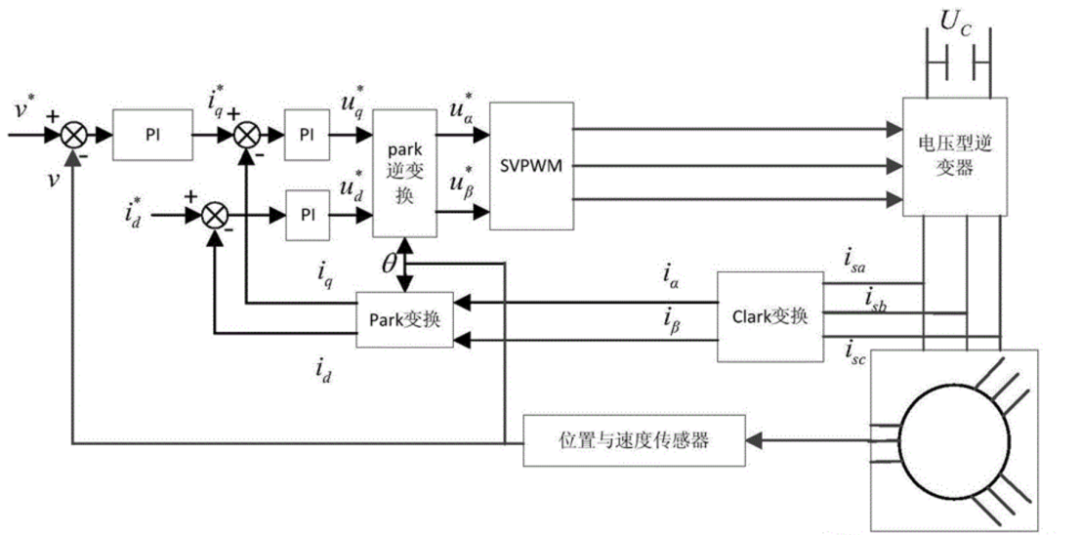
Aiming at the problems of high velocity fluctuation of the rudder wheel and high repeated positioning accuracy of the motor in the existing motor drive control, a differential feedforward terminal sliding mode control strategy is proposed. The adaptive fuzzy control method is used in the speed loop to improve the ability of the speed loop to suppress the speed fluctuation, and the fast terminal sliding mode control is added to the position loop to improve the control accuracy of the rudder wheel position.
3, Research on improved trajectory tracking algorithm
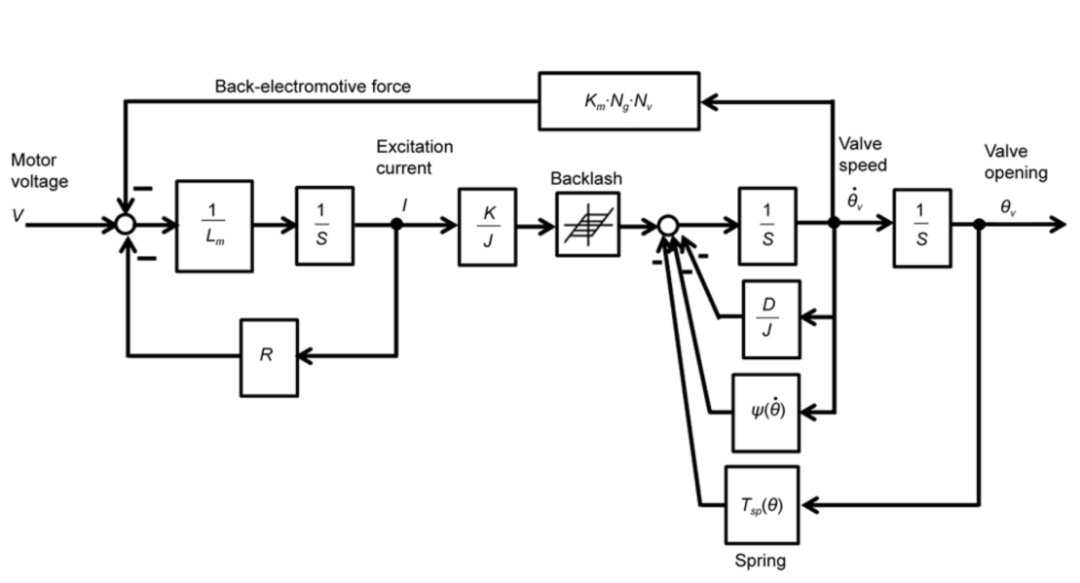
In view of the slow tracking speed and low tracking accuracy of the existing AGV, a Back-stepping control algorithm combined with Lyapunov design controller is proposed to improve the robustness and tracking accuracy, and finally achieve the goal of AGV repeated positioning accuracy.
4, real-time processing of large amounts of data to meet the needs of various scenarios
Based on the Kafka architecture to achieve the scheduling function of AGV cluster system, it has the characteristics of distributed, support partition, multi-copy and so on, the biggest advantage is that it can process a large amount of data in real time to meet the demand scenario. The improved genetic algorithm proposed in this project can effectively reduce the standard deviation of the system load, and its value is reduced by 63.58. The algorithm helps to alleviate the serious congestion in the actual production area. It is proposed to use surface micro-texture, two-dimensional material additives and other methods to solve the limitations of liquid ultra-slip by speed, pressure and temperature, and to establish a solid-liquid coupling ultra-slip system under high-speed and heavy-load conditions. Explain the formation, evolution and aging mechanism of super-slip interface, establish the physical model of solid-liquid coupling super-slip, and break through the pressure limit of liquid super-slip. In order to solve the problem of friction and wear of key components in the rudder wheel, improve the accuracy and stability of the rudder wheel.
5, improved artificial bee colony scheduling task allocation algorithm technology
In the scheduling update strategy of AGV, its linear update dimension mechanism is used to speed up the search process. The single driving path of AGV in the active area leads to congestion. The key technology is to introduce "the technology of multi-AGV path planning algorithm based on graph theory search algorithm and balanced load and reinforcement learning". Through this algorithm, the optimal solution of high-density AGV scheduling path planning problem is obtained.
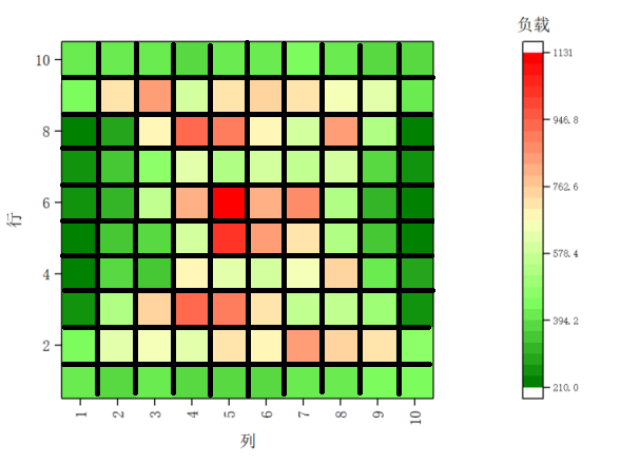
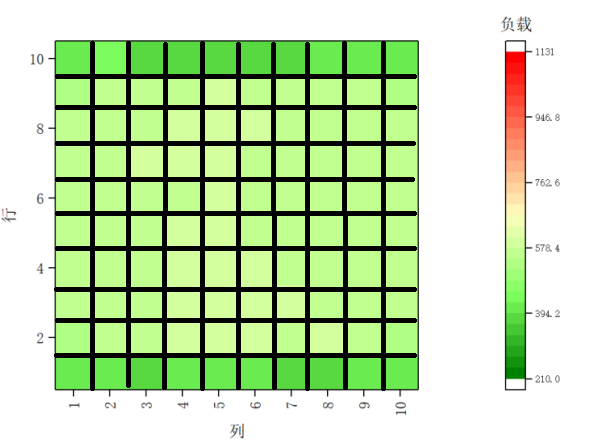
Congestion in the region comparison chart:
The above figure shows the congestion situation of normal A * path planning.
The following figure is optimized based on graph theory algorithm
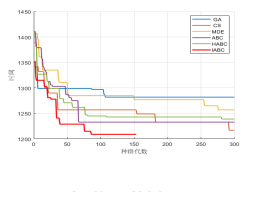
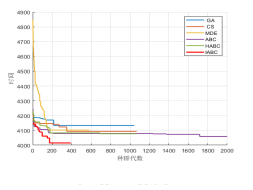
IABC improves scheduling scale adaptability and improves scheduling efficiency:
The figure on the left shows the task allocation efficiency of ordinary ABC (bee colony algorithm).
The figure on the right shows the efficiency of IABC (Intelligent Bee Colony) task allocation.
New AGV with "Five New Concepts"
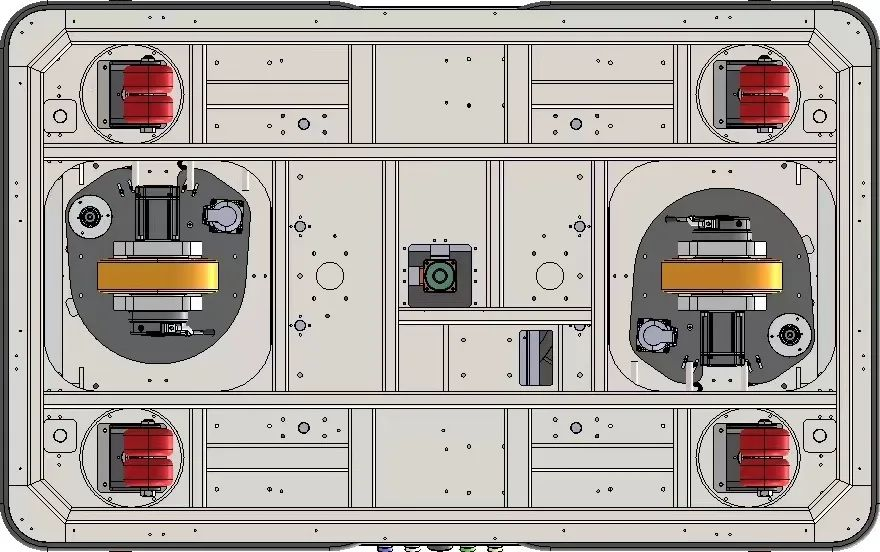
As shown in the figure, the standard load of AGV is 600KG, and SLAM laser + visual positioning and inertial navigation integrated navigation strategy are adopted. The hardware structure adopts the male mode, which is the mainstream industrial design in the industry, and it is also a relatively stable design, which can cope with more than 80% of the factory environment. Its advantage lies in providing more intelligent software customization services. It is a unique technology of Tsinghua University, with intelligent acceleration, intelligent obstacle avoidance, intelligent route selection and intelligent overtaking functions. The driving mode is double rudder wheel driving, and the vehicle body has a higher degree of freedom.
application value
The automotive industry has a huge demand for AGV applications. The typical application of AGV in the automotive industry is mainly in the engine assembly line, or the docking of chassis and platform. For example: the automatic transportation of raw materials, the transportation of the final assembly line, the transportation of the test area, and the automatic transportation between the production workshop and the finished product. Whether in terms of usage or application maturity, the automotive industry is undoubtedly the strongest market and the largest supporting force for AGVs.
An automobile enterprise often uses hundreds or even thousands of AGVs. For example, Dongfeng Nissan Guangzhou Huadu Factory uses more than 1000 AGVs. Judging from the current data of domestic automobile manufacturers, most automobile enterprises have adopted domestic AGV as a circulation hardware for production logistics in the factory, with a high localization rate. Therefore, it is necessary to vigorously develop the domestic intelligent AGV scheduling system to meet the production demand.
FAW Red Flag Field Application
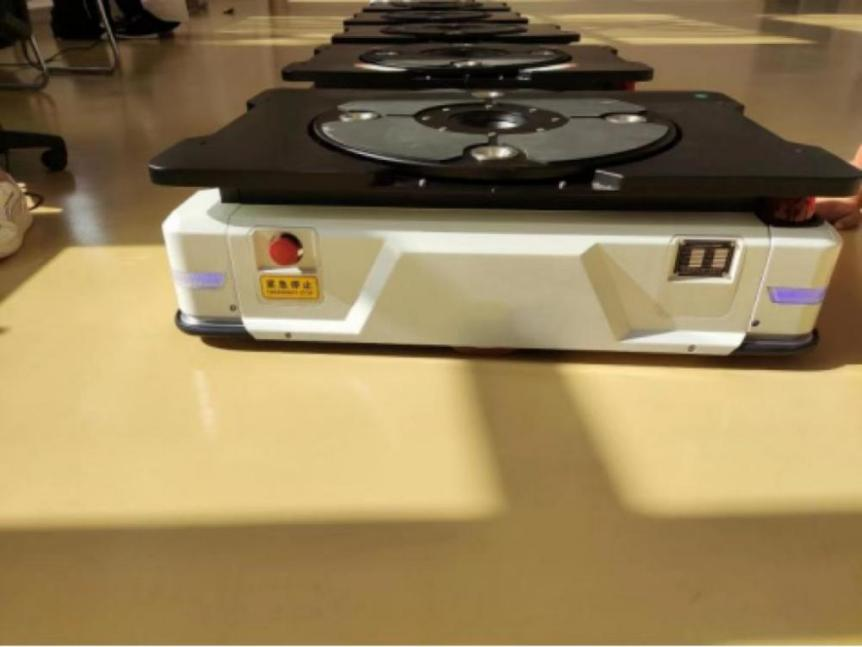
At present, our compound manufacturing institute and Changchun faqi hongqi have carried out a series of in-depth research and cooperation on the application of AGV (mobile robot) in painting and assembly workshops. At present, the "Research on Coating Multifunctional AGV" has been applied on site. As the first ultra-high precision multifunctional AGV that can replace drum line in automobile manufacturing process in China, the putting into use of this equipment can greatly improve the flexibility of automobile production line and promote the transformation of production line to high-end intelligent operation, laying a solid foundation for promoting the development of "matrix" production mode in automobile manufacturing in "industrial 4.0.
At the same time, the "Research on Intelligent Cluster Dispatching of AGV in General Assignment Workshop" developed for enterprises has realized the high coordination function among various types of AGVs in Hongqi Changqing General Assignment Workshop. The highlight and difficulty is the development of cooperative operation technology between SLAM laser AGV and magnetic stripe AGV. On the basis of "magnetic stripe navigation AGV and intelligent dispatching system, by realizing the functions of 6 SLAM intelligent lasers and 15 magnetic strip AGVs to jointly complete the production line tasks (including multi-vehicle grouping, specifying vehicle overtaking, laser AGV accompanying magnetic strip AGV, etc.), the partial congestion problem of AGV in the assembly door line of Changqing Base is solved. On the basis of the traditional magnetic stripe AGV, the system realizes the mutual cooperation of two AGVs with different navigation strategies, and creates higher economic benefits for enterprises.
Research Institute of Composite Manufacturing and Intelligent Identification
With surface engineering, non-standard automation, on-line detection and intelligent identification technology as the technical core, Tsinghua University Tianjin High-end Equipment Research Institute has carried out high-end research and development projects such as surface technology of insulating bearing spraying for high-speed motors, aviation non-standard manufacturing, visual detection, and production of AGV complete vehicles and key parts of AGV steering wheels. More than 80% of the project team members have a master's degree or above in key universities. Through independent research and development and innovation, they have solved the core problems of industrialization. They have cooperated with many manufacturing companies to solve production problems, complement each other's advantages, share resources, integrate the industrial chain, and form a collection A team integrating R & D, production and sales.
Technical docking and business negotiation
Contact: Wang Rongguo
Tel: 18518677771/022-24890969
E-mail: wangrg@tsinghua-tj.org
Source | Composite Manufacturing and Intelligent Identification Institute
Editor | Wang Xiao
The final interpretation of the above related technologies belongs to the Institute of Composite Manufacturing and Intelligent Identification.

Address: Buildings 4 and 5, Kechuang Huigu Park, Hongshun Road, Huaming High-tech Zone, Dongli District, Tianjin
Tianjin High-end Equipment Research Institute, Tsinghua University, Copyright
Website Construction: China Enterprise Power Tianjin
sweep
Pay attention to the official WeChat public number