




PARTY BUILDING
party building work
"fired the first shot of armed resistance against the Kuomintang reactionaries"
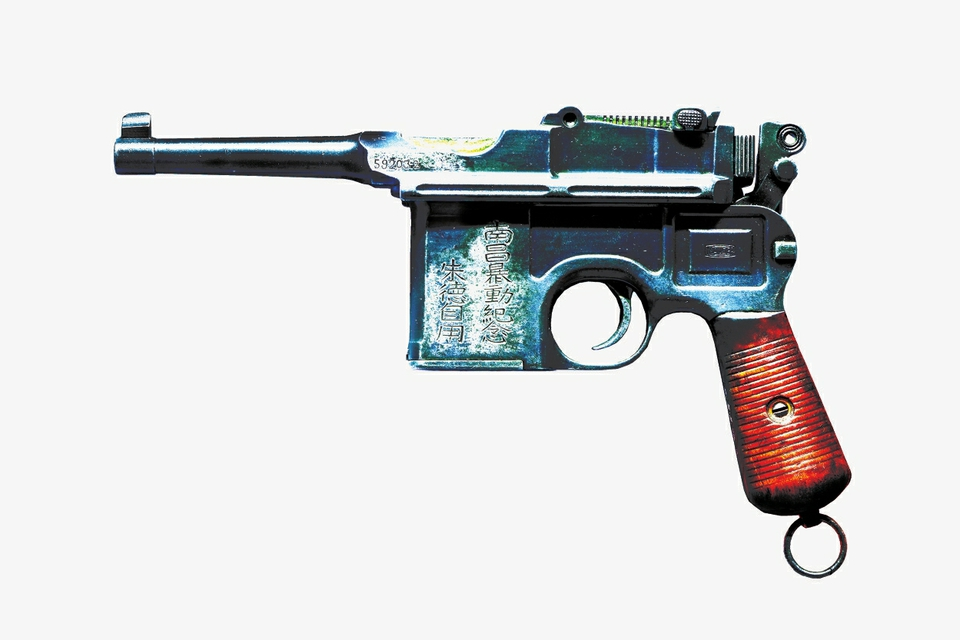
"August 1" Nanchang Uprising, Zhu De used pistol (first-class cultural relic)
"Political power comes from the barrel of a gun" is a valuable experience drawn by the Communist Party of China from the lesson of blood, and it is also a resounding slogan to guide the Chinese revolution. In the treacherous environment of great powers and warlords, the Communist Party of China led the people to take up arms, used "guns" to defeat internal and external reactionaries, and established a new regime in which the people are the masters of the country.
In the Chinese Communist Party History Exhibition Hall, there is a significant pistol on display. This pistol is a German-made police Mauser short tube M96, made of steel and wood, with a diameter of 7.63mm and a length of 26.3cm. The magazine can hold 10 rounds. This type of pistol began to enter China after the First World War. In the revolutionary war years, it was widely used in the people's army because it was easy to carry. Zhu De held this pistol and participated in leading the August 1 Nanchang Uprising. Therefore, it was called "the first shot of armed resistance against the Kuomintang reactionaries". As one of the main founders of the Chinese people's Liberation Army, Zhu de regarded his participation in leading the Nanchang uprising as an important experience in his life, and he personally engraved the words "Nanchang riot commemorating Zhu de's own use" on the pistol. In 1956, the Chinese People's Liberation Army Political College prepared to build a showroom and collected this gun from Marshal Zhu De. In 1959, the political Academy of the Chinese people's Liberation Army handed over the gun to the military Museum of the Chinese people's Revolution for collection as a national first-class cultural relic.
In October 1922, in order to find the truth of saving the country and the people, Zhu De, who was already a famous defender of the country, traveled across the oceans and arrived in Berlin, Germany. In November of the same year, he joined the Communist Party of China after being introduced by Zhang Shenfu and Zhou Enlai, the heads of the European branch of the Communist Party of China. Embark on the road of revolution. In July 1925, Zhu went to the Soviet Union for military training and study, and then returned to Shanghai in July 1926. In January 1927, in accordance with the instructions of the Central Committee of the Communist Party of China, Zhu De went to Nanchang, Jiangxi, and successively served as the head of the Third Army Officer Education Corps of the National Revolutionary Army and the director of the Nanchang Public Security Bureau. In June of the same year, Zhu De resigned as director of the Public Security Bureau and left Nanchang for Wuhan.
In July 1927, in the bloody storm after the failure of the Great Revolution, the Communist Party of China was in serious danger of being driven out, and the Chinese revolution was at a critical juncture. Under extremely critical circumstances, in order to save the revolution, the Provisional Standing Committee of the Political Bureau of the CPC Central Committee held a meeting in Wuchang and decided to hold an armed uprising in Nanchang on the basis of the 20th Army of the National Revolutionary Army led by He Long in Jiujiang and Nanchang, the 24th Division of the 11th Army of the National Revolutionary Army led by Ye Ting, and the third Army Officer Education Corps led by Zhu de. At the same time, the Central Committee of the Communist Party of China also decided to send Zhu De back to Nanchang first to make preparations for the uprising. Since some senior officers of the Third Army of the National Revolutionary Army stationed in Jiujiang and Nanchang at that time were Zhu De's old army, they had a deep friendship. This special identity provided extremely convenient conditions for Zhu De to prepare for the uprising. After arriving in Nanchang, Zhu De immediately had a detailed understanding of the deployment of the garrison troops, ordered the troops to inspect and familiarize themselves with the terrain of Nanchang City, and commanded and carried out exercises many times.
After everything was ready, in the early morning of August 1, 1927, Zhu De held this M96 pistol and led three companies of cadets from the Officer Education Corps, together with the National Revolutionary Army led by Zhou Enlai, He Long, Ye Ting, Liu Bocheng, etc. More than 20000 people held an uprising in Nanchang. After more than four hours of fierce fighting, the rebel army wiped out more than 3000 defenders, occupied Nanchang City, and won the uprising. In late April 1928, Zhu De led the troops retained in the Nanchang Uprising and the troops led by Chen Yi to the Jinggangshan area, and reunited with the troops led by Mao Zedong to form the Fourth Army of the Chinese Workers and Peasants Revolutionary Army.
It was from the Nanchang Uprising that in order to seek national independence and the liberation of the people, the Communist Party of China took up the barrel of a gun, united and led the people to fight bloody battles, and waged an indomitable and arduous struggle. This pistol, which experienced the Nanchang uprising, marked the beginning of the Communist Party of China's independent leadership of the revolutionary war, the establishment of the people's army and the armed seizure of power.
Seeing things and thinking of people, seeing things and Ming history. History once again shows us that without revolutionary armed forces, we cannot defeat the armed counter-revolution, we cannot shoulder the heavy responsibility of leading the Chinese revolution, we cannot win the victory of the Chinese revolution, and we cannot change the destiny of the Chinese people and the Chinese nation. Adhering to the party's command of the gun and building its own people's army is an unbreakable truth drawn by the party in the struggle between blood and fire. (Contributed by the History Exhibition Hall of the Communist Party of China)
Source: Learning Times

Address: Buildings 4 and 5, Kechuang Huigu Park, Hongshun Road, Huaming High-tech Zone, Dongli District, Tianjin
Tianjin High-end Equipment Research Institute, Tsinghua University, Copyright
Website Construction: China Enterprise Power Tianjin
sweep
Pay attention to the official WeChat public number