




NEWS
News Center
[Introduction of Scientific and Technological Achievements] Automatic Yarn System of Winder
As a pillar industry of China's national economy and an important livelihood industry, the textile industry is in a critical period of transformation and upgrading. The entire industry is facing real problems such as the disappearance of the demographic dividend, rising raw material prices, increasing environmental pressure, and shrinking exports. my country's textile industry is actively seeking change, accelerating the conversion of new and old kinetic energy, and using intelligent manufacturing as a means to promote the transformation and development of my country's textile industry from "big" to "big and strong", seeking to achieve breakthroughs in some areas and lead the world. With the innovative application of "artificial intelligence", "Internet" and "big data" in the textile industry, it has become the general trend to speed up the innovative development of the integration of the new generation of information technology and the textile industry, combined with continuous scientific and technological innovation, to promote the development of the textile industry in the direction of green, low-carbon, digital, intelligent and flexible is the only way to achieve this great transformation.
The Intelligent Green Equipment Research Center of our hospital has long been committed to the transformation of scientific and technological achievements of intelligent manufacturing and green environmental protection innovative technologies, focusing on the research and development and innovation of automation equipment in various industries, aiming to use automation equipment instead of manual labor, reduce labor intensity of workers and improve equipment production efficiency. Today, what we all know is that the textile industry can replace the intelligence of manual yarn.Automatic Yarn System of Winder.
science and technology research and development]
domestic status
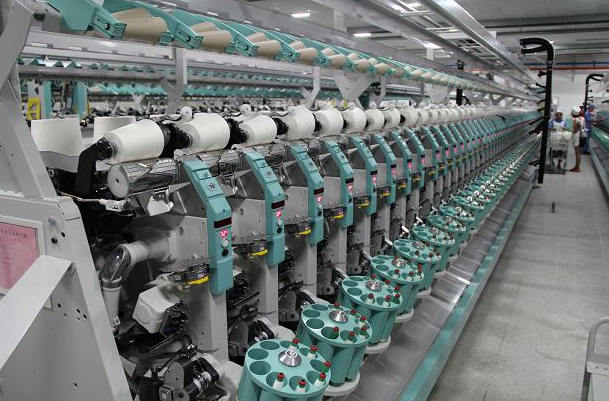
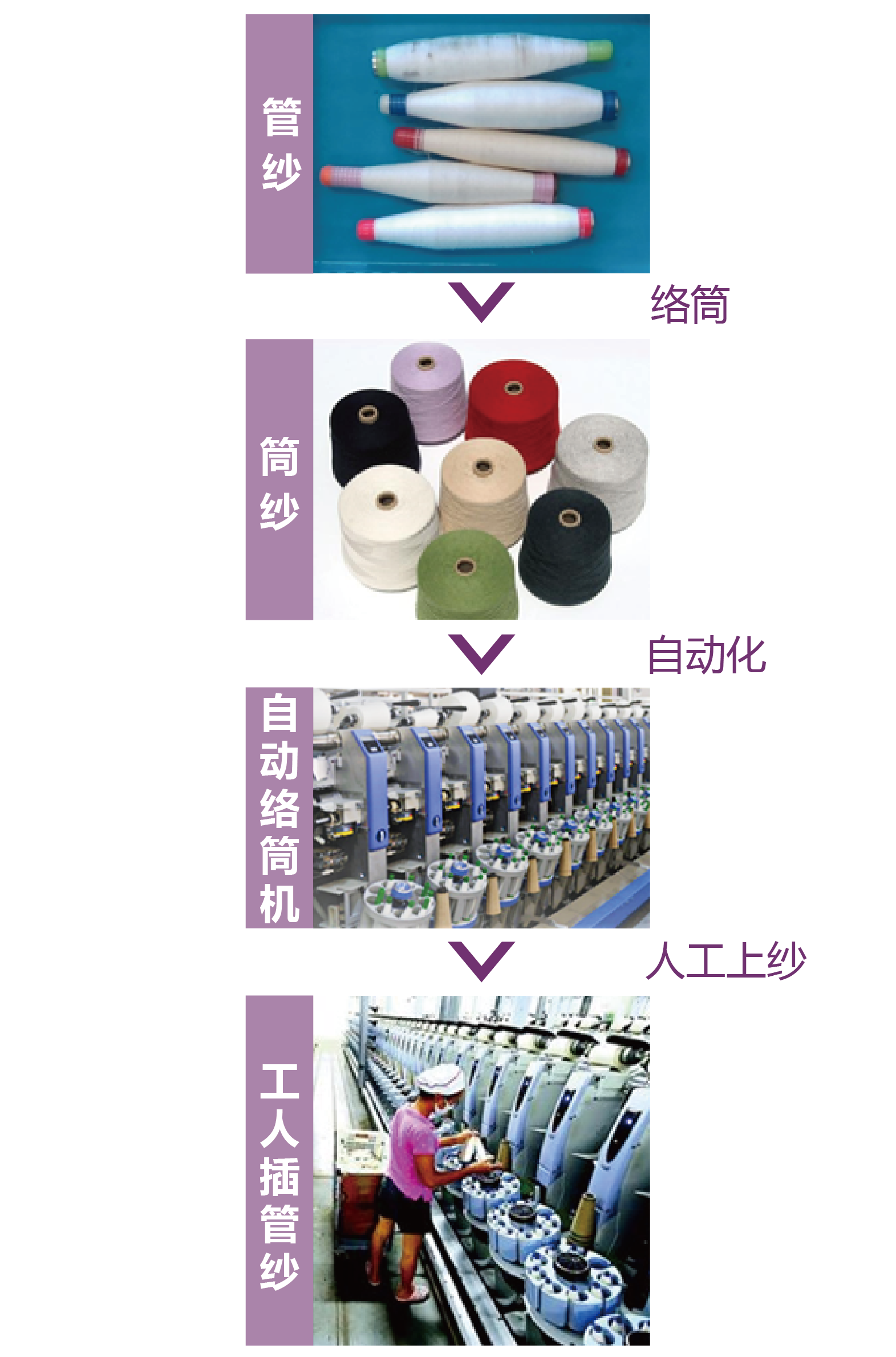
Since the eighties of the twentieth century, China began to introduce and develop automatic winder, automatic winder to achieve the winding process in a number of steps of automation, reduce the labor intensity of workers, improve production efficiency. Winding is the last process of the spinning process, which connects small-capacity tube yarns to make large-capacity bobbin yarns for subsequent weaving. However, this step of placing the tube yarn in the yarn magazine of the winder always also requires manual operation. The worker pushes the trolley with the tube yarn to tour in front of the winder and cannulas the yarn in the yarn warehouse. This step is called yarn feeding. A worker needs to be responsible for the yarn feeding of multiple winder production lines, which is labor-intensive.
In recent years, the labor cost of textile enterprises has been rising, and due to the problems of high dust, high humidity and high noise in the working environment, the problems of "difficult recruitment" and "expensive employment" in textile enterprises have become increasingly prominent. Therefore, the development of winder automatic yarn system has become a realistic demand of the textile industry.
implementation function
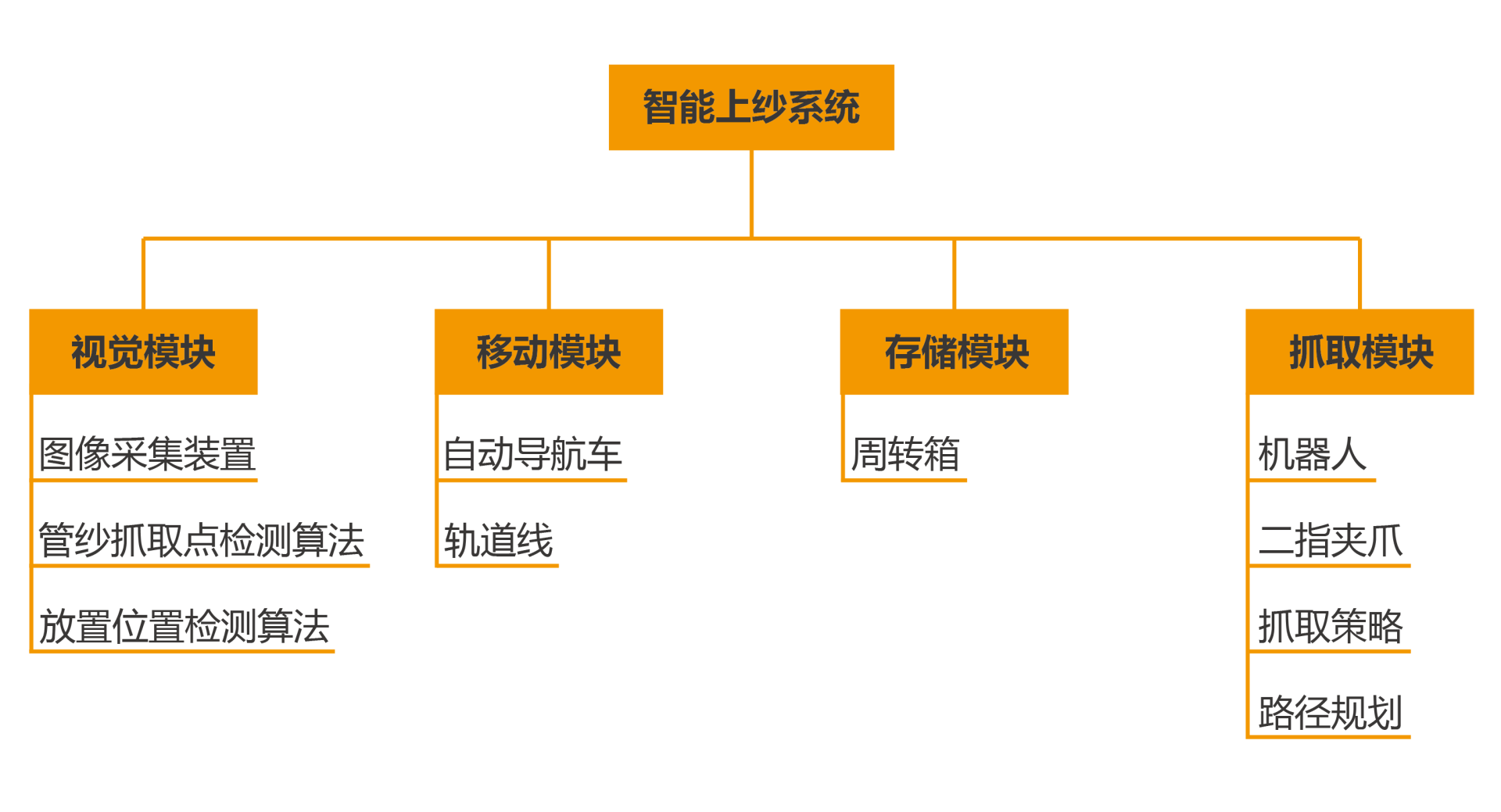
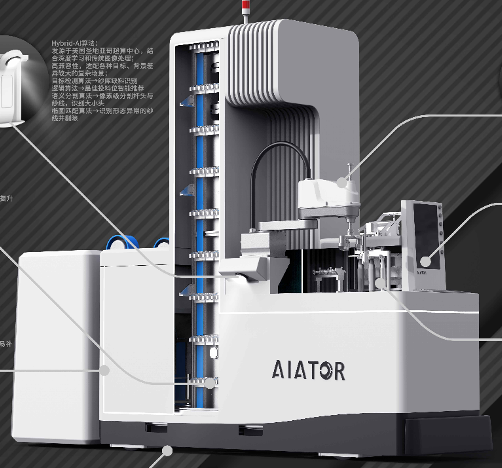
The automatic winding system of the winder is mainly composed of four modules: vision, movement, storage and grabbing. The steps required to implement the functionality are as follows:
1. The automatic navigation vehicle cruises in the workshop along the magnetic track line laid on the ground;
2. After receiving the instruction to yarn a certain winder, move to the designated winder yarn warehouse;
3, the computer vision module to shoot the image of the automatic drum machine yarn library, run the deep learning algorithm, identify and locate the yarn library vacancy without tube yarn;
4, the computer vision module to shoot the image in the turnover box, run the deep learning algorithm, predict the mask and key points of the tube yarn, calculate the grab point of the tube yarn;
5. If it is detected that there are multiple tube yarns that can be grasped in the image, the grasping points of each tube yarn are sorted according to the grasping strategy, and the optimal grasping target is selected;
6. The robot grabs the tube yarn;
7. The robot puts the tube yarn into the vacancy of the yarn library.
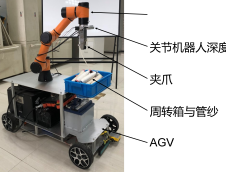
Since the tube yarn needs to be found after it is put into the yarn warehouse, in order to improve the overall operation efficiency of the winder, we will add a head finding mechanism to the automatic yarn feeding system in the later period, thus saving the time for the winder to find the head. The functions of each module and the overall structure of the prototype are shown in the following figure:
science and technology innovation]
1. The first joint robot is used to clamp and place the yarn tube, and the structure is light and flexible.
At present, most products realize the transportation and placement of tube yarns through traditional mechanical structures. Such structures require tube yarns to be neatly placed in turnover boxes. Compared with our products, there will be more time for placing tube yarns, which also requires more labor. In addition, the traditional mechanical structure is too heavy, resulting in a large overall machine and high manufacturing cost (as shown in the figure below).
2. Using image recognition technology to improve computer vision algorithms.
The existing algorithm is improved and optimized, so that the equipment recognition efficiency is obviously improved, the grabbing position can be quickly judged, and the vacancy of the yarn warehouse can be quickly identified.
3. Improved joint robot path planning.
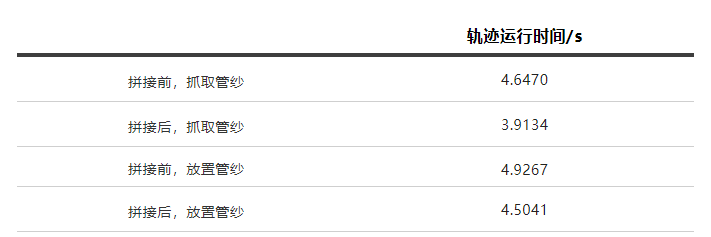
Usually, in order to reduce the amount of calculation, the motion trajectory of the joint robot will be divided into multiple segments for calculation, and then executed separately, which causes frequent start and stop of the robot, which will affect the working efficiency of the robot. In this design, the trajectory calculated by sections is spliced together, which effectively improves the operation efficiency of the robot.
4. Suction cup structure improves the success rate of grasping.
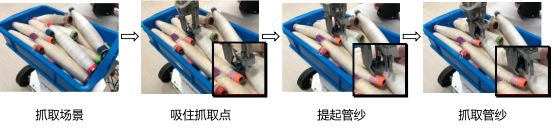
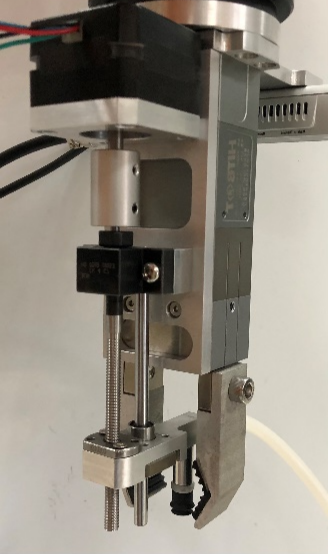
A suction cup structure is added to the clamping jaw. The suction cup sucks the tube yarn before the clamping jaw clamps the tube yarn and lifts it with the ball screw to ensure that the clamping jaw can smoothly clamp the tube yarn even if multiple tube yarns overlap.
Clamps
5. Automatic power detection, automatic charging.
The device is equipped with a battery management system (BMS) to reduce the energy consumption of the device and automatically go to the power source for automatic charging after the power is exhausted.
6, a variety of navigation options.
This system has developed a variety of navigation methods, including magnetic navigation and lidar navigation, which can be applied to different needs of different plants.
application value]
According to the statistics of China Textile Machinery Association, the number of ring spinning spindles in China has exceeded 0.12 billion spindles, of which more than 85% have applied automatic winding machines, of which nearly 80% are yarn warehouse-type automatic winding machines. Based on one yarn warehouse-type automatic winding machine production line per thousand spindles, the number of yarn warehouse-type automatic winding machine production lines is about 81600, and there is currently no very practical automatic yarn feeding system, therefore, this system has great market development potential.
The computer recognition algorithm and robot path planning algorithm developed based on this system are not only suitable for this system, these algorithms can be applied to different grasping scenes, but also can guide the robot to grasp the target in the scene with scattered and dense objects, and provide a solution for the robot to grasp the problem in complex scenes.
Intelligent Lvchuang Equipment Research Center
The Intelligent Green Equipment Research Center was founded by Associate Professor of Mechanical Engineering of Tsinghua University, and is a base for intelligent manufacturing and green environmental innovation, technology transformation and industrial incubation. The team led by Suo Shuangfu has been engaged in research and development in the field of intelligent manufacturing and green innovation for a long time, and has achieved certain results in robot grasping strategies and robot path planning in complex situations. The team consists of professors, doctoral supervisors, senior engineers and researchers from Tsinghua University.
Technical docking and business negotiation
Contact: Zhou Yan
Telephone: 15632528857
E-mail: 2100273127@qq.com
Source | Intelligent Green Equipment Research Center
Editor | Wang Xiao
The final interpretation of the above related technologies belongs to the Intelligent Green Equipment Research Center.

Address: Buildings 4 and 5, Kechuang Huigu Park, Hongshun Road, Huaming High-tech Zone, Dongli District, Tianjin
Tianjin High-end Equipment Research Institute, Tsinghua University, Copyright
Website Construction: China Enterprise Power Tianjin
sweep
Pay attention to the official WeChat public number