




PARTY BUILDING
party building work
Grasp the general trend of economic globalization, unswervingly expand opening up in an all-round way -- in-depth study and implementation of General Secretary Xi Jinping's important exposition on economic globalization
In 2017, at a time when anti-globalization is on the rise and the world economy is full of haze, General Secretary Xi Jinping, standing at the height of the long river of human history, delivered a historic speech at the Davos Forum, demonstrating China's firm stand in defending economic globalization, pointing out the correct direction of economic globalization, injecting strong confidence and positive energy into the world, and winning lasting high praise from the international community. It marks China's transformation from a participant in economic globalization to a leader.
Since then, General Secretary Xi Jinping has further clarified his clear position in support of economic globalization and multilateralism on many important international occasions such as the Group of Twenty (G20) summit, the Asia-Pacific Economic Cooperation (APEC) summit, and the CIIE, and contributed China's wisdom. Demonstrated the responsibility of a great power. China is doing what it says, taking the initiative to expand opening up to the outside world in an all-round way, actively participating in global economic governance, and promoting the building of a community with a shared future for mankind. The acceleration of the construction of a new development pattern proposed this year is an open domestic and international double cycle, which is in line with the Chinese proposition of the Davos Forum, and has become China's latest plan to promote economic globalization.
1. grasp the historical trend of economic globalization and promote the common opening up of the world
General Secretary Xi Jinping pointed out that economic globalization is the objective requirement of the development of social productive forces and the inevitable result of scientific and technological progress. It is an irreversible trend of the times. It is not artificially created by who or which countries; the sea of the world economy, whether you want it or not, It is unavoidable to be there; we must work together to make the cake of the global market bigger, to make the global sharing mechanism solid, and to make the way of global cooperation live, the greater the driving force of economic globalization, the better, and the smaller the resistance, the better; some of the current anti-globalization trends in the world are just a few waves stirred up in the trend of globalization, which cannot stop globalization. The tide; we must not be blocked by headwinds and turning back waves. We must stand on the right side of history and unswervingly expand and open up in an all-round way. These important statements have set the pulse of the world, prescribed effective prescriptions and pointed out the way forward.
Economic globalization is an irreversible historical trend.Economic globalization has roughly gone through three stages. The first is the stage of colonial expansion and the formation of the world market, in which all countries are involved in the world economic system. The second is the two parallel world market stages, that is, the two camps and markets after World War II. Third, the stage of economic globalization, the acceleration of world economic integration after the Cold War. The imbalance of factor endowments among countries in the world and the deepening of international division of labor are important driving forces for economic globalization. All countries have different degrees of contradictions in natural resources, capital, labor, technology, market and so on. They are faced with the problem of "division of labor is limited by the scale of the market". The great geographical discovery in the 15th century promoted the formation of the world market. The scientific and technological revolution and the industrial revolution have provided a profound material and technological foundation for economic globalization. Several industrial revolutions have greatly reduced the cost of cargo transportation, information dissemination and personnel movement. In particular, new technological revolutions such as the Internet have promoted the flattening of the world, and the economic interdependence of various countries is unprecedented. The international economic governance system and the market-oriented reform after the Cold War have provided the economic system guarantee for economic globalization. After World War II, the Bretton Woods system and the three pillars of GATT, the International Monetary Fund and the World Bank emerged, providing the institutional framework for international economic governance, coupled with the market-oriented reform of emerging economies after the Cold War, which promoted the great development of economic globalization. In short, economic globalization is an objective historical process jointly promoted by the development of productive forces and the transformation of production relations, which is not subject to human will. In history, plagues, wars, crises, etc. have hindered the development of economic globalization, but the trend of globalization is finally mighty, rolling forward, and rushing to the vast sea.
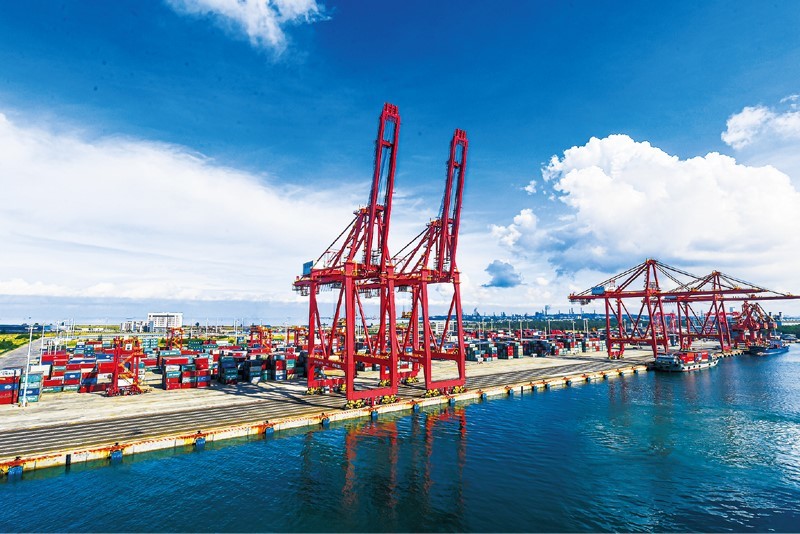
On November 15, 2020, the ten ASEAN countries and China, Japan, South Korea, Australia and New Zealand formally signed the Regional Comprehensive Economic Partnership Agreement (RCEP).
After eight years of negotiations, the world's largest free trade zone has finally been announced and officially set sail. The picture shows the Hainan Yangpu spade beach wharf taken on September 23. Xinhua News Agency reporter Pu Xiaoxu/Photo
Economic globalization has experienced twists and turns, but the general direction of progress has not changed.At the same time, there are "forward power and backward resistance" in economic globalization: the driving force is a new round of scientific and technological revolution and industrial transformation; the resistance is unilateralism, protectionism and bullying. On the whole, the driving force is still greater than the resistance, and open cooperation is still the general trend of development. Economic globalization is more of an incremental slowdown than a decline in stocks. With the exception of a few crisis years, trade in goods remained stable, with global exports of goods growing by 17.1 per cent in 2019 compared to 2008 before the financial crisis, and trade in services booming, with global exports of trade in services growing by 52.4 per cent in 2019 compared to 2008. Digital trade is in the ascendant, with the global cross-border e-commerce market growing at an average annual rate of nearly 30%, and cross-border digital trade is expected to erupt in the future. Regional integration is developing in depth. The number of free trade arrangements notified to the WTO and in force is 237 more than before the crisis. Major countries have promoted a higher level of opening up through regional trade arrangements, and the negotiation topics have gone from "on-border" trade barriers to "behind-border" regulation, reflecting the general trend of deepening economic globalization. In the era of the global village, the global value chain has expanded in depth, and countries have become more closely linked, forming a community of interests, a community of responsibility and a community of destiny. It is not in the common interest of mankind to retreat back to the state of "isolated island" and "reverse" history.
Over the past 40 years of reform and opening up, my country has always adhered to the basic national policy of opening to the outside world, continuously expanded its opening to the outside world, achieved a great historical transition from closed and semi-closed to all-round opening, and became a beneficiary and important contributor to economic globalization. In the past, the main driving force of economic globalization was the United States and other Western countries. Today, we are regarded as the biggest standard bearer of free trade and globalization. We take General Secretary Xi Jinping's important exposition on economic globalization as a scientific guide, establish a global thinking, unswervingly expand opening up in an all-round way, build a new system of open economy at a higher level, and promote the common opening up of the world with our own opening up. We are moving from an open country to an open power.
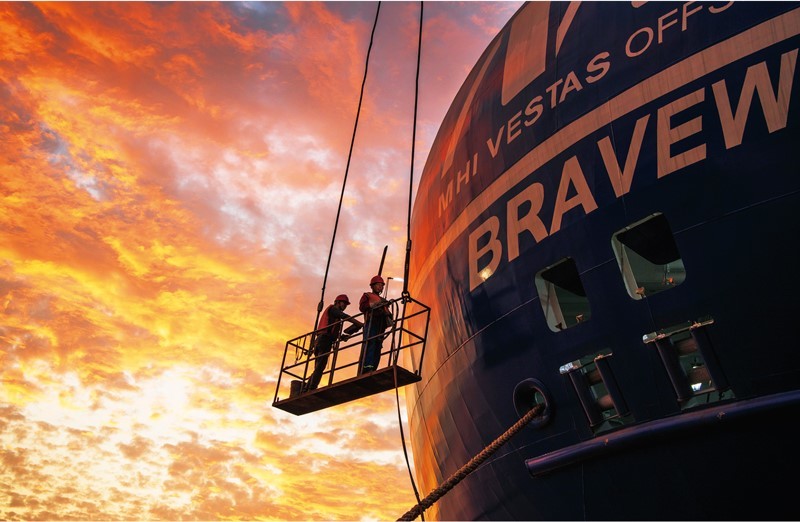
According to data released by the General Administration of Customs, in the first 11 months of this year, the total value of my country's import and export of goods trade was 29.04 trillion billion yuan, an increase of 1.8 percent year-on-year.
The picture shows workers of Zhenjiang Shipyard (Group) Co., Ltd. in Jiangsu Province performing electric welding operations on a deck transport ship exported to Germany on August 27, 2020. People's Picture Fengjiang River/Photograph
-- Promoting high-quality trade development. Promote the innovative development of foreign trade, cultivate new business models and new models, continue to optimize the trade structure, reduce tariff and non-tariff barriers, promote trade liberalization and facilitation, expand imports of high-quality goods, and innovate and develop service trade. From 2016 to 2019, my country's imports and exports of trade in goods grew at an average annual rate of 7.5 percent, maintaining its status as the largest exporter for 11 consecutive years; the imports and exports of trade in services grew at an average annual rate of 6 percent, ranking second in the world. In the first 11 months of this year, my country's exports of goods increased by 0.6 year-on-year. It is expected to achieve positive growth throughout the year, and its status as a major trading country will continue to be consolidated. In the future, we will enhance the comprehensive competitiveness of foreign trade and steadily promote the construction of a trade power.
-- Raising the level of foreign capital utilization. Actively expand market access, relax restrictions on foreign equity ratios in the banking, securities, and insurance industries, expand the opening up of high-end manufacturing and service industries, increase the protection of intellectual property rights, continue to improve the business environment, and form a huge "gravitational field" for international capital ". From 2016 to 2019, my country utilized a total of US $549.6 billion billion in foreign capital, becoming the world's second largest foreign capital inflow country, and the utilization of foreign capital in high-tech industries increased by 24% annually. In the first 10 months of this year, China's actual utilization of foreign capital was 115.1 billion billion US dollars, up 3.9 percent year on year. In the future, we will continue to relax market access and protect the legitimate rights and interests of foreign-funded enterprises in accordance with the law, so that foreign businessmen can stay and develop.
-- Innovating foreign investment methods. Comply with the trend of global industrial transfer, encourage enterprises to go global, optimize the layout of national industries, enhance the ability to allocate resources globally, build Chinese investment brands, and build a global trade, investment, production, and service network. From 2016 to 2019, my country's foreign direct investment totaled US $634.4 billion billion, ranking among the top in the world; through foreign investment cooperation, it has driven exports of US $more than 500 billion. By the end of 2019, a total of 44000 enterprises had been established in 188 countries and regions, and more than 2.2 million foreign employees in "going out" enterprises had promoted the process of local industrialization and the improvement of people's livelihood. In the future, we will improve the legal, policy and service system to promote and guarantee overseas investment, help enterprises improve their transnational operation ability, tighten the ties of interest, and promote common development.
2. grasp the trend of global governance reform and contribute more "Chinese wisdom"
General Secretary Xi Jinping pointed out that the world today is undergoing a century of unprecedented changes, the new coronary pneumonia epidemic global pandemic to accelerate this change, the world has entered a period of turbulence and change; we should inject China's strength into the reform and optimization of global governance, and promote economic globalization towards a more open, inclusive, inclusive, balanced and win-win direction. General Secretary Xi Jinping's important statement provides a guide for our participation in the reform of the global economic governance system.
The reform of the global economic governance system is at a historical turning point.The world has entered a period of accelerated evolution unseen in a century, and global challenges have increased. It is the general trend to strengthen global governance and promote the reform of the global economic governance system. The international power contrast "east rises west descend" is the most revolutionary change. Emerging markets and developing countries have risen in groups. The world share of economy and trade has increased by about 20 percentage points compared with the 1990 s, and the share of foreign investment has increased by 18 percentage points. The trend of multi-polarization in global governance is obvious. The willingness and ability of developing countries to participate in governance have been continuously improved, and continuous efforts are needed to promote a more just and reasonable global governance system.
Existing international economic and trade rules are difficult to adapt to new changes.Deep-seated contradictions in global development have become increasingly prominent: more global problems and insufficient solutions; more global rules and insufficient international coordination; global market expansion and insufficient regulation and supervision. The focus of global governance has changed. International trade and investment continue to innovate and develop, and global governance issues have shifted from border measures such as market opening to "post-border" regulations such as subsidies, labor, and the environment. The new round of scientific and technological revolution has spawned new governance problems, and the game of new issues such as network security, digital sovereignty and data flow has become more intense.
We have strengthened the party's overall leadership over China's participation in global economic governance, promoted the development of economic globalization in a more balanced direction, promoted the construction of an open world economy, took a clear-cut stand against trade and investment protectionism, promoted the democratization and legalization of global governance rules, worked hard to maintain and extend China's important strategic opportunity period, and became an important participant and contributor to global economic governance.
-China's ideas and programs have gained more recognition. Put forward the concept of building a community with a shared future for mankind, adhere to the correct concept of justice and interests, advocate the concept of global governance of extensive consultation, joint construction and sharing, conform to the trend of the times, increase the convergence of interests between my country and other countries, and enrich the concept of global governance; actively provide international public products, Organize major home diplomatic events such as the China-Africa Cooperation Forum and the CIIE, and establish the Asian Investment Bank and the BRICS Bank. A number of Chinese propositions, Chinese plans and Chinese initiatives have become an international consensus, and the international community expects China to play a more constructive role in trade, investment, digital governance and other fields. In the future, we will strengthen internal and external coordination, put forward China's initiative to implement the concept of global economic governance, and safeguard international fairness and justice.
-Building "the belt and road initiative" to Go Deep and Solid. Adhere to the principle of extensive consultation, joint contribution and sharing, uphold the concept of green, open, and clean, and earnestly implement the results of the "Belt and Road" International Cooperation Summit Forum. The "six corridors, six roads, multi-country and multi-port" interconnection structure has basically taken shape, and a number of comprehensive benefits and driving The strong project took root. In 2019, China's total trade in goods to countries along the route as a proportion of foreign trade rose to 29.4 percent, and the proportion of direct investment rose to 13.7 percent, up 3.7 and 5.2 percentage points, respectively, from 2016. In the future, we must continue to build the "Belt and Road" with high quality, build a road of cooperation that unites and responds to challenges, a road of health that maintains people's health and safety, a road of recovery that promotes economic and social recovery, and a road of growth that releases development potential.
-- Deepening bilateral and regional cooperation. Actively participate in the reform of the WTO, put forward the "three principles" and "five propositions", and promote the formulation of rules in emerging areas such as e-commerce. A total of 19 free trade agreements have been signed with 26 countries and regions, especially the newly signed regional comprehensive economic partnership agreement. The total population, economy and trade of 15 member countries account for about 30% of the world's total. This is not only a landmark achievement of deepening regional cooperation in East Asia, but also a victory of multilateralism and free trade. Efforts will be made to stabilize the overall situation of Sino-US relations, deepen Sino-Russian strategic cooperation and China-EU cooperation, speed up the negotiation process of China-EU investment agreements, China-Japan-ROK and other free trade agreements, and expand practical cooperation with developing countries. In the future, we will actively participate in the reform of the WTO, implement the strategy of upgrading the free trade zone, negotiate and sign high-standard free trade agreements with more countries, continue to expand the "circle of friends", and promote the opening up and development of the world.
3. grasp the new trend of economic globalization after the epidemic and promote the construction of a new development pattern
General Secretary Xi Jinping pointed out that economic globalization has encountered a countercurrent, and the world has entered a period of turbulence and change; with the changes in the global political and economic environment, the trend of anti-globalization has intensified, and some countries have engaged in unilateralism and protectionism, and the traditional international cycle has been significantly weakened; the new development pattern is by no means a closed domestic cycle, but an open and mutually reinforcing domestic and international double cycle; we do not pursue excellence, do not make you lose or win, it will not close the door and operate in a closed manner. It will gradually form a new development pattern with the domestic cycle as the main body and the domestic and international double cycles promoting each other, opening up space for China's economic development and adding impetus to the recovery and growth of the world economy. These important statements provide guidelines for building a new development pattern and better participating in global open cooperation.
The current world economic situation has undergone profound changes.The international environment is becoming more and more complex, and the uncertainty of instability has increased significantly. Global trade and investment growth is sluggish. Before the international financial crisis, the growth rate of global trade was twice the economic growth rate, and after the crisis, it was roughly the same as the economic growth rate. International organizations predict that global trade will fall by about 30 per cent this year and rebound by only 7.2 per cent next year; global direct investment will fall by 40 per cent and continue to fall by 5-10 per cent next year. Populism has intensified, trade protectionism has heated up, and it has expanded from traditional industries to emerging industries and high-tech industries. International investment restrictions have been tightened. Developed countries vigorously support the return of manufacturing, the introduction of corresponding policies to attract automobile manufacturing, equipment manufacturing, electronic information, biomedicine and other industries to the domestic return, the epidemic further exacerbated the global industrial chain supply chain adjustment.
New changes have taken place in the conditions for China's opening up and development.Traditional advantages are weakening and new advantages are being cultivated. In recent years, my country's working population has gradually decreased, cost advantages have weakened, and some important resources are in short supply. In 2019, the external dependence of iron ore, crude oil, and soybeans will be 80%, 72%, and 86%, respectively. New advantages such as marketing need to be improved, and the task of high-quality development is urgent. Ultra-large-scale market advantages appear. China's total economic output ranks second in the world, with a per capita GDP of more than 10000 US dollars. It has a 1.4 billion population, more than 0.4 billion middle-income groups, as well as the world's most complete and largest industrial system and perfect supporting capacity. It is the most potential market in the world, and its international attractiveness continues to increase.
In the face of major changes in the domestic and international environment and grasping the new characteristics of China's entry into the new development stage, we adhere to the new development concept, adhere to high-quality development, and propose to speed up the construction of a new development pattern. This is a first-hand move to grasp the initiative in development, not a forced move and a stopgap measure; this is an open domestic and international double cycle, not a closed domestic single cycle; this is a domestic cycle based on a unified national market as the main body, not all localities engage in self-small cycles. We should implement the strategy of expanding domestic demand, open wider to the outside world in an all-round way, and promote the benign interaction between domestic and international double cycles.
-- Building a unified global shared market. Promote in-depth reforms with high-level opening up, improve urban and rural circulation networks, vigorously develop urban, rural, and service consumption, promote the integration of domestic and foreign trade, and actively expand imports by holding CIIE. In 2019, China's total retail sales of consumer goods reached 41 trillion billion yuan, ranking second in the world; imports of $2.1 trillion billion are expected to import $22 trillion in the next 10 years, and the third edition of the Fair was traded at $72.62 billion billion, expanding international demand under the epidemic. In the future, we will comprehensively promote consumption, improve the modern commercial circulation system, expand the import of high-quality goods and services, and make the Chinese market a world market, a shared market, and a market for everyone.
-- Creating a new highland for opening up to the outside world. Linking the construction of a new development pattern with the implementation of the national regional coordinated development strategy and the construction of a pilot free trade zone, encouraging the pilot free trade zone to boldly try, boldly venture, and independently reform, and accelerate the construction of Hainan's free trade port. At present, 21 pilot free trade zones have been set up and 260 institutional innovations have been replicated and promoted. The overall plan for the construction of Hainan's free trade port has been issued to promote the free flow of goods, services, funds, personnel and information. In the future, we will promote the high-quality development of pilot free trade zones and free trade ports, and create an important strategic fulcrum for the new development pattern.
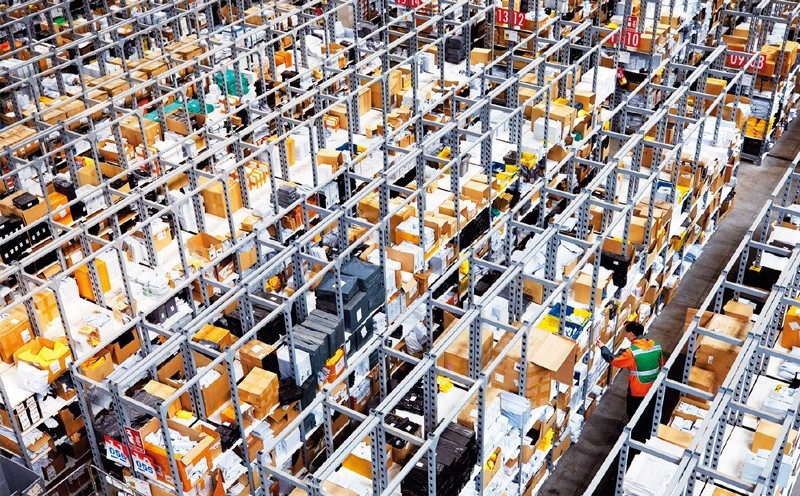
The World Trade Organization's World Trade Report 2020: Innovation Promotion Policies for the Digital Age, released on 23 November 2020, notes that strengthening international cooperation can help enhance
The effectiveness of digital innovation policies to maximize the positive effects of policies. The picture shows staff sorting goods at Cainiao's overseas warehouse in Guadalajara, Spain, on November 11.
This year, with the new coronary pneumonia epidemic still not stopping spreading, the "Double Eleven" led a new round of online consumption boom in Spain. Xinhua News Agency reporter Meng Dingbo/photo
-- Promoting institutional openness such as rules. Actively connect with international economic and trade rules, enhance transparency, strengthen property rights protection, encourage competition, oppose monopoly, and continue to optimize the business environment. Improve the foreign investment management system, fully implement the pre-access national treatment plus negative list management system, and introduce a foreign investment law. The international ranking of business environment has risen from 78th in 2017 to 31st. The open areas and layout continue to expand. Among the 160 service sectors defined by the WTO, my country has opened more than 120; in-depth promotion of the reform of decentralization, management and service in open areas, and deepening inland and border opening. In the future, we will pay more attention to institutional openness in rules, regulations, management, and standards, and form a new higher-level open economic system.
4. grasp the risk prevention of economic globalization and build security in opening up
General Secretary Xi Jinping pointed out that economic globalization is a "double-edged sword". When the world economy is in a downward period, both developed and developing countries will feel pressure and impact; our open development environment today is generally better than ever before. At the same time, the contradictions, risks, and games we face are unprecedented; the more open we are, the more we must pay attention to security, the more we must coordinate development and security, and we will be indestructible; development is the foundation of security and the guarantee of security; development is the greatest security and the "master key" to solve security problems; constantly expanding and raising the level of opening up to the outside world, and promoting reform and development through opening up, it is an important magic weapon for China's development to make new achievements. These important expositions provide a fundamental basis for us to implement the overall concept of national security in the process of participating in economic globalization, to dynamically seek higher-level security in the process of opening wider to the outside world, and to improve our ability to participate in and lead economic globalization.
Economic globalization provides both development opportunities and security risks.While economic globalization is making the "cake" bigger, the problem of dividing the "cake" has become increasingly prominent. Countries with different national conditions, systems and stages of development face different security situations. While developed countries have benefited from the process of economic globalization, due to the inadequate adjustment of domestic policies, problems such as hollowing out of industries, insufficient employment, and widening gap between the rich and the poor have emerged. Developing countries have made remarkable achievements in opening up to the outside world, but their development strength and risk response capacity are insufficient, and they are vulnerable to external risks. The globalization of economic risks requires enhanced global cooperation and joint response. The economies of all countries in the world are interdependent, "you have me, I have you", economic security has also become a global issue, and no country can be left alone. Strengthening international cooperation, seeking self-security and expanding common security through openness has become a realistic choice for all countries.
In the process of participating in economic globalization, China has strengthened its strength and gained security, while facing new challenges.For more than 40 years, we have handled the relationship between independence and opening wider to the outside world. On the one hand, we have strengthened our comprehensive national strength and significantly improved our ability to maintain security in the process of opening wider to the outside world; on the other hand, we have grasped the intensity and rhythm of opening up and paid attention to risk prevention. for example, when we joined the WTO, the "wolf coming" that many people worried about did not appear. At present, China has developed from a "small economic and trade country" to a "big economic and trade country", and is becoming a "economic and trade power". The degree of participation in economic globalization is deepening, and the mutual influence with the world is significantly increasing. At the same time, unilateralism and protectionism are on the rise in the world, and China's external risks are also increasing, which requires us to properly deal with it from the height of creating a good external environment for the great rejuvenation of the Chinese nation.
Facing the new situation, new problems, and new challenges, we must resolutely implement the new development concept and the overall national security concept, establish an open economic security concept, better safeguard national economic security under open conditions, and enhance our ability to participate in and lead economic globalization.
-- Coordinating openness and security. It is necessary to open the windows and install the screens to better maintain economic security. In the new stage of development, domestic development must be planned in the context of economic globalization, make full use of two markets and two resources, promote market-oriented reform and high-quality development by comprehensively expanding opening up, ensure economic security with stronger industrial competitiveness, stronger economic strength and stronger comprehensive national strength, and participate in a higher level of economic globalization with a safer economic system. Comply with the laws of economic development of major countries, earnestly take the expansion of domestic demand as the fundamental foothold of economic development, accelerate the construction of a new development pattern, coordinate opening up and reform and development, and find the golden combination of opening up and security.
-- Effectively preventing and defusing risks. We must adhere to the bottom line thinking, resolutely hold the bottom line and red line in foreign negotiations such as the signing of free trade agreements, resolutely implement the decisions and deployments of the Party Central Committee, stabilize the basic foreign trade and foreign investment, stabilize the global industrial chain supply chain, and prevent "Belt and Road" related Risks, put risk prevention into practice. We should grasp the strength, progress and depth of opening up, actively deal with traditional and non-traditional security risks, and better safeguard national economic security.
-- Enhancing the ability to participate in and lead economic globalization. Enhance rule-making capabilities, multilateral, regional and bilateral, actively participate in a new round of rule-making, effectively oppose protectionism, and effectively safeguard free trade and multilateralism. Improve security maintenance capabilities, use internationally accepted rules, improve industrial security mechanisms, improve economic security risk early warning, improve foreign investment security review, industrial damage early warning, trade remedies and other mechanisms to safeguard my country's development interests. Improve the ability to guarantee talents, actively cultivate international talents in economics, law, management, negotiation, etc., increase my country's representation in international organizations, improve the environment for introducing international talents, create a favorable international environment for us, and maintain and extend our country Period of strategic opportunities.
Economic globalization is an irreversible historical trend. We must be guided by Xi Jinping Thought on Socialism with Chinese Characteristics for a New Era, strengthen the "four consciousnesses", strengthen the "four self-confidence", achieve the "two safeguards", better coordinate the overall domestic and international situations, and unswervingly support and Participate in economic globalization, unswervingly expand opening up, promote the construction of a new development pattern, and greet the 100th anniversary of the founding of the party with outstanding results.
Source: The Truth
Next Page
Next Page

Address: Buildings 4 and 5, Kechuang Huigu Park, Hongshun Road, Huaming High-tech Zone, Dongli District, Tianjin
Tianjin High-end Equipment Research Institute, Tsinghua University, Copyright
Website Construction: China Enterprise Power Tianjin
sweep
Pay attention to the official WeChat public number