




PARTY BUILDING
party building work
The Summer Palace Witness Mao Zedong's Heart of the Early People
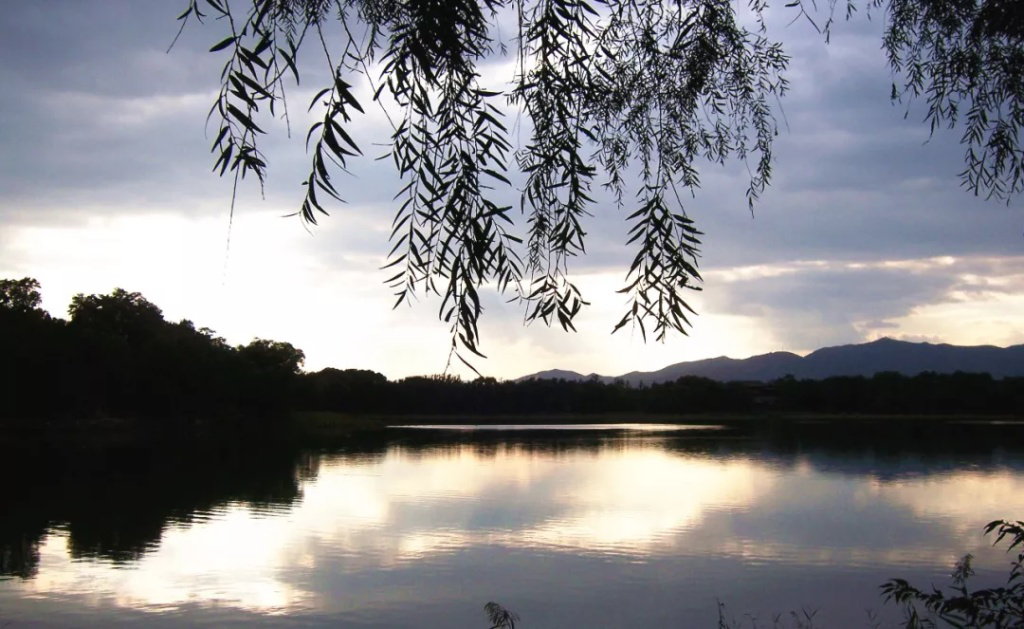
Located in the western suburbs of Beijing, the Summer Palace is a famous ancient imperial garden in China. Large-scale construction began in 1750, long-term as the Qing Dynasty royal summer amusement. In 1924, the Summer Palace was opened to the public. In March 1949, Mao Zedong and other central leaders left Xibaipo and the first place they chose to rest in Peiping was the Summer Palace. Here not only left Mao Zedong's hasty "rush for exams" footprints, but also witnessed his unchanging heart for the early years of the people.
1. "to leave this oasis of safety"
At the end of November 1948, the Pingjin campaign began. According to Mao Zedong's strategic deployment of "encircling but not fighting" Zhangjiakou and the new security guards and "separating but not encircling" Peiping and Tianjin, the front-line troops of Pingjin quickly implemented a strategic encirclement of Peiping. Among them, an advance force of the People's Liberation Army gradually approached the Summer Palace.
At that time, the Kuomintang army had two infantry battalions and one artillery battalion stationed at the Summer Palace. They used the terrain and buildings in the park to dig trenches, set up artillery, and set up barracks to prepare for a stubborn resistance. When the PLA had no choice but to prepare for a strong attack, Mao Zedong sent a special instruction: "leave this safe oasis." The Central Military Commission has formulated a series of strict disciplinary requirements for the People's Liberation Army on the Pingjin front line, such as not tying horses in front of the Summer Palace palace, avoiding bullets from damaging the walls, and so on. After receiving this order, the Pingjin Frontline Command urgently stopped the battle and changed its strategy, allowing the troops to attack Hongshankou in the northwest of the Summer Palace, and detour from the foot of the West Mountain, bypassing Shijingshan, forcing the Summer Palace to guard the enemy without fighting and retreat. As there was no attack, the Summer Palace avoided war damage and was preserved intact. On January 21, 1949, the Beiping Military Control Commission formally took over the Summer Palace.
2. "let the working people have a park"
On the morning of March 25, 1949, Mao Zedong arrived at Tsinghua Park Station by train and then changed buses to the Summer Palace.
Entering the Summer Palace, Mao Zedong said to Ye Zilong, "Go, take a walk." When he came to the lake in Kunming, Mao Zedong saw that the huge park was empty and there was not a single tourist, so he asked, "Why is there no tourist in the park?" Ye Zilong replied, "For the safety of the chief, the park is closed today." A comrade from the Ministry of Social Affairs explained: "There used to be monks and staff here. For your safety, the Ministry of Social Affairs cleared out all the people who lived in the Summer Palace." Mao Zedong was very angry when he heard this: "The park is not a private park. What does it look like without tourists!"
After breakfast and a short rest, Mao Zedong and his party visited Jingfu Pavilion and watched the panoramic view of Kunming Lake. In early spring, the Summer Palace is full of vitality and the Kunming Lake is rippling with blue waves. Mao Zedong happily said to the staff around him: "The Summer Palace has mountains and water, and the scenery is really beautiful. More people should be allowed to visit here in the future." Later, Liu Linxi, the head of the management office who took over the Summer Palace, was called to talk.
mao zedong inquired in detail about the takeover of the summer palace: how many old clerks and how many workers were taken over? Are there any eunuchs? How is their life? Are there any difficulties? Liu Linxi replied earnestly: "We accept more than 20 old employees, more than 30 workers, and no eunuchs. When Beiping was surrounded, all the employees in the park could not even get their salaries. At that time, the Spring Festival was about to be celebrated, and the employees could not pass it for years. After we went to the city to take over, we immediately reported the situation to the municipal government. We borrowed money from the municipal government and paid the employees two months' salary, which made everyone a year later." Mao Zedong nodded his approval and said, "We should take care of the life of the staff and workers. We should not dismiss them or dismiss them. We should not ask people to say that we had food during the Kuomintang period, but when the Communist Party came, we had no food. It would be bad if that was the case." Liu Linxi immediately said, "We are paid according to the original salary." Mao Zedong listened with great satisfaction.
Mao Zedong went on to say to Liu Linxi: "In the past, we had experience in guerrilla warfare in ravines, but we couldn't go to big cities to build parks. If you have no experience, you should learn from the old workers. If you have no experience, you should first manage the original park. In the past, the parks were visited by landlords, bourgeoisie and leisurely people. The working people had no money and no time to visit the parks. We will build many new parks in the future so that working people can have parks to visit. After work, I have time to rest and entertain in the park, relieve fatigue, and then return to work to do more work for the country."
Following Mao Zedong's instructions, in April 1949, the People's Government of Beiping City established the Summer Palace Management Office and began to focus on the renovation and protection of the Summer Palace. After the establishment of the the People's Republic of China, the government has repeatedly allocated special funds to comprehensively renovate the Summer Palace, increase necessary tourist facilities, and open up public transportation routes to Beijing and other scenic spots in the northwest. This famous royal garden has been rejuvenated with vigor and vitality. In 1949, the annual number of visitors to the Summer Palace was 240000. In 1961, the Summer Palace was announced by the State Council as a national key cultural relic protection unit. Since then, it has become one of the main tourist spots in Beijing, welcoming thousands of Chinese and foreign tourists every day. The former royal garden has truly become a park for the working people.
3. "Your opinion will be respected"
Liu Ya-zi is a famous politician, democrat and poet. He successively served as a member of the League, the Guangfuhui Association, and a member of the Central Supervisory Committee of the Kuomintang. Later, he joined the China Democratic League, participated in the establishment of the Chinese Kuomintang Revolutionary Committee, and served as a leader. Liu has long maintained close ties with the Chinese Communist Party.
On March 18, 1949, Liu Ya-zi was invited to Beiping from Hong Kong to attend the New CPPCC meeting. On the afternoon of the 25th, Mao Zedong held a military parade at Xiyuan Airport and met with Liu Yaz and other representatives from all walks of life and democratic personages. That night, Mao Zedong hosted a banquet in the Yishou Hall of the Summer Palace, and Liu Yasi was invited to attend. However, only three days later, Liu Yasi suddenly wrote a seven-law poem with a depressed mood and implied retreat-"Feeling Things as Chairman Mao":
The king of heaven and earth is really healthy, saying that it is in great trouble for me.
Seizing the seat is not a deer, no car bullet, no blame feng.
Head early regret life cheap, liver gallbladder would forget an inch of Dan.
Andhar South is a good news, and the lake is Ziling Beach.
After seeing the poem, Mao Zedong was aware of Liu Yazi's implication and said, "my old poet's stubborn temper has come up again. It is false to retire, and it is true to have complaints. It seems that we have to have a good talk with him so as to give better play to his enthusiasm!" On April 25, 1949, Mao Zedong arranged for Liu Yazi to move to the Yishou Hall of the Summer Palace for rest and equipped him with a special car. On the 29th, despite his busy schedule, Mao Zedong gave Liu Yazi a heartfelt and philosophical swan song, showing that the Chinese Communists have never forgotten his revolutionary contributions and sincerely retained him to participate in the preparations for the establishment of New China. This poem is "Qilu and Mr. Liu Yazi":
Drinking tea in Yuehai can't forget, and Yuzhou Ye Zhenghuang.
Thirty-one years to return to the old country, the flower season to read the chapter.
Complaining too much to prevent heartbreak, the wind should be long-term.
Mo Dao Kunming pond shallow water, fish than Fuchun River.
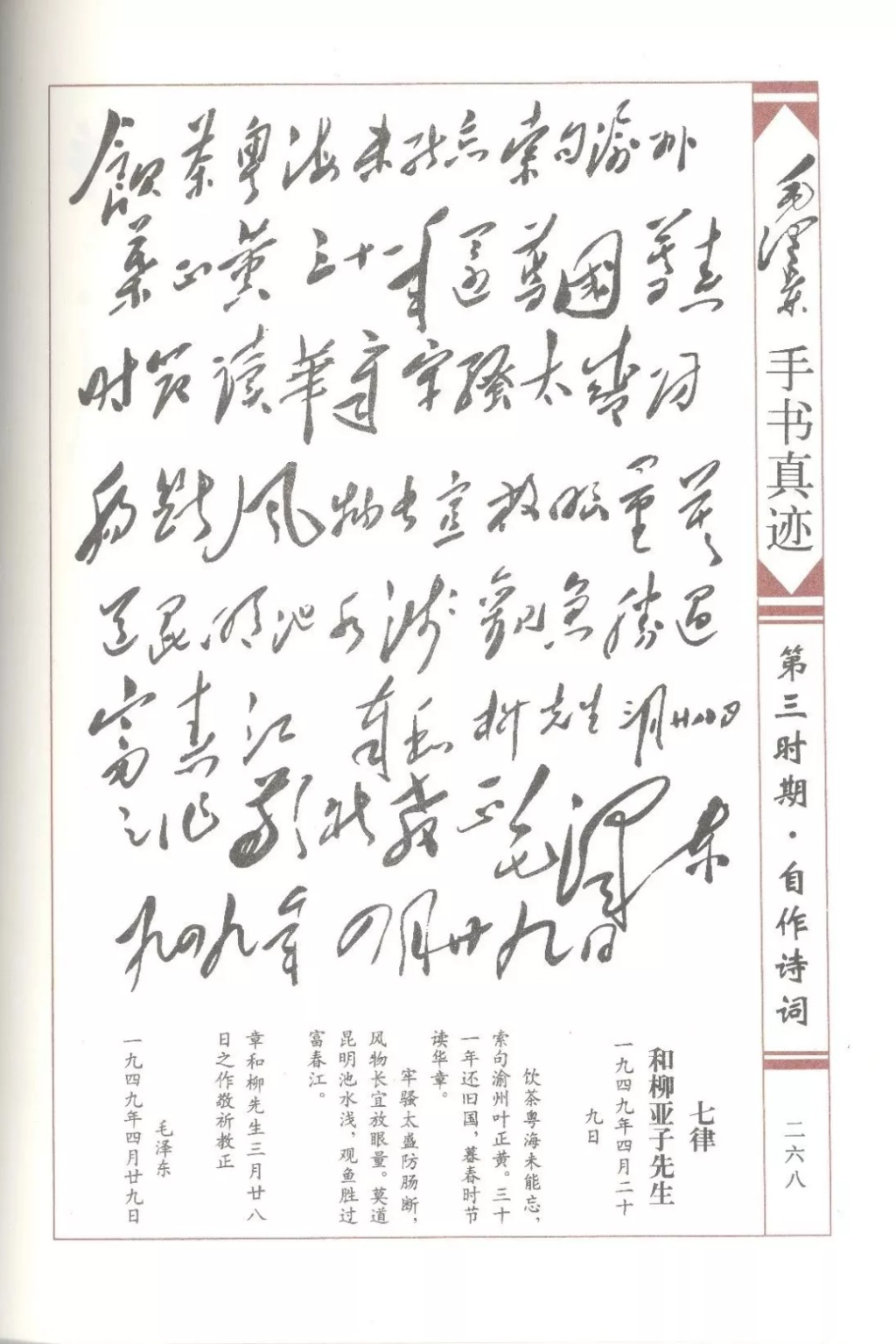
On May 1, 1949, Mao Zedong made a special trip to the Summer Palace to visit Liu Yasi and make an appointment to visit the garden. On a boat trip to the lake, Liu Ya-zi asked Mao Zedong: The People's Liberation Army quickly succeeded in crossing the river and occupied Nanjing, I don't know what clever plan the chairman used? Mao Zedong smiled and replied: there is no clever plan to fight a war, if there is a clever plan, it is to know yourself and the enemy, according to the actual situation, to make the right decision. Also, as Mr. Wang said, the support of the people is the biggest trick! Mao Zedong also said meaningfully to Liu Yaz: "You can now publish articles and speeches shirtless. Now it is different from the Chiang Kai-shek era. Your personal safety is guaranteed and your opinions will be respected." Liu Yaz said excitedly: "I will do what Chairman Mao said. I will try my best to do something beneficial to the people and the government." When the cruise ship was about to leave, many people gathered on the shore, and everyone shouted: "Long live Chairman Mao!" As soon as Mao came ashore, he was immediately surrounded by jubilant crowds. In order to prevent the masses from crowding into Liu Ya Zi, Mao Zedong let him go half a step ahead and took care of Liu Ya Zi getting on the bus first.
To seek happiness for the Chinese people and rejuvenation for the Chinese nation has always been the original intention and mission of the Chinese Communists. The Summer Palace left a good story about Mao Zedong's concern for the people's livelihood and an open mind, and witnessed Mao Zedong's feelings of not forgetting his original aspirations and working for the people. It is precisely because of always maintaining the heart of the people that the Chinese Communists represented by Comrade Mao Zedong united and led the Chinese people to achieve national independence and people's liberation, established the socialist system, and laid a solid foundation for all development and progress in contemporary China.
Source: Beijing Party History
Next Page
Next Page

Address: Buildings 4 and 5, Kechuang Huigu Park, Hongshun Road, Huaming High-tech Zone, Dongli District, Tianjin
Tianjin High-end Equipment Research Institute, Tsinghua University, Copyright
Website Construction: China Enterprise Power Tianjin
sweep
Pay attention to the official WeChat public number