




PARTY BUILDING
party building work
The Experience of Cadre Work in Our Army during the Anti-Japanese War
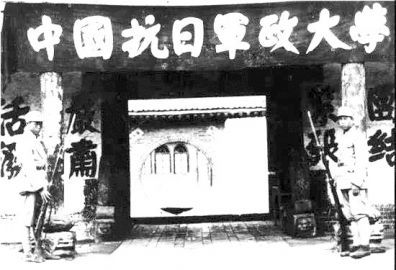
During the Anti-Japanese War, the People's Army inherited and carried forward the fine traditions of the Red Army, always adhered to the principle of the party's management of cadres, established the correct cadre line and cadre policy, the cadre work was fully developed and matured, the cadre team continued to grow, and the overall quality was continuously improved. It has withstood the historical strategic changes and the huge test of the complex and changeable situation, not only provided an organizational guarantee for the victory of the Anti-Japanese War, organisational preparations were also made for the war of liberation.
appointing people on their merits is a powerful guarantee for developing and strengthening the contingent of cadres. In September 1938, Mao Zedong pointed out at the Sixth Plenary Session of the Sixth Central Committee of the Communist Party of China: "on the issue of the use of cadres, there have always been two opposing lines in the history of our nation: one is the line of" appointing people on their merits "and the other is the line of" cronyism. The former is a decent line, the latter is an undecent line. The Communist Party's cadre policy should be based on whether it can resolutely implement the party's line, obey the party's discipline, have close ties with the masses, have the ability to work independently, be active and willing to work, and do not seek personal gain. This is the "meritocracy". Line. "Mao Zedong dialectically analyzed the historical lessons of the past dynasties in the employment of cadres, combined with the practical experience of our party cadres, made a new high-level summary of the" virtuous "of party members and cadres, and then rose to the policy line of the use of cadres, pointing out the direction for the development of our army's cadre work.
with the development of the situation of the war of resistance against japan, our army's demand for cadres is growing. Mao Zedong keenly pointed out: "The existing backbone is not enough to support the building of the struggle, and it is necessary to train a large number of talents; after the political line is determined, cadres are the decisive factor. Therefore, it is our combat task to train a large number of new cadres in a planned way. "Under the guidance of the cadre line of appointing people on merit, the Central Military Commission, the General Political Department, the Eighth Route Army and the New Fourth Army have formulated and issued a series of cadre policy documents such as instructions, instructions, regulations, and decisions, involving cadre appointment and removal, training, deployment, exchange, review, Rewards and punishments, archives, health care, pensions, preferential treatment, intellectual policy, technical expert policy, captured and returned cadres policy, disabled cadre placement, it has greatly enhanced the attractiveness and cohesion of the contingent of cadres, and the number of cadres has been rapidly increased, ensuring the demand for cadres in the development of the Anti-Japanese War. By 1940, the number of cadres above the platoon level of the Eighth Route Army and the New Fourth Army had rapidly grown from more than 11000 in 1937 to more than 51000, with 40000 new cadres. During the Anti-Japanese War, the Anti-Japanese Military and Political University alone trained more than 100000 cadres.
having both ability and political integrity is the fundamental principle in selecting and appointing cadres. During the War of Resistance Against Japan, the Party Central Committee and the Central Military Commission continued to learn from experience and lessons, actively explored and explored ways to inspect and appoint cadres, and put forward standards for the selection and appointment of cadres with both ability and political integrity, and actively implemented them. It is precisely in accordance with the standard of having both ability and political integrity that we have effectively overcome abnormal phenomena such as "small hills" small groups and "small circles", cultivated and brought up a large number of outstanding talents, and ensured the victory of the War of Resistance Against Japan.
In August 1937, the General Political Department clearly stipulated that the criteria for selecting cadres should be based on political conditions and work ability, and political conditions are more important. Mao Zedong pointed out at the Sixth Plenary Session of the Sixth Central Committee of the Communist Party of China: "The Communist Party of China is a party that leads the great revolutionary struggle in a large nation of tens of millions of people. Without a majority of leading cadres with both talent and morality, it cannot accomplish its historical tasks. "here, although he puts" talent "first, he does not want to put talent first and" virtue "second, and he still emphasizes" having both ". In November 1940, Chen Yun, then head of the Organization Department of the CPC Central Committee, put forward the principle of promoting cadres: "pay equal attention to morality and talent, and give priority to morality. It is opposed to only caring for talent and not caring for virtue, and it is also opposed to only caring for virtue and not caring for talent. Talent and virtue should be unified. Talent is not empty talent. Germany is not empty. To examine the talent and morality of a cadre, we should mainly look at the performance in completing the task. 'he also put forward the principle of using cadres: 'according to their ability, according to their needs, and at the same time. The quantity is the main, emergency response is also inevitable. "In September 1941, the Central Military Commission's" Instructions on the Work of Veteran Cadres in the Army "stated:" In the future, the promotion of cadres must be based on morality (loyalty to the revolution), talent (work ability), and capital (qualifications and struggle history). Struggle history is the only or first criterion. "In November 1942, the" Instructions on the Organization of the Army "by the Field Political Department of the Eighteenth Army clearly stated that" the promotion of cadres must master the principle of morality and talent, and cannot proceed from qualifications alone and ignore other conditions. "The principle of selecting and appointing cadres has been implemented in the army.
Absorbing knowledge-based talents is an effective way to quickly improve the overall quality of the cadre team. After the start of the all-out war of resistance, the Central Committee of the Communist Party of China and the Central Military Commission formulated and implemented a series of policies to absorb a large number of intellectuals. A large number of revolutionary intellectual youths rushed to Yan'an and the front line of the Anti-Japanese War with enthusiasm. The supplement of "fresh blood" of advanced intellectuals has greatly improved the quality structure of the cadre team, the overall quality of the cadre team has been significantly improved, and the combat effectiveness of the army has been rapidly improved. Many of them have become an indispensable part of the cadre team of our army, and many have become senior and middle-level generals of our army.
On December 1, 1939, Mao Zedong personally drafted the decision of the CPC Central Committee to absorb a large number of intellectuals, which pointed out: "in the long and cruel war of national liberation and in the great struggle to establish a new China, the Communist Party must be good at absorbing intellectuals in order to organize the great anti-Japanese forces, organize millions of peasants, develop the revolutionary cultural movement and develop the revolutionary United front. "On October 12, 1940, Mao Zedong, Zhu De and Wang Jiaxiang gave instructions to the New Fourth Army, demanding that" a large number of intellectuals should be taken in only those with a little revolutionary enthusiasm, regardless of their social origin ". The army's policy towards intellectuals can be summarized in four words: "tolerance" and "excellence". "Congency" means to strive for a large number of intellectuals to join our army, to accommodate them and to make them excellent cadres; "transformation" means to change the petty bourgeois consciousness of intellectuals and to make them revolutionary and proletarian; "use" means to correctly distribute the work of intellectuals so that they have a proper future for development; "excellence" means to give them material preferential treatment and encourage them to serve the army. All units resolutely implement the Central Committee's decision on the recruitment of intellectuals, thoroughly correct all tendencies that exclude and reject intellectuals from our army, and make every effort to recruit intellectuals into our army on the spot. By 1940, the number of intellectual cadres in the Eighth Route Army and the New Fourth Army had increased to about 10000. Attaching importance to absorbing intellectuals and giving full play to their role is a major feature of our army's cadre work during the Anti-Japanese War, which greatly promoted the quality construction of the cadre team.
Pure team is an important guarantee to strengthen the construction of ideological style, thisDuring the period, the people's army always attached importance to the construction of the ideological style of the cadre team, adopted many practical and effective measures, and achieved remarkable results. In the formation of the anti-Japanese national united front, the Red Army did not change its outfit and changed its name. It was not only famous for listening to the party's command and being able to win battles, but also famous for its excellent style of work, which became a distinctive sign that distinguished it from other armies.
The first is to carry out the rectification movement and strengthen the firm political conviction. Various units often carry out various forms of ideological and political education, especially the Yan'an rectification movement. Through ideological education, criticism and self-criticism, the goal of "punishing the past, treating the sick and saving people" has been achieved, which has greatly improved the Marxist theoretical level and political ideological consciousness of the cadre team, and pushed the ideological style construction of the army to a new level, It laid an important ideological and political foundation for the overall victory of the Anti Japanese war. The second is to carry out the cadre review campaign, pure and consolidate the cadre team. All levels of the army not only examine cadres from their social origin and work history, but also examine the political quality of cadres from various phenomena, especially the problems exposed, comprehensively understand the advantages and disadvantages of cadres, carry out in-depth class education, and really check a number of secret agents. it has been found that a number of capable and good cadres have been trained, and the organizational purity and political loyalty of the contingent of cadres have been improved. The third is to launch a large-scale production campaign and cultivate the style of hard work. The key attacks of the Japanese invaders and the encirclement and blockade of the Kuomintang caused a serious shortage of material supplies in the Shaanxi-Gansu-Ningxia Border Region. The Kuomintang openly clamored that the soldiers and civilians in the liberated areas would be trapped and starved to death. Mao Zedong, Zhou Enlai, Zhu De and others took the lead in living in earthen cave dwellings, opening up wasteland and farming, carrying baskets to pick up dung, spinning and weaving. All troops actively carried out large-scale production movements and passed through an unprecedentedly serious difficult period. The song "Nanniwan" sings: "Nanniwan today is different from the previous years, fighting and producing, the 359 brigade is a model..." It enthusiastically praises the situation of the Eighth Route Army soldiers who opened up wasteland and produced large-scale production.
Source: People's Daily Online
Previous Page
Next Page
Previous Page
Next Page

Address: Buildings 4 and 5, Kechuang Huigu Park, Hongshun Road, Huaming High-tech Zone, Dongli District, Tianjin
Tianjin High-end Equipment Research Institute, Tsinghua University, Copyright
Website Construction: China Enterprise Power Tianjin
sweep
Pay attention to the official WeChat public number