




PARTY BUILDING
party building work
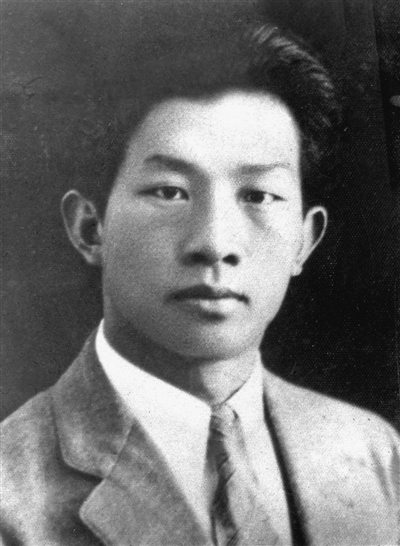
Nie Er: The Pioneer of Chinese New Music
In the former residence of Nie Er at No. 3 Beimen Street, Hongta District, Yuxi City, Yunnan Province, the relief pattern of a hundred years ago can be faintly seen on the eaves. Nie Er had studied, sang and lived in this quaint and clean courtyard.
"Get up! People who don't want to be slaves... "La la la, la la la, I'm a little expert in selling newspapers..." In Nie Er's former residence, when these familiar melodies sounded, every visitor would have a special emotion in his heart. These "red classics", which have been sung since the revolutionary era, are immortal to this day. Because of these songs, people remember the name Nie Er.
Nie Er, formerly known as Nie Shouxin, was born in Kunming, Yunnan Province in February 1912. In 1927, he was admitted to the first normal school in Yunnan Province. He joined the Communist Youth League of China in 1928. In 1930, he went to Shanghai to participate in the anti-imperialist alliance and actively participated in revolutionary literary and artistic activities under the leadership of the Communist Party of China.
In April 1931, Nie Er was admitted to the Mingyue Opera Society and officially began his artistic career. After the outbreak of the "January 28" Anti-Japanese War in Shanghai in 1932, the people of the whole country were surging to resist Japan and save the nation. At this time, Nie Er met Tian Han, a Communist Party member and dramatist. Under the cultivation and education of the party organization, Nie Er's ideological consciousness has been continuously improved. He went to Peiping in 1932 to participate in revolutionary music activities, and soon returned to Shanghai to initiate the organization of the China New Music Research Association. In early 1933, Nie Er was introduced by Tian Han to join the Communist Party of China. Since then, Nie Er not only gained new political life, but also gave further play to his artistic talent, becoming a pioneer of Chinese new music and an anti-fascist warrior. In the following two years, Nie Er composed more than 30 theme songs and episodes for operas, dramas and films, such as "New Women", "Pioneer", "Road Song", "Forward Song", "Graduation Song" and "Singer under the Iron Hoof", which were widely sung throughout the country and played a positive role in stimulating the people's anti-Japanese national salvation movement. His music such as "Golden Snake Dance", "Spring Dawn in Cuihu" and "Mountain Couple" are deeply loved by people.
In 1935, Nie Er wrote the theme song "March of the Volunteers" for the movie "Children of the Wind and Clouds", which reflected the great patriotism of the Chinese nation as one, united against aggression, courageously fighting, and indomitable when the nation was in peril, and inspired the Chinese people. The heroic spirit of fighting the Japanese invaders to the end. As soon as this work was born, it was like inserting wings and was sung everywhere in the motherland, playing the strongest voice of the era to save the national crisis. In September 1949, the first plenary session of the Chinese People's Political Consultative Conference decided that the March of Volunteers was the national anthem. In December 1982, the Fifth Plenary Session of the Fifth National People's Congress of the People's Republic of China decided "March of Volunteers" as the national anthem of the the People's Republic of China.
Because a large number of songs written by Nie Er reflected the aspirations of the people, they became a powerful weapon and fighting horn to inspire the people, educate the people, and fight the enemy, which aroused the hatred of the reactionary authorities and wanted to arrest him. According to the decision of the party organization, Nie Er left Shanghai and went to the Soviet Union via Japan. On July 17, 1935, Nie Er drowned at the age of 23 while swimming at the seashore of Guma, Fujisawa City, Kanagawa Prefecture, Japan.
Source: People's Daily Online
Next Page
Next Page

Address: Buildings 4 and 5, Kechuang Huigu Park, Hongshun Road, Huaming High-tech Zone, Dongli District, Tianjin
Tianjin High-end Equipment Research Institute, Tsinghua University, Copyright
Website Construction: China Enterprise Power Tianjin
sweep
Pay attention to the official WeChat public number