




PARTY BUILDING
party building work
Wei Bachun: The idea of immortal salvation and survival
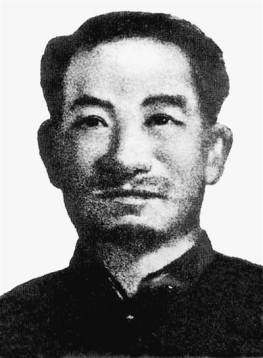
In August, the scorching sun in Guangxi is like fire. The Wei Bauqun Memorial Hall, located in the Martyrs Cemetery in the main urban area of Donglan County, Guangxi, still welcomes many people who come to pay their respects and visit every day. "Martyr Wei Bequn is our eternal pride, and his heroic deeds will always inspire us. "Huang Gaoxian, director of the management office of the Zhuang Township Hero Culture Park in Donglan County, said.
Wei Baston was born in 1894 in Donglan, Guangxi. In his early years, he studied in Guangxi Law and Politics School. In early 1916, he joined the National Guard against Yuan Shikai in Guizhou and took part in the War of Protecting the Nation. After graduation, he worked as a staff officer in the Zhang Yi Department of the Guizhou Army.
Under the influence of the May Fourth Movement, in 1920, Wei Baqun left the Guizhou Army and participated in the "Reforming Guangxi Comrades Association" in Guangzhou, and served as the deputy head of the political group of the Association, actively participating in the revolutionary activities of crusade against the old Gui warlord Lu Rongting.
In September 1921, Wei Baxun returned to his hometown Donglan County to engage in the peasant revolutionary movement. The "Association for the Transformation of Donglan Comrades" (later called the Peasant Self-Government Association) and the "National Self-Defense Army" (later called the Peasant Self-Defense Army) were organized successively to gradually integrate the peasant movement with the armed struggle. In the summer of 1923, he commanded the peasant army to fight Donglan County three times, which opened the prelude to the armed struggle of the peasants in Youjiang. At the beginning of 1925, he entered the Guangzhou Peasant Movement Institute to study. After graduation, he returned to Donglan to continue to engage in the peasant movement, host agricultural workshops, train backbones, develop peasant associations and peasant arms, and push the agricultural movement to the Youjiang area. In 1926, he led the establishment of the Donglan County Revolutionary Committee as its director and joined the Communist Party of China in the winter of the same year. After the failure of the Great Revolution in 1927, he still insisted on armed struggle in the local area.
In December 1929, Wei Baqun participated in leading the Baise uprising, established the Youjiang Soviet area, and served as a member of the Youjiang Soviet government and commander of the third column of the Seventh Army of the Chinese Workers' and Peasants' Red Army. In October 1930, the 7th Red Army was reorganized in Hechi, Guangxi, and the original three columns were reorganized into three divisions. Wei Baqun served as the commander of the 21st Division and led his troops to stay in the Youjiang Soviet Area. He resolutely obeyed the party's decision, and added more than 1000 elite officers and soldiers of the 21st Division to the two main divisions of the upcoming expedition, showing the lofty quality of putting the overall interests first.
After the main force of the Red 7 left the Youjiang Soviet area, Wei Baqun led more than 100 people to stay in the Youjiang area. He mobilized the masses, organized the expansion of the army, and persisted in the guerrilla struggle under extremely difficult conditions. His family of 20 people, more than 10 including his son Wei Shuzong, were brutally killed by the enemy. But none of this shook his revolutionary will. He said firmly: "Revolutionaries should not be afraid of difficulties or death, and resolutely sacrifice everything for the interests of the people. "In the early morning of October 19, 1932, Wei Baqun was killed by traitors in Donglan Tea Appreciation Cave in Guangxi. He was 38 years old.
"Wei Bachun has always had a firm historical consciousness of saving the nation from subjugation. "Wei Zhongchao, director of the Donglan County Party History Office, said," Wei's deeds have inspired us Communists to fight for the interests of the people."
Since the implementation of targeted poverty alleviation work, the appearance of poverty-stricken areas in Donglan County has improved significantly. In 2017, the per capita net income of local farmers was about 6590 yuan, an increase of 8.5 percent over 2016. In the face of the rapid changes in his hometown, Wei Shubin, a descendants of the Wei Bauqun family, said: "Life is getting better and better, but the revolutionary will cannot be lost, and we must continue to maintain the spirit of hard struggle."
Source: Party Building Network

Address: Buildings 4 and 5, Kechuang Huigu Park, Hongshun Road, Huaming High-tech Zone, Dongli District, Tianjin
Tianjin High-end Equipment Research Institute, Tsinghua University, Copyright
Website Construction: China Enterprise Power Tianjin
sweep
Pay attention to the official WeChat public number