




PARTY BUILDING
party building work
Three Scenes of Marxism in China
The October Revolution brought Marxism-Leninism to China with the sound of a cannon, and since then Marxism has taken root in China. In the surging "May 4th" period, a variety of social thoughts competed fiercely, and Marxism was able to stand out from it, not only because Marxism, as a scientific truth, has universal guiding significance, but also because generations of advanced Chinese people consciously combined the universal truth of Marxism with China's reality and creatively solved the problems facing China, thus enriching the theoretical system of Marxism.
From the beginning of its establishment, the Communist Party of China took Marxism as its guiding ideology with a clear-cut stand, and persistently promoted the process of Sinicization of Marxism, and achieved results that attracted the attention of the world. In the magnificent process of Sinicization of Marxism, we have selected three relevant scenes in the period of the new democratic revolution, trying to lead readers to see how the light of truth shines on the land of China.
Translator lets more people taste the truth
In Fenshuitang Village, Yiwu, Zhejiang, the first full Chinese translation of the Marxist foundation work "The Communist Manifesto" was published here in 1920. It was the scholar Chen Wangdao who completed this undertaking. Chen Wangdao "took five times as much effort as he usually did" to translate the Communist Manifesto. One day, my mother brought a plate of zongzi and brown sugar. Chen Wangdao mistook the ink for brown sugar because he was focused on translating books. When his mother asked if he wanted to add some brown sugar, Chen Wangdao said it was already very sweet and did not know that his mouth was covered with ink. The Communist Manifesto translated by Chen Wangdao was revised by Chen Duxiu and Li Hanjun and was published in August 1920. The first 1,000 copies were quickly sold out and reprinted a month later.
The translation, research and dissemination of Marxist works in China is an indispensable step in the Sinicization of Marxism. If the taste of truth is sweet, then the translator is the hard-working bees, they collect nectar from the flower of truth, make sweet honey, for more people to taste the taste of truth.
Two months before the first big meeting, Zhonghua Book Company published "Explanation of Historical Materialism" written by Dutchman Guo Tai translated by Li Da. In the appendix, Li Da summarized and translated the important expositions of Marx and Engels on historical materialism. The popularity of "Interpretation of Historical Materialism" at that time may make it hard for today's readers to imagine that this book has been printed 14 times in 15 years. At the first National Congress of the Communist Party of China, Li Da was elected as the director of propaganda. Two months later, the people's publishing house was established. The publishing plan includes 15 kinds of "Marx's complete books" and 14 kinds of "Lenin's complete books". This is the first time in China's history that Marxist works have been translated, introduced and published in the form of series. Although this plan was not completed due to the interference of reactionary forces and other reasons, Li Da, as the editor-in-chief, carried the work of editing, proofreading, printing, and distribution, and published a total of 15 books under very difficult conditions. Among them is the "Communist Manifesto" translated by Chen Wangdao.
The translation of Marxist works has made more and more Chinese people realize the scientific nature of Marxism. In this sophisticated theoretical system, Marx spent forty years to write the "Das Kapital" is known as the Encyclopedia of Marxism. Since 1928, Wang Yanan and Guo Dali began the journey of cooperative translation of Das Kapital. Ten years later, the Chinese translation of Das Kapital finally came out. The process of their translation was arduous. In 1928, Guo Dali translated the first volume of Das Kapital at the Great Buddha Temple in Hangzhou, and became a close friend with Wang Yanan, who was planning to write a novel at the temple. The two met to cooperate in the translation of Das Kapital. As for the classical economics criticized by Das Kapital, Guo Dali admitted that he "did not even have a preliminary understanding" at that time, and he suggested that the two should start with the translation of classical economics works. In 1935, because the first volume of "Das Kapital" translated by Guo Dali had been destroyed by the war, they had to translate "Das Kapital" from scratch. After years of accumulation, their education was undoubtedly deeper than then, and The basis is the German text from the Soviet Union, and the translation is naturally more accurate. It is worth mentioning that Wang Yanan later completed the writing of "The Original Theory of Chinese Economy", which "studies Chinese semi-feudal and semi-colonial economy according to the system and category of" Das Kapital "and sinicizes Marxist economics".
Today, when we read Marxist works and are encouraged by the shining light of truth, we should not forget the contributions of generations of translators. The cause of translating books has continued to this day, which itself reflects the realistic work style advocated by Marxism.
attach importance to investigation and research and oppose "bookishness"
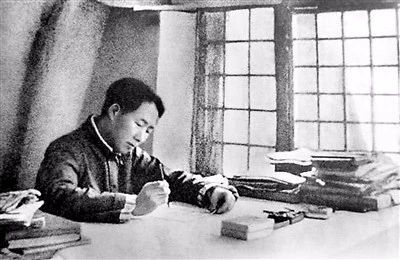
In May 1930, in Xunwu County, Ganzhou, Jiangxi, Mao Zedong made a social survey here. The investigation was conducted for more than ten days. Eleven people from different occupations and experiences, including local Soviet cadres, grocery shopkeepers, handicraftsmen, and the poor, participated in the investigation meeting presided over by Mao Zedong. Mao Zedong carefully recorded their statements and later sorted out more than 80,000 words of "Xunwu Investigation".
Mao Zedong's investigation work in Xunwu was completed between battles. When we understand this background and open the "Xunwu Investigation", we will sigh at the fineness of this investigation.
During the investigation of Xunwu, Mao Zedong wrote "Against Benben Doctrine", which is an important document in the process of Sinicization of Marxism. The article begins by revealing the truth that "no investigation, no right to speak.
In his article, Mao Zedong unequivocally opposed "book-based doctrine". When Mao Zedong wrote this article, there was a "wrong tendency to dogmaticize Marxism and sanctify the resolutions of the Communist International and the experience of the Russian revolution" in the Party ". Russia's "October Revolution" followed a line of cities encircling the countryside. In 1928, the Sixth National Congress of the Party was held in Moscow. Bukharin made a political report on behalf of the Communist International. He still advocated that the focus of the work of the Communist Party of China should be on the cities and opposed the establishment of solid base areas in the countryside. However, is this road really suitable for China?
Mao Zedong's practice in Jinggangshan, southern Jiangxi and western Fujian made him confident that China should take a different revolutionary road from Russia. In the same year when "Against Benben Doctrine" was published, Mao Zedong wrote "A single spark can start a prairie fire". This article "for the first time clarified the strategic thinking that the work of the Communist Party of China should be centered on the countryside, thus marking the countryside. The basic formation of the theory of the road to encircling the city and seizing power by armed forces".
The year 1930 was undoubtedly a crucial year in the course of the Sinicization of Marxism. But the discovery and growth of truth is always inseparable from the fierce struggle with falsehood. If the light of truth is only "a single spark" when it is not yet understood by most people, it will eventually start a prairie fire, and history has proved this.
Yan'an witnessed the first historic leap in the Sinicization of Marxism
On September 29, 1938, Qiaoergou, Yan'an, Shaanxi, the Sixth Plenary Session of the Sixth Central Committee of the Communist Party of China was held here. Nearly five years have passed since the convening of the last plenary session. During this period, the Red Army's Long March arrived in Yan'an, the Anti-Japanese War broke out, the Kuomintang and the Communist Party cooperated again, and the situation of the Chinese revolution changed.
In the course of the Sinicization of Marxism, the Sixth Plenary Session of the Sixth Central Committee left a glorious stroke. Mao Zedong made a political report on "On the New Stage" at the meeting, and for the first time clearly put forward the concept of "Marxism in China.
Li Dazhao, the earliest Marxist in China. As early as 1919, Li Dazhao had already "preliminarily expressed the idea that the general principles of Marxism must be combined with the reality of the country and developed in the process of this combination". Twenty years have passed from 1919 to 1938. The course of the Chinese revolution has repeatedly proved that both in theory and in practice, we must adhere to the direction of Sinicization of Marxism.
It is in the hot land of Yan'an that the Sinicization of Marxism has reaped fruitful results. In 1945, the Seventh National Congress of the Communist Party of China established Mao Zedong Thought as the party's guiding ideology and wrote it into the party constitution, which marked the first historic leap in the Sinicization of Marxism.
Mao Zedong wrote a series of famous articles in Yan'an that had an important influence in the process of Sinicization of Marxism. From July to August 1937, Mao Zedong successively wrote "On Practice" and "On Contradiction", criticized dogmatism and subjectivism from a high degree of philosophy, demonstrated the ideological line of seeking truth from facts, and laid an important philosophy for the Sinicization of Marxism. basis. In 1941, at the beginning of the rectification movement, Mao Zedong's three reports, "reforming our study", "rectifying the party's style of work" and "opposing the party's eight writing", pointed the spearhead at subjectivism, sectarianism and the party's eight writing, and called for the establishment of a Marxist style in the party. After the rectification movement, the ideological line of seeking truth from facts was established in the whole party. The essence of the Sinicization of Marxism lies in the four words of seeking truth from facts. These four words are not easy to come by, and we should cherish them and pass them on forever as "family heirlooms" from generation to generation.
the sinicization of marxism is a process of endless and constant innovation. In the great practice of socialist construction and reform, the Chinese Communists have gradually formed a theoretical system of socialism with Chinese characteristics and realized another historic leap in the Sinicization of Marxism.
Since the 18th National Congress of the Communist Party of China, socialism with Chinese characteristics has entered a new era. The Party Central Committee with Comrade Xi Jinping at the core has deepened its understanding of the laws of the Communist Party's governance, the laws of socialist construction, and the laws of human social development with a new vision, and carried out arduous theories. Explore, achieve major theoretical innovations, and create Xi Jinping Thought on Socialism with Chinese Characteristics for a New Era. This is the latest achievement of the Sinicization of Marxism and the Marxism of China in the 21st century. We should arm our minds with Xi Jinping's thought of socialism with Chinese characteristics in the new era, lead all kinds of work, and strive for the realization of the "two centenary" goals and the Chinese dream of the great rejuvenation of the Chinese nation.
Source: Communist Party Network
Previous Page
Previous Page

Address: Buildings 4 and 5, Kechuang Huigu Park, Hongshun Road, Huaming High-tech Zone, Dongli District, Tianjin
Tianjin High-end Equipment Research Institute, Tsinghua University, Copyright
Website Construction: China Enterprise Power Tianjin
sweep
Pay attention to the official WeChat public number