




PARTY BUILDING
party building work
The armed uprising and the founding generals who took part in the uprising in the memory of the old revolutionaries
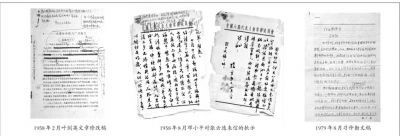
During the 30-year period of the New Democratic Revolution, the Chinese Communists, represented by Mao Zedong, held high the banner of armed uprising under the extremely cruel white terror, starting from the Nanchang Uprising, which fired the first shot at the Kuomintang reactionaries. Nearly a thousand armed uprisings were launched in the southern, central and northwestern regions of China. Recalling these armed uprisings of blood and fire and summarizing the development and growth of the People's Army has become the greatest wish of the older generation of revolutionaries at the beginning of the founding of New China. Therefore, in 1956, the Central military Commission decided to launch the "30-year essay solicitation of the Chinese people's Liberation Army" and compile a series of large-scale revolutionary memoirs, "start a prairie fire." On the occasion of the 90th anniversary of the founding of the Chinese People's Liberation Army, some old revolutionaries recalled the armed uprising and the list of founding generals who participated in the armed uprising were compiled to reproduce this arduous history and the great achievements of the revolutionary predecessors.
-- Editor
Nie Rongzhen spent 22 years to complete the summary of the experience and lessons of the Nanchang Uprising.
Marshal Nie Rongzhen spent 22 years from October 1958 to the end of 1980 to complete "The Historical Significance and Lessons of the Nanchang Uprising."
In order to reproduce this great history, Nie Rongzhen consulted the historical archives of Ye Ting, Peng Pai, Deng Zhongxia, Yun Daiying, Zhou Yiqun, Tan Pingshan and other leaders participating in the Nanchang Uprising, solicited the opinions of hundreds of people who experienced the uprising, and asked Zhou Enlai, Liu Shaoqi, Zhu De, Deng Xiaoping, Liu Bocheng, He Long, Su Yu and other leading comrades to revise the article.
Nie Rongzhen said in the article: "Historical facts have proved that since the Nanchang Uprising, the revolutionary struggle experience gained by our Communists and countless revolutionary people with their blood has been highly concentrated, forming the great Mao Zedong Thought, and constantly developing and Enriching the great Marxist-Leninist revolutionary theory. The revolutionary spirit of our comrades-in-arms and martyrs and the revolutionary cause they devoted themselves to, with the victory of the Chinese revolution led by our party and the rapid development of socialist construction, are radiating brilliance throughout Asia, in the East, and in the world!"
Nie Rongzhen's article recalling the Nanchang Uprising has since become the main basis for our party and army to review the history of the revolution and summarize the historical experience of the revolution.
After the founding of New China, he participated in the uprising and was awarded the rank of marshal in 1955: Zhu de, he long, Liu Bocheng and Nie Rongzhen.
Those who were awarded the rank of general were: Su Yu, Chen Geng and Xu Guangda.
The rank of general was awarded to Chen Qihan, Xiao Ke and Zhou Shidi.
The rank of lieutenant general was awarded to: Nie Heting, Tang Tianji, Peng Meiji, Tan Furen, Tan Jiashu and Zhao Rong.
Those who were awarded the rank of major general were: Zhou Wenzai, Li Yimin, Zhang Shucai, Wang Yunlin and Yuan Yelie.
Luo Ronghuan Reviews the Failure of the Autumn Harvest Uprising on the Hunan-Jiangxi Border
The Autumn Harvest Uprising, the Southern Hunan Uprising, the Hunan-Jiangxi Uprising, the Pingjiang Uprising, and the Ningdu Uprising all took place in Hunan and Jiangxi. These uprisings created the first front army of the Chinese Workers' and Peasants' Red Army.
Marshal Luo Ronghuan attached great importance to the history of the people's army. On December 1, 1956, Luo Ronghuan met with comrades from the editorial department of the "Chinese People's Liberation Army 30 Years Essay" to talk about the Autumn Harvest Uprising on the border between Hunan and Jiangxi. After that, he began to write "Autumn Harvest Uprising and the Initial Period of Our Army".
Luo Ronghuan seeks truth from facts and is frank and straightforward. His statement about the failure of the Autumn Harvest Uprising in the article is too straightforward. The article said: "The Autumn Harvest Uprising began on September 9, 1927. Under the situation that the enemy was strong and we were weak at that time, attacking Changsha was obviously a military adventure. action."
When the editorial department relayed to him the different views of some leading comrades, Luo Shuai insisted on not revising them. He believed that although the revolution had won, the Chinese Communists must never whitewash their own history. Luo Ronghuan's attitude of seeking truth from facts has also become an example for later military history researchers of our army.
After the founding of New China, he took part in these uprisings. In 1955, he was awarded the rank of Marshal: Chen Yi and Luo Ronghuan.
The rank of general was awarded: Huang Kecheng, Tan Zheng.
The rank of general was awarded to Song Renqiong, Xiao Ke, Zhang Zongxun, Chen Shiju, Chen Bojun, Yang Zhicheng, Zhu Liangcai and Deng Hua.
The rank of lieutenant general was awarded to Chen Zhengxiang, Yan Fusheng, Tan Xilin, Lai Yi, Han Wei, Guo Peng, Zhang Lingbin, Yang Meisheng, Liu Xiansheng, Zeng Siyu, Peng Jiaqing, Yu Qiuli, Zhu Ming, Kuang Yumin, Tan Guan 3. Cao Lihuai, Ouyang Yi and Wang Zifeng.
The ranks of major generals were awarded: Li Zhen, Wang Yaonan, Pan Zhenwu, Pei Zhouyu, Guo Yanlin, Xie Guoyi, You Shenghua, Zeng Baotang, Zeng Ruqing, Luo Huasheng, Li Zhiyuan, Li Zuoyu, Xiao Yingtang, Xiao Feng, Zhang Jiexiu, Zheng Xiaofeng.
Ye Jianying leads Guangzhou uprising
In 1927, Chiang Kai-shek launched the "April 12" counter-revolutionary coup. Ye Jianying went to Wuhan to work in the Fourth Army of the Second Front Army of the National Revolutionary Army at that time, and served as chief of staff of the Fourth Army.
At the end of September, Ye Jianying arrived in Guangzhou from Nanxiong and started various preparations before the Guangzhou Uprising together with Zhang Tailei, Ruan Xiaoxian, Yun Daiying, and Su Zhaozheng. On December 11, the teaching group commanded by Ye Jianying fired the first shot of the Guangzhou Uprising.
During the uprising, Ye Jianying used troops to defend according to the topographic characteristics of Guangzhou, so that the uprising occupied more than half of Guangzhou smoothly at the beginning. Ye Jianying braved a hail of bullets and personally commanded the battle in the Changdi area. In the end, due to the enemy's strength and our weakness, the rebels were forced to withdraw from Guangzhou on the evening of the 12th.
In October 1957, Ye Jianying wrote the article "The Failure of the Great Revolution and the Guangzhou Uprising. The editorial department sent Zhou Enlai, Liu Shaoqi, Deng Xiaoping and other marshals for review. The leading comrades either personally revised this article or put forward specific amendments, which Ye Shuai readily accepted.
After the founding of New China, he participated in this uprising. In 1955, he was awarded the rank of marshal: Ye Jianying, Nie Rongzhen, Xu Xiangqian, Zhu De, and Chen Yi (Zhu De and Chen Yi were ordered to lead their troops to support the Guangzhou Uprising).
Guo Tianmin was awarded the rank of general.
He Cheng and Ni Zhiliang were awarded the rank of lieutenant general.
The rank of major general was awarded: Liu Shaoqing, Flood.
Xu Xiangqian led the failed Guangzhou uprising troops to Hailufeng
In the Guangzhou uprising, Xu Xiangqian was the leader of the sixth wing of the workers' Red Guard. After the failure of the uprising, more than 1200 workers and failed personnel of the sixth wing were evacuated to Huaxian County. On December 16, the fourth division of the Chinese workers' and peasants' Red Army was established. After arriving in Haifeng, they joined with the Red Army units led by Comrade Peng Pai.
In 1958, Marshal Xu Xiangqian wrote a reminiscence article on "Running to Hailufeng. Published in People's Daily, July 30, 1958. At that time, the people of the whole country knew very little about the Guangzhou uprising, so the people's daily was out of stock on that day. The newspaper was printed many times, and the people's daily was printed at the same time in the printing points of several major cities in China, which met the needs of readers on that day. This incident affected and infected Lu Dingyi, Minister of the Central Propaganda Department, Xiao Hua, Director of the General Political Department, and Yang Xiufeng, Minister of Education. The three leaders decided to select a batch of excellent articles from the memoirs of leading comrades into primary and secondary school textbooks.
Since then, in the new edition of Chinese textbooks for primary and secondary schools, there are a number of texts reflecting the theme of revolutionary war, such as "running to Hailufeng", "five strong men of Langya Mountain", "Liu Hulan" and "Dong Cunrui. At that time, there were nearly 300000 primary and secondary school students in the country who could not afford to pay tuition fees. They had no textbooks and had to borrow books from their classmates to copy some texts. According to statistics at that time, nearly 300000 copies of these texts on the subject of revolutionary war were copied.
Marshal He Long and the Armed Uprising in the West of Hunan and Hubei
On July 31, 1958, Marshal He Long was transferred from the confidential office of the Central Office to the revised draft of the article "The Revolutionary Struggle in the Early Stage of Western Hunan and Hubei" written for the first episode of "Xinghuo Liaoyuan. This revised draft was approved by Liu Shaoqi, Zhou Enlai, Deng Xiaoping and other marshals.
During the Agrarian Revolutionary War, under the leadership of Comrade He Long, the western region of Hunan and Hubei launched hundreds of armed uprisings, large and small, of which the most famous are the Jingjiang Cross-Strait Nian Guan Uprising, Shishou Nian Guan Uprising, Shimen Nian Guan Uprising, and Huarong Lantern Festival Uprising, Sangzhi Uprising, Jianli Uprising, Mianyang Uprising. The Sixth Army of the Red 2. Army, later the Red Second Army, became an important armed force of the Chinese People's Liberation Army.
After the founding of new China, participated in these uprisings, in 1955 was awarded the rank of marshal he long.
He Bingyan was awarded the rank of general.
The rank of lieutenant general was awarded to Liao Hansheng, Huang Xinting, Wang Enmao, Dun Xingyun, Yang Xiushan and Wang Shangrong.
He Jilin, Xue Shaoqing, Zhang Shuzhi, Zhang Xianliang, Fang Zhong and Bai Zhiwen were awarded the rank of major general.
Xu Xiangqian and the Red Fourth Front Army after the Jute Uprising
During the Agrarian Revolutionary War, Wu Guanghao, Pan Zhongru, Dai Kemin, Wang Zhiren, Zheng Weisan, Cao Xuekai, Wang Dianchuan, Liu Guanglie, Liu Wenwei, Cai Jihuang and others led dozens of armed uprisings such as the Jute Uprising, the Shangnan Uprising and the Liuhuo Uprising, and founded the Red Fourth Front Army.
Marshal Xu Xiangqian has written a number of reminiscence articles to review this arduous revolutionary course. He wrote the "Hubei, Henan and Anhui Red Army's Anti-Siege Struggle" article is one of them. After the article was written, it was submitted to Zhou Enlai, Liu Shaoqi, Deng Xiaoping, Li Fuchun, Peng Zhen, Li Xiannian, Xi Zhongxun and other leading comrades for review. All the leaders agreed. Marshals He Long, Liu Bocheng, and Nie Rongzhen also requested that the article be sent to the National Defense University as a teaching material for study and research.
After the founding of New China, he took part in these uprisings. In 1955, he was awarded the rank of general: Xu Haidong and Wang Shusheng.
Those who were conferred the rank of general were: Xu Shiyou, Hong Xuezhi, Chen Zaidao, Zhou Chunquan, Wang Hongkun, and Wang Jianan.
The rank of lieutenant general was conferred on Kong Qingde, Liu Fei, Wu Xianen, Zhou Xihan, Qin Jiwei, Qian Jun, Xu Shenji and Zhan Caifang.
The ranks of major generals were conferred on Du Biao, Han Weimin, Ding Xianguo, Li Shiyan, Wu Shian, Zhu Shifeng, Yuan Overcome, Luo Yinghuai, Geng Xixiang, Yu Xinhua, Cheng Ruzhen and Tong Lusheng.
Deng Xiaoping launched the Baise Uprising
General Zhang Yunyi wrote an article "Baise Uprising and the Establishment of the Seventh Red Army" in August 1958, reviewing the Baise Uprising launched in December 1929.
After the article was written, Zhang Yunyi wrote a letter and attached the article for Deng Xiaoping to examine and approve.
After receiving a letter from Zhang Yunyi, Deng Xiaoping spent a week making 16 revisions to the article and making important supplements to the second and 3. sections of the article.
Deng Xiaoping deeply cherished the memory of the leaders and martyrs of the Baise uprising. He made a comment on the header of his letter: "the role played by Li Mingrui, Yu Zuoyu and Yu Zuobai in the uprising should be highlighted."
In response to Zhang Yunyi's review of the great success of the uprising in his article, Deng Xiaoping commented: "The revolutionary spirit of countless martyrs should be carried forward, and their brilliant achievements should be inherited."
Deng Xiaoping gave instructions on the success of the uprising and his personal evaluation: "I deleted a sentence related to me according to the facts, and added a few words to Comrade Li Mingrui and the Eighth Army."
Deng Xiaoping's attitude towards the historical orientation of the Baise uprising and his personal role shows the broad mind of a communist.
After the founding of New China, he took part in the uprising. Zhang Yunyi was awarded the rank of general in 1955.
The rank of general was conferred on Wei Guoqing and Li Tianyou.
The rank of lieutenant general was conferred on Wei Jie, Xian Henghan, Mo Wenhua and Qin Jian.
The ranks of major generals were awarded: Qin Guohan, Huang Xinyou, Qin Shimian, Jiang Maosheng, Ou Fu, Wu Xi, Zhu Heyun and Lu Shaowu.
Peng Dehuai and the Pingjiang Uprising
In June 1928, the Central Committee of the Communist Party of China made the "Resolution on the General Riot in Hunan, Hubei and Jiangxi and the Pingjiang Issue." The Hunan Provincial Committee of the Communist Party of China implemented the instructions of the Central Committee and issued a circular calling for the Pingjiang Uprising.
At 11: 00 a.m. on July 22, the 1st regiment of the 5th independent division of the Kuomintang occupied the county seat and won the uprising. Peng Dehuai was elected commander of the Fifth Red Army and commander of the 13th Division, and Teng Daiyuan was the party representative of the Red Army.
During the three years from 1956 to 1958, Marshal Peng Dehuai revised the memoirs of the participants in the Pingjiang Uprising many times and provided the sequence of events when the Pingjiang Uprising was launched.
After the founding of New China, he took part in the uprising. Peng Dehuai was awarded the rank of Marshal in 1955.
Those who were awarded the rank of general were Su Zhenhua, Li Jukui, Fu Qiutao and Peng Shaohui.
The rank of lieutenant general was awarded to Fang Qiang, Liu Zhijian, Li Shouxuan, Zhang Zhen, Ouyang Wen, Zhou Yucheng and Yao Zhe.
Ye Chuping was awarded the rank of major general.
Deng Zihui and Zhang Dingcheng in the West Fujian Riot
On March 4, 1928, Deng Zihui and Zhang Dingcheng participated in leading the Longyan Houtian riot, established the first peasant guerrilla group in western Fujian, and began the struggle to establish the Soviet area in western Fujian.
On March 8, 1930, the first congress of workers, peasants and soldiers was held in Western Fujian. The Red Guard Corps in each county was organized into the 12th Army of the Chinese Workers' and Peasants' Red Army, and the revolutionary government in Western Fujian was established.
At the beginning of July 1958, Deng Zihui and Zhang Dingcheng jointly signed the essay "30 Years of the Chinese People's Liberation Army" and wrote "The Western Fujian Riots and the Twelfth Red Army". Along with the manuscript were Deng Zihui's writing outline and hand-drawn "Western Fujian Topographic Map".
After the founding of New China, he took part in these uprisings. In 1955, he was awarded the rank of lieutenant general: Liu Zhong, Luo Shunchu and Luo Yuanfa.
Those who were awarded the rank of major general were: Chen Haihan, Lin Jiebiao, Fan Yangchun, Su Qisheng, Liu Yongsheng, Wang Ji and Wang Quanzhen.
Kuomintang 26th Route Army Launches Ningdu Uprising
On December 14, 1931, the 26th Route Army of the Kuomintang Army launched an armed uprising in Ningdu, Jiangxi under the guidance of the Central Bureau of the Soviet Area.
On December 14, Zhao Bosheng, Ji Zhentong, Dong Zhentang, Huang Zhongyue and others led 17000 members of the 26th Route Army to hold an uprising in Ningdu. After the uprising, the army was reorganized into the Fifth Army of the Chinese Workers' and Peasants' Red Army. commander-in-chief ji zhentong, political commissar xiao jinguang, deputy commander-in-chief dong zhentang, chief of staff zhao bosheng, and director of the political department liu bojian.
After 1955, Deputy Chief of General Staff Li Da and leading comrades who participated in the Ningdu Uprising wrote articles reviewing the Ningdu Uprising.
Later, the Fifth Army was nearly wiped out in the battle of the West Route Army, but their revolutionary spirit remained in the world.
After the founding of New China, he took part in the uprising. Xiao Jinguang was awarded the rank of general in 1955.
Li Da was awarded the rank of general.
The rank of lieutenant general was awarded to Wang Bingzhang, Sun Yi, Sun Jixian, Li Xue 3. Han Zhenji.
Those who were awarded the rank of major general were: Zhang Bufeng, Jin Hu, Cao Canzhang, Meng Qingshan, Guo Zhuoxin, Xu Guozhen, Hou Shikui, Wang Hongqing, Li Yi, Li Huamin, Su Jin, Liu Fang, Wang Yunrui, Wang Zhenxiang, Wang Qian, Zhang Mingyuan and Zhang Songping.
Xi Zhongxun Misses Liu Zhidan
Liu Zhidan, Xie Zhicang, Xi Zhongxun, Wang Shitai and other comrades were the founders of the Shaanxi-Gansu Revolutionary Base and the Northern Shaanxi Red Army.
In his articles such as "Red Rizhao, Shaanxi and Gansu" and "National Heroes of Mass Leaders", Xi Zhongxun was full of affection for Chairman Mao Zedong to save the Red Army in northern Shaanxi and the Shaanxi-Gansu base area, and was even more saddened by Liu Zhidan's sacrifice in the battle. He recalled Liu Zhidan: "In the spring of 1931, I launched a mutiny in Liangdang, Gansu, and reorganized the troops after the mutiny into the fifth detachment of the Shaanxi-Gansu Workers and Peasants Guerrillas. Liu Zhidan was instructed by the Shaanxi Provincial Party Committee and led the troops to Liquan and Gan County to prepare for the response. When Xi Zhongxun led his troops to attack Yongshou County, he was surrounded by the local bandit leader Wang Jiezi and suffered great losses."
After the failure, the party organization decided Xi Zhongxun to work in Zhaojin area. Xi Zhongxun met Liu Zhidan in Zhaojin. Liu Zhidan encouraged him to say, "You can still be afraid of failure in revolution! What can you do if you fail? Failure is the mother of success. I have failed much more times than you......"
Xi Zhongxun recalled that Liu Zhidan's attitude was sincere and frank, and his unswerving belief and dedication to the truth left a deep and unforgettable impression on me.
Xi Zhongxun recalled that in the autumn of 1934, the Shaanxi-Gansu Border Workers, Peasants and Soldiers Congress was held in Liyuanbao. The Shaanxi-Gansu Border Workers and Peasants Democratic Government was formally elected and the Shaanxi-Gansu Border Revolutionary Military Committee was established. Liu Zhidan was the chairman of the military committee and Xi Zhongxun was the chairman of the workers' and peasants' democratic government.
Xi Zhongxun's article tells people with a large number of historical facts that the armed uprisings in Shaanxi and Gansu have made great contributions to the Chinese revolution.
After the founding of New China, participated in these uprisings, and Yan Hongyan was awarded the rank of general in 1955.
The rank of lieutenant general was awarded to Yan Kuiyao, Zhao Qimin, Cui Tianmin and Zhang Dazhi.
The ranks of major generals were awarded: Wang Zhaoxiang, Niu Huadong, Yang Jiarui, Shen Qixian, He Zhenya, and Luo Chengde.
Tongrutai uprising commander died beside Zhang Aiping
In March 1930, the Tongrutai uprising was successful, and the Party Central Committee decided to establish the 14th Red Army in northern Jiangsu. The provincial party committee appointed He Kun as army commander, Li Xiaotian as political commissar, Xue Hengjing as army chief of staff, and Yu Naicheng as director of the army's political department. Xu De and Huang Huoqing are military commissioners. Liu Tingjie, Qin Chao, Chen Xuesheng, Zhang Shijie, Li Shizhong and Zhang Aiping were the leaders of the division and brigade respectively, and Liu Ruilong was later the secretary of the special committee.
At the end of 1957, General Zhang Aiping, deputy chief of general staff, wrote an article "Siege of Tiger Village" to recall the Thai uprising, recording the scene of Commander He Kun being shot and killed in this battle.
Zhang Aiping said in the article: One day in April 1930, the Special Committee decided to attack Tiger Village by the Red First Division.
It was already dawn, and the troops were hidden behind a pile of straw. The commander came running with a hand-held machine gun and looked angrily at the enemy's watchtower. He stepped on my shoulder, pasted his body on the straw pile, exposed half of his body, and swept a shuttle of bullets at the enemy's watchtower with a hand-held machine gun.
Suddenly, I felt a shake on my shoulder and the commander fell down from above. His face was pale, his eyes narrowed, pushing me, and he said with difficulty: "Go... Go! Must attack... Take the old... tiger... tiger..." Before he finished speaking, his head fell down in my arms.
I put the commander gently on the ground, grabbed the hand-held machine gun and shouted, "Fight! Avenge the commander!"
The fire of vengeance, the fire of anger, burns in the heart of every comrade. We stepped on the blood of the commander, clenched the gun he had put down, braved the enemy's bullets, and rushed to the lair of the reactionary landlord......
Dong Qiwu Leading Suiyuan Uprising
On August 16, 1983, Dong Qiwu, the leader of Suiyuan Uprising, talked about Suiyuan Uprising.
Dong Qiwu was the former Kuomintang security commander of Suiyuan Province and deputy general of the Northwest Chief Executive's Office. After the Suiyuan Uprising, he served as Chairman of the People's Government of Suiyuan Province and Commander of the 23rd Corps. He was awarded the rank of general in 1955.
Dong Qiwu said: on the night of January 21, 1949, I heard on the radio that Mr. Fu Zuoyi reached an agreement with the CPC to peacefully liberate Peiping. At that time, I was very excited, and I began to brew a peaceful uprising in Suiyuan.
when talking about the suiyuan uprising, dong qiwu was full of deep feelings for chairman mao zedong. He said that the Communist Party of China and Chairman Mao Zedong were very concerned about the Suiyuan Uprising. Chairman Mao Zedong entrusted Mr. Fu Zuoyi and Mr. Deng Baoshan and others to carry large amounts of cash to Suiyuan to visit all the soldiers.
He said that on September 19, 1949, I led 39 Suiyuan military and political officials and representatives of all ethnic groups and all walks of life to sign the Suiyuan Uprising and successfully held the uprising. After the victory of the uprising, he went to Beijing to meet Chairman Mao Zedong. Chairman Mao Zedong hosted a banquet in Zhongnanhai. There were Premier Zhou Enlai, Commander-in-Chief Zhu De, Commander Nie Rongzhen, Political Commissar Bo Yibo, and Mr. Guo Moruo and Mr. Fu Zuoyi.
There were also many armed uprisings during the war. After the founding of New China, the founding generals who were awarded military ranks in 1955 were:
Bi Zhanyun will lead the 126 uprising in October 1928. Major General Suo Libo took part in the Shanxi Pingding Uprising in 1931; Major General Xie Fusheng and Major General Wang Wen took part in the Jidong riots during the Anti-Japanese War. Lieutenant General Kong Congzhou led the uprising in Gongxian County, Henan Province in 1946.
General Chen Mingren and Cheng Qian led an uprising in Changsha in August 1949. Lieutenant General Zeng Zesheng led the Changchun Uprising in 1948. Major General Zhang Xiding participated in organizing the 17th Division Uprising of the Kuomintang Army in 1945. Major General Chen Ruiting led an uprising in the battlefield in 1941. Major General Liao Yunzhou led an uprising in the Huaihai Campaign. Major General Wei Zhen led his troops in Shaoyang Uprising; Lieutenant General Han Liancheng left the Kuomintang army in 1948 to join the Chinese People.
General Tao Zhiyue led an uprising in Xinjiang in 1949. Lieutenant General Saifuding Aizezi and Major General Margov Iskakov opposed the three-region revolution launched by the Kuomintang rule in Yili, Tacheng and Altay regions of Xinjiang. Major General Huang Zhengqing led an uprising in Xinjiang in 1949 and accepted peaceful adaptation.
Major General Deng Zhaoxiang also led the "Chongqing" warship uprising at Wusongkou in Shanghai in 1949. Major General Lin Zun led the coastal defense second fleet uprising in 1949. These were important armed uprisings launched by the officers and men of the Kuomintang naval forces.
The large and small revolutionary armed forces created by these armed uprisings, such as thousands of rivers returning to the sea, have gathered in the iron current of the Chinese Workers' and Peasants' Red Army. Therefore, the Communist Party has its own armed forces and gradually developed to the Eighth Route Army, the New Fourth Army, and to today's People's Liberation Army.
August 16, 2017 Source: Learning Times
Previous Page
Previous Page

Address: Buildings 4 and 5, Kechuang Huigu Park, Hongshun Road, Huaming High-tech Zone, Dongli District, Tianjin
Tianjin High-end Equipment Research Institute, Tsinghua University, Copyright
Website Construction: China Enterprise Power Tianjin
sweep
Pay attention to the official WeChat public number