




PARTY BUILDING
party building work
Qiongya Revolution Continues in Danger
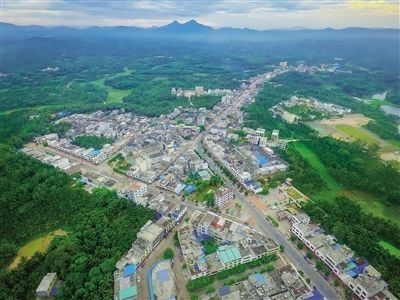
A "Red" Place-Photo by Yuan Chen, Reporter of Yangjiang Town, Qionghai City (Yangjiang Market, Le Si District)
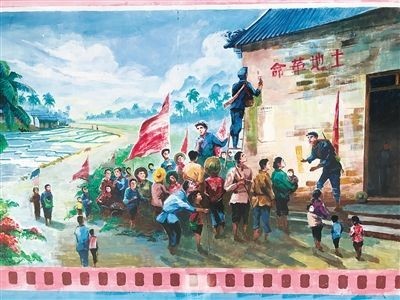
Reflecting the Land Revolution Launched by Le Four District Oil Painting Reporter Zhou Dayan Remover
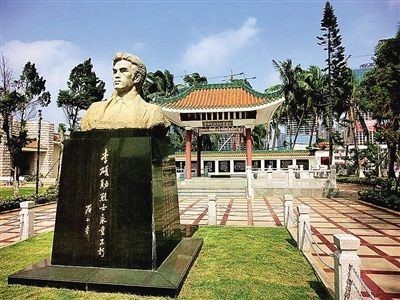
Li Shuoxun Martyrs Memorial Pavilion Photo by reporter Yuan Chen
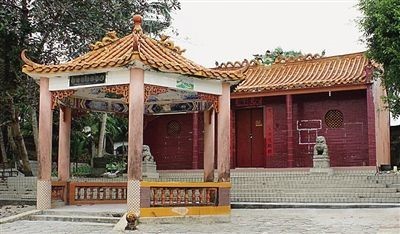
Photo by Yuan Chen, a reporter at the former site of the Second Qiongya Congress of the Communist Party of China
Today's Yangjiang Town in Qionghai City was called "Yangjiang Market in Le Si District" 90 years ago. In the eyes of Chen Jinai, former director of the Party History Research Office of Qionghai Municipal Committee, this is a "red" place.
Here, it was once the most active place for the red regime and the agrarian revolution-the first enlarged meeting of the Communist Party of China's Qiongya Special Committee was held here, and the Soviet regime spread to the whole island with this as the center, and the first agrarian revolution in Quanqiong set off a climax with this as the starting point... But it was also here, under the special historical background, that the voice of "Left" blind activism was issued, which almost led the Qiongya revolution astray.
Qiongya Land Revolution Has Advanced Consciousness and Reference Significance
In late September 1927, after the prelude to the general riot of Quan Qiongwu was opened in Coconut Village, good news of the revolution came frequently from all over the country.
As the resident of the Qiongya Special Committee, Le Si District took the lead in organizing a peasant congress and announced the establishment of the Le Si District Soviet government, marking the formal formation of the Le Si District Revolutionary Base, and also marking that the local party members and the masses have since joined in the agrarian revolution and base construction. Come in.
"The first upsurge of the agrarian revolution in Quan Qiong was set off with the four districts of Le. "Xie Caixiong, director of the Party History Research Office of Qionghai Municipal Party Committee, said that at that time, the agrarian revolution in the four districts of Le developed from general riots, burning land deeds, and fighting local tyrants to the stage of land distribution. One of the most prominent manifestations is the "Interim Measures on Land Issues" issued in January 1928.
What does the Interim Measures on Land Issues say? We choose the main points to see: 1. The land right belongs to the peasant association, and the farming right belongs to the peasants; 2. All landlords and public fields (such as ancestral rewards, etc.) except for their families to farm at their discretion, the rest will be returned to the peasant association; 3. Before the real investigation of the household registration and the re-division of the land, all the fields originally cultivated by the farmers will still be temporarily cultivated by the farmers, but the farmers; 4. All poor peasants who have not been ploughed or ploughed and do not have enough food to eat can be effectively reported to the peasant association. 5. All industries, such as gum and betel nut, will be returned to the district peasant association, which will be distributed by the district peasant association and managed by the township peasant association. 6. All debts will not be repaid, and loans will be guaranteed by the peasant association in the future......
Chen Jinai believes that the agrarian revolution in Le Si District has a certain policy level, which is mainly reflected in the introduction of this method. In terms of time, it is earlier than the "Land Law" of Jinggangshan and the "Land Law" of Xingguo, and has advanced consciousness and reference significance.
Not only that, Le Si District has also formulated land allocation principles and specific methods. For example, "Allocate the region's farmland according to the number of people in the region. Each person gets two fields, and the rest will be managed by the Soviet Union of each township in order to distribute retired soldiers and unemployed workers in the future. "The distribution of field products will be based on the township. If the distribution of field products in a township is not enough, the district government will allocate the" field products for both men and women, big and small, "after the distribution of field products, the deceased will recover the fields and the living will supply them"......
The release of this series of documents inspired the masses of Le Si District, under the leadership of the Soviet government of Le Si District, to crack down on the local tyrants and evil gentry who destroyed the agrarian revolution, and to burn down the landlord's contracts, books, instruments of torture, etc. Xie Caixiong told reporters that some township peasant associations took the initiative to organize the establishment of farmers' cooperatives, and another township peasant association proposed to get rid of all private concepts and let farmers in each township become co-producers and co-consumers under the township peasant association.
From the "Report of the Qiongya Special Committee of the Communist Party of China to the Provincial Party Committee" in April of that year, it can be seen that the Qiongya Special Committee at that time also promptly extended the specific methods of land distribution in the fourth district of Le to the Xinshi District of Le and the second and fourth districts of Wanning, making the development of the agrarian revolution in the Le and Wansu areas more solid.
"Left" errors put the Qiongya revolutionary struggle in danger.
The positive effects of the agrarian revolution not only acted on the peasants in the Soviet--
Lai Yongsheng, deputy director of the Party History Research Office of the Provincial Party Committee, gave an example. During the Zhongpingzai battle that broke out in the same year, our army, in addition to carrying out military operations, also actively carried out to the enemy "Soviet power to distribute land to farmers, implement land for farmers, and change the system of landlord exploitation of the toiling masses. Inspired by the enemy platoon leader Haiting, he led the entire platoon of soldiers to the Red Army."
However, it can be noted that in order not to bring greater resistance to the revolutionary work, although the Soviet government of the fourth district confiscated the land of the landlords, it still left a share for the landlords and their families. This is contrary to the requirement of the Guangdong Provincial Party Committee that "land shall not be allocated to the families of landlords", which makes the Guangdong Provincial Party Committee have a misunderstanding of the Qiongya Special Committee.
From February 18 to 21, 1928, the Second Congress of the Communist Party of China Qiongya was held in Le Si District. Guangdong Province appointed Li Yuan and Huang Yong to attend the meeting. Lai Yongsheng said that the conference discussed and made resolutions on issues such as riots, political power, land distribution, movement of workers and soldiers. Due to the influence of the "left" risk-taking erroneous ideas, Li Yuan and Huang Yong did not know much about the real situation of the Qiongya Revolution, but only conveyed the criticism of the Guangdong Provincial Party Committee on the Qiongya Revolution: "There are still many defects, and the policy of the agrarian revolution has not been resolutely implemented," no real (armed) riots can be seen, "the old military speculation method" and so on.
Before the meeting began, the Guangdong Provincial Party Committee had proposed that "since the objective environment of Qiongya has the possibility of fully developing the riots, the special committee should have a detailed plan to complete the riots on the whole island in a short time and eliminate the reactionary forces on the whole island", and issued instructions that "we must immediately make every effort to mobilize the riots of the masses and complete the revolution on the whole island", it is even argued that the plan "should be realized within two months at most".
As a result, the Congress made a resolution to "seize the whole Qiongya regime" before it was mature, and decided to carry out a major riot in Qiongshan, Wenchang, Haikou and Fucheng, so that the enemy could not take full account of it, so that our army could seize the counties on the east and west roads, and then rendezvous with the revolutionary forces of Qiongshan and Wenchang, marching towards Haikou and Fucheng, and finally seizing the armed regime of the whole Qiong.
In fact, Li Yuan also realized that the revolutionary struggle in Qiongya was still in a difficult period. In his report to the Guangdong Provincial Party Committee, he specifically mentioned that in Qiongya, not only the military supplies and medicines urgently needed in the war were not available, but also the daily necessities such as matches, kerosene, pens, ink, and paper were also difficult to buy. More importantly, in terms of military affairs, among the revolutionary armed forces in Qiongdong County at that time, "there were only 100 guns, of which 92 were long guns and 8 were short guns, and the bullets were 200 multiple".
Obviously, the Red Army of Qiongya Workers and Peasants was not ready to seize the armed regime of Quan Qiong.
In a treacherous situation, I firmly believe that "the future of the revolution is bright"
Although the situation was not optimistic, under the repeated requirements of the Guangdong Provincial Party Committee, the Qiongya Special Committee had to continue to organize siege riots. As a result, the Red Army of various ministries fought hard and consumed a lot of revolutionary forces. At this point, the Qiongya Special Committee has felt that it is difficult to complete the goal of capturing Quan Qiong, so it reported to the Guangdong Provincial Party Committee to abandon the plan to develop to Haikou and turn to Ya County.
Lai Yongsheng said that this correct decision, which was in line with the reality of the revolution, was regarded by the Guangdong Provincial Party Committee as a "defeatist concept of avoiding the enemy" and even more wrong ". Even after the Qiongya Special Committee revised its plan and proposed the strategy of "taking Ding'an Mountain as the base center, merging the east, middle and west roads to realize the east road of separatism and force the city", it was still evaluated by the Guangdong Provincial Party Committee as "no arrangement to seize the whole island", forcing the Qiongya Special Committee to issue a riot mobilization order aimed at attacking the city again and expand the riot in the east, middle and west roads.
Fortunately, although the Second Congress of the Communist Party of China Qiongya made a decision to break away from the reality of Qiongya, it basically made resolutions on mobilizing farmers to carry out rural struggles, establishing revolutionary political power, distributing land, and consolidating and expanding rural revolutionary base areas. is correct. After Li Yuan left, the Qiongya Special Committee, with Wang Wenming as its secretary, relied on its rich experience in revolutionary struggle, and in the process of expanding the riot, it still mobilized the peasants as much as possible to resist the joint defense team, consolidate the revolutionary base areas, and accelerate the construction of Soviet power. And continue to carry out the agrarian revolution and distribute land to the masses. Lai Yongsheng believes that these practices, so Joan
The Cliff Revolution was able to continue in a dangerous situation.
In June of the same year, in order to further promote the Qiongya revolutionary work, the Guangdong Provincial Party Committee sent Huang Xuezeng, a member of the Provincial Party Committee and an inspector, to guide Qiong. After Huang Xuezeng arrived in Qiongya, he held a meeting. First, he reorganized the Qiongya Special Committee and asked Wang Wenming to withdraw from the Qiongya Special Committee and no longer hold the post in the party. Instead, he served as the chairman of the Qiongya Revolutionary Committee and was responsible for preparing for the establishment of the Qiongya Soviet government.
Lai Yongsheng said that on the surface, this meeting seems to be a simple reorganization of the Special Committee, but in fact the impact of this is far more than that. At this meeting, when the enemy's "encirclement and suppression" is becoming more and more rampant, the resolution of "removing the Special Committee to Qiongshan within one month" was not correct.
After the leadership of the QiongYa Special Committee withdrew from the base area, what should the soldiers and civilians do? Where will the QiongYa Revolution go? Wang Wenming, who is familiar with the development of the QiongYa Revolution and the current situation, firmly believes: "The current situation is dangerous, but the future of the revolution is bright, we must fight a bloody road, highlight the siege, open a new situation, we must adhere to the rural struggle. "To this end, he and Huang Xuezeng launched a fierce argument, and then made a clever choice for the Qiongya Revolution to retain the fire......
Revolutionary Site
Li Shuoxun Martyrs Memorial Pavilion
The Li Shuoxun Martyrs Memorial Pavilion is located at No. 39 Xunting Road, Qiongshan District, Haikou City. It is a national key martyrs memorial building protection unit. It is the first batch of 100 patriotic education bases in the country. The Propaganda Department of the CPC Central Committee and the Central Civilization Office funded the renovation of the patriotic education base project. Hainan Youth Revolutionary Traditional Education Base. In front of the pavilion stands a granite statue of martyr Li Shuoxun, 1.2 meters high, with a base 2 meters high, inscribed on the front by Deng Xiaoping "martyr Li Shuoxun will live forever", and on both sides of the base are engraved with Li Yimeng's "biography of martyr Li Shuoxun" and the "suicide note" written by martyr Li Shuoxun to his wife Zhao Juntao ".
Qiongya Workers and Peasants Red Army
In February 1928, the Qiongya Workers' and Peasants' Revolutionary Army was reorganized into the Qiongya Workers' and Peasants' Red Army, and the Qiongya Workers' and Peasants' Red Army Headquarters was established, with Feng Ping as the commander-in-chief. In August of the same year, the Qiongya Soviet government was established, with Wang Wenming as its chairman.
In May 1929, the independent regiment of the Red Army of Qiongya Workers and Peasants was established in Murui Mountain, with Liang Bingshu as its head. In August 1930, the Independent Regiment of the Red Army was expanded into the Independent Division of the Red Army (later officially named the Second Independent Division of the Chinese Workers' and Peasants' Red Army), with Liang Bingshu as the division commander and Yang Xuezhe as the political commissar.
August 08, 2017 Source: Hainan Daily
Next Page
Next Page

Address: Buildings 4 and 5, Kechuang Huigu Park, Hongshun Road, Huaming High-tech Zone, Dongli District, Tianjin
Tianjin High-end Equipment Research Institute, Tsinghua University, Copyright
Website Construction: China Enterprise Power Tianjin
sweep
Pay attention to the official WeChat public number