




PARTY BUILDING
party building work
Xu Haidong's Most Willing to Listen to Mao Zedong's Lectures
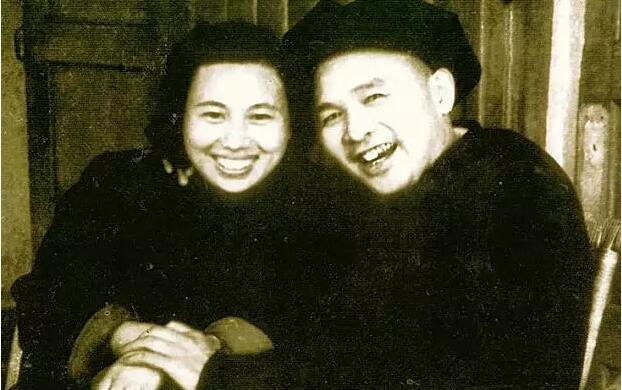
Xu Haidong was born in 1900 in Xiadian, Huangpi County, Hubei Province (now Dawu County). Among the ten generers of the Republic, he was the one with the most bitter background and the one with the most wounds in the battle. When Xu Haidong first arrived in the revolutionary ranks, he also brought some habits of drinking and beating and scolding soldiers in the old army, but he actively studied, strictly demanded himself, and quickly corrected his shortcomings.
Once, Xu Haidong drank half a kilo of white wine without food. After getting drunk, the enemy almost got captured. After being criticized by the party organization, he made a profound examination and gave up drinking with great effort.
During the Long March, it was raining once and the troops were tired and hungry. Although they received the order to set out, many cadres and soldiers could not get up. In a hurry, Xu Haidong picked up a stick and started stabbing and beating from the head of the regiment and the political commissar. He drove more than 200 people up and on the road in one breath.
Some of the wounded on the road were not carried. He walked five miles despite the fact that he did not eat and was so hungry that he pressed his chest against his back. He carried the wounded in the rain. His actions led the troops out of the danger of being encircled and destroyed by the enemy. But afterwards, Xu Haidong has repeatedly self-examination: the warlord residual style to change!
Xu Haidong is a senior general of the Communist Party of China who grew up from the rural poor kiln workers. Although his cultural foundation was weak and his physical condition was not very good, Xu Haidong still insisted on entering the Marxism-Leninism Institute and systematically studied revolutionary theoretical knowledge. In private, he always said: Mao Zedong's lectures are my favorite and most willing to listen!
2017-07-04 Source: Dongli Party History

Address: Buildings 4 and 5, Kechuang Huigu Park, Hongshun Road, Huaming High-tech Zone, Dongli District, Tianjin
Tianjin High-end Equipment Research Institute, Tsinghua University, Copyright
Website Construction: China Enterprise Power Tianjin
sweep
Pay attention to the official WeChat public number