




PARTY BUILDING
party building work
Zhou Enlai's sixth uncle, Zhou Songyao
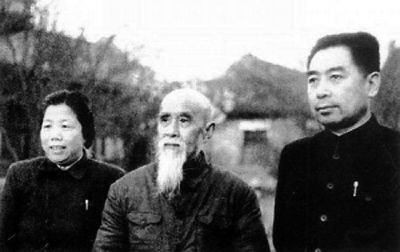
Zhou Songyao's character is Jizhi, Hao Kaoru. He was born in Xu Ma Xiang in Huai 'an City during the reign of Qing Dynasty. He was the third son of Zhou Enlai's second uncle's grandfather Zhou Junang. He ranked sixth among Zhou's peers, so Zhou Enlai always called his sixth uncle affectionately. In 1897, when Zhou Songyao was 25 years old, he won the 35th Juren of Guangxu Ding Youke.
Zhou Songyao did not ascend to the heavens in one step after the middle-class election. It was only on the recommendation of his second uncle Zheng Renshou that he went to the Yamen of the Governor of Water Transport to be a copywriter. In 1908, Zhou Songyao was promoted to "Cao Du" general copywriter only after his uncle Zheng Renshou returned to his hometown. Later, the Governor's House of Canal Transport was abolished by the Qing government and changed to Jianghuai Governor and Jiangbei Governor's House. The prefect of Jiangbei was Wang Shizhen, Yuan Shikai's close friend. Wang Shizhen highly regarded Zhou Songyao and strongly recommended him, finally making him appointed as the assistant minister of the postal communication department in charge of the road administration department. After taking office, Zhou Songyao made great achievements. The New Language Forest recorded: "Zhou Jizhi entered Zhejiang with his ministry and investigated and handled the bridge workers in Song, Shanghai, Hangzhou and Ningbo. He was impartial and selfless. "This record gives a high evaluation of Zhou Songyao. In the early years of the Republic of China, Zhou Songyao also won the second-class Wen Hu Medal and the second-class Jiahe Medal commended by the National Government.
In 1915, Zhou Songyao resigned and returned to Huai 'an because he did not agree with Yuan Shikai's title as emperor. In 1929, Zhou Songyao moved to Yangzhou with his family. Soon after moving to Yang, Zhou Songyao participated in the "Yechun Post Society" hosted by Ling Hongshou at that time because of his reputation ". Soon after the July 7th Incident in 1937, Yangzhou fell. Due to his talent and reputation, the Japanese and puppet parties repeatedly asked him to come out of the mountain and asked him to serve for the "Greater East Asia Co-Prosperity" and the "goodwill" between China and Japan. Zhou Songyao remained unmoved and insisted on living in seclusion. When he was most nervous, he had to live in the countryside with his family to avoid the entanglement of the Japanese puppet. In 1946, when he learned that his seven nephew Zhou Enlai had led the Chinese Communist Party's peace talks delegation to Nanjing, he was immediately overjoyed and immediately sold some household items to make up enough money to rush to the Chinese Communist Party delegation office in Meiyuan New Village, Nanjing to meet with Zhou Enlai.
Zhou Songyao in half a life of leisure life also collected a large number of antiques, ancient jade, ancient calligraphy and painting, ancient coins and so on. At the beginning of the founding of New China, the War to Resist US Aggression and Aid Korea broke out. Zhou Songyao donated a landscape album painted by Wang Yun in the early Qing Dynasty, which he had collected for decades and had been handed down for more than 200 years, to the country through the Central Research Center of Literature and History, in order to buy airplanes, artillery and other weapons after sale. Later, because there was no cultural relic store at that time, it could not be sold. Although the move was unsuccessful, it showed Zhou Songyao's patriotic feelings. In September 1953, when he was critically ill, he bequeathed more than 20 pieces of fine works he had collected and watched all his life to his nephew Zhou Enlai, who gave all his last words to the state before his death.
"A hundred battles for democracy". In October 1949, New China was founded. Zhou Enlai immediately wrote to his sixth uncle, inviting him to come to Beijing to discuss the matter. Zhou Songyao then boarded a ship from Yangzhou and took a train to the capital via Zhenjiang, where he met his seventh nephew Zhou Enlai at the Xihua Hall in Zhongnanhai. As soon as they met, Zhou Enlai said happily to him: "This time, we will come here, then we will settle down."
Zhou Enlai often invited Zhou Songyao to Xihua Hall to ask him about the establishment, functions, staffing and salary arrangements of government agencies at all levels during the Qing Dynasty and the Republic of China, so that the people's government could adopt or abolish them or revise them. Zhou Songyao explained patiently one by one. He was gratified that he was always doing something, while Zhou Enlai, who had always been modest and prudent, had a very good "teacher" who could consult nearby at any time ".
In 1951, during the preparation of the Central Museum of Literature and History, with the approval of recommend Qi Yanming and Zhou Enlai, executive deputy secretary general of the State Council, Zhou Songyao was formally hired as the first batch of librarians of the Central Museum of Literature and History in June of the same year. The first batch of people hired to the Central Research Institute of Literature and History were highly respected masters and celebrities in the late Qing Dynasty and the Republic of China, such as Fu Dingyi, Zhang Shizhao, Qi Baishi, Chen Banding, etc. They were all arranged to take care of the nature, so Zhou Enlai said to his sixth uncle before hiring Zhou Songyao: "During the Republic of China, you had two benevolent policies, and the people should not forget them. First, you quelled a warlord war in Jiangsu and Zhejiang provinces on the appointment of Secretary-General Li Chun, the governor of Jiangsu, and saved people's lives and property from war. Second, when Yuan Shikai proclaimed himself emperor, as a secretary of his general's office, you did not go with him. This is a politically far-sighted approach. Now that the people are the masters of the country, you should consider doing something for the people."
Zhou Enlai arranged to employ Zhou Songyao as the first batch of librarians of the Central Literature and History Research Center just out of consideration of the above two moral policies of the six uncles and his many years of experience in studying cultural relics and ancient books. According to the information we currently have, this is also the only time that Zhou Enlai directly hired his own relatives during his 26 years as prime minister of a country. It is a model of not avoiding relatives.
May 05, 2017 Source: Learning Times
Next Page
Next Page

Address: Buildings 4 and 5, Kechuang Huigu Park, Hongshun Road, Huaming High-tech Zone, Dongli District, Tianjin
Tianjin High-end Equipment Research Institute, Tsinghua University, Copyright
Website Construction: China Enterprise Power Tianjin
sweep
Pay attention to the official WeChat public number