




PARTY BUILDING
party building work
Guns escort Sun Yat-sen Yang Hill Gate Seven Jie write legend
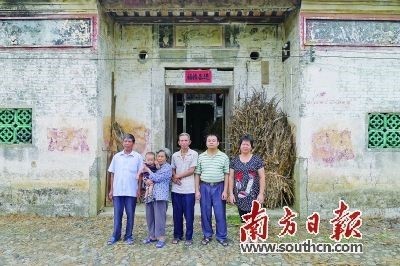
Qiu Kan's descendants took a photo in front of the old house where Qiu Kan lived as a teenager. Information picture
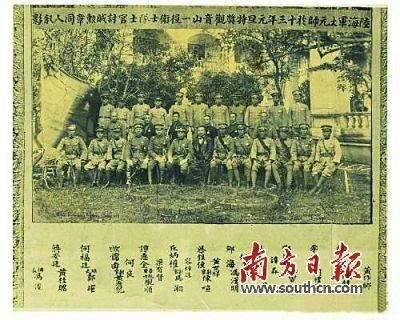
A group photo of the commended guards who participated in the Battle of Guanyin Mountain, retained by Qiu Ketang and Qiu Zifa father and son. Secondary Supplied by Qiu
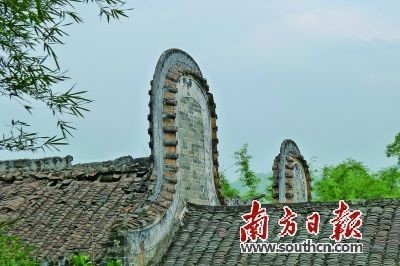
A corner of the former residence of the "Seven Guards" of the Qiu family. Information picture
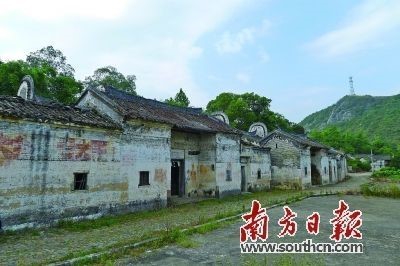
The former residence of Qiu's "Seven Guards" is an architectural model of the integration of Guangfu and Hakka traditions. Information picture
Opening
Revitalize China and build dreams together.
A century ago, Dr. Sun Yat Sen, a great national hero, a great patriot and a great pioneer of China's democratic revolution, took the lead in putting forward the slogan of "revitalizing China", which opened the dream journey of the Chinese people since modern times. Before overthrowing the monarchy and opening up the atmosphere, people with lofty ideals responded accordingly. There were people with lofty ideals who gave up their lives for the country, overseas Chinese who donated money to help, and comrades-in-arms who gave advice... From the middle-class rich to the hard work of peddlers, from donating money and gifts to doing things by themselves, the dream of a powerful country always made Chinese people enthusiastically.
A hundred years of wind and cloud, the revitalization of the dream. In order to commemorate the 150 anniversary of Sun Yat Sen's birth, Nanfang Daily · Zhongshan observation will launch a series of reports on the 150 anniversary of Sun Yat Sen's birth, focusing on the dissemination and promotion of Sun Yat Sen's culture and spirit in the contemporary era, and with the narration of Dr. Sun Yat Sen and his followers as the main line and historical dialogue, Further publicize and carry forward Dr. Sun Yat Sen's patriotic thought, revolutionary will and enterprising spirit.
The autumn wind skips over the golden late rice, and the ripples add autumn color to Shijiaotang Village, Qigong Town. This is a remote mountainous area in the northwest of Guangdong, Guangdong, Guangxi and Hunan. It is located at the southern foot of Mengzhuling Mountain in the Nanling Mountains, 27 kilometers south of Yangshan County, Qingyuan City. Standing in the distance of the village committee, at the end of the rice field is a group of magnificent and simple wok-ear houses-the former residence of Sun Yat-sen's personal "Seven Guards.
Open the navigation map, from Cuiheng Village, Nanlang Town, Zhongshan City to Shijiaotang Village, Qigong Town, Yangshan County, the shortest driving distance is 261 kilometers, 4 hours and 7 minutes by car. Time and space span over a hundred years, the anti-Qing trend of thought surging, the wind and cloud treacherous. Around the thirty-third year of Guangxu (1907), Qiu Yuru, who went out from Shijiaotang Village, met Deng Zeru, the head of the Nanyang Branch of the Tongmenghui. The acquaintance of these two people completely changed the fate of the Qiu family in Qigong Town, which opened the legendary prelude of the Qiu family's "Seven Guards" personal guard Sun Yat-sen.
Margin
Practiced a hand in grappling and was recommended as a "presidential guard"
From provincial highway line 114 to line 260, the traffic from yangshan county town back to shijiaotang village has been very convenient. Nevertheless, the winding mountain road still adds a lot of strange risks to this journey. At that time, Qiu Yuru and Qiu Xidang crossed these mountains and went to Malaysia to make a living, saved a lot of wealth, and became supporters and followers of the democratic revolution.
"The ancestor's bond with Sun Yat-sen, the founding father, began with Qiu Yuru and Qiu Xitang. "Qiu Jifa is a Chinese teacher. Out of respect for his ancestors, he has collected a lot of historical materials about the" Seven Guards "of the Qiu family. And his grandfather was Qiu Kan, one of Sun Yat-sen's personal guards.
The acquaintance with Deng Zeru opened Qiu Yuru and Qiu Xidang's profound understanding of the democratic revolution. Influenced by the idea of democratic revolution, these two descendants of Qiu donated a large amount of money to the democratic revolution and sponsored Sun Yat-sen's revolution. After joining the League led by Sun Yat-sen, Qiu Yuru actively promoted the theory of the Three People's Doctrine, serving as a communicator and fundraiser to raise funds for revolutionary activities.
In May 1921, Sun Yat-sen formed the government of the Republic of China in Guangzhou and served as a very large president. At that time, when the Guards were in urgent need of talents for the establishment of the Guangzhou General Marshal's Mansion, Qiu Yuru, who was the general affairs officer of the Kuomintang branch in Guangzhou, thought of his nephews in the clan.
"At that time, all the people who could be the guards of the marshal's mansion were one in a hundred. Many of them had studied abroad and could drive cars and ships. "Qiu's father, Qiu Ketang, is the second son of Qiu Kan, who is 80 years old this year. The old man is in good health. Now he lives in Yangshan County with his son Qiu Jifa, but he has to go back to the village every once in a while to chat with the villagers. Whenever someone goes down to visit the former residence of the Seven Guards, he is also willing to accompany him, using Mandarin with a strong Hakka accent, trying to restore the deeds of the ancestors he heard when he was a child. Although he had been farming at home all the time, Qiu Kan, who was 27 years old at that time, was smart, capable and generous in character. He was highly valued by Qiu Yuru. He was recommend to be Mr. Sun's guard together with his brother Qiu Bingquan in the clan. The pragmatic and industrious Qiu Kan soon became appreciated and became Sun Yat-sen's personal guard.
Legend
Yuexiu mountain experienced the rain of bullets and Qiu's family made "seven outstanding"
So far, the descendants of the Qiu family in Shijiaotang Village have talked about nothing more than the personal experience of Qiu Kan and Qiu Bingquan who gave up their bodies to escort Sun Yat-sen and Soong Ching-ling out of danger.
In June 1922, Chen Jiongming defected and shelled Yuexiu Mountain Presidential Palace. In the process of leaving, Sun Yat-sen encountered rebels many times. 62 guards, including Qiu Kan, were fearless in the face of danger. After two days and nights of fierce fighting with the rebels, they risked their lives to escort Sun Yat-sen to the "Yongfeng Ship".
Subsequently, Qiu Kan, Qiu Bingquan and others returned to the presidential palace and escorted Soong Ching Ling to retreat. At that time, the two took turns to carry Soong Ching Ling to retreat, once again experienced a hail of bullets, and finally completed the task, sending Soong Ching Ling to the warship at Humen.
because of this, qiu jiawei became famous in the first world war ". Later, Qiu Kan introduced his brothers Qiu Shifa, Qiu Shi, Qiu Yuting, Qiu Xixuan, Qiu You and others to Sun Yat-sen's recommend. The seven brothers of the Qiu family all became Sun Yat-sen's personal guards.
Seven "presidential guards" emerged from the same village, and the seven outstanding Qiu family members became famous for a time.
"In fact, there are more than seven. "Qiu Jifa said," Qiu Kan's cousin Zou Hai was also one of the recommend guards at that time, with a total of eight."
With the passage of time, there are almost no relics related to Sun Yat-sen left by our ancestors, and many letters have been destroyed. Referring to the Yuexiu Mountain Incident escorting Meritorious's gold medal, Qiu Xinpei, Qiu's grandson, recalled seeing it at home as a child. "When my grandfather returned to his hometown, he brought back Sun Yat-sen's bronze statue and commemorative medals. Many of them were lost, and some are still left. "Qiu Xinpei doesn't have much idea about whether these old things are valuable or not." Let's think about them as things handed down from the family."
Guardian
Rescuing the Former Residence Huai Ancestors Qiu Clan Continues the Chapter
Although the history is far away, the stories and glory left by the "Seven Heroes" to the clansmen have not faded by the passage of time. The descendants of Qiu Jiawei, including Qiu Jifa, are the guardians and disseminators of the "Seven Heroes" legend.
Qiu Jifa is currently working as a Chinese teacher in a school in Yangshan County. For so many years, he has been systematically collecting and sorting out documents and materials about family history. Almost the media reports on the history of the Qiu family cannot get around this guide.
"Although they are guards, the sense of trust between them and Sun Yat-sen and Soong Ching Ling can be said to surpass guards. "Qiu Jifa interpreted the relationship between his ancestors and Sun Yat-sen in such a way that his tone was full of pride." The Seven Guards followed Sun Yat-sen and Soong Ching-ling all their lives, were loyal and made contributions to the democratic revolution. Sun Yat-sen and Soong Ching-ling's concern for the guards also went beyond work and gave them a lot of help in life. I think this kind of trust is also their friendship in the revolution together. Such unity and belief also made the legend of that era."
However, in recent years, the aging and collapsing former residence of the Seven Guards has also worried Qiu. "If the former residence is gone, the carrier of memories will be missing a lot. "In order to appeal to the community's attention, Qiu Jifa often works with other ethnic groups to raise more resources for the maintenance of their former homes. In the first half of this year, the maintenance project of the former residence of Sun Yat-sen's seven guards was successfully opened as the construction project of the main village of Guangdong provincial-level new rural continuous demonstration film, and the project was highly valued by the local government. Qiu's descendants, including Qiu Jifa, Qiu Gufeng, Qiu Xinpei, Qiu Kepai and so on, jumped for joy.
Not only the descendants of Qiu, but also the villagers of Shijiaotang have great support and high hopes for this project, and actively cooperate with the integration and repair work proposed by the government. Qiu Jifa even thought of using the maintenance project as an opportunity to establish a brand system of agricultural products in the village and even the town, and start the local green agricultural and sideline products of the former residence of the Seven Guards. "To keep up with the supporting facilities, former residence tourism has become a brand to attract tourists and benefit everyone. "Qiu Jifa also thought of the current popular" online and offline "sales model," traveling to the former residence is an offline experience, which can be driven by farmhouse entertainment. We can also consider developing e-commerce and using the overall brand of the former residence of the seven guards to promote and sell our characteristic agricultural products."
■ Former Residence Visit
The wok ear house is renovated to return the old style.
Is it accidental or inevitable that a small village has seven "presidential guards" of the same race?
Walking into the former residence of the Seven Guards-Wok Ear House Group, the historical heaviness under its carved railing and painted buildings outlines the cultural heritage of this place one by one.
The Wok Ear House Group in Shijiaotang Village is the concentrated location of the former residence of the Seven Guards, covering a total area of 16000 square meters, which is rare in northern Guangdong.
To maintain the characteristics of Hakka enclosed houses that focus on self-defense and are compatible with the noble style of Guangfu Wok Ear House, which is the biggest feature of Wok Ear House Group and an architectural model of the integration of Guangfu and Hakka traditions. According to legend, Qiu Ruxiang, the ancestor of the Qiu family, was founded in Shijiaotang in 1772 and was the richest man in the area. According to the genealogy of the village, this group of wok-ear houses was built during the Jiaqing and Daoguang years of the Qing Dynasty. It was built by Qiu Ruxiang specially for the five 4. of the 2. 3. to prepare for the separation of their families according to Hakka customs.
From northwest to southeast, the four wok-ear houses are conjoined into a nine-hall and eighteen-well Hakka enclosed house. Walking into the old house, we can see that there are mud reliefs on the outer wall and murals on the inner wall. The lifelike wood carvings can still be seen the exquisite skills at that time. In 2007, the former residence of Sun Yat-sen's seven guards was approved as a key cultural relic protection unit in Yangshan County. In October 2014, Yangshan County successfully applied for the construction project of Guangdong provincial new rural demonstration film, and has applied for the first batch of famous historical and cultural villages in Guangdong Province.
Profound culture has a long history. It is reported that Qiu Ruxiang's fifth son, Qiu Zixin, was a 33-member of the Renwu Branch in the second year of Daoguang. At that time, Ruan Yuan, who was honored as one of the governors of Guangdong and Guangxi in the Qing Dynasty, presented the plaque "Wen Kui", which won great honor for Yangshan County. However, with the passage of time, the interior of the weathered wok-ear house group has begun to collapse, and most of the descendants of the Qiu family who used to live here have moved away.
Qiu Kopai, general counsel of the Qiu Family Council, lamented that the former residence of the Seven Guards still looks magnificent on the surface, but in fact it is seriously damaged and in urgent need of protection.
In May 2016, as the main village construction project of the Guangdong provincial-level new rural contiguous demonstration film, the bidding for the maintenance project of the former residence of Sun Yat-sen's Seven Guards was successfully opened. The local government proposed that cultural relics such as the former residence of Sun Yat-sen's Seven Guards, the Sifang Besieged City, and the General Building should be repaired according to their original architectural styles and characteristics, and the surrounding environmental facilities should be improved, and the neighboring Tan Village and Dahegang Village, etc. The ancient villages and ancient buildings are united to build a historical and cultural boutique tourist route.
At present, the engineering team has entered the construction site. Reporters at the scene to see that the operating vehicles began to carry soil and sand, repair works are underway. However, compared with the size of the former residence and the depth of the damage, the government's funding at this stage is not enough to fully restore the original appearance. "If social funds can participate in the development of the former residence, it is of great significance to excavate and inherit this historical and cultural memory. We hope that more forces can participate. "qiu jifa appealed.
■ Seven Guards Sketch
Qiu Kan
(1893-1973)
The original name can. He is wise and generous. On New Year's Day in 1924, at the awards ceremony held at the Grand Marshal's Mansion in Guangzhou, he was awarded a gold medal and a medal each by Sun Yat-sen and worn by Soong Ching-ling for his escort in the Yuexiushan Incident, and was promoted to the squadron leader of the Guard Brigade. After the fall of Nanjing, he returned to Guangdong and worked at Mei Lu Station at Guangdong Highway. After liberation, he retired and settled in Guangzhou.
Yau Bingquan
(1894-1925)
The list of celebrities, the word Bingquan. On New Year's Day in 1924, at the awards ceremony held at the Grand Marshal's Mansion in Guangzhou, he was awarded a gold medal and a medal by Sun Yat-sen and worn by Soong Ching-ling for his escort in the Yuexiushan Incident. At the same time, he was promoted to the first squadron of the Guard Brigade. small captain. After Sun Yat-sen's death in 1925, he died of a serious illness due to labor injuries at the age of 31 when he was reorganized by the Weitu.
Qiu Shifa
(1906-1973)
The family members call it "prudent and kind". Young diligent and studious, in Yangshan County, high school students. He graduated from the Whampoa Military Academy and the senior class of the Central Military Training Corps, and became a lieutenant general in the army.
Humble
(1892-1969)
When the name is available. In 1925, Sun Yat-sen died in Beijing. He was ordered to go north to guard the spirit and then escorted Sun Yat-sen's coffin to be buried in Purple Mountain, Nanjing. He died at home in 1969, aged 70.
Qiu Yuting
(1899-1971)
Also known as can. He was a clerk and special agent of the Guard Corps of the Army and Navy Generals. After liberation, for the Chengdu food sector workers. He died in 1971 at the age of 72.
Qiu Xixuan
(1889-1957)
When he was young, he worked in farming and studied martial arts at leisure. Former Northern Expedition National Technology (martial arts) coach. He died at home in 1957, aged 68.
Qiu has
(1902-1969)
The original name has. Family farming, less private school, good at monkey boxing, can fire two shots. After Sun Yat-sen's death, he was ordered to go north to the wake. After the liberation has been working in Nanjing Zhongshan Mausoleum. He died in 1969 at the age of 67.
Reporter Luo Lijuan trainee reporter Wang Qian
Source: Southern Daily

Address: Buildings 4 and 5, Kechuang Huigu Park, Hongshun Road, Huaming High-tech Zone, Dongli District, Tianjin
Tianjin High-end Equipment Research Institute, Tsinghua University, Copyright
Website Construction: China Enterprise Power Tianjin
sweep
Pay attention to the official WeChat public number