




NEWS
News Center
On February 1, 2023, Liaowang interviewed academician Luo Jianbin of the Chinese Academy of Sciences on the topic of "Super Sliding Promoted Green Development of Manufacturing Industry"
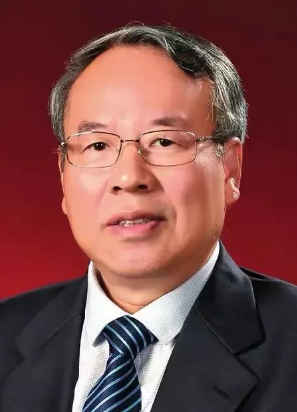
◇ "Doing scientific research is the best way for me to contribute to my country, and it is also a great honor. To make the Chinese do their best in the field of tribology, we still need to work harder."
Super-slip is one of the fastest growing directions in the field of tribology in recent years. The friction coefficient of lubricating oil is 0.01~0.1, and the friction coefficient of super slip is more than one order of magnitude lower than that of lubricating oil, reaching 0.001 order of magnitude or less. Super-slippery is another contribution of the field of tribology in the history of human civilization
Wen Yu | "Liaowang" Newsweek reporter Yu Yongshun
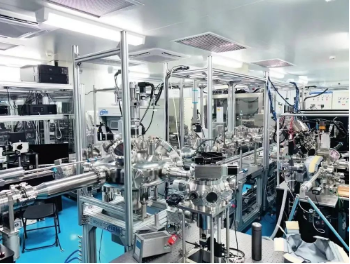
National Key Laboratory of Interface Science and Technology for High-end Equipment, Tsinghua University
(taken in 2020) by respondents
Friction can be seen everywhere in life. Some applications require increased friction, such as brake pads for automobiles; others require reduced friction, such as bearings in mechanical equipment.
China is a big manufacturing country, and the use of machinery and equipment will produce friction, which is often accompanied by wear when friction occurs. Friction and wear will increase energy consumption and bring losses to equipment, devices and materials. The report of the 20th National Congress of the Communist Party of China proposed to promote the high-end, intelligent and green development of the manufacturing industry. Through scientific research in the field of tribology, reducing the friction coefficient can effectively reduce wear, which is one of the important ways to promote the high-end and green development of manufacturing industry.
Reducing the energy consumption of motion friction, improving accuracy, reducing noise and prolonging life is a major problem in the field of friction and even in the field of materials. In recent years, China has made a series of important breakthroughs in the field of tribology. These contributions are inseparable from a scientist who has devoted himself to the field of tribology. He is Luo Jianbin, an academician of the Chinese Academy of Sciences and former director of the State Key Laboratory of Tribology at Tsinghua University.
For more than 30 years, Luo Jianbin led the team to make unremitting efforts to develop a new type of nano-scale lubricating film thickness measuring instrument. For the first time in the world, the concept of thin film lubrication state is proposed, which fills the theoretical gap between elastic fluid dynamic pressure lubrication and boundary lubrication. Discovered new super-slip system and super-slip mechanism, boldly explored super-slip and polishing problems in the field of industrial application, and solved a series of technical problems for industrial development.
"People will find it hard to swallow when they take medicine, it's very uncomfortable. We will use ultra-slippery research in the future, and we will make a lubricating film on the surface of the pill, and it will be smooth when swallowing the medicine." Luo Jianbin uses this small example of life to explain the profound science. At present, Luo Jianbin's team has reached the forefront of the world in the research of super-skating, promoting the industrial application of super-skating.
Recently, a reporter from Outlook Newsweek interviewed Academician Luo Jianbin to see how to help the green development of the manufacturing industry through super lubrication.
Solving Friction Problems to Help Green Development
Outlook: How did you get along with tribology? What were the results of previous research?
Luo Jianbin:In the second year of the resumption of the college entrance examination, I was admitted to the Department of Materials of Northeastern University. After graduation, I entered Xi'an Cable Factory as a technician. A process for making cables is called drawing copper wire. Copper wire drawn in summer is easy to oxidize and change color and become waste products. My colleagues and I work together to calculate the test, in order to control the oxidation of copper wire, reduce the temperature of copper wire lubrication. Since then, I have developed a keen interest in tribology.
In 1985, I was admitted to the Department of Metallurgy, Xi'an University of Architecture and Technology, and began to study tribology systematically. In order to engage in tribology research more professionally, in 1991, I was admitted to the Department of Precision Instruments and Mechanics of Tsinghua University, entered the State Key Laboratory of Tribology, and studied under the famous tribology expert Academician Wen Shizhu. Later, Academician Wen Shizhu went abroad to investigate and learned that nano-scale lubricating film testing technology was a brand-new international frontier field at that time. He gave me the task of developing this technology.
We crossed the river by feeling the stones and finally developed a nano-scale film thickness measuring instrument, which laid the foundation for the subsequent theoretical research on film lubrication. This measuring instrument won the third prize of the National Invention Award in 1996. Our team also proposed a new lubrication state-thin film lubrication, which fills the gap between elastic fluid dynamic pressure lubrication and boundary lubrication, and won the second prize of the National Natural Science Award in 2001.
Doing scientific research is the best way for me to contribute to the country, and it is also a great honor. To make the Chinese do their best in the field of tribology, we still need to work harder.
Why is tribology so important?
Luo Jianbin:Mechanical friction, wear and lubrication are collectively referred to as tribology, which is an interdisciplinary subject involving machinery, materials, physics, chemistry and other disciplines. The application surface involves industrial mother aircraft, aircraft, vehicles, etc.
Friction and wear consume about 30% of the world's disposable energy, causing huge energy waste and the loss of equipment, devices and materials. The structure of GDP varies from country to country, and the resulting property losses vary from year to year as a percentage of GDP, typically in the range of 2 to 7 per cent.
China is a big manufacturing country, but the service life of mechanical equipment is short, and there are many low-end and high-energy-consuming equipment. The waste caused by friction and wear is huge every year. Solving such problems is directly related to the green development of the country and the world.
SUPERSLIP PICKED COEFFICIENT OF FRICTION INFINITE
"lookout": in the field of super skating, you lead the team to achieve what breakthrough?
Luo Jianbin:Super-slip is one of the fastest developing directions in the field of tribology in recent years. The friction coefficient of lubricating oil is 0.01~0.1, and the friction coefficient of super slip is more than one order of magnitude lower than that of lubricating oil, reaching 0.001 order of magnitude or less. As a transformative technology that can reduce friction energy consumption and wear rate by several orders of magnitude, super-slip is another important contribution in the field of tribology in the history of human civilization.
Super slip is divided into liquid super slip, solid super slip and solid-liquid coupling super slip. The earliest liquid super slip was discovered by British physicist Kapicha in 1938, that is, when helium is about minus 271 ℃, the friction in the fluid disappears. However, it is of little significance for reducing friction energy consumption, because the energy required for cooling is far greater than the general friction energy consumption. Therefore, how to achieve ultra-slippery at room temperature or even higher temperatures has become the goal of people's pursuit. In the 1990 s, Professor Klein of Israel achieved ultra-slippery between mica surfaces by hydration in aqueous solutions of charged polymer molecules. Professor Kato's team in Japan added pure water between the ceramic friction pair for 2 hours, and also achieved super-slip.
Our team's research on ultra-slippery is often inspired by life phenomena. Once I drank a bowl of water shield soup. The water shield was very slippery. I thought that some ingredients in the water shield might have super slippery effect, so we carried out a study on the super slippery performance of the water shield. On another occasion, the team members, with curiosity, added yogurt to the experimental super slippery machine, but the friction coefficient curve on the screen suddenly decreased. After rigorous argumentation, yogurt is "fake super smooth". We consider that if we find the key factors that lead to friction reduction in yogurt, it may be helpful to achieve ultra-slip. After repeated experiments, we found that lactic acid plays a key role in yogurt. Inspired by it, we tried to experiment with various acids, and finally found that the use of phosphoric acid solution can achieve an ultra-slippery state with a friction coefficient of 0.005 or less.
After discovering the super-slippery and phosphoric acid super-slippery phenomena, our team successively proposed the fluid effect super-slippery mechanism, the electric double layer super-slippery mechanism and the solid-liquid coupling super-slippery mechanism, which greatly expanded the super-slippery liquid system and the applicable friction pair materials. In particular, the solid-liquid coupling ultra-slip system we propose increases the contact pressure when achieving ultra-slip by an order of magnitude, reaching the order of GPa (pressure unit), opening the door for ultra-slip to be practical. In terms of solid super-slip, we have achieved DCL film super-slip, heterogeneous surface super-slip, non-directional dependent super-slip, low temperature resistance super-slip, etc. under atmospheric conditions, and have increased the contact pressure when achieving super-slip to more than 3GPa, and have begun to move towards application tests. In 2021, we put forward the concept of ultra-slip engineering, and apply ultra-slip technology to specific projects, such as marine equipment, vehicles, wind turbines and other energy equipment, aerospace equipment, etc., which can greatly reduce energy consumption and increase equipment life. It is expected that once the super-slip project is fully realized, it can save mankind trillions of dollars in material and equipment consumption every year, and make the road of development more "green".
Outlook: What role does the theoretical research of thin film lubrication play in guiding industrial production and manufacturing?
Luo Jianbin:The state of thin film lubrication is our contribution to the improvement of the theoretical system of lubrication. At present, many super-slip phenomena are in the state of thin film lubrication.
In addition, in our thin film lubrication research, we found that after adding nanodiamond particles to the lubricating film, a good micropolishing effect was produced. Therefore, when I docked with the world's largest computer hard disk head manufacturing company (SAE), I put forward the concept of using nano-diamond particles for head surface polishing, and led the team to tackle key problems for several months. Combining the laboratory research of Tsinghua University with the experiments on the enterprise site, I successfully introduced nano-diamond particles into the head surface polishing solution, reducing the head surface roughness by 50% and reducing the head flying height for SAE, contributed to increased hard disk density.
Our team is also gradually expanding the nano-polishing technology to silicon wafer polishing, chemical mechanical polishing (CMP) equipment, etc. The number of residual particles on the surface of the wafer is one of the most critical indicators of wafer manufacturing, one more particle, one more waste point, nano-polishing technology can improve the cleaning effect of the wafer surface, reduce the number of particles; In the manufacture of ultra-large-scale integrated circuits, chemical mechanical polishing (CMP) is a technology in the manufacturing process of semiconductor devices, that is, chemical etching and mechanical force are used to planarize the silicon wafer or substrate material during processing. Huahai Qingke, a CMP equipment manufacturing company hatched by Professor Lu Xinchun of our research group, has been listed on the board and has made great contributions to the development of China's integrated circuit manufacturing equipment.
Atom-scale controlled removal of material surface
"Liaowang": The China Association for Science and Technology has issued 10 cutting-edge scientific issues that have a guiding effect on scientific development, one of which is to realize the controllable removal of atomic scale on the surface of materials. What do you suggest about this?
Luo Jianbin:Microscopic wear is not only a key problem in the application of micro/nano electromechanical systems, but also a common basic problem in nano manufacturing. Current micro-wear research focuses on the characterization of material wear performance, and lacks a deep understanding of the atomic-level material removal mechanism. The research and achievements on the controlled removal of atomic scale on the surface of materials are helpful to find out the mapping relationship between external energy and atomic level removal of solid materials, reveal the mechanochemical coupling mechanism in the process of microscopic removal of materials, realize the extreme precision processing of ultra-precision surfaces, and promote the practical process of micro/nano electromechanical systems.
For example, in the chemical mechanical polishing process, how to realize the atomic level smooth surface manufacturing is a difficult problem, one of which is whether the atomic level material can be controlled removal.
In order to accelerate the realization of technological breakthroughs, we conducted a special discussion under the organization of the Chinese Mechanical Engineering Society and formed the following recommendations:
One is in the project. It is suggested to set up basic and applied research projects, covering cultivation, key and major projects. Interdisciplinary and interdisciplinary declaration is required when applying for projects, and enterprises should participate in applied research projects. The completion of the project requires batch application by enterprises.
It is recommended that the relevant national departments issue targeted development plans, focusing on the layout of theoretical research projects at the atomic scale, especially the theoretical methods related to material properties based on quantum mechanics. At the same time, it is also necessary to explore the possibility of expanding the existing high-precision high-throughput process methods to atomic-level controlled removal, and pay attention to the cross-fusion of process mechanism research and existing high-precision process methods.
It is suggested to set up an integrated research platform for basic research on interface atomic scale regulation, development of atomic-level manufacturing technology, major demand and application of economic battlefield engineering, integrate various forces such as multidisciplinary universities, institutes and enterprises, strengthen research on atomic-level interface regulation mechanism and forming defect rate control methods, and provide basic cutting-edge technical support and common key technical breakthroughs for processing equipment, realize local and global chemical mechanical polishing of heterogeneous materials with multi-field coupling, controllable nanostructure processing of two-dimensional materials, innovative manufacturing of major key technologies and basic components such as ultra-long precision measurement gratings, waveguide display gratings, optical super-surface lenses, etc., and build an innovative chain from interface atomic scale control mechanism, original atomic-level processing technology to engineering application of nano-components.
Second, in terms of personnel training, strategic scientists should be set up to reasonably match the old, middle-aged and young people, especially to strengthen the participation of young scientists. Taking a number of typical devices as a breakthrough, a special research team was set up to carry out research on typical device manufacturing technology, and the maturity of atomic scale manufacturing technology of core components was improved in continuous research.
Three is to support the application of domestic equipment. In the process of micro-nano system construction and large-scale scientific device construction, we will support the popularization and application of domestic manufacturing equipment and testing instruments, expand the application and promotion scope of domestic processing and testing technology, and promote the improvement of the level of domestic manufacturing equipment and instruments. It is recommended to carry out basic research on common bottlenecks such as chip thermal management to promote original innovation. Taking the national major micro-nano system demand as the traction, support the research on the basic problems of high-precision and high-performance atomic-level manufacturing that need to be solved urgently around the construction of integrated circuits and optical device systems, carry out the basic research on ultra-precision surface atomic-scale manufacturing, enhance the innovation ability of China's atomic-level manufacturing technology, and provide theoretical and key technical support for national atomic-level processing and manufacturing.
Source, 2023-01-21 Outlook 2023 No. 4-5

Address: Buildings 4 and 5, Kechuang Huigu Park, Hongshun Road, Huaming High-tech Zone, Dongli District, Tianjin
Tianjin High-end Equipment Research Institute, Tsinghua University, Copyright
Website Construction: China Enterprise Power Tianjin
sweep
Pay attention to the official WeChat public number